Connect with us

Politics

GOP Primary for HD 90 in Palm Beach County features two very different candidates

Published

on


Republican voters have two people to choose from on Tuesday in a Special Election Primary for House District 90, which spans a coastal portion of Palm Beach County.

Unlike some races, where the difference between candidates is a matter of degrees, voters should have a clear choice in this contest depending on their ideological inclinations and affinity for conspiracy theories.

In one corner is businessman Bill Reicherter, a former member of the Palm Beach County Zoning Board and who has mounted yet another run at public office after falling short against late Rep. Joe Casello last year.

He’s facing Maria Zack, a longtime Georgia lobbyist-turned-software company executive who hopes to make the jump from political operative to elected official before the 2026 Legislative Session commences in full.

The winner of Tuesday’s election will face Delray Beach Commissioner Rob Long, a Democrat, and no-party candidate Karen Yeh, a serial litigant, in a Dec. 9 General Election.

Locally and electorally, Reicherter, a 56-year-old signage company executive and Realtor, should be the better-known commodity. He runs a local nonprofit, the Reicherter-Tozzi Foundation, which assists underserved communities through housing, youth services, historic preservation, veteran support and disaster relief initiatives.

Bill Reicherter has long been an active member of the South Florida community and hopes to serve the area in Tallahassee with a win this year. Image via Bill Reicherter campaign.

He has also served on numerous local nonprofit Boards, including those of ChildNet, Junior Achievement of South Florida, the FLIGHT Center, Women and Wishes and the YMCA of Broward County — where state records show he’s long lived in a homesteaded property outside HD 90’s bounds.

It isn’t illegal for candidates to run in a district where they don’t live, but they must have moved into the district by the time they take office. And it appears Reicherter, a Coral Springs resident, has been contemplating a move for some time; he challenged Casello last year, losing by 12 percentage points. In 2022, he ran unsuccessfully against Boca Raton Democratic Sen. Tina Scott Polsky.

Before switching to the HD 90 contest this year, he was briefly in the crowded 2026 race for Governor.

Zack, 61, has worked in lobbying and government relations since the early 1980s in various capacities, including as President of the Strollo Group, whose clients have included Johnson & Johnson, AT&T, Pfizer and the Greater Atlanta Homebuilders Association, among others.

In her campaign for HD 90, she’s leaning on her political bona fides, which include her leadership of Atlanta-based Stand for Principle PAC, which raised and spent nearly $420,000 through 2017 backing U.S. Sen. Ted Cruz’s failed presidential bid.

State records show that Zack was registered to vote in Broward County between 2018 and 2021, when she moved from Pompano Beach to Palm Beach, where she has since been registered.

Her campaign website features pictures of her rubbing elbows with numerous GOP notables, from U.S. Rep. Jim Jordan, U.S. Ambassador to Israel Mike Huckabee and embattled border czar Tom Homan to late presidential candidate Herman Cain and former New York City Mayor Rudy Guiliani, who this week settled a $1.3 billion defamation lawsuit with voting systems company Dominion over his claim that its machines were rigged to flip votes from Trump to Joe Biden in 2020.
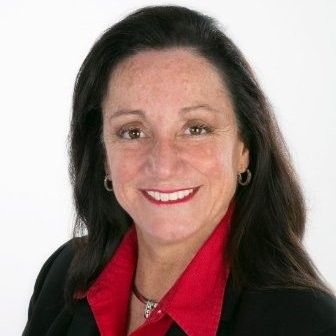
Lobbyist and political operative Maria Zack has supported high-profile presidential campaigns. She has also promoted unfounded pandemic and election conspiracies. Image via Maria Zack.

Zack herself is a staunch 2020 election skeptic who has worked to spread several other unverified claims through her Lantana-based nonprofit, Nations in Action. Among other things, the organization purports to have uncovered evidence of “shadow government” conspiracies to “depopulate countries through a COVID attack” and fix the 2020 election by beaming software hacks from foreign satellites over Italy into voting machines.

Her pinned post on X references that second, QAnon-affiliated claim, known as “ItalyGate,” and she was credited as a “conspiracy theorist” in the 2024 film, “Stopping the Steal.”

Despite her objections to the label, which she described to the South Florida Sun Sentinel as “very ridiculous and very unprofessional,” Zack still says she’s unconvinced Biden legitimately won in 2020, telling the outlet she “can’t tell” who won but still assumes it was Trump.

She also insisted that eliminating property taxes in Florida — a proposal backed by Gov. Ron DeSantis, CFO Blaise Ingoglia and many GOP lawmakers — would lower the rate of teen pregnancies, since parents would have more money and be able to spend additional time at home, and lead to an “11% decrease in crime,” citing her own research.

Reicherter’s comments on hot-button issues, meanwhile, indicate he’d bring a moderate but conservative voice from South Florida to Tallahassee.

In an interview with the Sun Sentinel, which later endorsed him, he cautioned against eliminating property taxes, reasoning they’d leave localities without a sufficient alternative to pay for necessary services, and called DeSantis’ soon-to-be-shuttered Alligator Alcatraz immigrant detention center in the Everglades an ill-conceived “political stunt.”

He is also for keeping Florida’s mandate on vaccinating children against diseases like polio and measles, the safety of which he said is long-established, but doesn’t support requiring residents to take “new vaccines,” such as those for COVID.

Reicherter’s campaign site says that, if elected, he’ll support legislation providing aid to seniors and helping more skilled worker training, stand up for local home rule, protect the environment and local resiliency and back the creation of an “insurance fraud task force.”

Zack promises, if elected, to support ridding Florida of property taxes, purging the state of undocumented immigrants and empowering parents in education.

Both want to strengthen the local economy, support veterans and first responders and help to curb the burden of property taxes, albeit in different ways.

A detailed map of House District 90 in Palm Beach County. Image via Florida House.

Through Sept. 25, Reicherter reported raising about $5,300 in outside contributions and lending his campaign $104,000, the unspent portion of which is refundable. His donors included Associated Builders and Contractors, whose Florida East Coast chapter endorsed him, and the farming company of former state Rep. Rick Roth, who is also backing him.

By Thursday, less than a week before Election Day, he spent close to $32,000.

Reicherter’s other endorsers include Palm Beach County Commissioner Marci Woodward, Delray Beach Mayor Tom Carney, Boynton Beach Commissioner Thomas Turkin, former Palm Beach City Commissioner Mack McCray and BLU-PAC of Boca Raton.

Zack raised close to $15,300, about 45% of which was self-given. Notable donors included serial entrepreneur Sharon Amezcua and Marla Maples, a former wife of Trump’s who successfully urged state lawmakers to pass legislation this year banning weather modification activities in Florida, including cloud-seeding and the use of so-called chemtrails.

Her political committee, Friends of Maria Zack, was formed in August but has reported no campaign finance activity so far.

Former U.S. House Speaker Newt Gingrich, whom Zack worked for in Atlanta during the 2012 presidential race, has endorsed Zack for HD 90, as has anti-abortion nonprofit Florida Right to Life.

The Special Election for HD 90 was triggered by Casello’s death in July.

HD 90 is a Democratic-leaning district that spans Boynton Beach, Delray Beach, Golf, Gulf Stream, Briny Breezes and parts of Highland Beach, Manalapan and Ocean Ridge.


Source link

Continue Reading

Politics

Emily Duda Buckley family business gets philanthropic, gives $200K to cancel student lunch debt

Published

on


As part of its 100th anniversary celebrations, family-operated agriculture and real estate company DUDA has donated $200,000 to the nonprofit All for Lunch program to eliminate school lunch debt for students in Seminole County who qualify for free or reduced meals.

The company, which owns a suite of brands across the country in both agriculture and real estate development, includes leadership from Emily Duda Buckley, who is running for House District 38 to replace term-limited incumbent David Smith.

Duda Buckley is the senior manager for external affairs for DUDA, where she leads the company’s external engagement strategy with a primary focus on community relations, philanthropy and industry partnerships. She also monitors public policy and regulatory developments that may impact business operations.

“Education begins with meeting basic needs,” Duda Buckley said of the company’s donation to All for Lunch. “Clearing school lunch debt helps remove a quiet but very real barrier for students and families, and our family business is honored to support Seminole County schools in this meaningful way. When we support students, we support the entire community.”

The Duda family presented a check Tuesday to All for Lunch and Seminole County Public Schools, at Pine Crest Elementary.

“As we celebrate 100 years, it’s important for us to give back to the community that helped shape who we are,” said Tracy Duda Chapman, Chief Legal and Administrative Officer at DUDA.

“Our family firmly believes in sharing our blessings, and eliminating this lunch debt allows us to put those values into action and support Seminole County families in a tangible way. No child should carry the weight of a lunch debt, and we’re honored to help ensure students have access to the nutritious foods they need to optimize learning.”

The donation from DUDA will clear lunch balances for more than 3,600 Seminole County students who qualify for free meals and another 1,425 who receive reduced-price meals, collectively helping more than 5,000 students eliminate stress and focus on learning.

“DUDA’s donation made an immediate difference for thousands of students. When a partner steps forward at this scale, it allows us to lift a burden that many parents quietly struggle with. This gift didn’t just erase debt — it offers relief for families navigating tight household budgets month-to-month,” All for Lunch founder and Executive Director Alessandra Ferrara-Miller said.

It’s estimated that 1 in 6 kids in Central Florida face hunger on any given day, and Seminole County school leaders say this type of philanthropic support is a huge relief to those students and their families.

“The extraordinary generosity of DUDA exemplifies that community partnerships make a significant impact on the lives of our students and families,” Seminole County Public Schools Superintendent Serita Beamon said.

“This support provides a fresh start for many of our families and helps to ensure students and their families can focus on learning. On behalf of our students, families, and staff, thank you for making such a meaningful difference.”

And Seminole County Schools are also using the Duda family philanthropy as a tool to attract additional donors. All for Lunch has established a special donation page in honor of DUDA’s 100th anniversary contribution, allowing anyone in Central Florida to chip in to make a difference.

Emily Duda Buckley is one of three Republicans currently vying for the HD 38 seat, and she’s off to an early lead, with nearly $134,000 raised. The other two Republicans in the race are far behind, with Marcus Hyatt banking more than $35,000 and Austyn Cydney Spell hasn’t reported any fundraising.


Source link

Continue Reading

Politics

Have Democrats given up on the Pinellas County Commission?

Published

on


Three Pinellas County Commission seats are up for election this year, and Republicans incumbents are seeking re-election in all of them. Those office-holders appear relatively safe if 2025 campaign finance reports are any indication.

Brian Scott, who represents the countywide District 2 seat, is so far unopposed. Qualifying in the races runs June 8-12, so there is still time for a challenger to emerge. However, any would-be challenger would enter the race at an immediate funding disadvantage, with Scott raising more than $94,000 as of the end of 2025.

The other two incumbents facing re-election this year — Dave Eggers in District 4 and Kathleen Peters in District 6 — have drawn challengers, though neither have posted significant fundraising activity since entering the race.

There isn’t a Democrat challenging Eggers so far, but he faces intraparty opposition from fellow Republican Tony Ringelspaugh. Ringelspaugh, who describes himself as retired, raised just $1,000 since entering the race in October, and half of that was a contribution from himself to his campaign. As of Dec. 31, he hadn’t spent any of it.

Eggers, meanwhile, has raised nearly $19,000 and retains about $13,000. It’s a small sum compared to fundraising activity in past Pinellas County Commission races — note Scott’s nearly six-figure haul for a so far unopposed race — but it’s still enough to create a wide funding gap between his opponent.

And Ringelspaugh doesn’t appear to be actively campaigning at this point. His most recent post to his campaign Facebook page was on Oct. 15 announcing his bid. Ringelspaugh does not appear to have a campaign website, either.

Eggers also has strong institutional support, including recent nods from U.S. Reps. Gus Bilirakis and Anna Paulina Luna.

Eggers faced intraparty opposition four years ago, but won re-election that year with 68% of the vote. If no Democrat enters the race, and no one files as a write-in to close the Primary, the GOP Primary will be open to all voters.

District 4 covers the northernmost parts of Pinellas County, including Palm Harbor, East Lake, Tarpon Springs, Dunedin and Safety Harbor.

Peters is the top fundraiser among incumbents up for re-election this year, with $103,000 raised as of Dec. 31. Her opponent, architect David Glenn Jr., a Democrat, has collected less than $2,300.

While Glenn entered the race in December and only had three weeks of fundraising to report, his early activity doesn’t show a lot of momentum. All of his funds came from the candidate himself. Still, he has been at least somewhat active on social media and in the community, speaking at local Democratic clubs. His campaign website, though, doesn’t list any upcoming events.

Glenn previously said he was running to disrupt what he describes as entrenched county leadership. His platform emphasizes land use and development policy, arguing the need for more density and carefully planned growth. He also favors increased support for public transportation and affordable housing, and wants to crack down on nuisance short-term rental properties, among other priorities.

But getting that message to voters amid a six-figure funding deficit will be a challenge, and like her colleagues on the dais, Peters will have plenty of support from the county’s donor class.

Peter’s fourth-quarter haul, which was nearly $40,000, included top $1,000 donations from a number of local businesses and interests, including Marine construction companies Speeler Helicals, Bayside Dredging, Tampa Bay Marine Contractors, Haven Dock & Marine, Decks & Docks Lumber, Waterfront Property Services, and BCJ 2.

She also received top donations from a couple of bowling alleys, and from interests in real estate development, insurance, restaurant and automotive industries. The political committee supporting state Rep. Linda Chaney cut a $1,000 check in the fourth quarter, as did former state Rep. Jackie Toledo, both Republicans, among other donors.

First elected in 2018 with 60% of the vote over Democrat Amy Kedron, Peters was re-elected in 2022 without opposition.

Taken collectively, the three County Commission seats up for election this year may prove to be sleepy affairs unless current challengers step up campaign efforts.

The lack of competitive races so far may be a result of Pinellas County’s position as an increasingly red region. For Scott, countywide voter registration favors Republicans by about 47,000 voters. In Eggers’ District 4, Republicans outnumber Democrats by about 29,000 voters, and Democrats trail Republicans in Peters’ District 6 by about 23,000 voters.


Source link

Continue Reading

Politics

Florida Council of 100 recommends major upgrades in state severe weather prep

Published

on


A new report on Florida’s resilience to natural disasters concludes there are key challenges ahead for the state, as well as opportunities to modernize infrastructure to help streamline recovery after an emergency.

The Florida Council of 100 (FC 100), made up of of business leaders who analyze some of the biggest challenges facing the state, published a report called “Resilience Reimagined: Modern Policy and Innovation for a Stronger Florida.”

The document analyzes how long-term economic competitiveness can expand in the face of severe weather endemic to the state. The report concludes that even as hurricanes, flooding and other severe weather events are part of Florida living, resilience can become an economic component as well as an environmental effort.

“Florida’s future will be defined by how well we prepare for and respond to storms and flooding,” said George S. LeMieux, Chair of FC 100. “Resilience is not just about repairing damage. It is about protecting our economy, safeguarding communities, and ensuring Florida remains one of the most competitive places in the world to live and do business.”

Some of the key findings in the report, published Tuesday, include warnings that failure to invest in storm preparedness will result in lost economic activity, business closings and disruption to the job market, while insurance costs could rise. Long-term investments in recovery plans can reduce losses and accelerate recovery after major weather events.

Beyond outlining the issues that could damage Florida’s business sector, the FC 100 report provides several recommendations, including:

— Streamlining post-disaster recovery and permitting to reduce delays and uncertainty

— Hardening infrastructure and utilities to limit outages and economic disruption

— Modernizing Florida’s building code to reflect evolving flood, wind, and energy risks

— Incentivizing resilience investments by homeowners and communities

— Supporting resilience innovation and commercialization to grow new industries and jobs

“The choices we make now will shape Florida’s quality of life and economic strength for generations,” said Michael Simas, President and CEO of the FC 100. “This report offers a clear path forward and an opportunity for Florida to define itself not by its exposure to storms, but by its ability to thrive despite them.”

The FC 100 has more than 200 companies in its membership that represent more than 1.3 million workers in the state.


Source link

Continue Reading

Trending

Copyright © Miami Select.