Connect with us

Business

UK treasury chief says ‘harsh global headwinds’ from wars and tariffs are harming the country’s economic outlook

Published

on


Britain’s Treasury chief warned Monday that “harsh global headwinds” from wars in Ukraine and the Middle East and U.S. President Donald Trump’s tariffs have worsened the U.K.’s economic outlook since the governing Labour Party won power last year.

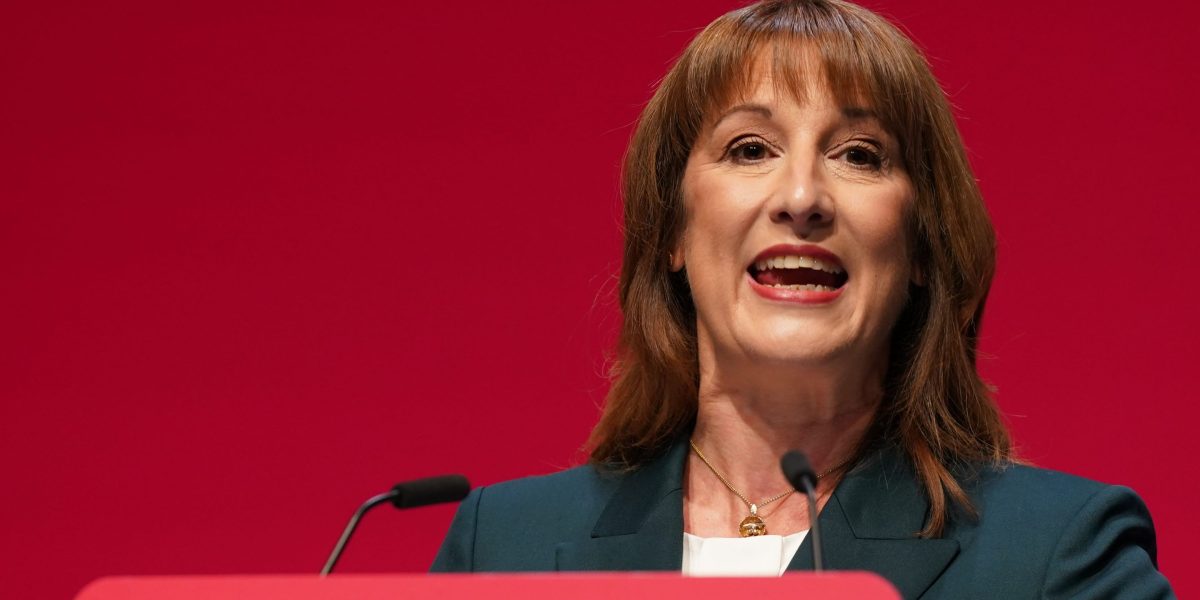
Chancellor of the Exchequer Rachel Reeves told Labour’s annual conference that her economic plans must be “fit for an uncertain world,” a hint she will raise taxes in her autumn budget on Nov. 26.

“In the last year the world has changed, and we are not immune to that change,” she told the BBC before the speech. “Whether it is wars in Europe and the Middle East, whether it is increased barriers to trade because of tariffs coming from the United States, whether it is the global cost of borrowing, we’re not immune to any of those things.”

Since ending 14 years of Conservative rule in July 2024, Labour has struggled to deliver the economic growth it promised. Inflation remains stubbornly high and the economic outlook subdued, frustrating efforts to repair tattered public services and ease the cost of living.

Labour pledged during the election not to raise taxes on working people, but has since hiked levies on employers.

Reeves told the BBC she was “determined not to increase those key taxes that working people pay,” stopping short of ruling out any hikes at all.

In her speech, interrupted by repeated standing ovations from hundreds of Labour members — and by a lone pro-Palestinian protester — Reeves leavened her sober assessment of the country’s finances with a touch of optimism. She outlined the government’s investments in defense, transport, energy and education, claiming they were making a difference to millions of people.

She pledged to end long-term youth unemployment, saying everyone under 25 who has been unemployed for 18 months will be offered guaranteed paid work. One in eight 16–24-year-olds in Britain — about 1 million people — is currently not in education, work, or training.

Reeves also said the government was working on an “ambitious agreement on youth mobility” with the 27-nation European Union. British citizens lost the right to move and work freely in the EU when the country left the bloc in 2020.

Thousands of Labour members are in Liverpool, northwest England, for the party conference -– a mix of policy forum and pep rally that this year is lacking in pizazz.

The hard right is a key concern

Labour lags behind Nigel Farage ’s hard-right Reform UK party in opinion polls, and some party members are losing faith in Prime Minister Keir Starmer, even though there may be four years until the next election.

Many are rallying around Andy Burnham, the ambitious Labour mayor of Manchester, who said Sunday that the party is in “peril” and needs to change direction.

Reeves took aim at those in Labour, such as Burnham, who argue the government should borrow more to spend more on public services. She cited former Conservative Prime Minister Liz Truss’ disastrous 2022 plan for unfunded tax cuts, which sent the value of the pound plunging and the cost of government borrowing soaring.

“When spending gets out of control, when market confidence is lost … it is felt immediately in the growing cost of essentials, and rising interest rates,” Reeves said.

The threat posed by Reform is top issue among Labour delegates at the four-day conference, which ends Wednesday. Farage’s party has only five lawmakers in the 650 seat House of Commons, and Labour has more than 400. Nonetheless, Starmer said Reform is now Labour’s chief opponent, not the main opposition Conservatives.

Starmer has described the fight between Labour and Reform as “a battle for the soul of this country.” On Sunday he accused Farage of sowing division with plans by Reform to deport immigrants who are in the U.K. legally. Starmer said such a policy would be “racist” and “immoral.”

The U.K. government has toughened its own language about immigration, though. Home Secretary Shabana Mahmood told the conference the government must question some of “the assumptions and legal constraints” around migration.

She said she plans to raise the bar immigrants must meet to gain permanent residency. Under the proposals, people will have to have a “high standard” of English, no criminal record and give back to their communities to get the right to settle in the U.K.

“Unless we have control of our borders, and until we can decide who comes in and who must leave, we will never be the open, tolerant and generous country that I know we all believe in,” she said.

Fortune Global Forum returns Oct. 26–27, 2025 in Riyadh. CEOs and global leaders will gather for a dynamic, invitation-only event shaping the future of business. Apply for an invitation.


Source link

Continue Reading

Business

European leaders’ text messages to Trump reveal a very different tone than their Greenland saber-rattling

Published

on


While Europe is pushing back publicly against U.S. President Donald Trump over Greenland, the language appears softer behind the scenes.

Trump published a text message on Tuesday that he received from French President Emmanuel Macron, confirmed as genuine by Macron’s office.

Starting with “My friend,” Macron’s tone was more deferential than the criticism that France and some of its European partner nations are openly voicing against Trump’s push to wrest Greenland from NATO ally Denmark.

Before broaching the Greenland dispute, Macron opted in his message to first talk about other issues where he and Trump seem roughly on the same page.

“We are totally in line on Syria. We can do great things on Iran,” the French leader wrote in English.

Then, he added: “I do not understand what you are doing on Greenland,” immediately followed by: “Let us try to build great things.”

That was the only mention that Macron made of the semi-autonomous Danish territory in the two sections of message that Trump published. It wasn’t immediately clear from Trump’s post when he received the message.

Trump breaks with tradition

World leaders’ private messages to each other rarely make it verbatim into the public domain — enabling them to project one face publicly and another to each other.

But Trump — as is his wont across multiple domains — is casting traditions and diplomatic niceties to the wind and, in the process, lifting back the curtain on goings-on that usually aren’t seen.

This week, a text message that Trump sent to Norway’s prime minister also became public, released by the Norwegian government and confirmed by the White House.

In it, Trump linked his aggressive stance on Greenland to last year’s decision not to award him the Nobel Peace Prize.

“Considering your Country decided not to give me the Nobel Peace Prize for having stopped 8 Wars PLUS, I no longer feel an obligation to think purely of Peace,” the message read.

It concluded, “The World is not secure unless we have Complete and Total Control of Greenland.”

On Tuesday, Trump also published a flattering message from Mark Rutte, secretary general of NATO, which the alliance also confirmed as authentic.

“I am committed to finding a way forward on Greenland,” Rutte wrote. “Can’t wait to see you. Yours, Mark.”

Rutte has declined to speak publicly about Greenland despite growing concern about Trump’s threats to “acquire” the island and what that would mean for the territorial integrity of NATO ally Denmark. Pressed last week about Trump’s designs on Greenland and warnings from Denmark that any U.S. military action might mean the end of NATO, Rutte said: “I can never comment on that. That’s impossible in public.”

Macron’s relationship with Trump

Macron likes to say that he can get Trump on the phone any time he wants. He proved it last September by making a show of calling up the president from a street in New York, to tell Trump that police officers were blocking him to let a VIP motorcade pass.

Guess what? I’m waiting in the street because everything is frozen for you!” Macron said as cameras filmed the scene.

It’s a safe bet that Macron must know by now — a year into Trump’s second spell in office — that there’s always a risk that a private message to Trump could be made public.

Macron said Tuesday that he had “no particular reaction” to the message’s publication when a journalist asked him about it.

“I take responsibility for everything that I do. It’s my habit to be coherent between what I say on the outside and what I do in a private manner. That’s all.”

Still, the difference between Macron’s public and private personas was striking.

Hosting Russia and Ukraine together

Most remarkably, the French leader told Trump in his message that he would be willing to invite representatives from both Ukraine and Russia to a meeting later this week in Paris — an idea that Macron has not voiced publicly.

The Russians could be hosted “in the margins,” Macron suggested, hinting at the potential awkwardness of inviting Moscow representatives while France is also backing Ukraine with military and other support against Russian President Vladimir Putin’s invasion.

Macron wrote that the meeting could also include “the danish, the syrians” and the G7 nations — which include the United States.

The French president added: “let us have a dinner together in Paris together on thursday before you go back to the us.”

He then signed off simply with “Emmanuel.”

Making nice only goes so far

Despite Macron’s persistent efforts, in both of Trump’s terms, not to ruffle his feathers, any payback has been mixed, at best.

Trump bristled on Monday, threatening punitive tariffs, when told that Macron has no plans to join Trump’s new Board of Peace that will supervise the next phase of the Gaza peace plan, despite receiving an invitation.

“Well, nobody wants him because he’s going to be out of office very soon,” Trump told reporters, even through the French leader has more than a year left in office before the end of his second and last term in 2027.

“I’ll put a 200% tariff on his wines and champagnes and he’ll join,” Trump said.

___

Lorne Cook in Brussels, Sylvie Corbet in Paris and Kostya Manenkov in Davos contributed.


Source link

Continue Reading

Business

Billionaire Marc Andreessen spends 3 hours a day listening to podcasts and audiobooks—that’s nearly an entire 24-hour day each week

Published

on


If you want to think like a billionaire, you might want to stop scrolling on TikTok and pick up a book. For venture capitalist Marc Andreessen, it’s not just a habit—it’s how he makes sense of the world and continually reshapes his thinking about business.

“I’ve always been like this, I’m reading basically every spare minute that I have,” Andreessen told the How I Write podcast in 2023.

The billionaire previously carved out two hours of reading time on most weekdays, according to a detailed version of his weekly schedule he published in 2020. However, with the business world only becoming more pressurized, he’s ramped up his knowledge intake—something made possible from “the single biggest technological leap” in his life: AirPods. 

Andreessen now spends two to three hours a day glued to audiobooks—typically alternating between histories, biographies, and material in new subject areas like artificial intelligence. Collectively, his practice amounts to nearly an entire 24-hour day dedicated to learning, each week.

Research suggests that listeners retain roughly the same amount of information from audiobooks as they do from reading text, making Andreessen’s shift in format less a compromise than an optimization.

“If nothing else is going on,” Andreessen added. “I’m always listening to something.”

Andreessen didn’t respond to Fortune’s request for further comment.

Mark Cuban and Bill Gates agree: reading will drive you to success

Andreessen’s approach is far from unusual among the ultra-wealthy. Reading ranks as the most commonly cited behavior tied to long-term success, according to a JPMorgan report that surveyed more than 100 billionaires with a combined net worth exceeding $500 billion.

Bill Gates, for example, has long championed reading—often finishing 50 books a year and releasing annual lists to encourage others to do the same.

“Reading fuels a sense of curiosity about the world, which I think helped drive me forward in my career and in the work that I do now with my foundation,” he told TIME in 2017.

Former Shark Tank star Mark Cuban has similarly cited reading as a critical habit that helped set him apart—and put him on the billionaire path.

 “I read more than three hours almost every day,” Cuban wrote on his blog in 2011.

“Everything I read was public,” the now 67-year-old added. “Anyone could buy the same books and magazines. The same information was available to anyone who wanted it. Turns out most people didn’t want it.”

Reading, as a whole, remains a cornerstone of nuanced thinking and communication—skills that are increasingly critical for business leaders, according to Brooke Vuckovic, a professor at Northwestern’s Kellogg School of Management.

“Reading long-form fiction, biography, and history demands focused attention, tolerance with ambiguity and unanswered questions or unrevealed nuance in characters and situations, and a willingness to have our preconceptions upended,” Vuckovic previously told Fortune. “All of these qualities are requirements of strong leadership [and] they are in increasingly short supply.”


Source link

Continue Reading

Business

Mass texts and EZ-Pass phishing: $17 billion stolen in crypto scams, largely by the Chinese

Published

on


EZ-Pass final reminder: you have an outstanding toll. Such texts have become all too familiar to many Americans, and it is a Chinese-backed criminal network that is largely behind them. These scammers are using crypto to steal a record $17 billion from regular people, according to Chainalysis’s recent report

The severity of this fraud has reached the attention of the U.S. government. On Wednesday, Jacqueline Burns Koven, the head of cyber threat intelligence at Chainalysis, spoke in front of the Senate about the increase of this criminal activity, and how the U.S. can combat it. Her testimony was titled, ‘Made in China, Paid by Seniors: Stopping the Surge of International Scams.’

“Scams that leverage cryptocurrency are having a record year in terms of proceeds,” Burns Koven said, in an interview with Fortune. “The Chinese scam conglomerates are the market leaders in criminal fintech. They’ve been doing this for a long time.” 

The estimated $17 billion received in crypto scams is up from about 30% from last year, according to the report. These operations have become increasingly sophisticated and include the use of AI-generated deepfakes. Crypto is an essential part of the operation because the criminals frequently use digital currencies to finance their scamming operations, such as purchasing tools like SMS phishing kits. 

Nefarious actors have leaned heavily on impersonation techniques, where they pose as legitimate organizations to coerce victims into paying digitally. The most well-known example of this is the EZ-Pass phishing campaign, which targeted millions of Americans. The operation was traced back to a Chinese-speaking criminal group called “Darcula”, which also has a history of impersonating the USPS. 

While 2025 also saw a record number of crypto seizures by law enforcement, Burns Koven says that government and industry responses are still fragmented and reactive. Just as criminals are using advanced technology for scams, both the public and private sector could use AI to block these messages from appearing on people’s phones. Also, with criminals using crypto to facilitate these scams and because these transactions are public on the blockchain, this makes it easier to identify criminal networks and disrupt activity.  

“Scammers are taking advantage of the disjointed and reactive responses from both the public and private sector,” she said. “We need to use advanced technologies like AI enabled fraud prevention, to prevent a human being from ever being in contact with that scam in the first place.”

Fraud usually never sleeps, but these Chinese criminal networks actually do take breaks. Chainalysis and other researchers found a dip in criminal activity during the Chinese New Year and other of the country’s public holidays. 


Source link

Continue Reading

Trending

Copyright © Miami Select.