Connect with us

Politics

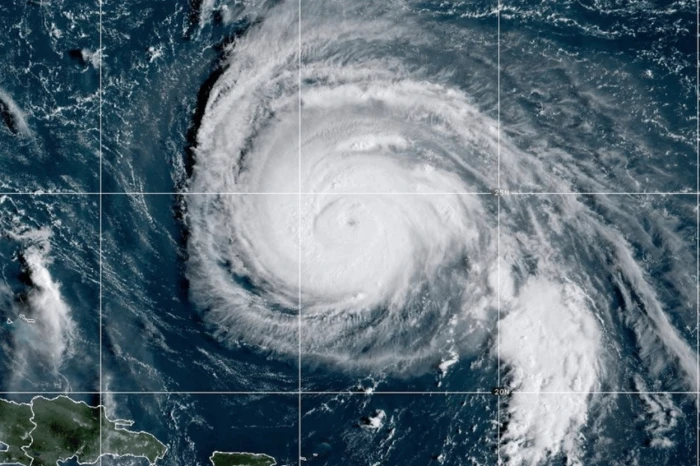
Tropical Storm Imelda forms and is expected to become hurricane off the US East Coast in coming days
Published

on


Tropical Storm Imelda formed Sunday and is expected to become a hurricane on a forecast track that could take it away from the U.S. East Coast early this week. The storm was causing disruption in the Bahamas and Cuba on Sunday, and a tropical storm watch was posted in parts of Florida.

Meanwhile, Hurricane Humberto weakened very slightly but remained a strong Category 4 storm in the Atlantic, threatening Bermuda.

At about 2 p.m. EDT, Imelda was located about 95 miles (152.89 kilometers) west-northwest of the Central Bahamas and about 370 miles (595.46 kilometers) southeast of Cape Canaveral in Brevard County, Florida, the National Hurricane Center in Miami said. It was headed north at 7 mph (11 kph) and its maximum sustained winds were 40 mph (65 kph).

The center said the system was expected to move across the central and northwestern Bahamas Sunday and Sunday night and turn east-northeastward, away from the southeastern U.S., by the middle of the week.

A tropical storm watch was in effect for the east coast of Florida from the Palm Beach-Martin County Line to the Flagler-Volusia County Line, the center said, urging residents along the southeast U.S. coast to monitor the system. A tropical storm watch means tropical storm conditions are possible within 48 hours.

South Carolina Gov. Henry McMaster urged people to monitor the weather closely and stay alert, although coastal Georgetown County said it was returning to normal operations with an improved forecast for the area. And in North Carolina, Gov. Josh Stein declared a state of emergency before Tropical Storm Imelda formed.

“What we learn every time is we never know where they are going to go,” McMaster said during a news conference to discuss the storm. “This storm is deadly serious. Not just serious. Deadly serious.”

The storm could bring high winds and heavy rain, which could produce flooding, he said. The state was prepositioning search and rescue crews over the weekend.

Humberto weakened slightly on Sunday but still had maximum powerful sustained winds of 150 mph (240 kph), according to the hurricane center, making it a Category 4 hurricane. It was located about 535 miles (861 kilometers) south of Bermuda and was moving west-northwest at 13 mph (20 kph).

A tropical storm watch could be required in Bermuda later in the day, forecasters said, and swells could reach the U.S. East Coast on Monday.

Alison Dagostino moved to Myrtle Beach, South Carolina, six years ago with her four children and husband. She experienced her first hurricane within days of moving into the area.

She said that other than basic storm preparation — like buying batteries and storm-proofing windows — people in the area were living life as normal on Sunday.

“People are still out and about. People are still walking on the beach,” Dagostino said, adding that school and sporting events haven’t been canceled.

Imelda was threatening parts of Cuba and the Bahamas with heavy rainfall and flash flooding, with portions of the Bahamas under a tropical storm warning.

The Bahamas’ Department of Meteorology said moderate to heavy rains would continue over the northwest and central islands, which include Nassau, Andros Island, San Salvador and Long Island. Rainfall could reach between 6 inches (15 centimeters) and 12 inches (30 centimeters), with some isolated areas seeing up to 10 inches (25 centimeters).

“Residents in low-lying areas should take actions to mitigate property damages due to flooding,” the department said in a statement.

Sunday’s storm surge was expected to raise water levels up to 3 feet (.9 meters) above normal tide along the coasts of the Abaco Islands, the north and east coasts of Grand Bahama, and all nearby cays.

The National Weather Service in Puerto Rico warned inexperienced mariners and those operating smaller boats against navigating the hazardous waters on Sunday, with swells from Humberto forecast to reach between 7 feet (2 meters) and 8 feet (2.4 meters) in Atlantic waters.

In the Dominican Republic, where weather conditions on Friday forced the evacuation of hundreds of people, meteorologists on Sunday expected moderate showers, thunderstorms and gusts in some inland areas. The Dominican Institute of Meteorology said in a statement that other areas including the capital, Santo Domingo, would only see scattered showers.

The agency added that while Humberto was not threatening the country Sunday, fragile and small- to medium-sized vessels should only “operate near the coastal perimeter, avoiding venturing out to sea due to abnormal waves.”

___

Republished with permission of The Associated Press.


Post Views: 0


Source link

Continue Reading

Politics

Miami Beach committee leadership reshuffle excludes women from every top post

Published

on


Miami Beach Mayor Steven Meiner unveiled his new committee appointments for 2026, and there’s a commonality among them: no women Chairs.

In all three of the city’s Commission committees, which are appointed solely by the Mayor and composed exclusively of City Commission members, men hold the top post.

That’s despite three of the Commission’s six non-Mayor members being women.

On the Land Use and Sustainability Committee, Meiner elevated previous Vice Chair David Suarez to Chair and demoted prior Chair Alex Fernandez to Vice Chair.

He did the same with the Public Safety and Neighborhood Quality of Life Committee, where Fernandez rose from Vice Chair to Chair, and Laura Dominguez switched to Vice Chair.

Only on the Finance and Economic Resiliency Committee did last year’s arrangement remain the same, with Joseph Magazine keeping his Chairmanship, with Suarez staying on as the panel’s second-in-command.

Commissioner Tanya Bhatt holds membership posts in two of the three committees and is an alternate member for a third, in which Monica Matteo-Salinas — who won election to the City Commission in December — serves as a member.

Florida Politics contacted Meiner, Bhatt, Dominguez and Matteo-Salinas for comment, but received no response by press time. We also reached out to Lynette Long, who chairs the Miami Beach Commission for Women, but she did not immediately respond.

Suarez said by text that he doesn’t believe Meiner’s appointments have anything to do with gender.

“Commission committee assignments rotate and are based on merit and experience, and suggesting otherwise leans into a false narrative where none exists,” he said. “Women have long chaired committees — both Commission committees and other City committees — and continue to serve today as chairs and vice chairs on both.”

Magazine said he looks forward to continuing his work leading on economic resiliency.

“Given my long financial background in the private sector and our success in the last two budget seasons, I’m happy to be appointed Chair again,” he said. He declined to comment on other appointments.

Fernandez said he is proud of the record he built as Chair of the Land Use and Sustainability Committee, which secured critical exemptions from the 2024 Resiliency and Safe Structures Act, helped preserve architectural design standards under the Live Local Act and modernized historic preservation regulations, among other accomplishments.

“Serving as Chair of the Land Use Committee was something I was proud of and I will continue to be proud of the committee’s record of accomplishments during my tenure,” he wrote in a statement that did not touch on the women-as-Chairs subject.

Last year, Dominguez and Matteo-Salinas each defeated opponents who participated in a campaign event for Meiner also attended by one of the officers who questioned resident-activist Raquel Pacheco at her home last week after she wrote disparagingly about the Mayor on Facebook.

The visit has since made national headlines.


Source link

Continue Reading

Politics

Emily Duda Buckley family business gets philanthropic, gives $200K to cancel student lunch debt

Published

on


As part of its 100th anniversary celebrations, family-operated agriculture and real estate company DUDA has donated $200,000 to the nonprofit All for Lunch program to eliminate school lunch debt for students in Seminole County who qualify for free or reduced meals.

The company, which owns a suite of brands across the country in both agriculture and real estate development, includes leadership from Emily Duda Buckley, who is running for House District 38 to replace term-limited incumbent David Smith.

Duda Buckley is the senior manager for external affairs for DUDA, where she leads the company’s external engagement strategy with a primary focus on community relations, philanthropy and industry partnerships. She also monitors public policy and regulatory developments that may impact business operations.

“Education begins with meeting basic needs,” Duda Buckley said of the company’s donation to All for Lunch. “Clearing school lunch debt helps remove a quiet but very real barrier for students and families, and our family business is honored to support Seminole County schools in this meaningful way. When we support students, we support the entire community.”

The Duda family presented a check Tuesday to All for Lunch and Seminole County Public Schools, at Pine Crest Elementary.

“As we celebrate 100 years, it’s important for us to give back to the community that helped shape who we are,” said Tracy Duda Chapman, Chief Legal and Administrative Officer at DUDA.

“Our family firmly believes in sharing our blessings, and eliminating this lunch debt allows us to put those values into action and support Seminole County families in a tangible way. No child should carry the weight of a lunch debt, and we’re honored to help ensure students have access to the nutritious foods they need to optimize learning.”

The donation from DUDA will clear lunch balances for more than 3,600 Seminole County students who qualify for free meals and another 1,425 who receive reduced-price meals, collectively helping more than 5,000 students eliminate stress and focus on learning.

“DUDA’s donation made an immediate difference for thousands of students. When a partner steps forward at this scale, it allows us to lift a burden that many parents quietly struggle with. This gift didn’t just erase debt — it offers relief for families navigating tight household budgets month-to-month,” All for Lunch founder and Executive Director Alessandra Ferrara-Miller said.

It’s estimated that 1 in 6 kids in Central Florida face hunger on any given day, and Seminole County school leaders say this type of philanthropic support is a huge relief to those students and their families.

“The extraordinary generosity of DUDA exemplifies that community partnerships make a significant impact on the lives of our students and families,” Seminole County Public Schools Superintendent Serita Beamon said.

“This support provides a fresh start for many of our families and helps to ensure students and their families can focus on learning. On behalf of our students, families, and staff, thank you for making such a meaningful difference.”

And Seminole County Schools are also using the Duda family philanthropy as a tool to attract additional donors. All for Lunch has established a special donation page in honor of DUDA’s 100th anniversary contribution, allowing anyone in Central Florida to chip in to make a difference.

Emily Duda Buckley is one of three Republicans currently vying for the HD 38 seat, and she’s off to an early lead, with nearly $134,000 raised. The other two Republicans in the race are far behind, with Marcus Hyatt banking more than $35,000 and Austyn Cydney Spell hasn’t reported any fundraising.


Source link

Continue Reading

Politics

Have Democrats given up on the Pinellas County Commission?

Published

on


Three Pinellas County Commission seats are up for election this year, and Republicans incumbents are seeking re-election in all of them. Those office-holders appear relatively safe if 2025 campaign finance reports are any indication.

Brian Scott, who represents the countywide District 2 seat, is so far unopposed. Qualifying in the races runs June 8-12, so there is still time for a challenger to emerge. However, any would-be challenger would enter the race at an immediate funding disadvantage, with Scott raising more than $94,000 as of the end of 2025.

The other two incumbents facing re-election this year — Dave Eggers in District 4 and Kathleen Peters in District 6 — have drawn challengers, though neither have posted significant fundraising activity since entering the race.

There isn’t a Democrat challenging Eggers so far, but he faces intraparty opposition from fellow Republican Tony Ringelspaugh. Ringelspaugh, who describes himself as retired, raised just $1,000 since entering the race in October, and half of that was a contribution from himself to his campaign. As of Dec. 31, he hadn’t spent any of it.

Eggers, meanwhile, has raised nearly $19,000 and retains about $13,000. It’s a small sum compared to fundraising activity in past Pinellas County Commission races — note Scott’s nearly six-figure haul for a so far unopposed race — but it’s still enough to create a wide funding gap between his opponent.

And Ringelspaugh doesn’t appear to be actively campaigning at this point. His most recent post to his campaign Facebook page was on Oct. 15 announcing his bid. Ringelspaugh does not appear to have a campaign website, either.

Eggers also has strong institutional support, including recent nods from U.S. Reps. Gus Bilirakis and Anna Paulina Luna.

Eggers faced intraparty opposition four years ago, but won re-election that year with 68% of the vote. If no Democrat enters the race, and no one files as a write-in to close the Primary, the GOP Primary will be open to all voters.

District 4 covers the northernmost parts of Pinellas County, including Palm Harbor, East Lake, Tarpon Springs, Dunedin and Safety Harbor.

Peters is the top fundraiser among incumbents up for re-election this year, with $103,000 raised as of Dec. 31. Her opponent, architect David Glenn Jr., a Democrat, has collected less than $2,300.

While Glenn entered the race in December and only had three weeks of fundraising to report, his early activity doesn’t show a lot of momentum. All of his funds came from the candidate himself. Still, he has been at least somewhat active on social media and in the community, speaking at local Democratic clubs. His campaign website, though, doesn’t list any upcoming events.

Glenn previously said he was running to disrupt what he describes as entrenched county leadership. His platform emphasizes land use and development policy, arguing the need for more density and carefully planned growth. He also favors increased support for public transportation and affordable housing, and wants to crack down on nuisance short-term rental properties, among other priorities.

But getting that message to voters amid a six-figure funding deficit will be a challenge, and like her colleagues on the dais, Peters will have plenty of support from the county’s donor class.

Peter’s fourth-quarter haul, which was nearly $40,000, included top $1,000 donations from a number of local businesses and interests, including Marine construction companies Speeler Helicals, Bayside Dredging, Tampa Bay Marine Contractors, Haven Dock & Marine, Decks & Docks Lumber, Waterfront Property Services, and BCJ 2.

She also received top donations from a couple of bowling alleys, and from interests in real estate development, insurance, restaurant and automotive industries. The political committee supporting state Rep. Linda Chaney cut a $1,000 check in the fourth quarter, as did former state Rep. Jackie Toledo, both Republicans, among other donors.

First elected in 2018 with 60% of the vote over Democrat Amy Kedron, Peters was re-elected in 2022 without opposition.

Taken collectively, the three County Commission seats up for election this year may prove to be sleepy affairs unless current challengers step up campaign efforts.

The lack of competitive races so far may be a result of Pinellas County’s position as an increasingly red region. For Scott, countywide voter registration favors Republicans by about 47,000 voters. In Eggers’ District 4, Republicans outnumber Democrats by about 29,000 voters, and Democrats trail Republicans in Peters’ District 6 by about 23,000 voters.


Source link

Continue Reading

Trending

Copyright © Miami Select.