Connect with us

Politics

How Monique Pardo Pope’s past shapes her campaign
Published

on


When Republican lawyer Monique Pardo Pope announced her candidacy for the Miami Beach Commission in May, she described herself as coming from a working-class “Cuban family that believed in deep sacrifice, service of others, and standing up for what’s right.”

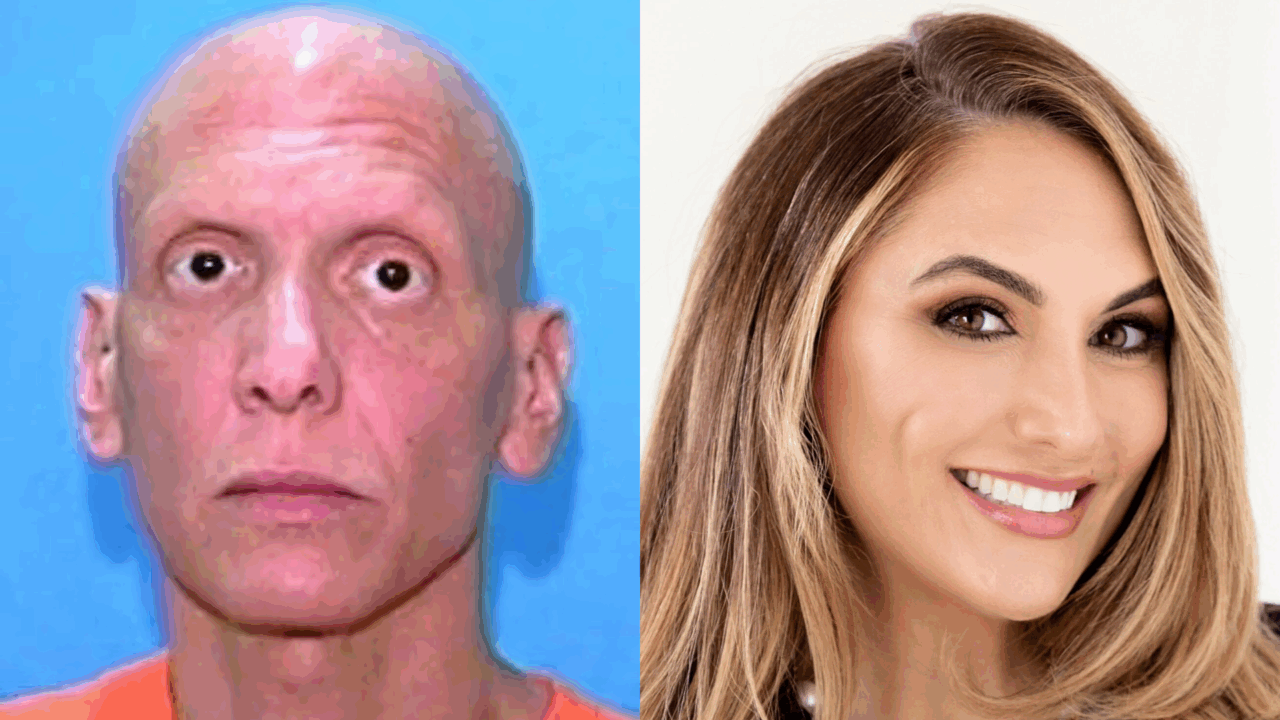
She omitted a rather important detail: her father was Manuel Pardo, a former police officer who murdered nine people in the 1980s, idolized Adolf Hitler and left behind newspaper clippings detailing his crimes, Nazi memorabilia and a swastika-tattooed dog.

Documentarian Billy Corben was the first to make the connection Thursday in a three-minute video that’s well worth a watch. The Miami New Times posted a report soon after.

In a statement shared with Florida Politics, Pardo Pope — one of seven candidates running for the City Commission’s Group 1 seat — said she prays for the families of her father’s victims “every day.”

She said it took years for her to make sense of how “the man I loved could commit such a crime,” but that she has since forgiven him so she could “move forward, build my family, and dedicate myself to a life of service and purpose.”

Pardo, a Marine Corps veteran, was executed at age 56 in December 2012, decades after he was sentenced to death on nine separate first-degree murder counts.

His death warrant was signed by then-Gov. Rick Scott. Pardo Pope posed with Scott for a photo this year, then uploaded it to an Instagram account littered with saccharine posts about her late father.

(L-R) Executed serial killer Manuel Pardo and his daughter, Monique Pardo Pope, who is running for the Miami Beach City Commission. Images via Miami-Dade Sheriff’s Office and Monique Pardo Pope campaign.

In one post, she called Pope her “guiding light,” “eternal best friend” and “a little girl’s first true love.” In others, she called him her “hero,” referenced the song “Midnight Train to Georgia” and wrote, “Airborne forever, love your Michi girl” — his nickname for her.

In his last written statement, Pardo admitted to killing six men who he said were narcotics traffickers, but denied murdering the three women he was convicted of killing. He closed out the statement with, “I am now ready to ride the midnight train to Georgia.”

His final words before dying by lethal injection were, “Airborne forever. I love you, Michi baby.”

Before his killing spree, Manuel Pardo worked as an officer for the Florida Highway Patrol and Sweetwater Police Department. Misconduct and false testimony led to his termination from both agencies and ended his law enforcement career.

In 1986, over just three months, he fatally shot nine people — some drug dealers, some bystanders — later claiming he was on a vigilante mission. In the Pardo family’s Hialeah apartment, police found meticulous diaries Pardo kept of his crimes, Polaroid photos of his victims, hundreds of books about the Nazis and Hitler, rifles engraved with swastikas and a Doberman pincher tattooed with the same symbol.

During his trial, Pardo was unrepentant and testified in his defense against the advice of his attorneys.

“I was not wrong to kill these people. Somebody had to do this, kill these people,” he said. “The only regret that I have is that instead of nine, I wish that I could have been up here for 99.”

Pardo’s notoriety has since bled into pop culture. Some have speculated that he was the inspiration for the lead character in novelist Jeff Lindsay’s Dexter” series, which was later adapted into a TV series starring actor Michael C. Hall. And in the 2015 video game “Hotline Miami 2: Wrong Number,” one of the playable characters is a deranged police detective named Manny Pardo who goes on a killing spree.

Pardo Pope, 44, noted that she was just 4 years old when her father “became the center of a story that would forever change my family and affect countless others.”

“Every day, the families of victims weigh on me,” she said. “Those experiences instilled in me a deep sense of empathy and a determination to make a positive impact.”

One of the numerous Instagram posts Monique Pardo Pope published memorializing her father, serial killer Manuel Pardo. In the comments section of this post, she agrees with someone who described Pardo as “handsome” by saying, “Isn’t he?! Love him so much!” Image via Instagram.

Pardo Pope said her unique family history informed her perspective on public safety and community service. She said she is a proponent of sufficient support and mental health resources for law enforcement professionals.

Her legal work focuses on family law and guardian ad litem matters. She has served as a Nicklaus Children’s Young Ambassador, Women’s Cancer Association of the University of Miami and is a current member of the Miami Beach Commission for Women.

As of 4:30 p.m. Friday, more than a day after Corben posted his video, Pardo Pope remained in the City Commission race.

She did not say why she neglected to inform voters that her father was a serial killer. In a separate statement posted to social media, she denied any obfuscation.

“I have not hidden who I am … From the beginning, I have referenced myself as Monique Pardo Pope,” she said, adding that “bullies” and “smears won’t stop” her — a reference to Corben, whom she described to the Miami New Times as someone who “has made a career of slinging mud, which has even resulted in losing a defamation case.”

State records show she is registered to vote as Monique Kristine Pope, meaning she voluntarily included her former surname, Pardo, on her candidate form.

Corben, who invited Pardo Pope onto his #BecauseMiami show to discuss her “compelling story,” fired back in another video Friday, blasting her for “spreading misinformation about her father and attacking the messenger (but not the substance of my 100% factual reporting).”

He pointed to her claim that “courts found (her) father to be mentally ill due to health problems,” which is false, and noted that the only time he was party to a defamation case, his side won.

“She seems to be doubling down on dishonesty,” he said. “The truth is not a smear or an attack. Facts don’t bully.”

Florida Politics obtained a cease-and-desist letter (viewable below) that Corben sent to Pardo Pope demanding that she immediately stop “making false statements of fact” about him.

“As a lawyer, you either knew or should have known that Corben has never lost a defamation case,” the letter says. “Indeed, you could have easily verified this fact by checking public records. Even a simple Google search would have confirmed that Corben has never lost a defamation case. To insist otherwise evidences actual malice.”

Others running for the Group 1 seat include consultant and former Miami Design Preservation League Executive Director Daniel Ciraldo, developer Brian Ehrlich, Realtor Ava Frankel, transportation improvement advocate and Miami Design Preservation League Project and Grants Manager Matthew Gultanoff, Park View Island Sustainable Association founder Omar Jimenez and Miami Beach legislative aide Monica Matteo-Salinas.

Ciraldo, Ehrlich and Matteo-Salinas are Democrats, according to state records. Frankel, Gultanoff and Jimenez have no party affiliation.

Pardo Pope is the lone Republican in the race. She has run a mostly self-funded campaign.

The Miami Beach Commission is a technically nonpartisan body, as are its elections.

The Miami Beach General Election is Nov. 5.

___

Editor’s note: This report was updated to include Corben’s cease-and-desist letter.


Post Views: 0


Source link

Continue Reading

Politics

Senate committee willing to test the waters on expanding swim lesson vouchers

Published

on


The Senate Health Policy Committee plunged into a proposal to expand the Florida swim lesson voucher program that provides financial help for teaching kids how to handle water.

The panel approved a measure (SB 428) by Sen. Clay Yarborough, a Jacksonville Republican, to allow older kids to qualify for the voucher program. The current program, originally enacted in 2024, provides vouchers for families of children aged 0 to 4 years old. Yarborough’s bill would allow kids 1 to 7 to qualify for vouchers.

Yarborough told the committee that in the first year of life for infants, they don’t really “learn” how to swim as much as they act instinctively in the water. Furthermore, he said, adding additional years will help ensure lessons for children who didn’t get around to learning how to swim earlier.

Corrine Bria, a pediatric emergency medical physician at Nemours Children’s Health facility in Orlando, spoke at the hearing and said the rise in young drownings is heartbreaking. Nemours has handled 35 drownings of children in the past three years, and 90% of those are under the age of 7, Bria said.

“As a physician in a pediatric emergency department I see firsthand what it looks like when a child gets carried into the ED (emergency department) by a parent or brought in on a stretcher after drowning,” Bria said. “We know that a child can drown in a matter of seconds and this happens too frequently in Florida.”

Jason Hagensick, President and CEO of the YMCA of South Palm Beach County, also addressed the committee on behalf of the Florida State Alliance of YMCAs and said the revision to the swimming lesson voucher program would be a big improvement.

“Drowning remains a leading cause of unintentional injury (and) death in the United States,” Hagensick said, adding that early swim lessons reduce the risk of drowning by 88%.

“Expanding the swim voucher program to include children up to the age of 7 will dramatically increase access to essential swim instruction at a time when those skills are most impactful,” Hagensick continued. “It will deepen water competency and strengthen confidence for kids and parents alike and help prevent needless tragedies that devastate families and communities.”

A similar bill (HB 85) is working its way through the House. The House Health Care Budget Subcommittee approved that measure last week. Rep. Kim Kendall, a St. Augustine Republican, is sponsoring the House version.


Source link

Continue Reading

Politics

Senate advances Jason Pizzo bill extending PTSD workers’ comp coverage to 911 dispatchers

Published

on


Legislation that would narrowly recategorize 911 dispatchers as first responders so they can receive workers’ compensation for work-related psychological injuries is one step closer to passing in the Legislature’s upper chamber.

Members of the Government Oversight and Accountability Committee voted unanimously to advance the bill (SB 774), which would eliminate a barrier that today denies aid to people who are often the first to respond to a crime.

The measure’s sponsor, Hollywood Sen. Jason Pizzo, noted that during his time as a prosecutor, playing a 911 call would often be the most effective thing to do to sway a jury.

“911, what’s your emergency? He’s going to kill me! He’s going to kill me! Now, imagine hearing that 12 times a day, 15 times a day,” he said.

“Two years ago, you all voted to require these 911 operators to be proficient in CPR so they could administer (it) over the phone. And they’re not considered first responders? They are first responders, and they’ve been grossly overlooked and screwed, and this brings some remedy.”

SB 774 would add 911 dispatchers to the group of “first responders” covered by Florida’s special workers’-compensation rules for employment-related mental or nervous injuries. It would apply the same framework to them as other first responders for mental health claims.

Essentially, if you’re a 911 dispatcher and develop post-traumatic stress disorder, anxiety or similar mental health injuries from traumatic calls, SB 774 would make it so you can get workers’ comp-covered treatment and that your claim is handled under the same special rules lawmakers already set for other first responders — without certain time-limit restrictions that typically apply to mental injury benefits.

Several dispatchers signaled or spoke in favor of the bill, as did representatives from the Florida Police Chiefs Association, Florida Sheriffs Association and Consolidated Dispatch Agency.

Jennifer Dana, a dispatcher with the Palm Beach Sheriff’s Office, noted that in a Senate analysis of SB 774, there’s a list of disturbing things first responders see and do on the job, from seeing dead children and witnessing murders to helping severely injured people, including those who commit suicide.

What it doesn’t include, she said, is that 911 dispatchers also witness those things.

“We’re seeing and hearing it,” she said. “We have the technology for people to livestream it now, so it’s a double-whammy for us, and we want to make sure we have the protections.”

Kim Powell, a licensed and clinical mental health counselor who oversees an employee behavioral health program at a 911 communications center in Leon County, detailed several examples of what dispatchers experience: a woman struggling to breathe while dying from a gunshot wound inflicted by her child’s father; an officer’s final words moments before his murder; the sound of a mother discovering her deceased infant; the 800 or so calls received in the wake of the Florida State University shooting last April.

“These are not isolated events; they are part of the job,” she said. “The trauma compounds over time with repeat exposure.”

St. Petersburg Republican Sen. Nick DiCeglie thanked Pizzo for carrying the bill and expressed gratitude to the “3,500 dispatchers” across Florida for their work.

“For me personally, (this) could be one of the most important bills that we have this Session because of the importance there is for your well-being and your quality of life,” he said.

Melbourne Republican Sen. Debbie Mayfield, who chairs the committee, echoed DiCeglie’s remarks.

Pizzo reminded the panel that four years ago, during COVID, a $280 million set-aside for payments to first responders and front-line workers did not extend to 911 dispatchers.

“They never stopped working,” he said, adding that Mayfield at the time acknowledged the oversight and pledged that the Legislature would get it right in the future. “So, it’s serendipitous that you were kind and gracious enough to put us on the agenda.”

SB 774 will next go to the Senate Appropriations Committee on Agriculture, Environment and General Government, after which it has one more stop before reaching a floor vote.

An identical bill (HB 451) by Republican Rep. Jeff Holcomb of Spring Hill awaits its first hearing in the House.


Source link

Continue Reading

Politics

Hillsborough College Trustees OK first step in Tampa Bay Rays stadium talks

Published

on


The Tampa Bay Rays’ search for a new home took a tangible step forward as the Hillsborough College Board of Trustees approved a nonbinding agreement that could ultimately shift the franchise away from St. Petersburg under its new ownership.

The Board voted to approve a memorandum of understanding (MOU) authorizing staff to negotiate with the Tampa Bay Rays over a potential stadium and mixed-use redevelopment at the college’s Dale Mabry Campus.

The agreement does not commit the college to the project and can be terminated by the Board at any time. Instead, it outlines key terms the parties would like to see in any future binding agreements, which would require separate Board approval at a later public meeting.

College officials characterized the MOU as the beginning of negotiations. Under the document, staff would begin drafting potential project agreements for Trustees to consider in the future, with an anticipated negotiation timeline of up to 180 days.

Rays CEO Ken Babby addressed Trustees during the meeting, calling the proposal an early milestone. He emphasized that the effort involves the college, the team, the state and local governments. Babby said the Rays are exploring a roughly 130-acre redevelopment anchored by a new stadium and an integrated college campus, alongside residential, commercial and entertainment uses. 

“As we envision this development, together in cooperation and partnership with the community and the college, we’ve been calling the campus portion of this work ‘Innovation Edge’ featuring Hillsborough College,” Babby said.

“It’ll be neighbored by, of course, what we envision to be ‘Champions Corridor,’ which we hope will be the mentioned home of the Tampa Bay Rays. Of course, this will be a mixed-use with residential, with commercial, and, as we’ve said, billions of dollars of economic impact to the region. … This is an incredible moment for our community.”

Public input was split. Supporters recognized the economic impact the project could have, while critics worried about the effect on housing affordability, in particular for college students.

Following the vote, Trustees acknowledged uncertainty among students, faculty and staff, particularly those based at the Dale Mabry campus, but stressed that the approval did not determine final outcomes.

“This is a major decision, and I truly hope that it leads Hillsborough College towards growth and advancement,” Student Trustee Nicolas Castellanos said. 

Trustee Michael Garcia echoed the sentiment.

“It’s a tremendous day for the future of Hillsborough College and for the future of Major League Baseball in the area and also for the future of the city of Tampa,” Garcia said.

Gov. Ron DeSantis publicly expressed support for the concept ahead of Tuesday’s meeting, saying it could benefit both the college and the region, while cautioning that details still need to be resolved.

“It could be very good for HCC, and I’ve met with the President about it. I think he’s excited about the possibility,” DeSantis said in Pinellas Park.

“Obviously, they’ve got to iron out details. But basically, we’re supportive of them pursuing that partnership because I think it could be good for them. I think it could be good for the state. But I definitely think it could be really good for this region.”

Also ahead of Tuesday’s meeting, Tampa Mayor Jane Castor told Florida Politics the city and Hillsborough County have been in ongoing discussions with the Tampa Bay Rays as the team explores long-term stadium options — including the potential Hillsborough College site. She emphasized that any future stadium proposal would require coordination among multiple governments and would be evaluated alongside existing contractual obligations related to other major sports facilities.

No timeline for construction, campus relocation or final land disposition was discussed Tuesday. College officials emphasized that any binding agreements would return to the Board of Trustees for approval at a future public meeting.

___

A.G. Gancarski and Janelle Irwin Taylor of Florida Politics contributed to this report.


Source link

Continue Reading

Trending

Copyright © Miami Select.