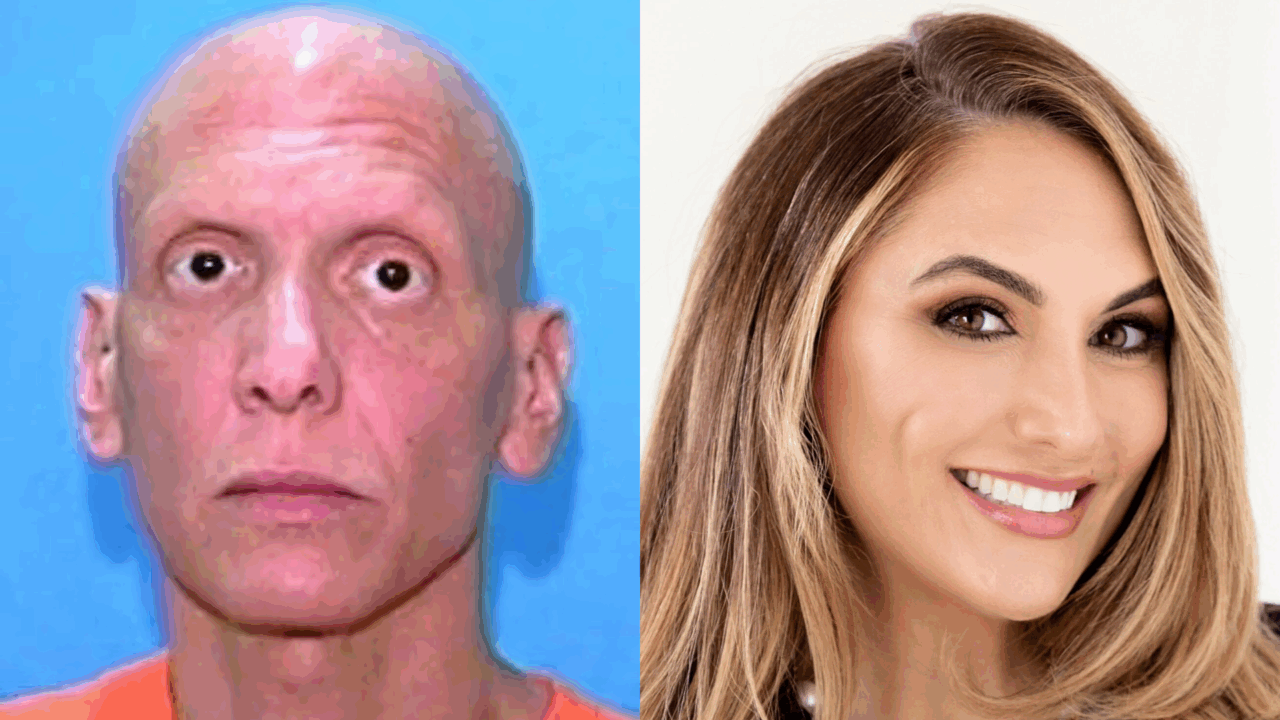
When Republican lawyer Monique Pardo Pope announced her candidacy for the Miami Beach Commission in May, she described herself as coming from a working-class “Cuban family that believed in deep sacrifice, service of others, and standing up for what’s right.”
She omitted a rather important detail: her father was Manuel Pardo, a former police officer who murdered nine people in the 1980s, idolized Adolf Hitler and left behind newspaper clippings detailing his crimes, Nazi memorabilia and a swastika-tattooed dog.
Documentarian Billy Corben was the first to make the connection in a three-minute video that’s well worth a watch. The Miami New Times posted a report soon after.
In a statement shared with Florida Politics, Pardo Pope — one of seven candidates running for the City Commission’s Group 1 seat — said she prays for the families of her father’s victims “every day.”
She said it took years for her to make sense of how “the man I loved could commit such a crime,” but that she has since forgiven him so she could “move forward, build my family, and dedicate myself to a life of service and purpose.”
Pardo, a Marine Corps veteran, was executed at age 56 in December 2012, decades after he was sentenced to death on nine separate first-degree murder counts.
His death warrant was signed by then-Gov. Rick Scott. Pardo Pope posed with Scott for a photo this year then uploaded it to an Instagram account littered with saccharine posts about her late father.
(L-R) Executed serial killer Manuel Pardo and his daughter, Monique Pardo Pope, who is running for the Miami Beach City Commission. Images via Miami-Dade Sheriff’s Office and Monique Pardo Pope campaign.
In one post, she called Pope her “guiding light,” “eternal best friend” and “a little girl’s first true love.” In others, she called him her “hero,” referenced the song “Midnight Train to Georgia” and wrote, “Airborne forever, love your Michi girl” — his nickname for her.
In his last written statement, Pardo admitted to killing six who he said were narcotics traffickers, but denied murdering the three women he was convicted of killing. He closed out the statement with, “I am now ready to ride the midnight train to Georgia.”
His final words before dying by lethal injection were, “Airborne forever. I love you, Michi baby.”
Before his killing spree, Manuel Pardo worked as an officer for the Florida Highway Patrol and Sweetwater Police Department. Misconduct and false testimony led to his termination from both agencies and ended his law enforcement career.
In 1986, over just three months, he fatally shot nine people — some drug dealers, some bystanders — later claiming he was on a vigilante mission. In the Pardo family’s Hialeah apartment, police found meticulous diaries Pardo kept of his crimes, Polaroid photos of his victims, hundreds of books about the Nazis and Hitler, rifles engraved with swastikas and a Doberman pincher tattooed with the same symbol.
During his trial, Pardo was unrepentant and testified in his defense against the advice of his attorneys.
“I was not wrong to kill these people. Somebody had to do this, kill these people,” he said. “The only regret that I have is that instead of nine, I wish that I could have been up here for 99.”
Pardo’s notoriety has since bled into pop culture. Some havespeculated that he was the inspiration for the lead character in novelist Jeff Lindsay’s “Dexter” series, which was later adapted into a TV series starring actor Michael C. Hall. And in the 2015 video game “Hotline Miami 2: Wrong Number,” one of the playable characters is a deranged police detective named Manny Pardo who goes on a killing spree.
Pardo Pope, 44, noted that she was just 4 years old when her father “became the center of a story that would forever change my family and affect countless others.”
“Every day, the families of victims weigh on me,” she said. “Those experiences instilled in me a deep sense of empathy and a determination to make a positive impact.”
One of the numerous Instagram posts Monique Pardo Pope published memorializing her father, serial killer Manuel Pardo. In the comments section of this post, she agrees with someone who described Pardo as “handsome” by saying, “Isn’t he?! Love him so much!” Image via Instagram.
Pardo Pope said her unique family history informed her perspective on public safety and community service. She said she is a proponent of sufficient support and mental health resources for law enforcement professionals.
Her legal work focuses on family law and guardian ad litem matters. She has served as a Nicklaus Children’s Young Ambassador, Women’s Cancer Association of the University of Miami and is a current member of the Miami Beach Commission for Women.
As of 4:30 p.m. Friday, more than a day after Corben posted his video, Pardo Pope remained in the City Commission race.
She did not say why she neglected to inform voters that her father was a serial killer. In a separate statement posted to social media, she denied any obfuscation and declared, “Smears won’t stop me.”
“I have not hidden who I am,” she wrote. “From the beginning, I have referenced myself as Monique Pardo Pope.”
State records show she is registered to vote as Monique Kristine Pope, meaning she voluntarily included her former surname, Pardo, on her candidate form.
Others running for the Group 1 seat include consultant and former Miami Design Preservation League Executive Director Daniel Ciraldo, developer Brian Ehrlich, Realtor Ava Frankel, transportation improvement advocate and Miami Design Preservation League Project and Grants Manager Matthew Gultanoff, Park View Island Sustainable Association founder Omar Jimenez and Miami Beach legislative aide Monica Matteo-Salinas.
Ciraldo, Ehrlich and Matteo-Salinas are Democrats, according to state records. Frankel, Gultanoff and Jimenez have no party affiliation.
Pardo Pope is the lone Republican in the race. She has run a mostly self-funded campaign.
The Miami Beach Commission is a technically nonpartisan body, as are its elections.
One day after Hurricane Helene skirted past the Tampa Bay area on Sept. 26, 2024, leaving devastating flooding, St. Pete Beach residents were still blocked from returning to their homes to survey damage, as crews worked to ensure it was safe to return.
Yet even as residents grew anxious to see what remained of their homes and communities, St. Pete Beach Mayor AdrianPetrila was already on the island and, it appears, already taking steps to repair his flooded home.
On Sept. 27, 2024, the city of St. Pete Beach posted a warning on Facebook informing residents that access points to the local barrier islands “remain closed today” as “crews from the county and impacted municipalities continue to work on clearing impassable roadways, removing dangerous debris, restoring power, and addressing other infrastructure issues including returning power to our sanitary sewer system.”
The post went on to caution residents that they “should plan to spend multiple days away from their houses.”
That same day, a local resident who had remained on the island to weather the storm captured video at Petrila’s home of what appears to be crews bringing in fans to dry flood areas.
DonnaMiller had stayed on the island with a neighbor — a decision she said many residents made after weathering numerous storms without much damage and with no risks to safety. This time was different, as flooding impacted much of the island, leaving homes badly damaged.
She told Florida Politics that she and others who had stayed behind were unable to obtain water, food or other supplies as the barrier islands remained closed because they were told they could leave the island, but would not be able to return until access was restored. Not wanting to miss out on time to address flood damage, many continued to stay.
Instead, Miller and a friend hopped in her car to check on other neighbors. In doing so, they came across Petrila’s home, where video Miller took shows a crew carrying several large fans into the home. The video is just 10 seconds long, but Petrila’s address is visible in the footage and metadata on the video confirms it was taken the day after the hurricane. Petrila is also visible in the garage.
Miller said she stopped filming to confront the homeowner. Said she didn’t realize it was the Mayor until after the confrontation.
Miller told Florida Politics that during the interaction, she asked Petrila, “How is it that you have workers cleaning out your house when people need food and supplies?”
He responded, according to Miller, that the men had already been on the island, a claim Miller said she doubts.
“It seemed like he played the Mayor card to get them in,” she said.
Florida Politics reached out to Petrila on Monday via his city email asking about the video. The email included questions about how workers were able to bring supplies to his house. As of Wednesday, he had still not responded.
Miller, meanwhile, has sent letters to the Pinellas County Sheriff’s Office and to U.S. Rep. Anna Paulina Luna complaining about what she perceived as Petrila misusing his authority as Mayor for personal benefit.
“A Mayor who puts himself before the people needs to find another career,” Miller told Florida Politics. “What he did was horrible. Instead of getting trucks on the island with emergency supplies, he got blowers and workers on the island.”
Petrila, a Republican, is up for re-election this year. He faces fellow Republican Scott Tate in what is expected to be a tight race. Petrila is the top fundraiser in the race, but only barely. Tate has nearly matched Petrila’s fundraising, with new fourth-quarter totals showing he has brought in just over $14,000, only $1,300 less than Petrila.
The tighter-than-usual fundraising in a beach town election cycle that is more often than not a quiet affair comes as Petrila faces criticism for proposing to impose tolls at the north, central and southern access points to the island to fund ongoing infrastructure repairs and improvements following back-to-back hurricanes in 2024 that devastated the island.
Despite his plan exempting residents, employees and business owners, it has been controversial, with some worrying such tolls would reduce tourism and other revenue-generating traffic on St. Pete Beach.
And Petrila, like neighboring St. Petersburg Mayor Ken Welch, who is also facing intraparty opposition for his re-election, is also earning resident frustration over a permitting backlog following the hurricanes that is ongoing as residents continue to rebuild. While Tate has not directly weighed in on the tolling issue, he has lamented that the permitting red tape is a failure of leadership.
Petrila is facing his first re-election contest after first being elected in 2023, when he unseated then-incumbent Alan Johnson.
The St. Pete Beach municipal election is March 10.
With just over a year remaining in her second and final term, Tampa Mayor Jane Castor’s administration is shifting into a “finish strong” phase to wrap up major redevelopment projects while positioning the city for continued growth under its next Mayor.
Castor told Florida Politics that she is focused on completing long-planned initiatives in the coming year, and creating what she called “project launch pads” for the next administration after nearly seven years of rapid development and population growth.
“We’ve accomplished a great deal in just a bit less than seven years,” Castor said. “Our city’s grown dramatically. We’re focused on finishing up some of those projects and getting other projects ready for the next administration.”
Castor said recent city budgets have emphasized investment in transportation, affordable housing and workforce development.
Transportation remains Tampa’s biggest challenge, she said, calling it the city’s “Achilles heel.” Castor pointed to the defeat of Hillsborough County’s voter-approved transportation surtax as a major setback for the region, though she emphasized that local governments have continued pursuing alternatives.
“We mourned the loss of that, but we didn’t stop,” Castor said.
Instead, Tampa and regional partners turned to grants and federal funding, securing nearly $4 million through a U.S. Department of Transportation program known as the Regional Infrastructure Accelerator. The grant supports planning for large-scale, multicounty transportation projects across Hillsborough, Pinellas and Pasco counties, including both local and regional transit options.
One proposal under consideration would expand Tampa’s streetcar system beyond its current footprint in Ybor City, Channel District and downtown, extending north into Tampa Heights. Castor said the city is also examining longer-term regional transit connections, including potential airport links and public-private partnerships to help finance future projects.
Meanwhile, construction across Tampa continues at a rapid pace, particularly along the riverfront and in historically underserved neighborhoods.
Castor highlighted projects nearing key milestones, such as the West River redevelopment in West Tampa — where a new Riverwalk extension is under construction. Castor also noted the Rome Yard project near Rome Avenue and Columbus Drive, a 16-acre mixed-use development now rising out of the ground.
In East Tampa, the city recently held a ribbon-cutting for the new East Tampa Recreation Center, a sprawling, multiblock complex that Castor said will be among the best facilities in Tampa’s parks system once completed later this year.
Downtown and surrounding neighborhoods are also seeing a wave of new residential construction. Castor cited multiple high-rise developments near downtown, additional riverfront condominiums along Kennedy Boulevard, student housing tied to the University of Tampa, and the long-anticipated opening of the five-star Pendry Hotel near the river this year.
Ybor City and the Channel District remain hot spots for redevelopment as well, with Water Street Tampa entering its second phase and developer Darryl Shaw advancing residential, office and retail projects, including a food hall, near the Gas Worx site.
“The city is just on fire,” Castor said. “I keep saying I’m going to change our city bird to the crane, there’s cranes all over the city.”
As lawmakers convene in Tallahassee for the ongoing Legislative Session, Castor said her top request is simple: leave property taxes alone.
Property taxes remain the primary revenue source for cities and counties, she said, and are already constrained by Florida’s Save Our Homes cap, which limits annual increases regardless of rising property values.
“Any cuts to property tax would be cuts to police and fire, to our parks and recreation, and to all the other city departments that rely on property tax funding,” Castor said.
Castor also addressed ongoing discussions surrounding professional sports facilities, noting that planned improvements to Raymond James Stadium and Benchmark International Arena are already accounted for through Hillsborough County’s voter-approved Community Investment Tax extension. She said city and county officials are meeting with the Tampa Bay Rays as discussions continue around a potential baseball stadium site near Hillsborough Community College.
Looking beyond her tenure, Castor said she does not plan to seek another political office, but intends to remain active in civic life after leaving City Hall.
“I don’t have any plans politically, but I definitely will stay involved in the community,” Castor said. “I was born and raised here in Tampa, so I’ll always be involved — participate on boards, volunteering, whatever way I can — to help continue to grow this great city.”
The survey asked likely Broward County voters whether they approve or disapprove of the health care services currently available in the county. Nearly two-thirds (65%) say they approve, including 30% who strongly approve. Just 22% say they disapprove of Broward’s health services.
When asked whether the North and South Broward Hospital Districts should be allowed to change how they operate “without triggering the legal requirements, transparency, or voter approval normally required for a full merger,” nearly three-quarters of respondents (73%) said no, including 62% who said “definitely no.” Only 16% say the Districts should be allowed.
The polling comes after Sarasota Republican Sen. Joe Gruters and Dania Beach Republican Rep. Hillary Casselfiled bills that would authorize two or more special hospital districts to jointly form, participate in, or control a wide range of collaborative health care ventures — including public or private, for-profit or nonprofit entities — anywhere within their combined boundaries.
Notably, the legislation would explicitly give the Districts and their partners immunity from state action, allowing them to collaborate regardless of anticompetitive effects or potential conflicts with state or federal antitrust laws.
When similar bills were filed last Session, critics warned that it amounted to a backdoor merger that would bypass public scrutiny, regulatory review and possibly a countywide referendum otherwise required under state law. Memorial Healthcare System employees, physicians and community advocates raised alarms about transparency, governance and the potential shifting of financial burdens from North Broward’s struggling BrowardHealth system onto South Broward taxpayers.
“Once voters understood that the shared services agreement would go into effect without public review or voter approval, it was impossible to generate support. Each message we tested reinforced the negative perception that the shared services agreement was a shady deal designed to circumvent quality control,” the polling memo reads.
Messaging tests in the survey included transparency, lack of a taxpayer vote, financial mismanagement, and consolidation of power — on each front, more than 60% of those polled express concern while no more than 10% are unbothered.
By the end of the poll, just 21% said they supported a shared services agreement, with 63% in opposition, including 47% who say they “strongly oppose” the deal.
The survey was conducted Dec. 8-10. The sample includes 500 likely voters in Broward County and carries a margin of error of 4.38 percentage points.
___
Jesse Scheckner of Florida Politics contributed to this report.