Connect with us

Business

Trump told pregnant women to ‘tough it out’ instead of take Tylenol. A study of 2.5 million births in Sweden finds zero evidence to back him up

Published

on


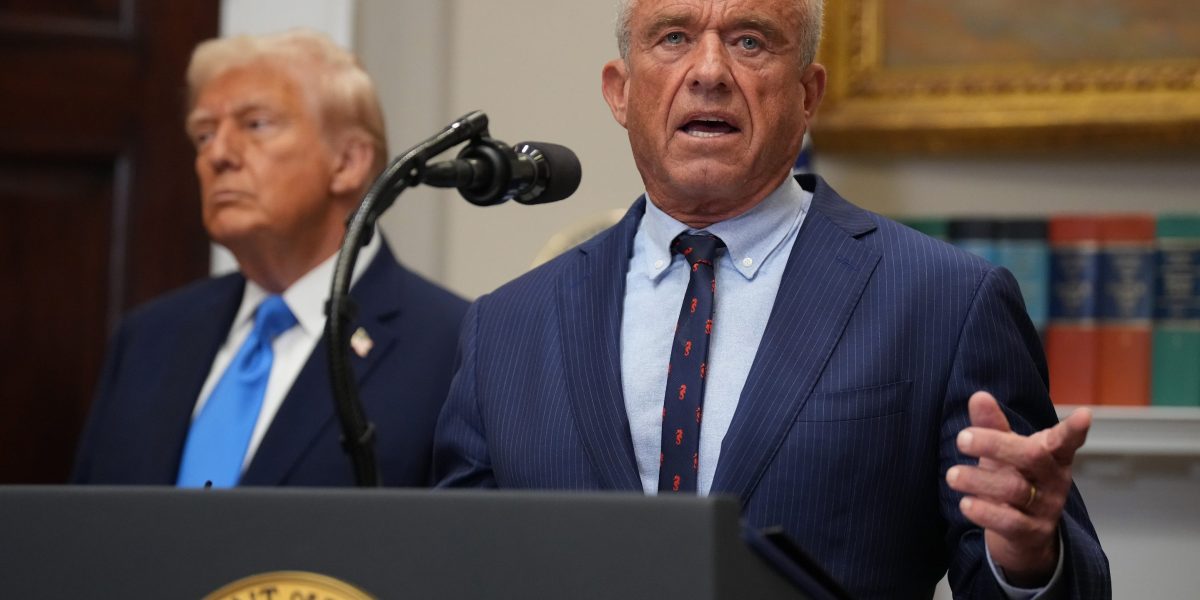
United States President Donald Trump recently claimed that using the common painkiller acetaminophen (also known as paracetamol and by the brand name Tylenol in the US) during pregnancy is fuelling the rise in autism diagnoses. He then went on to suggest pregnant women should “tough it out” rather than use the common painkiller if they experience fever or pain.

This announcement has caused alarm and confusion worldwide. But despite Trump’s claim, there is no strong scientific evidence to back it up. Our study of nearly 2.5 million births in Sweden published in 2024 shows no evidence that acetaminophen use during pregnancy increases a child’s risk of autism. This is the largest study conducted on the subject to date.

To understand whether acetaminophen really poses a risk in pregnancy, we turned to Sweden’s national health registers, which are among the most comprehensive in the world. Our study followed nearly 2.5 million children born between 1995 and 2019, tracking them for up to 26 years.

Using prescription records and interviews that midwives conducted during prenatal visits, we could see which mothers reported using acetaminophen (about 7.5% of pregnancies) and which did not.

We also made sure to account for any variables that may have affected the results of our statistical analysis – including controlling for health factors, such as fever or pain, which would have influenced whether or not a mother used acetaminophen during her pregnancy. This was to ensure a more fair comparison between the two groups.

We then looked at the children’s neurodevelopmental outcomes – specifically whether they were diagnosed with autism, ADHD or an intellectual disability.

The real strength of our study came from being able to compare siblings. This allowed us to compare children born to the same mother, where acetaminophen had been used during one child’s pregnancy but not the other. We compared over 45,000 sibling pairs, where at least one sibling had an autism diagnosis.

This sibling design is powerful because siblings share much of their genetics and family environment. This allows us to tease apart whether the drug itself – rather than underlying family traits or health conditions – is responsible for any apparent risks for neurodevelopmental outcomes.

Acetaminophen use

When we first looked at the entire population, we saw a pattern that echoed earlier studies: children whose mothers reported using acetaminophen during pregnancy were slightly more likely to be diagnosed with autism, ADHD or an intellectual disability.

But once we ran the sibling comparisons, that association completely disappeared. In other words, when we compared sets of siblings where one was exposed in the womb to acetaminophen and one was not, there was no difference in their likelihood of later being diagnosed with autism, ADHD or an intellectual disability.

Our study is not the only one to put this question to the test. Researchers in Japan recently published a study using a similar sibling-comparison design, and their results closely matched ours.

Importantly, they replicated our findings in a population with a different genetic background and where patterns of acetaminophen use during pregnancy are quite different. Nearly 40% of mothers in Japan reported using the drug during pregnancy. In comparison, less than 10% of Swedish mothers had used it.

Despite these differences, the conclusion was the same. When siblings are compared, there is no evidence that acetaminophen use during pregnancy increases the risk of autism or ADHD.

These findings mark an important shift from earlier studies, which relied on more limited data, used smaller cohorts and didn’t account for genetic differences. They also did not fully account for why some mothers used pain relief during pregnancy while others didn’t.

For example, mothers who take acetaminophen are more likely to also have migraines, chronic pain, fever or serious infections. These are conditions that are themselves genetically linked to autism or ADHD, as well as a child’s likelihood of later being diagnosed with one of these conditions.

These types of “confounding factors” can create associations that look convincing on the surface, but may not reflect a true cause-and-effect relationship.

That brings us to the real question on many people’s minds: what does this mean if you’re pregnant and dealing with pain or fever?

It’s important to recognise that untreated illness during pregnancy can be dangerous. A high fever in pregnancy, for example, is known to increase the risk of complications for both mother and baby. “Toughing it out,” as the president suggested, is not a risk-free option.

That’s why professional medical organisations such as the American College of Obstetricians and Gynecologists and the UK’s Medicines and Healthcare products Regulatory Agency continue to recommend acetaminophen (paracetamol) as the safest fever reducer and pain reliever during pregnancy when used at the lowest effective dose and only when necessary. This has been the guidance for decades.

Of course, if someone finds themselves needing to take acetaminophen regularly over a longer period of time, that’s a decision best made in consultation with their doctor or midwife. But the idea that acetaminophen use during pregnancy causes autism simply isn’t supported by the best available science.

The greater danger is that alarmist messaging will discourage pregnant women from treating pain or fever – putting both themselves and their babies at risk.

Renee Gardner, Principal Researcher, Department of Public Health Sciences, Karolinska Institutet; Brian Lee, Professor of Epidemiology, Drexel University, and Viktor H. Ahlqvist, Postdoctoral Researcher, Institute of Environmental Medicine, Karolinska Institutet

This article is republished from The Conversation under a Creative Commons license. Read the original article.

Fortune Global Forum returns Oct. 26–27, 2025 in Riyadh. CEOs and global leaders will gather for a dynamic, invitation-only event shaping the future of business. Apply for an invitation.


Source link

Continue Reading

Business

Hegseth likens strikes on alleged drug boats to post-9/11 war on terror

Published

on


Defense Secretary Pete Hegseth defended strikes on alleged drug cartel boats during remarks Saturday at the Ronald Reagan Presidential Library, saying President Donald Trump has the power to take military action “as he sees fit” to defend the nation.

Hegseth dismissed criticism of the strikes, which have killed more than 80 people and now face intense scrutiny over concerns that they violated international law. Saying the strikes are justified to protect Americans, Hegseth likened the fight to the war on terror following the Sept. 11, 2001 attacks.

“If you’re working for a designated terrorist organization and you bring drugs to this country in a boat, we will find you and we will sink you. Let there be no doubt about it,” Hegseth said during his keynote address at the Reagan National Defense Forum. “President Trump can and will take decisive military action as he sees fit to defend our nation’s interests. Let no country on earth doubt that for a moment.”

The most recent strike brings the death toll of the campaign to at least 87 people. Lawmakers have sought more answers about the attacks and their legal justification, and whether U.S. forces were ordered to launch a follow-up strike following a September attack even after the Pentagon knew of survivors.

Though Hegseth compared the alleged drug smugglers to Al-Qaida terrorists, experts have noted significant differences between the two foes and the efforts to combat them.

Hegseth’s remarks came after the Trump administration released its new national security strategy, one that paints European allies as weak and aims to reassert America’s dominance in the Western Hemisphere.

During the speech, Hegseth also discussed the need to check China’s rise through strength instead of conflict. He repeated Trump’s vow to resume nuclear testing on an equal basis as China and Russia — a goal that has alarmed many nuclear arms experts. China and Russia haven’t conducted explosive tests in decades, though the Kremlin said it would follow the U.S. if Trump restarted tests.

The speech was delivered at the Reagan National Defense Forum at the Ronald Reagan Presidential Foundation and Institute in California, an event which brings together top national security experts from around the country. Hegseth used the visit to argue that Trump is Reagan’s “true and rightful heir” when it comes to muscular foreign policy.

By contrast, Hegseth criticized Republican leaders in the years since Reagan for supporting wars in the Middle East and democracy-building efforts that didn’t work. He also blasted those who have argued that climate change poses serious challenges to military readiness.

“The war department will not be distracted by democracy building, interventionism, undefined wars, regime change, climate change, woke moralizing and feckless nation building,” he said.


Source link

Continue Reading

Business

US debt crisis: Most likely fix is severe austerity triggered by a fiscal calamity

Published

on


One way or another, U.S. debt will stop expanding unsustainably, but the most likely outcome is also among the most painful, according to Jeffrey Frankel, a Harvard professor and former member of President Bill Clinton’s Council of Economic Advisers.

Publicly held debt is already at 99% of GDP and is on track to hit 107% by 2029, breaking the record set after the end of World War II. Debt service alone is more than $11 billion a week, or 15% of federal spending in the current fiscal year.

In a Project Syndicate op-ed last week, Frankel went down the list of possible debt solutions: faster economic growth, lower interest rates, default, inflation, financial repression, and fiscal austerity. 

While faster growth is the most appealing option, it’s not coming to the rescue due to the shrinking labor force, he said. AI will boost productivity, but not as much as would be needed to rein in U.S. debt.

Frankel also said the previous era of low rates was a historic anomaly that’s not coming back, and default isn’t plausible given already-growing doubts about Treasury bonds as a safe asset, especially after President Donald Trump’s “Liberation Day” tariff shocker.

Relying on inflation to shrink the real value of U.S. debt would be just as bad as a default, and financial repression would require the federal government to essentially force banks to buy bonds with artificially low yields, he explained.

“There is one possibility left: severe fiscal austerity,” Frankel added.

How severe? A sustainable U.S. debt trajectory would entail elimination of nearly all defense spending or almost all non-defense discretionary outlays, he estimated.

For the foreseeable future, Democrats are unlikely to slash top programs, while Republicans are likely to use any fiscal breathing room to push for more tax cuts, Frankel said.

“Eventually, in the unforeseeable future, austerity may be the most likely of the six possible outcomes,” he warned. “Unfortunately, it will probably come only after a severe fiscal crisis. The longer it takes for that reckoning to arrive, the more radical the adjustment will need to be.”

The austerity forecast echoes an earlier note from Oxford Economics, which said the expected insolvency of the Social Security and Medicare trust funds by 2034 will serve as a catalyst for fiscal reform.

In Oxford’s view, lawmakers will seek to prevent a fiscal crisis in the form of a precipitous drop in demand for Treasury bonds, sending rates soaring.

But that’s only after lawmakers try to take the more politically expedient path by allowing Social Security and Medicare to tap general revenue that funds other parts of the federal government.

“However, unfavorable fiscal news of this sort could trigger a negative reaction in the US bond market, which would view this as a capitulation on one of the last major political openings for reforms,” Bernard Yaros, lead U.S. economist at Oxford Economics, wrote. “A sharp upward repricing of the term premium for longer-dated bonds could force Congress back into a reform mindset.”


Source link

Continue Reading

Business

The $124 trillion Great Wealth Transfer is intensifying as inheritance jumps to a new record

Published

on


Nearly $300 billion was inherited this year as the Great Wealth Transfer picks up speed, showering family members with immense windfalls.

According to the latest UBS Billionaire Ambitions Report, 91 heirs inherited a record-high $297.8 billion in 2025, up 36% from a year ago despite fewer inheritors.

“These heirs are proof of a multi-year wealth transfer that’s intensifying,” Benjamin Cavalli, head of Strategic Clients & Global Connectivity at UBS Global Wealth Management, said in the report.

Western Europe led the way with 48 individuals inheriting $149.5 billion. That includes 15 members of two “German pharmaceutical families,” with the youngest just 19 years old and the oldest at 94.

Meanwhile, 18 heirs in North America got $86.5 billion, and 11 in South East Asia received $24.7 billion, UBS said.

This year’s wealth transfer lifted the number of multi-generational billionaires to 860, who have total assets of $4.7 trillion, up from 805 with $4.2 trillion in 2024.

Wealth management firm Cerulli Associates estimated last year that $124 trillion worldwide will be handed over through 2048, dubbing it the Great Wealth Transfer. More than half of that amount will come from high-net-worth and ultra-high-net-worth people.

Among billionaires, UBS expects they will likely transfer about $6.9 trillion by 2040, with at least $5.9 trillion of that being passed to children, either directly or indirectly.

While the Great Wealth Transfer appears to be accelerating, it may not turn into a sudden flood. Tim Gerend, CEO of financial planning giant Northwestern Mutual, told Fortune’s Amanda Gerut recently that it will unfold more gradually and with greater complexity

“I think the wealth transfer isn’t going to be just a big bang,” he said. “It’s not like, we just passed peak age 65 and now all the money is going to move.”

Of course, millennials and Gen Zers with rich relatives aren’t the only ones who sat to reap billions. More entrepreneurs also joined the ranks of the super rich.

In 2025, 196 self-made billionaires were newly minted with total wealth of $386.5 billion. That trails only the record year of 2021 and is up from last year, which saw 161 self-made individuals with assets of $305.6 billion.

But despite the hype over the AI boom and startups with astronomical valuations, some of the new U.S. billionaires come from a range of industries.

UBS highlighted Ben Lamm, cofounder of genetics and bioscience company Colossal; Michael Dorrell, cofounder and CEO of infrastructure investment firm Stonepeak; as well as Bob Pender and Mike Sabel, cofounders of LNG exporter Venture Global.

“A fresh generation of billionaires is steadily emerging,” UBS said. “In a highly uncertain time for geopolitics and economics, entrepreneurs are innovating at scale across a range of sectors and markets.”


Source link

Continue Reading

Trending

Copyright © Miami Select.