Connect with us

Politics

Fires its top lawyer; hires Ron DeSantis-linked firm; Manny Diaz seeks school presidency
Published

on


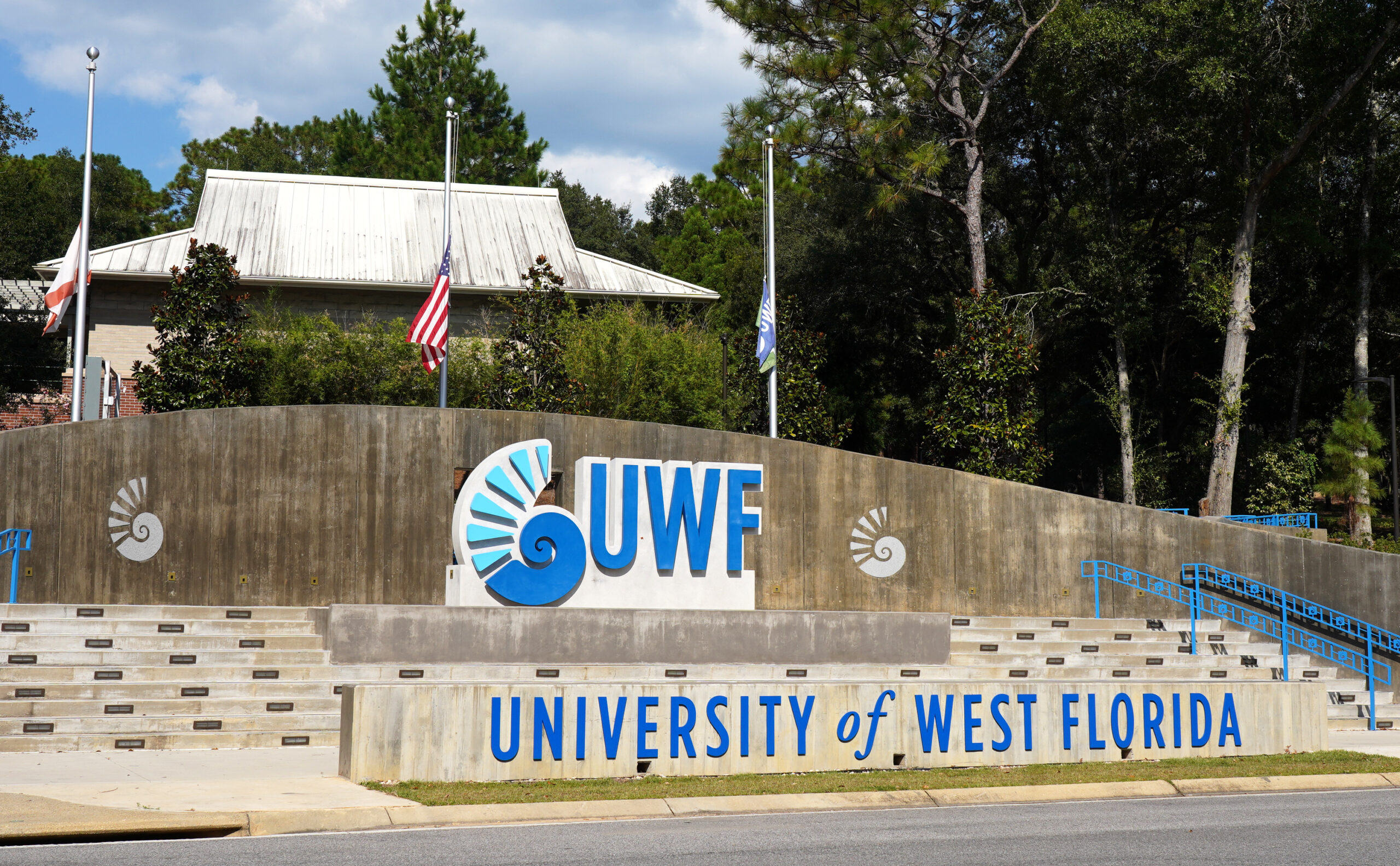
Less than three weeks after taking over University of West Florida in Pensacola as interim president, Manny Diaz Jr. abruptly dismissed the school’s top legal officer after she objected to hiring one of his longtime allies: a politically connected law firm that earned millions in contracts when Diaz ran the Education Department under Gov. Ron DeSantis.

The same Tallahassee-based firm, Lawson Huck Gonzalez, is now helping steer that university’s search for a permanent President — a post Diaz has said he intends to pursue. Trustees last week approved an annual compensation range for the next President between $800,000 and $1.2 million.

The university quietly awarded the firm a contract capped at $100,000 in August, despite objections from its then-General Counsel, Susan Woolf. Woolf warned Trustees the firm lacked experience with higher education searches and that cheaper, more specialized alternatives were available, according to internal records. Hours after she put her concerns in writing to the board, Diaz fired her, according to internal emails and contract documents newly released under Florida’s public records law.

The records offer one of the clearest looks yet at the political forces reshaping the university’s leadership since DeSantis installed a slate of new Trustees earlier this year, mirroring his overhauls at other campuses across Florida.

The move closely resembles the Republican Governor’s makeover in 2023 at New College of Florida, where trustees swiftly replaced the school’s sitting President with Richard Corcoran, a former GOP House Speaker and Education Commissioner.

The leadership shake-ups are part of a broader push by DeSantis and the Republican-led Legislature to steer Florida’s 12 public universities in a more conservative direction, alongside new laws banning diversity spending and restricting how race and gender can be taught. The Governor in April charged UWF with harboring “Marxist professors” and “some of the most liberal programs in the state,” warning the university to “buckle up” for significant changes.

Critics counter that such rhetoric is a pretext for an unnecessary and overtly partisan power grab at a university better known for training military officers and cybersecurity experts than awarding gender studies degrees. Home to more than 15,000 students, UWF is in the state’s reliably Republican Panhandle region with nearby U.S. Navy and Air Force bases and one of the largest concentrations of veterans in the U.S.

“I’ve never seen communists hiding during walks around that campus,” said Jeanne Godwin, a former Trustee and vocal opponent of DeSantis’ new appointees. A registered Republican first appointed to the board in 2006 by then-Gov. Jeb Bush, Godwin said in an interview, “It’s hard to tell what their goal is, whether it is to completely dismantle public education in Florida or whether it’s just an ideological holy war to make everything far more conservative than they think it has been.”

The university’s reshaped Board has pushed for academic reforms favored by conservatives and are now shoring up the administration — with Diaz, a former state Education Commissioner under DeSantis, now steering the university as interim President.

A former Republican state lawmaker and public school teacher from Miami-Dade County, Diaz championed many of the academic reforms that helped cement DeSantis’ culture warrior reputation. After the Governor picked him as the state’s top education official in 2022, Diaz helped engineer new accreditation laws giving Tallahassee more sway over state universities and pushed to eliminate sociology as a core course for college students, saying the subject had been “hijacked by left-wing activists.”

To many in Pensacola, Diaz’ sudden arrival as interim President on a $744,000 contract — after longtime President Martha Saunders resigned in May under scrutiny from the DeSantis administration — seemed less like a caretaker role and more like a setup for a permanent appointment. Those suspicions intensified shortly after Diaz’ arrival in July, when he announced Woolf’s dismissal without providing a public explanation.

The records show that Lawson Huck Gonzalez’s hiring sparked a behind-the-scenes clash between Woolf and Rebecca Matthews, Chair of the Board of Trustees and a recent DeSantis appointee. In late July, Matthews was pressing Woolf to hire Jason Gonzalez, the firm’s co-founder and a well-connected Republican lawyer, to serve as outside counsel for the presidential search.

Woolf pushed back, warning Matthews in a July 29 email that while Gonzalez is “very experienced in litigation work and has many political connections,” he had limited expertise in presidential searches and higher education law. Woolf relayed her concerns to the full Board of Trustees in a letter the following day, stressing that the search “will be closely watched and potentially audited” and recommending two other, specialized firms as alternatives.

At least one of the alternative firms’ billing rate was half as expensive as Gonzalez’s.

“Matthews has identified another attorney and his firm that she wants hired against my advice,” Woolf wrote, without identifying Gonzalez or his firm by name. The Board “of course has the authority to disagree with my advice,” she added, noting that “no individual trustee has the authority to make that decision for the board.”

Five hours later, on July 30, a university vice president informed Trustees that on behalf of Diaz Woolf had been fired “effective immediately.” Diaz has offered no public explanation for the decision, only that it came “after careful consideration and in the best interest of the university.”

Woolf declined to be interviewed. Before stepping in as the university’s General Counsel in 2021, she had served in a similar position for the Pensacola Police Department and was a former Pensacola City Attorney.

The circumstances and timing of her ouster were striking: Records show Diaz had already told administrators he intended to apply for the permanent presidency, raising questions about whether the search process was being engineered to benefit him.

Domani Turner-Ward, a longtime student activist on campus and part of the “Save UWF” movement, said the firing fit into a broader pattern. “It was inappropriate for the general counsel to have been fired for a simple recommendation to the board, and that seems like what it was,” they said. “Many believe that Manny Diaz will be the permanent president of UWF, and I’ve heard some people complain that this whole presidential search is just a show and a waste of money.”

Diaz and Matthews did not respond to calls and emails requesting comment.

The university formally launched the search last month and expects to announce finalists as early as January. Despite Woolf’s warnings that presidential searches at other universities typically don’t require outside counsel, Matthews moved ahead with Gonzalez. The university finalized its $100,000 agreement with his firm Aug. 11, backdated to Aug. 1 — the same day Matthews met with Gonzalez and two lawyers from his firm to “discuss the search and next steps,” according to emails.

Godwin, the former Trustee, said she raised concerns to Matthews about the university incurring unnecessary costs for the search. “My verbiage was,” Godwin recalled, “‘I have a problem with the appearance of hiring a special firm when we all know that Diaz is going to be the president.’” According to Godwin, Matthews “never challenged that assumption. She said, ‘I have a problem with it looking like the committee made the choice.’”

Turner-Ward echoed those concerns, adding that students feel disconnected from the process and worried about its outcome. “Many students don’t seem to be particularly aware of these changes, but those who are are very concerned. There is a pretty significant sense of impending doom, almost. I’ve heard people saying, ‘Well, at least I graduate this semester.’”

The internal records do not explain Matthews’ rationale for hiring outside counsel for the search, or why she insisted on Gonzalez’ firm over more specialized alternatives.

Founded in 2023, Lawson Huck Gonzalez has quickly built a lucrative roster of state contracts, collecting $10.5 million in just over two years — including $2.5 million from the Education Department under Diaz. The firm is currently defending Diaz and the state in a pending American Civil Liberties Union lawsuit challenging the 2023 state law banning diversity spending and restricting college curriculum. The Education Department paid a flat $600,000 legal fee to Lawson Huck Gonzalez for that case.

Gonzalez did not respond to phone calls requesting comment. His contract strictly prohibits his firm from speaking to the media about the university without prior authorization from a university administrator, and it directs all inquiries to be referred to the school.

Gonzalez, a former two-term General Counsel to the Republican Party of Florida and legal adviser to ex-GOP Gov. Charlie Crist, has represented major political and corporate clients. His firm’s website touts his work as lead counsel for the oil company Transocean Ltd. after the 2010 Deepwater Horizon disaster, where he successfully fought to have dozens of lawsuits dismissed in the Panhandle.

Although his firm’s website does not list higher education law as one of its specialties, Gonzalez’s contract letter cites his firm’s role in the Miami Dade College presidential search, as well as stints representing the University of Florida, University of Wisconsin, Broward College and Florida Atlantic University.

Per the contract, Gonzalez and his attorneys must attend all committee meetings, present on Florida’s Sunshine Laws and “(ensure) all non-disclosure agreements are executed.” University presidential searches are highly confidential under a 2022 state law, which shields the names of candidates until finalists are announced.

At the search committee’s first public meeting last month, Gonzalez offered a brief introduction, while another lawyer from his firm gave a three-minute overview of state confidentiality laws. Earlier in the meeting, the school’s human resources chief spent 13 minutes delivering a more detailed presentation on the same content.

Turner-Ward, who previously was an intern with the university’s Office of Campus Culture and Access before it was closed by the new administration, said administrative shakeups signal a troubling shift. “That office organized important community events,” they said. “I’m not talking about politically controversial events either — I’m talking about Holocaust remembrance. These are events that bring our community together, and I don’t know if we will be able to have them anymore now that that office is closed.”

“Our community is absolutely in jeopardy,” Turner-Ward said. “Our connections to the Pensacola community at large are in jeopardy, because a lot of what makes UWF community is its connections and entanglement with things outside of it. Students are well integrated into Pensacola. There are many partnerships, and I think those are being jeopardized by these trustees and what is being done here.”

The worst-case scenario, Turner-Ward said, “is that this community becomes unsafe for people who don’t subscribe to a particular ideology. That would create a situation where the university begins to teach students what to think, not how to think.”

___

This story was produced by Fresh Take Florida, a news service of the University of Florida College of Journalism and Communications. The reporter can be reached at [email protected]. You can donate to support our students here.


Post Views: 0


Source link

Continue Reading

Politics

South Florida is feeling blue, and that’s a delight for Democrats

Published

on


It might be too bold to definitively declare a blue wave is coming to Florida this election cycle. But writing on the wall suggests, at the very least, it’s a strong possibility.

Examples abound.

Broadly, there have been 25 Democratic pickups across the nation this year. That’s not just the gross number either, it’s the net. Republicans haven’t flipped a single seat, according to The Downballot.

The crystal ball was already throwing sparks after stronger-than-expected results in Virginia and New Jersey in November. Also last month, Democrats in Georgia crushed Republicans in two statewide races for the state’s public service commission.

On Tuesday night, Georgia Democrats celebrated victory again, flipping a solidly Republican Georgia House seat in a Special Election. It wasn’t a blowout, but it wasn’t a nail-biter either — Eric Gisler defeated Republican Mack Guest IV by 2 percentage points.

But those 2 percentage points look positively huge when considering President Donald Trump won the district just last year by a staggering 12 percentage points.

Sure, you might say, those are other states. Florida is not like other states. After all, when Democrats overperformed in the 2022 Midterms across the U.S., Florida Republicans rode what amounted to a red tsunami that year.

But here’s the thing: For now at least, Florida is following suit.

I present to you exhibit A: Eileen Higgins. Not only did she flip the Miami Mayor’s Office, she will be the first registered Democrat to serve as Miami Mayor in 27 years.

And in a Special Election to replace the late Joe Casello, Democrat Rob Long landed 63% of the vote, outperforming Kamala Harris in House District 90 by 17 points.

Democrats also significantly improved on their 2024 performance in this Spring’s Special Elections in Florida’s 1st and 6th Congressional Districts, and enjoyed lopsided wins in two legislative Special Elections in September. Strategists on both sides of the aisle say the pattern reflects a real shift in enthusiasm, not a one-off fluke.

So what does this mean for 2026? It by no means guarantees victories at the top of the ticket, but it signals a potentially more competitive slate of statewide races than what we saw four years ago. And the Democratic Party is taking notice. The Democratic Legislative Campaign Committee (DLCC) has added Florida to its “Target Map of 2026,” an announcement that came just after Higgins’ and Long’s victories.

DLCC President Heather Williams called this moment “a once-in-a-generation opportunity to fundamentally transform state legislative power.”

Democrats may be able to most reap the benefits in the place now responsible for creating the Florida-specific buzz: South Florida.

Last year, Republicans made Palm Beach County competitive for the first time in years, narrowing Harris’ margin of victory to just 0.7 percentage points. But subsequent election results have shown a strong reversion toward the county’s traditionally Democratic lean.

Republican state Rep. Anne Gerwig won House District 93 last year by just 356 votes — a razor-thin margin in what was otherwise a strong GOP year. Now, Democrat August Mangeney is looking to flip the seat, citing what he calls a “realignment of energy” among voters.

“Over the past few months, I’ve seen a clear shift in Democratic energy on the ground,” Mangeney said. “People who sat out in 2024 or felt disillusioned are showing up again, ready to fight for fair representation and a government that actually works for them.”

Democrats view HD 93 as one of their top pickup opportunities in 2026, especially if recent overperformance continues.

In nearby House District 101, Democrat Todd Delmay is challenging state Rep. Hillary Cassel, who won the seat in 2024 as a Democrat before switching parties shortly thereafter. The district is politically complex — while Trump narrowly carried it with 50.56% of the vote, the Democratic Senate candidate beat Rick Scott there by 2 points, and Democrats outnumber Republicans by more than 11,000 registered voters.

Delmay argues that Cassel’s party switch has triggered widespread frustration, offering another opening for Democrats who are still, well, Democrats.

“I’m talking to voters every day who are not only furious at what the Trump and DeSantis administrations are doing, but at Cassel for flipping parties,” Delmay said. “People here voted for a Democratic representative to defend their rights and fight for affordability — and instead, Cassel turned on them.”

Democrats believe that anger, combined with national and local overperformance, could make HD 101 one of the marquee contests of 2026.

This doesn’t just represent an opportunity to claw back seats in the Legislature. Democrats also have opportunities in local races.

Gov. Ron DeSantis appointed former state Rep. Mike Caruso, a Republican, to serve as Palm Beach County Clerk of Court. He replaced Democrat Joe Abruzzo, who left the post to become Palm Beach County Administrator. Democrat Yvette Drucker is already running to challenge Caruso if he runs in 2026, or Republican Sam Thompson, who has already filed for the race.

A renewed Democratic surge would put Drucker in a strong position.

Whether these trends hold remains to be seen — a lot can change in a little less than a year — but operatives in both parties agree on one thing: South Florida is suddenly back on the map, and Democrats head into 2026 with more wind at their backs than they’ve felt in years.


Source link

Continue Reading

Politics

House committee backs property tax relief amendment as local governments fear the consequences

Published

on


A House committee advanced a constitutional amendment for property tax relief despite Democrats and government advocates voicing their objections about potential devastating major budget shortfalls for local communities.

The House Ways and Means Committee passed the resolution (JR 209) with a 10-5 vote. That means it is ready to go before the full House after the House’s State Affairs Committee and Select Committee on Property Taxes already OK’d it.

HJR 209 is one of several plans prioritized by the House to tackle the property tax issue.

This particular proposed constitutional amendment for the November 2026 ballot would create an exemption from non-school property taxes for $200,000 of a homestead property’s assessed value as long as the property is insured. 

The House committee adopted an amendment Wednesday that adds firefighters and first responders to law enforcement in a class that would be protected from budget cuts. First responders’ budgets would be required to be at the 2025-2026 or 2026-2027 level, whichever was higher, when property tax revenue decreases if HJR 209 takes effect.

Some Democrats voiced concerns that 911 dispatchers might not be protected from potential budget cuts. 

Rep. Demi Busatta, the bill sponsor, said those details who would be considered first responders would be worked out later on in implementing legislation, if voters passed it.

Busatta argued some local governments are spending unwisely, pointing to one rural county of only 15,000 residents — she didn’t say which one — where the County Administrator is paid $177,000 annually.

“Some cities need to take a hard look at how they structure their budgets and what they’re spending their money on,” the Coral Gables Republican said. “It’s not fair that the governments continue to fund their political wants on the backs of hardworking Floridians.”

But critics argued property taxes are the backbone for funding local government and HJR 209’s multibillion-dollar impact would devastate services. 

“We’re the great state of Florida, we don’t want to be Mississippi,” challenged Jeff Scala, a lobbyist for the Florida Association of Counties.

For instance, Port St. Lucie would face an 80% cut from the homestead property tax base and a 41% total assessed taxable value reduction, said Charles Chapman, a lobbyist for the Florida League of Cities. Deland in Volusia County would lose 85% in the homestead property tax base and a 35% drop in total taxable value, he said.

Chapman also argued property tax relief like this wouldn’t save taxpayers money since, in return, fees would skyrocket to cover local government services.

Scala compared property tax and the general fund revenue to a bucket with water. In his metaphor, the water was the local governments’ essential services.

“These proposals take a shotgun to that bucket,” he said. “The local governments, county governments, are expected to carry that water.”

But Republicans, unmoved, said they are hearing from residents demanding for their property tax bills to get lowered. Rep. Wyman Duggan, the committee’s Chair, told opponents to talk to local constituents instead of state lawmakers.

“You should be relishing the opportunity, rubbing your hands to get in front of your voters and make the case as to why your city should continue to exist,” the Jacksonville Republican said to those “who think this is bad policy.”

“A fiscally constrained county, that if it were a private enterprise and came to us for state grant funding or other types of funding, we wouldn’t fund because you’re economically unsustainable. But you may have a compelling argument as to why a county of 7,500 people should still exist and support the superstructure of local government. Make that case.”

One lawmaker asked Busatta why her proposal should be considered out of the eight different House options.

Busatta said she couldn’t speak to the others,though she said lightly, “I’ve heard overwhelmingly from many people that they think mine is the best” since her proposal doesn’t affect taxes paying for schools.

“Our voters are capable of deciding how they want their property taxes to be assessed,” Busatta said.


Source link

Continue Reading

Politics

Last Call for 12.10.25 – A prime-time read of what’s going down in Florida

Published

on


Last Call – A prime-time read of what’s going down in Florida politics.

First Shot

Following Rob Long’s landslide win in House District 90 yesterday and better-than-expected showings in other 2025 elections, Democrats say they have the momentum to break GOP supermajorities in the state Legislature.

The Democratic Legislative Campaign Committee, the national party’s state legislative campaign arm, announced it is adding both chambers to its national target list, framing the cycle as a “once-in-a-generation” opening to chip away at Republican dominance.

While Long’s win in HD 90 wasn’t a flip, his 28-point thrashing of Republican lobbyist Maria Zack represents a massive swing from last year, when Democratic former Rep. Joe Casello, who died in July, defeated his Republican opponent 56%-44%.

Florida Democrats have also celebrated stronger showings in the Special Elections for Senate District 15 and House District 40 — which were also keeps, not flips — as well as a pair of congressional contests earlier this year. The Democratic nominees lost those races, but the margins narrowed significantly compared with the 2024 General Election.

Overall, DLCC says its internal data shows a 4.5-point overperformance in state legislative races nationwide. If the party can replicate that in 2026, they argue, it would notch its most significant legislative gains in two decades.

With Florida’s addition, the party’s “2026 Target Map” now includes 42 state legislative chambers that run the gamut from preserving narrow majorities to breaking GOP dominance. Florida joins statehouse chambers in Indiana, Iowa, Kansas, Missouri, North Carolina, Ohio and South Carolina, where Democrats are aiming to do the latter.

“The favorable political environment taking shape for Democrats is on a scale that only comes once in a generation, and the DLCC is poised to meet this moment through the largest target map and political budget ever. We aren’t wasting a moment to execute on our winning strategy by electing more state Democrats in Florida,” DLCC President Heather Williams said in a news release.

Florida House Democratic Campaign Committee Caucus Director Cassidy Whitaker is also projecting confidence, saying that the “Affordability Agenda” messaging from incumbents is resonating with voters and that “strong and serious challengers (are) stepping up” to run in Republican-held districts.

Florida Senate Victory’s Jena Kingery added that with DLCC in the mix, Democrats “are ready to reach every voter to turn the tide and make lasting inroads in legislative districts across the state.”

Evening Reads

—“The 53 utterly nuts lines from Donald Trump’s big Pennsylvania speech 🥜” via Chris Cillizza of So What

—”At the first stop on his affordability tour, Trump mocks affordability” via Matt Viser of The Washington Post

—“Inside the Pentagon’s scramble to deal with boat strike survivors” via Damien CaveEdward Wong and Maria Abi-Habib of The New York Times

—”The concept of a plan (to sabotage Obamacare)” via Judd Legum, Rebecca Crosby and Noel Sims of Popular Information

—“Gov. Ron DeSantis releases $117B budget, prioritizing teacher and police raises” via Gabrielle Russon of Florida Politics

—“Did immigration turn Miami blue?” via Peter Schorsch of Florida Politics

—”Older voters are gaining power. Young people are paying the price.” via Eric Levitz of Vox

—”Gov. DeSantis now says poorer counties will ‘eventually’ be on their own to deal without property taxes” via A.G. Gancarski of Florida Politics

—”State lawmakers greenlight sweeping audit of Miami Beach after request by Fabián Basabe” via Jesse Scheckner of Florida Politics

—”Scientists thought Parkinson’s was in our genes. It might be in the water” via David Ferry of WIRED

Quote of the Day

“Eventually they’re going to have to figure it out.”

— Gov. Ron DeSantis, on state funding to backfill rural counties if voters slash property taxes.

Put it on the Tab

Look to your left, then look to your right. If you see one of these people at your happy hour haunt, flag down the bartender and put one of these on your tab. Recipes included, just in case the Cocktail Codex fell into the well.

Gov. Ron DeSantis says fiscally constrained counties could ultimately get served a Snip Snip if the property tax cuts he’s seeking are approved. Meanwhile, his 2026-27 budget proposal nets a 117.

When Rep. Fabián Basabe’s call for an audit got the green light, Miami Beach officials were handed a Red Ledger.

Sen. Alexis Calatayud, Rep. Robin Bartleman and Rep. Chase Tramont each get a Champion Spritz for working to bring early learning priorities across the finish line last Session.

Breakthrough Insights

Tune In

Panthers open 4-game road trip on winning streak

The Florida Panthers look to extend a winning streak as they travel to Utah to face the Mammoth tonight (9 p.m. ET, Scripps).

Florida (12-12-2, 30 points) is in sixth place in the NHL’s Atlantic Division, and only the Buffalo Sabres have earned fewer points in the Eastern Conference this season. It is an unusual position for the two-time defending Stanley Cup Champions to be in.

Florida has struggled on the road, losing six of 10 games away from home ice. The last two wins were at home and featured 11 goals across victories over Columbus and the New York Islanders.

The Panthers have been led this season by left winger Brad Marchand, who has scored more goals (16) and added more assists (15) than any player on the team. 

It is the third time the Panthers and Mammoth have faced each other. Last season, Florida won a pair of games, including a 4-1 win at Utah.

The Mammoth (14-14-2, 31 points) has lost consecutive games, including a 4-2 home loss to the Kings last time out. Utah ranks fourth in the Central Division and eighth in the Western Conference.

After tonight’s game, the Panthers continue on the road for three more games, including Monday at the Tampa Bay Lightning.

___

Last Call is published by Peter Schorsch, assembled and edited by Phil Ammann and Drew Wilson, with contributions from the staff of Florida Politics.


Source link

Continue Reading

Trending

Copyright © Miami Select.