Connect with us

Business

Conservatives are talking about ‘unbelievably dangerous’ precedent being set by FCC chair

Published

on


In the aftermath of Jimmy Kimmel’s late-night show suspension, conservative politicians and media personalities are sounding the alarm on free speech.

Amid pressure from the Federal Communications Commission, Disney’s ABC suspended Jimmy Kimmel Live! on Wednesday night over remarks Kimmel made earlier in the week about the assassination of conservative activist Charlie Kirk. 

FCC Chair Brendan Carr suggested ABC affiliates could face fines or have their licenses revoked if they continued airing Kimmel’s show. He also told CNBC that “we’re not done yet.”

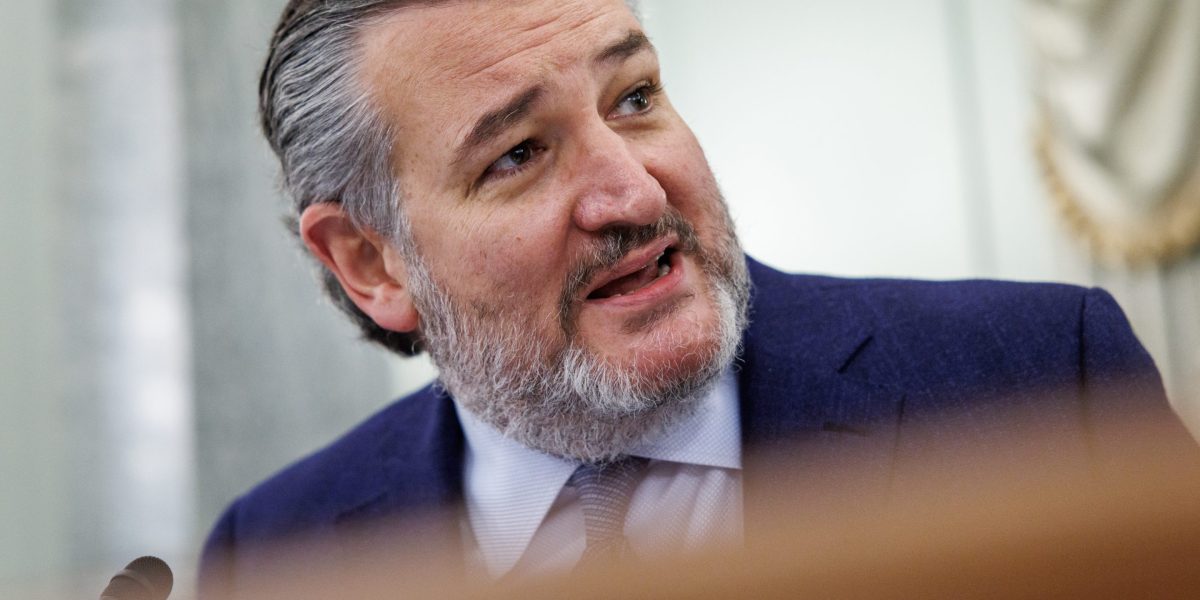
Although some conservatives have supported the broadcast network’s actions, others like Sen. Ted Cruz are also saying the FCC is going too far.

“I hate what Jimmy Kimmel said. I am thrilled that he was fired,” he said on Friday on his podcast Verdict with Ted Cruz. “But let me tell you, if the government gets in the business of saying, ‘We don’t like what you, the media, have said, we’re going to ban you from the airwaves if you don’t say what we like’—that will end up bad for conservatives.”

Cruz, who is the chairman of the Senate Commerce Committee, which has jurisdiction over the FCC, called Carr’s remarks “dangerous as hell,” warning against a future where the government can influence what broadcast networks put out.

“I think it is unbelievably dangerous for government to put itself in the position of saying, ‘We’re going to decide what speech we like and what we don’t, and we’re going to threaten to take you off air if we don’t like what you’re saying,’” Cruz added. “And it might feel good right now to threaten Jimmy Kimmel, but when it is used to silence every conservative in America, we will regret it.”

President Donald Trump, who has said the FCC could reexamine licenses for broadcasters that repeatedly criticize him, called Carr an American patriot in response to Cruz’s comments, adding he disagreed with the senator.

Meanwhile, conservative political commentator Tucker Carlson echoed Cruz’s censorship concerns earlier this week. 

“You hope that a year from now, the turmoil we’re seeing in the aftermath of (Kirk’s) murder won’t be leveraged to bring hate speech laws to this country,” he said Wednesday during a special tribute to Kirk on The Tucker Carlson Show. “And trust me, if it is, if that does happen, there is never a more justified moment for civil disobedience than that, ever. And there never will be.”

But some conservatives are in support of greater government discretion for what’s allowed on the air.

Sen. Cynthia Lummis (R-Wyo.) told Semafor on Thursday that a broadcasting license issued by the FCC is a privilege, not a right.

“Under normal times, in normal circumstances, I tend to think that the First Amendment should always be sort of the ultimate right. And that there should be almost no checks and balances on it,” Lummis said. “I don’t feel that way anymore. I feel like something’s changed culturally. And I think that there needs to be some cognizance that things have changed.”

Rep. Chip Roy (R-Texas) told NBC on Friday that the FCC is right to question broadcast networks regarding their licenses.

“The First Amendment must be fiercely protected, but we also impose various regulations on FCC licenses,” he said.

Fortune Global Forum returns Oct. 26–27, 2025 in Riyadh. CEOs and global leaders will gather for a dynamic, invitation-only event shaping the future of business. Apply for an invitation.


Source link

Continue Reading

Business

What happens to old AI chips? They’re still put to good use and don’t depreciate that fast

Published

on


New AI chips seem to hit the market at a quicker pace as tech companies scramble to gain supremacy in the global arms race for computational power.

But that begs the question: What happens to all those older-generation chips?

The AI stock boom has lost a lot of momentum in recent weeks due, in part, to worries that so-called hyperscalers aren’t correctly accounting for the depreciation in the hoard of chips they’ve purchased to power chatbots.

Michael Burry—the investor of Big Short fame who famously predicted the 2008 housing collapse—sounded the alarm last month when he warned AI-era profits are built on “one of the most common frauds in the modern era,” namely stretching the depreciation schedule. He estimated Big Tech will understate depreciation by $176 billion between 2026 and 2028.

But according to a note last week from Alpine Macro, chip depreciation fears are overstated for three reasons.

First, analysts pointed out software advances that accompany next-generation chips can also level up older-generation processors. For example, software can improve the performance of Nvidia’s five-year-old A100 chip by two to three times compared to its initial version.

Second, Alpine said the need for older chips remains strong amid rising demand for inference, meaning when a chatbot responds to queries. In fact, inference demand will significantly outpace demand for AI training in the coming years.

“For inference, the latest hardware helps but is often not essential, so chip quantity can substitute for cutting-edge quality,” analysts wrote, adding Google is still running seven- to eight-year-old TPUs at full utilization.

Third, China continues to demonstrate “insatiable” demand for AI chips as its supply “lags the U.S. by several generations in quality and severalfold in quantity.” And even though Beijing has banned some U.S. chips, the black market will continue to serve China’s shortfalls.

Meanwhile, not all chips used in AI belong to hyperscalers. Even graphics processors contained in everyday gaming consoles could work.

A note last week from Yardeni Research pointed to “distributed AI,” which draws on unused chips in homes, crypto-mining servers, offices, universities, and data centers to act as global virtual networks.

While distributed AI can be slower than a cluster of chips housed in the same data center, its network architecture can be more resilient if a computer or a group of them fails, Yardeni added.

“Though we are unable to ascertain how many GPUs were being linked in this manner, Distributed AI is certainly an interesting area worth watching, particularly given that billions are being spent to build new, large data centers,” the note said.


Source link

Continue Reading

Business

‘I had to take 60 meetings’: Jeff Bezos says ‘the hardest thing I’ve ever done’ was raising the first million dollars of seed capital for Amazon

Published

on


Today, Amazon’s market cap is hovering around $2.38 trillion, and founder Jeff Bezos is one of the world’s richest men, worth $236.1 billion. But three decades ago, in 1995, getting the first million dollars in seed capital for Amazon was more grueling than any challenge that would follow. One year ago, at New York’s Dealbook Summit, Bezos told Andrew Ross Sorkin those early fundraising efforts were an absolute slog, with dozens of meetings with angel investors—the vast majority of which were “hard-earned no’s.”

“I had to take 60 meetings,” Bezos said, in reference to the effort required to convince angel investors to sink tens of thousands of dollars into his company. “It was the hardest thing I’ve ever done, basically.”

The structure was straightforward: Bezos said he offered 20% of Amazon for a $5 million valuation. He eventually got around 20 investors to each invest around $50,000. But out of those 60 meetings he took around that time, 40 investors said no—and those 40 “no’s” were particularly soul-crushing because before getting an answer, each back-and-forth required “multiple meetings” and substantial effort.

Bezos said he had a hard time convincing investors selling books over the internet was a good idea. “The first question was what’s the internet? Everybody wanted to know what the internet was,” Bezos recalled. Few investors had heard of the World Wide Web, let alone grasped its commercial potential.

That said, Bezos admitted brutal honesty with his potential investors may have played a role in getting so many rejections.

“I would always tell people I thought there was a 70% chance they would lose their investment,” he said. “In retrospect, I think that might have been a little naive. But I think it was true. In fact, if anything, I think I was giving myself better odds than the real odds.”

Bezos said getting those investors on board in the mid-90s was absolutely critical. “The whole enterprise could have been extinguished then,” he said.

You can watch Bezos’ full interview with Andrew Ross Sorkin below. He starts talking about this interview gauntlet for seed capital around the 33-minute mark.

This story was originally featured on Fortune.com


Source link

Continue Reading

Business

Google cofounder Sergey Brin said he was ‘spiraling’ before returning to work on Gemini

Published

on


Google cofounder Sergey Brin thought retiring from Google in 2019 would mean quietly studying physics for days on end in cafés. 

But when COVID hit soon after, he realized he may have made a mistake.

“That didn’t work because there were no more cafés,” he told students at Stanford University’s School of Engineering centennial celebration last week, Business Insider reported.

The transition from president of Google parent company Alphabet to a 40-something retiree ended up not being as smooth as he imagined, and soon after he said he was “spiraling” and “kind of not being sharp” as he stepped away from busy corporate life.

Therefore, when Google began allowing small numbers of employees back into the office, Brin tagged along and put his efforts into what would become Google’s AI model, Gemini. Despite being the world’s fourth-richest man with a net worth of $247 billion, retirement wasn’t for him, he said.

“To be able to have that technical creative outlet, I think that’s very rewarding,” Brin said. “If I’d stayed retired, I think that would’ve been a big mistake.”

By 2023, Brin was back to work in a big way, visiting the company’s office three to four times a week, the Wall Street Journalreported, working with researchers and holding weekly discussions with Google employees about new AI research. He also reportedly had a hand in some personnel decisions, like hiring. 

Skip forward to 2025 and Brin’s plans for a peaceful retirement of quiet study are out the window. In February, he made waves for an internal memo in which, despite Google’s three-day in-office policy, he recommended Google employees go into the company’s Mountain View, Calif. offices at least every weekday, and that 60 hours a week was the “sweet spot” of productivity.

Brin’s newfound efforts at work may have been necessary as OpenAI’s release of ChatGPT in 2022 caught the tech giant off guard, after it had led the field of AI research with DeepMind and Google Brain for years.

To be sure, Google for its part has been rising in the AI race. Analysts raved last month about Gemini 3, the company’s latest update to its LLM, and Google’s stock is up about 8% since its release. Meanwhile, OpenAI earlier this month declared a “code red,” its highest alert level, to improve ChatGPT. 

Brin added in the talk at Stanford that Google has an advantage in the AI arms race precisely because of the foundation it laid over years through its neural network research, its custom AI chips, and its data center infrastructure.

“Very few have that scale,” he said.


Source link

Continue Reading

Trending

Copyright © Miami Select.