Connect with us

Business

Novartis seeks ways to cut US prices, admitting Americans ‘pay for a large part of the innovations’

Published

on


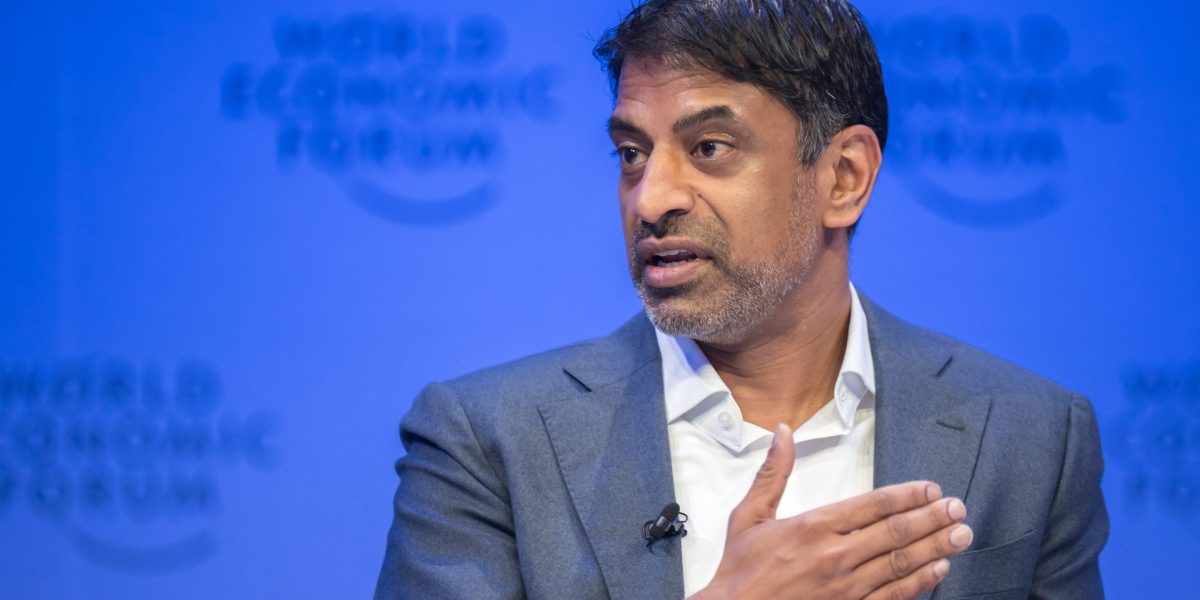
Amid a threat of towering US tariffs, Swiss pharmaceutical giant Novartis is seeking ways to enable Americans to pay less for their medicines, its chief said in an interview published Saturday.

Vasant Narasimhan told the Swiss daily Neue Zurcher Zeitung (NZZ) that his company was “working to eliminate the price gap between the US and other industrialised countries”.

“We are working with the government and trying to find constructive solutions so that Americans pay less for their medicines,” he told the Swiss daily.

While pharmaceutical products have been spared so far from the tariffs Washington has slapped on its trading partners, US President Donald Trump has threatened to hit the entire sector with tariffs of as much as 250 percent if drug prices do not drop.

Narasimhan suggested it made sense to bring down US prices.

“It is a fact that American patients pay for a large part of the innovations,” he acknowledged to the NZZ, insisting that “countries outside the US will have to contribute a larger share in the future”.

Pharmaceutical companies are meanwhile facing massive pressure from the Trump administration to move production to the United States.

Novartis already announced in April that it plans to invest $23 billion in the United States over five years.

The goal was “to manufacture the most important products for the American market locally”, he said, adding that it would “probably take three to four years to get there”.

But he estimated the company could “make significant shifts within the next two years”, including carrying out some of the final filling and packaging in the United States.

These efforts, he said, should allow Novartis to weather the situation if pharmaceuticals are hit with the same tariffs Washington has already slapped on other exports from the European countries where it has most of its production.

Washington is currently taxing imports from the EU at 15 percent and from Switzerland at 39 percent.

Novartis’s rapid US expansion “should allow us to fully mitigate any tariffs”, Narasimhan said.

The company was “more concerned about the tariffs for the entire industry”, he acknowledged.

Narasimhan said he was not worried about finding enough workers to staff Novartis’s new US factories, anticipating that massive pharmaceutical industry investment pledges would boost the US education system to turn out more specialists.

He added that many pharmaceutical factory processes were “fully automated”.

“We only need a total of 1,000 to 1,500 additional workers to operate our planned new factories in the US,” he said.

“That’s manageable.”

Fortune Global Forum returns Oct. 26–27, 2025 in Riyadh. CEOs and global leaders will gather for a dynamic, invitation-only event shaping the future of business. Apply for an invitation.


Source link

Continue Reading

Business

Crypto wallets now feel a lot more like Venmo

Published

on


Crypto wallets are having a moment. The latest example is Kalshi announcing an integration with Phantom to offer event contracts to the wallet’s 15 million users. While the prediction market angle is intriguing (these markets are a HUGE story right now), the news also highlights the light-speed advancements taking place in the wallet realm.

Consider how, just three years ago, the only thing you could do with Phantom was access the Solana blockchain. MetaMask, meanwhile, was limited to Ethereum. Sure, alternatives like Coinbase Wallet offered access to more assets but, like other wallets of the time, it suffered from a ghastly interface that required users to run a gauntlet of sub-nets, confusing gas fees, and more. The experience was miserable for crypto natives. For everyone else, it was nigh impossible.

Then something changed. After years of promises, developers finally succeeded in pushing the clunky technical elements to the background, while adding a host of practical features. The result has been an uptick in useful real-world applications, including Phantom’s Kalshi offering, and also in souped-up new offerings like Coinbase’s rebranded Base as well as Robinhood Wallet.

This new generation of wallets offers the best aspects of decentralized crypto by making the customers the ultimate custodians of their assets. At the same time, they offer interfaces that are starting to feel like Venmo or online banking apps—which should be table stakes for any of these products looking to break into the mainstream. The question now is where these wallets will fit in day-to-day life. Will they become the successor to web browsers, as Coinbase CEO Brian Armstrong and others have predicted, or will they be something else entirely?

JP Richardson is the founder and CEO of Exodus, another leading wallet that recently added a suite of stablecoin payment tools. He told me the browser analogy doesn’t really fit, arguing wallets are better seen as a superior type of banking app—one that will be able to bridge disparate financial services. “We believe it should not be three apps, it should be one app. Why can’t you take your brokerage app, and tap and buy groceries?” he asked.

Trevor Traina, the founder of a wallet called Kresus, whose customers include Sotheby’s auction house, has another take. He believes the tools will have a much broader footprint. He sees a world where wallets are not just for managing our assets, but also become repositories for vital documents such as a will, insurance, or a law license. 

The technology is certainly there to support Traina’s vision. That includes blockchains, which can supply a permanent and tamper-proof ledger, but also newer privacy tools like zero-knowledge proofs. Together, this tech provides a way to safeguard all of one’s personal data, while also being able to meet the constant need to show identification that modern life demands. All of this could get more interesting still if wallets like Sam Altman’s World App, which includes an anti-bot biometric layer, get more traction.

Now for the cold water: Just because you build it doesn’t mean they will come—or come anytime soon at least. I spoke with analyst James Wester, one of the shrewder observers of the crypto and fintech scene, and he pointed out that the idea of an “everything app” has been around for years but shows few signs of getting adopted. A big reason for this is inertia.

Right now, our existing apps and payment tools work pretty well, so it’s unlikely we’ll see mass wallet adoption anytime soon without some sort of external nudge. Wester points out that Apple Pay and Google Pay have been around for a decade, yet a huge number of people keep paying with physical cards—because they can. This will change as younger people who are well versed in tech and crypto make up a greater portion of the economy. But until then, wallet makers may have to find a way to make their suddenly attractive products downright irresistible.

Jeff John Roberts
jeff.roberts@fortune.com
@jeffjohnroberts

DECENTRALIZED NEWS

Stablecoins at YouTube: In a landmark moment for crypto in mainstream commerce, YouTube is now giving U.S. creators on the platform the option to receive payment in the form of PayPal’s stablecoin PYUSD. (Fortune)

Circle’s new privacy coin: Stablecoin giant Circle is working with an upstart blockchain called Aleo to issue a spin-off of its flagship token called USDCx, which will let banking clients obscure private transaction histories. (Fortune)

Charters for all: The OCC issued national trust bank charters to Circle, Ripple, BitGo, Paxos and Fidelity Digital Assets. The move comes amid a broader move by the agency to issue more such charters, which do not allow taking customer deposits or accessing FDIC insurance. (Axios)

Tokenization tipping point? The SEC issued a no-action letter to the DTCC, which will let the country’s main clearing house custody stocks on the blockchain. The permission applies only to 1,000 of the most liquid stocks, but is a key first step for what is likely to be a wholesale shift toward putting custody and record keeping on-chain. (Bloomberg)

Think I’ll buy me a football team: Tether, whose CEO is Italian and a lifetime fan of Juventus, made a bid to buy the storied football club. Its board rebuffed the offer even as the publicly-traded club struggles to keep up with financial dominance of Premier League teams and Real Madrid. (Reuters

MAIN CHARACTER OF THE WEEK

Do Kwon in Podgorica, Montenegro, in 2024—before he was extradited to the U.S.

Filip Filipovic—Getty Images

Do Kwon is arguably the second most notorious fraudster in crypto history. Now, the Terra Luna founder, known for his “steady lads” rallying cry, will get to test how steady he is after a U.S. judge sentenced him to 15 years in prison. If it’s any consolation, this earns him Fortune Crypto’s weekly Main Character designation.

MEME O’ THE MOMENT

Satoshi Nakamoto wanted to reinvent finance. Now, he’s at the New York Stock Exchange.

@NYSE

The cult of Satoshi keeps spreading as the New York Stock Exchange becomes the latest venue to install a physical statue of the Bitcoin creator. 


Source link

Continue Reading

Business

Magnificent 7 isn’t that magnificent: 5 stocks have underperformed the market this year

Published

on


S&P 500 futures were up 0.44%  this morning after the index lost 1.07% on Friday, a day after setting a new all-time high on Dec.11.

The index is still up 16% year-to-date—an above-average performance for U.S. stocks. Analysts have long complained that the index is dominated by the “Magnificent 7” tech stocks. Between October 2022 and November 2025 roughly 75% of gains in the S&P 500 came from this handful of companies.

But as we draw near to the close of the year, only two of those stocks—Alphabet and Nvidia—have beaten the market as a whole, year to date:

What appears to be happening is that investors are picking between winners and losers in tech, as opposed to just herding into the index or tech stocks as a whole. That’s probably healthy if you are worried that AI spending is creating a bubble in tech stocks.

The best example of this is Oracle, which is up a respectable 14% year to date but has declined 42% from its high in September. Investors have not liked the extra debt that Oracle has taken on, at increasingly wider interest spreads above the risk-free benchmarks, to fund its AI buildout. 

Wall Street is not yet ready to declare the AI gold rush a bubble. “If this is a bubble, it is still in its early stages,” Deutsche Bank analysts Adrian Cox and Stefan Abrudan said in a recent deep-dive research note on AI.

Thus far, the capital expenditure and the revenue is real: it’s hitting the top and bottom lines of Alphabet and Nvidia, and that’s why valuations for those companies are so healthy. “The charge is led by well-established Big Tech companies with multiple revenue streams, who are paying for their investment in data centers mostly out of free cash flow and from which they are generating immediate returns from enterprise customers,” Cox and Abrudan wrote.

“We think that reports of a bubble are exaggerated (for now),” they said.

Elsewhere: Asian markets were down today but markets in Europe largely rose in early trading. The STOXX Europe 600 was up 0.63% at the time of writing; The U.K.’s FTSE 100 was up 0.74%.

Here’s a snapshot of the markets ahead of the opening bell in New York this morning:

  • S&P 500 futures were up 0.44%  this morning. The last session closed down 1.07%. 
  • STOXX Europe 600 was up 0.63% in early trading. 
  • The U.K.’s FTSE 100 was up 0.74% in early trading. 
  • Japan’s Nikkei 225 was down 1.31%. 
  • China’s CSI 300 was down 0.63%. 
  • The South Korea KOSPI was down 1.84%. 
  • India’s NIFTY 50 was down 0.12%. 
  • Bitcoin was at $89K.
Join us at the Fortune Workplace Innovation Summit May 19–20, 2026, in Atlanta. The next era of workplace innovation is here—and the old playbook is being rewritten. At this exclusive, high-energy event, the world’s most innovative leaders will convene to explore how AI, humanity, and strategy converge to redefine, again, the future of work. Register now.


Source link

Continue Reading

Business

Visa launches stablecoins advisory practice to keep up with crypto wave

Published

on


Another major financial institution is doubling down on stablecoins and on crypto. This time, it’s Visa. The company announced on Monday the launch of its Stablecoins Advisory Practice, a service which aims to aid fintechs, banks, and other businesses with their strategy and implementation of stablecoins. 

“Helping our clients grow is frankly the reason we exist in stablecoin,” said Carl Rutstein, global head of Visa Consulting and Analytics, in an interview with Fortune. “What Visa is doing in this space is just one more area where our clients have a need.” 

Stablecoins are a type of cryptocurrency designed to maintain a constant value by means of reserves that peg them to a fiat currency, typically the U.S. dollar. They have recently been embraced by a wide range of companies from the traditional financial sector following President Donald Trump’s signing of the Genius Act in July, legislation which creates rules for issuing the digital asset. In the months since, other payments powerhouses like Paypal and Mastercard have boosted their stablecoin capabilities. 

Rutstein said that Visa’s stablecoins advisory has dozens of clients, among whom are Navy Federal Credit Union, the credit union VyStar, and a financial institution called Pathward. He said the practice will help businesses with their strategy, tech and operations, and implementation of stablecoins. Its clients use cases for stablecoins include cross-border transactions, especially to countries with volatile currencies, and business-to-business transactions. After using Visa’s advisory, Rutstein said some businesses may push forward with stablecoins, while others may conclude there is not a customer need. The company said that it expects the practice will grow to hundreds of clients. 

Visa is by no means new to crypto. In 2023, the company piloted stablecoin settlement using USDC, and it now has over 130 stablecoin-linked card issuing programs in more than 40 countries. Visa also has about $3.5 billion in annualized stablecoin settlement volume. 

“Stablecoins may represent an opportunity to enhance speed and lower cost in payments,” said Matt Freeman, senior vice president of Navy Federal Credit Union, in the statement. “So with the support of Visa, we are evaluating how this technology could fit into our broader strategy to deliver meaningful value to our 15 million members worldwide.”

Join us at the Fortune Workplace Innovation Summit May 19–20, 2026, in Atlanta. The next era of workplace innovation is here—and the old playbook is being rewritten. At this exclusive, high-energy event, the world’s most innovative leaders will convene to explore how AI, humanity, and strategy converge to redefine, again, the future of work. Register now.


Source link

Continue Reading

Trending

Copyright © Miami Select.