Connect with us

Business

Suzy Welch says Gen Z and millennials are burnt out because older generations worked just as hard, but they ‘had hope’

Published

on


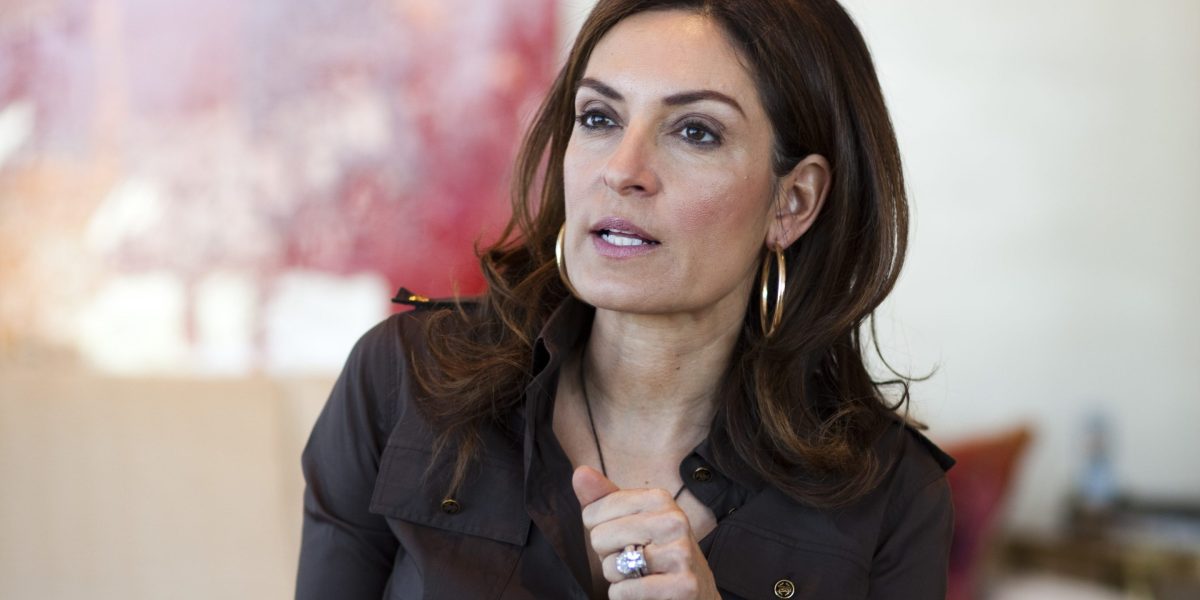
A generational divide over workplace burnout has less to do with work intensity and more to do with diminished expectations for career rewards, according to business author and New York University professor Suzy Welch. The 66-year-old from Portland earned her MBA as a Baker Scholar from Harvard Business School and spent seven years as a management consultant at Bain & Co. before joining Harvard Business Review in 2001, serving as editor-in-chief. Speaking on the July 24 episode of the Masters of Scale podcast, Welch argued younger workers face the same demanding schedules as previous generations, but lack the fundamental belief that hard work will lead to meaningful advancement.

Welch said this insight emerged from a conversation she had with a 25-year-old freelance worker who asked Welch to create more content about worker fatigue among young people because her friends were “just so burnt out.” When Welch told this worker she used to work “seven days a week” at that age and loved the work—and would’ve done more of it if she could—the young woman offered a striking rebuttal: “But you had hope.”

“And I did have hope. We all did have hope,” Welch told Masters of Scale host Jeff Berman. “We believed that if if you worked hard you were rewarded for it. And so this is the disconnect.”

A crisis of hope for young people, backed by data

Welch’s observations align with extensive research documenting unprecedented levels of workplace stress among younger generations, causing them to miss work as a result of physical and mental tolls. According to a 2024 Gallup poll, just 31% of staffers under age 35 say they’re “thriving,” while about 22% of staffers under 35 report feeling lonely.

“I think the distance between people is greater than it ever has been before,” Jim Harter, Gallup’s chief scientist of workplace and wellbeing, previously told Fortune. “When people become more distant physically, you become more mentally distant. That’s what’s happened with younger workers.”

Millennials are in a particularly bad spot, broadly speaking. About 66% of millennials report moderate or high levels of burnout, according to a recent report from Aflac.

“One possible explanation for the higher levels of burnout among millennials could be their unique career pressures and expectations,” the report said, which includes “more demanding work environments than other generations, defined by constant connectivity, high performance expectations and a competitive job market.” Millennial workers are also part of the “sandwich generation,” taking care of both children and their aging parents. According to a Principal Financial report, more than 60% of workers who juggle both responsibilities worry about burnout.

The context for this burnout crisis that young people are being forced to navigate multiple world-altering crises all at once: climate change, political instability, ongoing effects of the COVID-19 pandemic, economic uncertainty, and international conflicts like the Russia-Ukraine war. The psychological impact is profound and measurable: Research shows pandemic-related and climate-related distress are linked to more depression and anxiety symptoms and reduced health-related quality of life, while war-related distress was associated with greater anxiety. Notably, according to Harvard researchers, nearly half (45%) of young adults between 18 to 25 think their mental health is harmed by an overall “sense that things are falling apart.”

The sense of powerlessness—to push back against climate change, to deal with grapple with effects of the political environment like diminished public health and gun violence, and most notably to make enough money to support lifestyles, family, housing, and a future—has led to an erosion of institutional trust. Unlike baby boomers who embraced existing institutions to get rich and live a comfortable life, the younger generations do not feel that institutions—which are perceived as cumbersome, hierarchical, and a source of inequality and discrimination—can improve their situation. When combined with the economic realities Welch identified, where hard work no longer guarantees advancement, this helps explain why more than 50% of young people fear they will be poorer than their parents during their lifetime, according to Leger’s annual Youth Study.

The economic reality

Unlike previous generations who could reasonably expect homeownership and financial security through steady employment, younger workers face structural barriers that have fundamentally altered career prospects.

“Gen Z thinks, ‘Yeah, I watched what happened to my parents’ career and I watched what happened to my older sister’s career and they worked very hard and they still got laid off,’” Welch said on the podcast.

Student debt represents a significant burden, with Gen Z paying an average of $526 monthly toward loans—nearly double the overall average of $284, according to Empower. Housing costs compound these pressures, having increased 121% from 1960 to 2017 while median household income rose only 29%. Currently, 87% of Gen Z and 62% of millennials cannot afford to purchase homes.

Employment challenges begin immediately after graduation. About 58% of people who graduated last year are still looking for full-time work, according to a Kickresume report, compared to just 25% of previous generations. Only 12% of Gen Z secures full-time employment by graduation, versus 40% of earlier graduates. Those who find work earn an average of $68,400 annually while carrying approximately $94,000 in personal debt, as Fortune previously reported.

The generational divide has significant economic implications, with workplace burnout costing businesses $322 billion annually in lost productivity, according to Gallup, and generating healthcare costs between $125 billion and $190 billion. As Gen Z’s role in the global workforce continues to grow and evolve, Welch’s insight about hope provides a framework for understanding why traditional approaches to workplace stress may prove insufficient for younger U.S. workers.

You can watch the full Masters of Scale episode featuring Welch below:

For this story, Fortune used generative AI to help with an initial draft. An editor verified the accuracy of the information before publishing.


Source link

Continue Reading

Business

Meet 25 rising execs inside the Fortune 500

Published

on


Good morning. Major technology shifts often spur the rise of a new generation of leaders. Satya Nadella’s track record in building Microsoft’s cloud business earned him the top job in 2014. Arvind Krishna’s early bet on cloud and AI made him an obvious choice to run IBM, as did Ginni Rometty’s reputation in disruptive technologies before him. Doug McMillion’s push for e-commerce proved pivotal in becoming CEO of Walmart and transforming the retailer while there. Go back to 1989 and a digital-first Stan Bergman was champing at the bit to transform Henry Schein.

But technical savvy alone does not a leader make. For a glimpse of who’s likely to take the lead in this next era for the Fortune 500, check out theFortune Next to Lead list that’s out this morning. My colleague Ruth Umoh spent months talking to board directors, management consultants, leadership advisors, recruiters, and current and former CEOs to identify 25 rising executives inside the Fortune 500 who exhibit the skills and mindset of a new breed of CEO. 

Candidates were evaluated across several dimensions, from the scale and impact of their role with the enterprise to their vision and influence beyond the company. There’s Josh D’Amaro of Disney, who oversees a worldwide experiences division embarking on a $60 billion expansion of parks, resorts, cruise ships, and next-generation guest experiences. Within Microsoft, Scott Guthrie’s record at Azure has put him at the center of the company’s cloud and AI strategy. Donna Langley at NBCUniversal is redefining the studio’s multi-platform strategy, while General Motors’ Mark Reuss oversees a broad operational portfolio, from engineering and manufacturing to battery strategy and global markets, making him a central architect of GM’s long-term competitiveness. Keep an eye, too, on Marianne Lake of JPMorgan Chase and Kate Gutmann of UPS.

As always, I’d love to hear your thoughts on candidates you think deserve a spot, and what qualities you think will determine success in the next generation of Fortune 500 CEOs.

Contact CEO Daily via Diane Brady at diane.brady@fortune.com

Top news

New jobs data

Today is a quirky jobs day that will shed some light on the state of the U.S. economy. The Bureau of Labor Statistics is releasing jobs numbers for November and October. But the data will be patchy because of disruptions caused by the government shutdown; there will be no October unemployment report, for instance. “We’re going to have to look at [the data] carefully and with a somewhat skeptical eye” because it may be “distorted by very technical factors,” Fed Chair Jerome Powell said.

PayPal as a bank

PayPal is taking advantage of the Trump administration’s looser rules towards fintech companies and applying to become a bank. The payments company says the designation will allow it to lend more to small businesses. 

Introducing the U.S. ‘tech force’

The Trump Administration on Monday unveiled what it’s calling the U.S. “tech force” of 1,000 early career engineers and other specialists to research and develop AI and financial products for the federal government. Companies like Nvidia, Palantir, Amazon and Google will partner with the government on the initiative and second some of their own top talent to join its ranks. 

Ford’s EV bust

Ford will record a $19.5 billion impairment for the rollback of parts of its EV strategy. The Detroit carmaker is contending with lower-than-expected demand for EVs and plans to halt production of some pure electric vehicles in favor of hybrid models. 

Fed Chair finalists

President Trump could announce his pick for Fed chair before Christmas. Fortune’s Eleanor Pringle introduces us to the finalists and dissects their on-record opinions about the running of the central bank. This weekend, prediction markets were betting that the race had narrowed to a Kevin vs. Kevin contest

McKinsey gets lean

McKinsey is planning to shirk its non-client facing departments by about 10% in coming months as it contends with a slowdown in its traditional services and flatlining revenue. Governments in China and Saudi Arabia, for instance, have cut back on using consulting firms. 

Companies’ ‘93-7 split’ 

Bill Briggs, Deloitte’s chief technology officer, told Fortune’s Nick Lichtenberg that companies are pouring 93% of their AI budget into technology and only 7% into the people expected to use it. That lopsided investment is all wrong, Briggs says, since it focuses on the physical “ingredients” of AI and not the culture, workflow, and training needed to make the technology effective.

The markets

S&P 500 futures are down 0.25% this morning. The last session closed down 0.16%. STOXX Europe 600 was down 0.05% in early trading. The U.K.’s FTSE 100 was down 0.46% in early trading. Japan’s Nikkei 225 was down 1.56%. China’s CSI 300 was down 1.2%. The South Korea KOSPI was down 2.24%. India’s NIFTY 50 was down 0.64%. Bitcoin went to $87K.

Around the watercooler

Google cofounder Sergey Brin said he was ‘spiraling’ before returning to work on Gemini—and staying retired ‘would’ve been a big mistake’ by Marco Quiroz-Gutierrez

Former Meta integrity chief says new report reveals ‘disappointing’ ad fraud epidemic at the social-media giant by Lily Mae Lazarus

‘I had to take 60 meetings’: Jeff Bezos says ‘the hardest thing I’ve ever done’ was raising the first million dollars of seed capital for Amazon by Dave Smith

What happens to old AI chips? They’re still put to good use and don’t depreciate that fast, analyst says by Jason Ma

CEO Daily is compiled and edited by Claire Zillman and Lee Clifford.


Source link

Continue Reading

Business

80% of American Christmas trees are fake. They’re also tariffed

Published

on


On a recent December day, Mark Latino and a handful of his workers spun sheets of vinyl into tinsel for Christmas tree branches. They worked on a custom-made machine that’s nearly a century old, churning out strands of bright silver tinsel along its 35-foot (10-meter) length.

Latino is the CEO of Lee Display, a Fairfield, California-based company that his great-grandfather founded in 1902. Back then, it specialized in handmade velvet and silk flowers for hats. Now, it’s one of the only companies in the United States that still makes artificial Christmas trees, producing around 10,000 each year.

Tariffs and trees

Tariffs shone a twinkling light this year on fake Christmas trees — and the extent to which America depends on other countries for its plastic fir trees.

Prices for fake trees rose 10% to 15% this year due to the new import taxes, according to the American Christmas Tree Association, a trade group. Tree sellers cut their orders and paid higher tariffs for the stock they brought in.

Despite those issues, tree companies say they aren’t likely to shift large-scale production back to the U.S. after decades in Asia. Fake trees are labor-intensive and require holiday lights and other components the U.S. doesn’t make, said Chris Butler, CEO of the National Tree Co., which sells more than 1 million artificial trees each year.

Americans are also very price-sensitive when it comes to holiday décor, Butler said.

“Putting a ‘Made in the U.S.A.’ sticker on the box won’t do any good if it’s twice as expensive,” Butler said. “If it’s 20% more expensive, it won’t sell.”

Americans prefer fake trees

About 80% of the U.S. residents who put up a Christmas tree this year planned to use a fake one, according to the American Christmas Tree Association. That percentage has been unchanged for at least 15 years.

Mac Harman, the founder and CEO of Balsam Brands, which sells hundreds of thousands of Balsam Hill trees each year, said Americans like to set up their trees on Thanksgiving and leave them up for weeks, which dries out fresh-cut trees. Others prefer fake trees because they’re allergic to the mold spores on real trees, he said.

Americans also like convenience; 80% of the fake trees sold each year have the lights already strung on them, Butler said.

That preference is one reason artificial tree production shifted away from the U.S., first to Thailand in the early 1990s and to China about a decade later. Winding lights around the branches is time-consuming and tedious, Harman said.

“Where are we going to get 15,000 people in America who want to string lights on Christmas trees?” Harman said.

Labor-intensive work

It takes an hour or two to make an artificial Christmas tree, from molding and cutting the needles to tying branches together and attaching the lights, Butler said. Workers in China, where 90% of fake trees are made, are paid $1.50 to $2 per hour, he said.

Harman said the workers who wrap the lights on Balsam Hill’s trees are so efficient “it’s like watching an Olympian.”

One of Balsam Brands’ Chinese partners employs 15,000 to 20,000 people; another in Indonesia has up to 10,000, he said. Many are seasonal workers, since orders for Christmas décor slow down between October and February.

Balsam Brands, which is based in Redwood City, California, studied whether it could make faux trees in Ohio during the first Trump administration, when President Donald Trump threatened -– but eventually delayed –- tariffs on imported Christmas décor, Harman said.

The company hired consultants and considered automating some work. But it concluded a tree that currently sells for $800 would cost $3,000 if it was made in the U.S. Harman said Balsam couldn’t even find a U.S. company to make the pair of gloves it includes in each box for fluffing out branches.

American-made trees

Lee Display employs three or four people for most of the year, adding more during the holiday rush to help with installations and displays. About half its business is making custom displays for companies such as Macy’s, while the other half is selling directly to consumers.

Latino said he likes that he can produce an order quickly instead of waiting for it to ship from overseas.

“You have more control over it. I like to think that everything here is either my fault or my mistake or my careful planning and skill,” he said.

The tariffs still affected Lee Display. Latino’s son James, who leads business development and marketing, said the company didn’t import lights or decorations from China this year and relied on items it already had in stock. It’s getting low on lights, so next year it will have to pay more to import them, he said.

Responding to tariffs

Some artificial tree companies are branching out so they’re less reliant on China. National Tree Co., which is based in Cranford, New Jersey, moved some manufacturing to Cambodia in 2024, and could source all its trees from outside China by next year if it wanted to, Butler said.

But diversifying their suppliers didn’t make those companies immune from the impact of tariffs either. In April, the Trump administration threatened a 49% tariff against products from Cambodia. That rate was eventually reduced to 19%. Tariffs on artificial trees from China also bounced around but now average 20%, according to the American Christmas Tree Association.

Butler said his company imported fewer trees this year and also raised prices by 10%. He said he used a lot of the money to offer customer discounts since demand was weak because of consumer worries about the economy.

“It’s a discretionary item. People say, ‘I can wait one more year,’” Butler said.

Balsam Brands cut its workforce by 10%, canceled travel, froze raises and even stopped serving lunch in the office once a week to absorb the impact of tariffs, Harman said. It also raised tree prices by 10%.

Harman said his sales are down 5% to 10% this year in the U.S. but up 10% or more in Germany, Australia, Canada and France. That tells him tariffs have decreased U.S. demand.

“If a merry Christmas is measured in how many decorations people put up, by that measure it’s going to be a slightly less merry Christmas,” he said.

___

AP Video Journalist Terry Chea contributed from Fairfield, California.


Source link

Continue Reading

Business

Jim Carrey nearly quit ‘Grinch’ — Then the founder of SEAL Team Six came to the rescue

Published

on


For his role in the movie How the Grinch Stole Christmas, which came out in 2000, Jim Carrey’s tortuous costume and makeup had him on the verge of walking away from a $20 million paycheck.

In an interview with Vulture, the actor said the first day of makeup took eight hours. He nearly quit and suffered from panic attacks after having to wear painful green contacts, makeup that made him breathe through his mouth the whole time, and a full body suit made of itchy yak hair. But before he walked away, producer Brian Grazer hired the founder of SEAL Team Six to help Carrey suck it up.

“Richard Marcinko was a gentleman that trained CIA officers and special-ops people how to endure torture. He gave me a litany of things that I could do when I began to spiral. Like punch myself in the leg as hard as I can. Have a friend that I trust and punch him in the arm. Eat everything in sight. Changing patterns in the room,” Carrey told Vulture in the interview, which was published on Friday.

“If there’s a TV on when you start to spiral, turn it off and turn the radio on. Smoke cigarettes as much as possible. There are pictures of me as the Grinch sitting in a director’s chair with a long cigarette holder. I had to have the holder, because the yak hair would catch on fire if it got too close,” he added.

Carrey said he later learned that Marcinko was the founding officer of SEAL Team Six, the famed special-operations unit. Marcinko passed away at age 81 in December 2021.

Director Ron Howard and Grazer, who were also part of the Vulture interview, recalled Carrey struggling onset because of his Grinch costume.

Howard said the pain he endured was less physical than mental as the makeup was “destroying” Carrey’s skin. It was determined by medical professionals that Carrey couldn’t work in the makeup five days in a row, so he would have a day off or only be off-camera feeding dialogue on Wednesdays, he added.

“Jim started having panic attacks. I would see him lying down on the floor in between setups with a brown paper bag. Literally on the floor. He was miserable,” Howard said.

Carrey even offered to return his entire $20 million paycheck, with interest, Grazer said. But, instead Grazer found Marcinko. 

“I said, ‘Listen, you can quit on Monday, but just spend time with this guy on the weekend,’” Grazer said.


Source link

Continue Reading

Trending

Copyright © Miami Select.