Business
This is how Scott Kupor plans to handle the elimination of more federal jobs
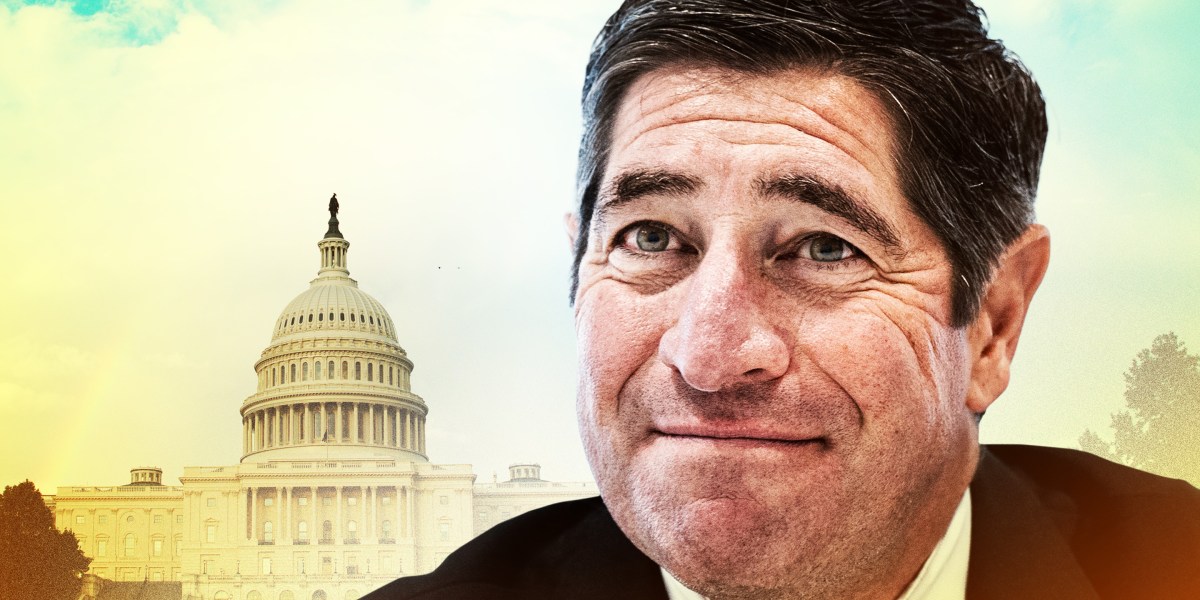
Published
3 months agoon
By
Jace Porter
It was December 16, 2024 when Scott Kupor, the former managing partner at venture capital juggernaut Andreessen Horowitz, arrived at Mar-a-Lago to meet with Donald Trump and his chief of staff, Susie Wiles, for his interview for a director role in the White House.
Kupor—who had been introduced to transition team co-chair Howard Lutnick via his longtime venture capital bosses, Marc Andreessen and Ben Horowitz—arrived at Trump’s Palm Beach estate just as the infamous billionaire Japanese investor Masayoshi Son was wrapping up a press conference with Trump, where Son pledged to pour $100 billion into the American economy.
Kupor sat through the briefing, then snapped a photo of Son—whom he had never met before—as Son posed in front of the lectern. In an interview with Fortune in August, Kupor laughed as he recounted it: “I’m a short guy. He was even shorter than I,” says Kupor, who says he is 5’5” tall “on a good day” when he isn’t sporting his cowboy boots for an extra inch of height. Later, Kupor was ushered into a ballroom where his interview was repeatedly pushed back for five hours, apparently so the President-Elect could work on a TikTok deal as the impending ban that same day approached.
“It was a lot of sitting around in an empty ballroom in Mar-a-Lago on my phone, trying to keep myself occupied,” Kupor recounts. “It was well worth waiting for, for sure.”
Kupor was officially sworn-in as director of the Office of Personnel Management (OPM) in July, where the venture capital operator is now overseeing the independent agency of the U.S. government that handles human resources policy, personnel oversight, and administration of key employee benefits, among other things. While not historically a very exciting or newsworthy White House agency, the OPM has, under President Trump, been at the forefront of one of the largest-scale federal labor cost-cutting efforts in modern U.S. history.
Kupor’s Senate confirmation hearing, which took place in April, became contentious at times, as Democratic Senators pelted him with questions, trying to get him to comment on the rapid-fire and chaotic cost-slashing effort across Washington, D.C. that preceded him. After all, OPM—once a little-known agency—had played a central role as Elon Musk, with Trump’s blessing, took it upon himself to try to address the U.S. government’s multi-trillion-dollar deficit and terminate tens of thousands of workers at agencies like the Department of Veterans Affairs, Department of Education, Department of Energy, and Department of Homeland Security; or attempted to disband agencies such as USAID or the Consumer Financial Protection Bureau. Dozens of lawsuits attempting to block DOGE’s cuts have been filed and are still playing out in court.
Anna Moneymaker/Getty Image
Musk is no longer in the White House following his public fallout with the President, and according to Kupor, DOGE is effectively no longer operational as its own entity.
“DOGE—as a coalesced, centralized organization—at least from my perspective, it doesn’t exist in that form anymore,” Kupor said.
Still, the cost-cutting efforts are far from over and “efficiency” across the federal government continues to be a Trump Administration priority—and one that Kupor is now instrumental in seeing through. OPM, Kupor says, is part of the “implementation” or “institutionalization” of the efforts that Musk’s org had started. While the approach Kupor plans to take will likely look rather different than the first six months of Trump’s Administration—putting a kinder, gentler, and less controversial face to the job—Americans can still expect that the cuts will be sweeping.
That puts the 53-year-old VC in the starring role of a fascinating real-time test case for the MAGA program: Can a level-headed operator not encumbered by his predecessor’s need for chaos and provocation, demonstrate that deep workforce reductions and reforms can actually produce a more efficient government? Or will he prove to simply be nicer packaging for a bad policy—effective at carrying out the DOGE mission without all the intense backlash, but ultimately leaving Americans with a shoddier outcome?
Kupor clearly believes the former. “You have to find ways to rebuild trust, and the way you rebuild trust, in my mind, is, number one: You actually treat with respect the people who are walking out the door,” Kupor told Fortune.
In with the cowboy boots, out with the chain saws
In true venture capital fashion, one of Kupor’s first orders of business at OPM was to start a blog, where he writes frequent missives about his thoughts on the federal deficit, discusses U.S. political history, or cites the legendary late investor Charlie Munger. As you might expect, Kupor eventually plans to launch a podcast, too.
But the Houston, Tex. native, who has a cheerful and casual flair, dresses in cowboy boots, and is quick to respond to an email, is candid about the bigger changes he has in mind. Shortly after he took the role, Kupor announced he expected a total of 300,000 federal roles would be eliminated by the end of 2025. While there are no firm figures just yet, some tallies have estimated that only more than 50,000—or some 17% of those roles—have already been cut, suggesting that there is much more ahead. As we spoke, Kupor emphasized that about 90% of the cuts that have already taken place have been either deferred resignations, standard resignations, early retirement, or buyouts, versus pure layoffs: And he says that, moving forward, the “vast majority” of people no longer employed by the U.S. government will be people who decided to leave of their own accord.
SAUL LOEB/AFP via Getty Images
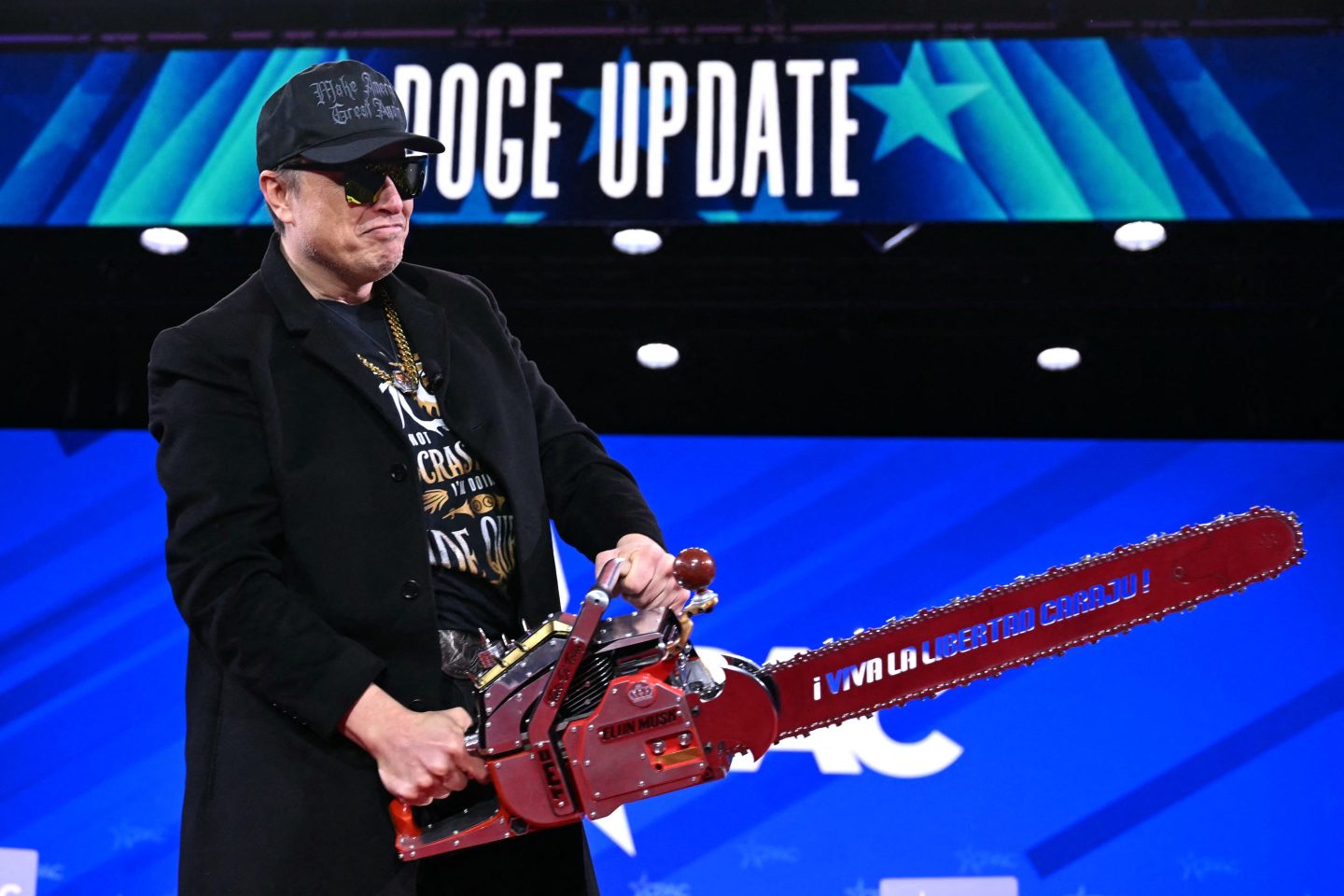
While Musk gleefully whipped around a chainsaw at the Conservative Political Action Conference and demanded federal workers prove in an email that they were productive to their managers, Kupor describes a more sensitive approach. “You have to know that you’re being judged by the people who are staying in the organization about how you do this,” he says of layoffs and deferred resignations. “And so do you go hide in your desk, in your corner, and don’t tell them about it? Or do you bad-mouth people once they leave? Everybody’s watching your behavior to see how you conduct yourself.”
In one early sign of course correcting, Kupor says that many of the federal agencies that OPM’s 250-person consulting team works with are taking a fresh look at their staffing plans to account for greater-than-expected attrition from deferred resignations. “A lot of people are going through and revisiting,” he said.
Within OPM itself, Kupor says his team is evaluating whether there were areas that “we cut too deep” during the layoffs or whether there were special skills that people had that were lost. Approximately 1,000 people—or 33% of its workforce—will no longer be with OPM by the end of the year, he said.
Still, in a display of the diplomacy necessary for navigating Silicon Valley’s fraught terrain of founders, frenemies, and big egos, Kupor wouldn’t comment on Musk or DOGE’s approach before he arrived at OPM. “I don’t know all the ins and outs of decisions that were made on how they did stuff in those first several months when I wasn’t here. And so, look, I just think it’s not constructive for me to try to Monday morning quarterback that,” he said.
Andreessen Horowitz’s ‘very first hire’
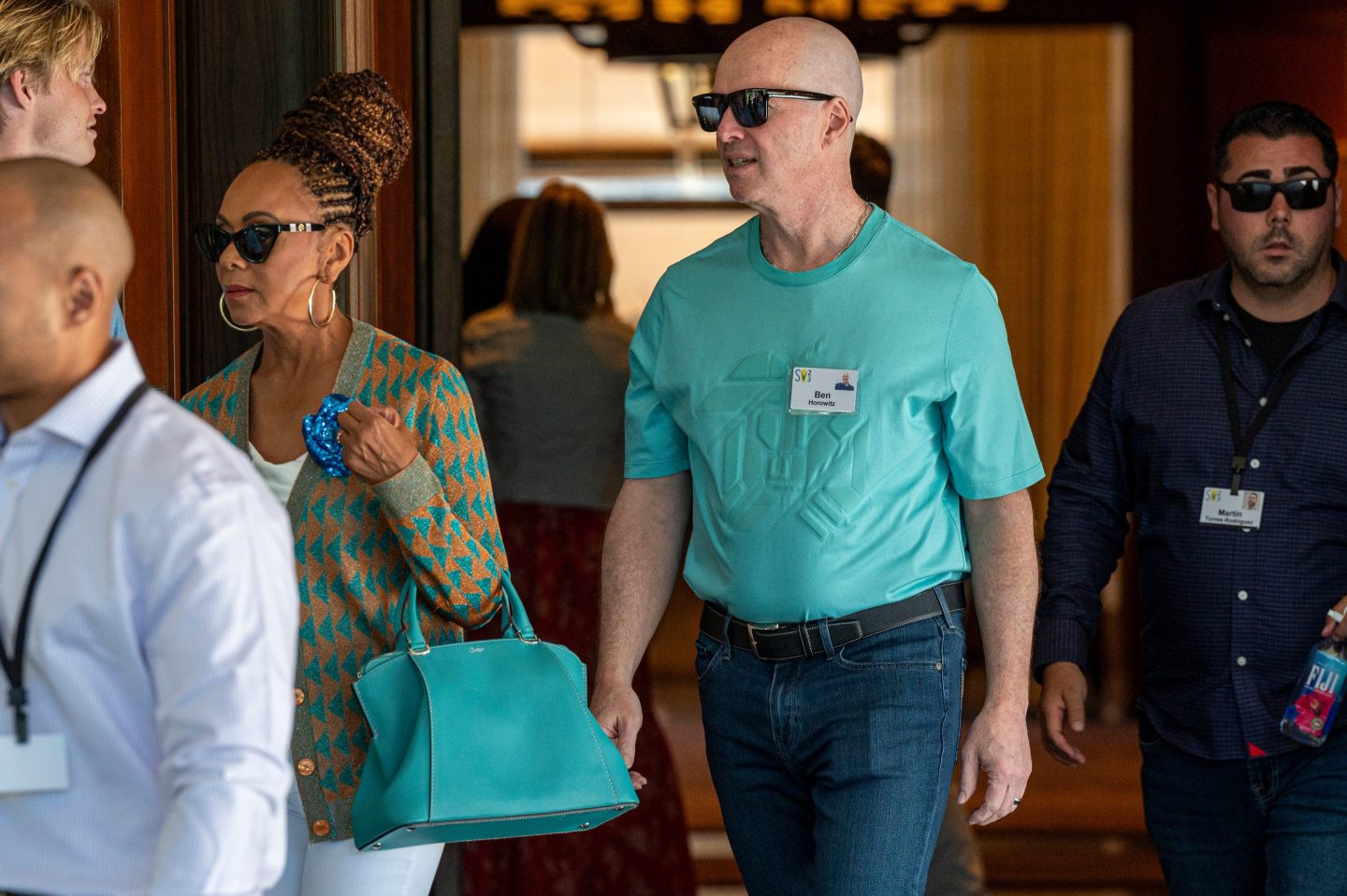
Kupor had spent the last couple decades in venture capital and tech before joining OPM. He was the first hire of Marc Andreessen and Ben Horowitz in 2009, right around the time they set up their storied venture capital firm. And he had worked with them a decade previously at Loudcloud, Opsware, and HP.
“He was our very first hire at a16z, because he is the best executive that we’ve worked with. He’s super smart, detail-oriented, great culturally, and the hardest working man in the business,” Horowitz told Fortune in an email, noting that Kupor’s leadership will translate “extremely well” into government and that “his tireless energy will enable him to crack through the bureaucracy and enable people to do their best work.”
After being sworn in as OPM Director this summer, Kupor became one of several prominent Silicon Valley investors and entrepreneurs to join the Trump administration, alongside Craft Ventures’ David Sacks, who is the AI and Crypto Czar; Senior White House AI policy advisor Sriram Krishnan, who also previously worked at a16z; and Gregory Barbaccia, a former Palantir employee who is now Federal Chief Information Officer at the Office of Management and Budget.
David Paul Morris/Bloomberg via Getty Images
Kupor’s decision to step into public service may seem in and of itself a bit puzzling. Joining the U.S. government meant stepping away from one of the most reputable jobs in venture capital, forfeiting carried interest in several of its funds, divesting from companies like Microsoft and Apple and Lockheed Martin, and resigning from boards of companies he had advised. More than that, it means succumbing oneself to intense public scrutiny and freedom of information.
For Kupor, he makes it out as a natural fit. He was a public policy major at Stanford University, where he worked on behalf of the Japanese government at a policy institute during undergrad and law school and later worked as an intern for a health care policy advisor during the George H. W. Bush Administration, the late Gail Wilensky. For a time, Kupor served as chair of the National Venture Capital Association, a trade association that lobbies Washington for the interests of private market investors, and he also did crypto and capital markets-related policy work at a16z.
“I always thought I wanted to do something at some point in government service. Life got in the way,” Kupor said later, noting that “everything sort of came together to make this role a reality.”
Kupor has never supported any candidates financially, but he says he has always been a fiscal conservative, and “probably a libertarian in many ways” when it comes to other issues. He pointed out that he was part of a group of students that sued Stanford University in 1995, successfully arguing that the university’s speech code, which restricted “insulting speech,” violated the first amendment. While Andreessen and Horowitz surprised Silicon Valley by announcing their firm’s endorsement of Trump last year, Kupor said his political leanings have “never really changed.”
A16z might have much to gain by having a former top partner in the White House. Horowitz and Andreessen said in a widely-viewed video last year that the Biden Administration had not been accessible. Kupor’s seat in the Cabinet surely helps with some of that access, or may put some of their portfolio companies in better positions to win government contracts.
When I followed up with Kupor about conflicts of interest, he said he doesn’t see any, as he is not in a policy position that has influence over the matters a16z is interested in, and that he “specifically wanted to take a role that was focused on very different things.”
“I don’t see any conflict in what I am doing,” he said. “As an American, I believe that tech and entrepreneurship are key to our ongoing economic strength, national security and sovereignty… My role at OPM is simply to ensure that the government can attract and retain the very best people to work efficiently on behalf of the American taxpayer.”
When asked for comment, an a16z spokeswoman said there were no conflicts of interest.
This is not venture capital
Since being named as director, Kupor has been focused on performance management and hiring—two areas he cites as priorities of President Trump that came up during his initial interview—as well as trying to find areas where technology could make federal workers more efficient.
Heidi Gutman/CNBC/NBCU Photo Bank/NBCUniversal via Getty Images
In the last few weeks, OPM issued a rule change that eliminates categorization requirements from agency hiring processes and, as was required from one of President Trump’s first executive orders, eliminated diversity, equity, and inclusion hiring requirements for senior executive hiring. Kupor has also publicly raised concerns about other areas he has been looking at, though he has yet to issue any formal rulemaking. Those include his opinions about there being too many senior level managers getting outstanding performance reviews—a system, he wrote, that does “not encourage excellence” or allow the heads of various agencies to determine who truly deserves a performance reward—or his concerns about potentially “excessive” administrative costs from the government’s “Combined Federal Campaign,” which allow federal workers to donate to charities of their choosing, saying he is considering whether to discontinue the program altogether.
Some of the changes Kupor hopes to make are more cultural, he says. He wants to see federal workers experimenting with different technologies and tools. For example, Kupor said he hopes to roll out an AI tool to help rulemaking committees parse through public comments for new rule proposals and respond to them.
“We have teams of people who are literally manually reading all those things, drafting responses. I saw one response that was literally 80 pages long to one comment. It doesn’t take that much imagination to imagine: There’s probably ways where AI can increase the efficiency.”
Kupor’s approach to the role is undeniably influenced by his background in tech—espeically in the way he talks about the federal government’s approach to risk.
“There’s just such a culture here of such risk aversion, and I understand why it is, but we got to just fight against that,” Kupor said. He added: “It’s a cultural change as much as it is a learning and a technological change. And look, I’m highly confident we’ll get there, but it does require kind of a reset on people’s willingness to take some level of risk.”
But Kupor also emphasizes in our conversation that he understands government is not the private sector.
“This is not venture capital—so we’re not going to shoot-for-the-moon risk. But we can afford to take some risk on things…Where maybe the payoff is we get a five or ten percent increase in efficiency. That would be awesome. I’d take that any day.”
You may like
Business
A SpaceX IPO could be the largest public offering of all time—and Elon Musk’s biggest headache
Published
28 minutes agoon
December 16, 2025By
Jace Porter
The SpaceX public offering could very well be the largest public offering of all time—bringing in even more money than Saudi Aramco’s cosmic $29 billion public listing in 2019. And with the rocketing costs (pun intended) that SpaceX would rack up as it paves the way for more test flights for the mega-rocket Starship it wants to send to Mars, the thousands of additional satellites it intends to send to orbit, and the artificial intelligence data centers it may decide to construct in outer space, some extra billions in cash sure wouldn’t hurt.
But the multibillion-dollar question is: Does Elon Musk really want the headaches that would come with all that money?
Since reports of the potential IPO emerged, would-be buyers have been acting like Christmas came early. Investors—from Wall Street mainstay institutions to the Elon fan-boys who trade shibu inu meme coins in their basements—will clamor to purchase shares in SpaceX on the public markets. The company, which Musk founded in 2002 with a large portion of the money he had made off PayPal, has quite literally built the foundation of America’s private space ecosystem. It is the leading space company in the world and is one of the U.S. government’s most important—and well-paid—private contractors.
Reporting has, thus far, pegged a potential market capitalization at $1.5 trillion, meaning that a public debut would immediately catapult SpaceX into the ranks of the 10 most valuable public companies in the world. Payload Space, which publishes detailed annual revenue research and estimates on SpaceX, forecasted that SpaceX will generate around $15 billion in revenue this year, and between $22 billion to $24 billion in 2026. Musk said earlier this month that SpaceX has been cash flow positive for “many” years. “The SpaceX IPO will be the most anticipated and successful IPO ever, in my opinion,” says Andrew Rocco, a stock strategist at Zacks Investment Research.
Early shareholders who have had to wait for their turn to sell shares in SpaceX’s liquidity events will finally get all the liquidity their hearts desire. And journalists like myself will finally have real visibility into the company’s business and profit breakdowns, and an explanation of what SpaceX has determined are key risks to the business.
In short, pretty much everyone has a legitimate reason to get excited about a SpaceX IPO—except for Elon Musk.
It’s hard at first to grasp why Musk has suddenly become convinced that taking SpaceX public is worth the scrutiny, criticism, and regulatory burden he has long said he wanted to avoid. He was the leader who took Twitter private, after all, so he could instill sweeping layoffs and changes without the criticisms of the public markets. And, in earlier business history lore, he famously tweeted he was considering taking Tesla private in 2018—a tweet that prompted an SEC investigation and litigation with shareholders. Keeping his other companies private—including Neuralink, xAI, and the Boring Co.—has allowed Musk to run his businesses the way he likes without much public scrutiny.
Tesla—the only one of Musk’s six companies that is publicly traded—has, on several occasions, attracted more short sellers than any other stock in the last several years; Musk’s pay package has been ridiculed and challenged; his tweets have been investigated; and his improbable timelines for product delivery have been picked apart by analysts. Investors punished Tesla stock when Musk stepped away to work in the White House earlier this year, even as SpaceX, thanks to being private, was able to avoid much of the fallout. Indeed, quite the opposite: A share sale this summer pegged SpaceX’s value at $400 billion, while an impending tender offer will double that valuation, according to the Wall Street Journal.
The fickle tendencies and demands of public investors haven’t only been inconvenient for Musk at Tesla; he’s sometimes taken them as a personal affront. In a 2017 interview, Musk described a heaping $9 billion short position into Tesla as “hurtful.” In March, during the heat of Musk’s episode running President Trump’s Department of Government Efficiency, Musk admitted on Fox News the personal toll the vandalism to Tesla vehicles and showrooms and Tesla’s plummeting stock price had taken on him.
If SpaceX goes public next year, it will be immediately thrown into the frenzy of Wall Street scrutiny over short-term financials, product delays, and costs. Few analysts will be asking Musk about his long-term plans for colonizing Mars. Surely Musk would never subject SpaceX—the beating heart of his broader cosmic ambitions—to the scrutiny that Tesla endures. That is: unless he felt it was the only option.
Hitting the ceiling of private markets
It’s hard to imagine that Musk would ever take SpaceX public unless the math depended on it. And, to be sure, the math may not, at least in the short term. SpaceX’s CFO has reportedly told employees that whether and when an IPO would take place was “highly uncertain.”
To date, SpaceX has managed to reel in more capital than most other private companies in history. The company has raised more than $10 billion, according to PitchBook, a figure that, just a decade ago, would have sounded absurd.
Of course, this is 2025, and—as the private markets have exploded as institutional investors like endowments, pension funds, mutual funds, and sovereign wealth funds have sought outsized returns in venture capital funds—companies like the AI juggernaut Musk cofounded, OpenAI, and TikTok-owner ByteDance have reached valuations in the hundreds of billions that are well above those of most public companies. An $800 billion tender offer would put SpaceX among the 20 most valuable public companies in the U.S., right alongside JPMorgan Chase, which has an $880 billion market cap, and Walmart, which was worth $931 billion at market close on Monday.
But the private markets have their limits. While there may be some $2 trillion to $3 trillion in capital sitting on the sidelines, available to deploy into private companies—which is nothing to sneeze at—there is somewhere around $100 trillion to $150 trillion that has been invested in global equities, according to PitchBook emerging technology analyst Ali Javaheri.
“SpaceX has effectively hit the ceiling of what private markets can support,” Javaheri says. “Financing a multi-decade, industrial-scale roadmap simply doesn’t map cleanly onto private fund structures.”
In pure numbers, reports peg discussions for a more than $30 billion raise for SpaceX, which would be—in a single listing—about three times the capital the company has raised since its inception in 2002. To be clear, not all that money would go to fund future SpaceX operations. In an IPO, it all comes down to which shareholders choose to float shares, and it remains to be seen how many shares—if any—SpaceX would list itself.
But it’s hard to imagine a scenario where SpaceX didn’t raise any money at all, or was simply under pressure from shareholders to give them an opportunity to cash out. The company does regular liquidity events, and there is never a shortage of demand. SpaceX’s board includes personal confidants as well as investors who have already made a fortune off of Musk’s various companies, and it would seem unlikely they’d be putting any kind of pressure on Musk to take the company public.
Given that SpaceX is already profitable, and therefore likely doesn’t need immediate cash to continue operation, SpaceX must need capital for some of its impending priorities.
If you follow Musk’s X account and public comments closely, he has suggested a series of places that money might go: the rollout of Starlink for mobile devices, data centers in space, Starlink factories on the moon, and a Starlink-esque satellite network around Mars. There’s the whole defense business, Star Shield, which we know so little about. SpaceX is also working on new Starship launch pads.
All of this will cost money—and a lot of it.
More scrutiny going public
Preparing SpaceX for an IPO would be a headache for Musk. For one, SpaceX would probably need to make some adjustments to its board. As we learned with Tesla early last year, there will be skepticism over whether its members are adequately independent—or if their ties are too close to the founder.
In the heat of the litigation over Musk’s compensation package agreement with Tesla, a judge determined that the process for approval for Musk’s compensation was “deeply flawed,” due to Musk’s close personal and financial ties with the members of the compensation committee, which included SpaceX board member Antonio Gracias.
Based on Fortune’s reporting, SpaceX’s board currently has six members. In addition to Musk and Tesla board member Gracias, who is an investor at Valor Equity Partners and a close friend of Musk; there is Luke Nosek, who was also a PayPal cofounder; Steve Jurvetson, one of the original SpaceX investors and a longtime friend of Musk; and Gwynne Shotwell, who is an insider as president and COO of SpaceX. The only truly independent board member seems to be Donald Harrison, who is president of global partnerships and corporate development at Google. That board composition could expose SpaceX to pressure from investors and potential litigation if it went public.
It’s “heavily weighted toward insiders and Musk loyalists,” PitchBook’s Javaheri says. “I would expect a meaningful expansion of truly independent board members ahead of any listing.”
There’s also ongoing litigation that would draw scrutiny should SpaceX start having to explain it in annual reports. The company is currently fighting a case with the National Labor Relations Board, over allegations from eight engineers who say they were fired for contributing to and signing an open letter that criticized Musk. In March 2025, an appeals court determined that the case could proceed, after SpaceX had attempted to block the Board from pursuing its claims.
Musk’s compensation plan at SpaceX—along with the compensation of all the other top executives, like Shotwell—will become public, too. And, depending on what those plans look like, they could end up provoking more public, and legal, attention.
To infinity and beyond
In 2018, Musk had the phrase “DON’T PANIC” written on the touchscreen of a Tesla Roadster that SpaceX launched into space on board the Falcon Heavy it was testing. It was in homage to one of his favorite books, A Hitchhiker’s Guide to the Galaxy, in which that message was written on the cover of a guidebook meant to reassure confused space travelers who might be frightened by the chaotic universe they suddenly found themselves in.
As companies graduate from the private markets to the public, executives must start spending as much time reassuring their shareholders as they do running their businesses. There is a slowdown that happens when you have to explain and answer for the decisions you make, versus just looping in a few people on your board. For people like Musk—someone who will sometimes demand that engineers figure out how to catch a rocket with chopstick arms—there is a constant tension between the predetermined rules and bureaucracy of regulation and the desire to move faster, dream bigger.
At Tesla, Musk must balance his ultimate vision for humanoid robots and self-driving vehicles with quarterly metrics and manufacturing costs. A SpaceX IPO will almost certainly hinder the speed at which his plans for Mars become a reality. At the same time, it may be the money and financing generated via that IPO that is the only means to make it possible.
But, for Musk, it will be a sacrifice. He will have to spend an increasing amount of his time saying the same thing to his investors, over and over: DON’T PANIC.
It was the week before Christmas, and Americans got one more dispiriting look at the jobs market.
After a year of stalled hiring and “ghost jobs,” Americans are going back to school, retraining, and trying to get off the sidelines. But they’ve been flying blind after the longest federal government shutdown in history clouded the picture on job growth and unemployment. Finally, the October and November figures confirmed what most of them seem to feel already: The labor market has no room for them.
The unemployment rate rose to 4.6% in November, the highest since 2021. But this isn’t a standard recession: The BLS isn’t seeing layoffs happen as much in the private sector. Instead, it continues to see a virtual hiring freeze, two-thirds of a year after the bottom fell out of employment growth in April.
Jeffrey Roach, chief economist at LPL Financial, wrote in a note the jump in unemployment reflects a “transformation” in the labor force. Rather than unemployment being driven by layoffs, he said, “it was driven by an increase of individuals formerly not in the labor force.” In other words, people who had been without work for so long they weren’t considered to be in the labor force started looking during the holiday, and didn’t find any takers.
Changes could be driven by ‘idiosyncratic spikes’
That shift is becoming increasingly visible in the data. During the past year, the total number of unemployed Americans has risen by more than 700,000. The fastest-growing segment isn’t people who lost jobs, but “re-entrants,” or workers returning after a period of inactivity. That number spiked roughly 20% year-over-year, outpacing every other category of unemployed, according to a note from Nicole Bachaud, ZipRecruiter’s labor economist.
Bank of America Research, in a note by U.S. economist Shruti Mishra and her team, noted this increase was “noisy,” driven by one-time effects and “idiosyncratic spikes.” One such example she noted was the indirect impacts of DOGE. These “furloughed employees,” she said, likely drove this spike in unemployment. Leisure and hospitality jobs also fell in November, “likely due to slower air travel” as the FAA struggled with staffing. Air-traffic controllers were ordered to work without pay for over a month and the government slashed hundreds of flights, a situation the Trump administration addressed by only giving post-shutdown bonuses to the 776 workers who had perfect shutdown attendance, leaving out nearly 20,000 others.
Bachaud wrote she saw the increase of re-entrants as a “positive” signal, though, for the labor market, since it counteracts the dual negative forces of “an aging population and lower immigration.” It suggests people who were previously sidelined—by caregiving, health issues, or discouragement—are willing or compelled to try again, “rebalancing the labor force,” Bachaud wrote.
But in many cases, re-entry might not be a sign of optimism so much as a necessity. Pandemic savings are gone, inflation has strained household budgets, and higher borrowing costs have made living on one income more difficult to sustain. As financial cushions thin, the rebalancing Bachaud referenced is a function of the economy pushing more Americans back into the job search.
The Department of Government Efficiency (DOGE), Elon Musk’s short-lived effort to reduce the size of the federal government, also clearly drove a sharp federal payroll drop: The federal government shed 162,000 jobs in October alone as government employees’ “fork in the road” buyout offers took effect. Data suggests when Uncle Sam moves to aggressively shed headcount, it has a chilling effect on the entire private sector.
How the job search is changing
The average job search is also lengthening, another sign the hiring door is locked. The number of people unemployed for 27 weeks or more has climbed more than 15% during the past year, now accounting for nearly one-in- four unemployed workers, Bachaud calculated. At the same time, the ranks of marginally attached and discouraged workers—those hovering at the edge of the labor force—are also growing, suggesting some re-entrants may be cycling back out after failing to land work.
Wages are also no longer providing much of a cushion. Average hourly earnings rose just 0.1% in November, slowing annual growth to 3.5%, the weakest pace since 2021. This slowing down in wage growth, Roach wrote, “may turn out to be a big story for the job market in the coming months.”
Slower wage gains have the positive of easing inflation pressures—beneficial in a time in which more Americans complain about affordability—but they also limit income growth for households already facing tighter job prospects.
Industry data reinforces the imbalance. Outside of health care, social assistance, and construction, hiring has been flat to negative in recent months. Seasonal hiring—which typically helps absorb marginal workers over the holidays—has “disappointed this year,” particularly in retail, leisure, hospitality, and transportation, Bill Adams, chief economist for Comerica Bank, wrote in a note.
Adams described the labor market as having “hit an air pocket” in the fourth quarter. Federal job losses amplified the slowdown, but private-sector hiring outside a narrow set of industries has also failed to keep pace with rising labor-force participation.
The S&P 500 greeted the news with a disappointed shrug, down 0.8% intraday, as the jobs report was balanced by an October retail sales report that surprised to the upside, showing Americans are still splashing the cash, driving the all-important consumer spending that powers two-thirds of GDP. But as a general lump of coal in the stocking, Mishra concluded after so many months of strong spending that appears bifurcated by income cohort and a “low-hire, low-fire” jobs market, “the consumer labor conundrum remains.”
Business
OpenAI releases new image model as it races to outpace Google’s Nano Banana amid company Code Red
Published
1 hour agoon
December 16, 2025By
Jace Porter
OpenAI released a new flagship image generation model today as it moves to counter recent concerns that it is slipping behind rivals in the race to capture both consumer and business mindshare.
The new image generation model allows for more precise image editing and can generate images up to four times faster than OpenAI’s previous image creation AI, the company said in a blog post. It said the new model, as well as a new images feature in ChatGPT are designed to make image generation “delightful.”
According to an OpenAI blog post, the new ChatGPT Images is rolling out to all ChatGPT users and API users globally today. The company said it works across models, so users don’t need to select a specific model in the drop-down menu in order to use it.
“We believe we’re still at the beginning of what image generation can enable,” the company said in the blog post. “Today’s update is a meaningful step forward with more to come, from finer-grained edits to richer, more detailed outputs across languages.”
While it may seem like a Christmas present for loyal ChatGPT users, OpenAI staffers have been the busy elves responding to Santa—er, CEO—Sam Altman’s post-Thanksgiving “Code Red” memo, which was meant to push the company to improve ChatGPT over the next eight weeks amid intense competition from rivals, most notably Google.
Google’s Gemini model had been gaining steam after its image generation model, Nano Banana, was released in August. Google said monthly active users grew from 450 million in July to 650 million in October.
The company’s latest version, Nano Banana Pro, went viral after its November 20 release, thanks to the model’s newfound ability to handle text in images cleanly (something that had been a thorny problem for years). Users were also wowed by Nano Banana Pro’s ability to produce diagrams and infographics that made sense, and the fact that it allowed people to edit their images rather than regenerating them from scratch.
Last week, OpenAI released the latest version of its text model, GPT-5.2; since then, industry-watchers have waited to see if the company would release a new image model before the New Year. But will it be good enough to outpace Google?
Fidji Simo, OpenAI’s CEO of applications, wrote in a Substack post that ChatGPT’s chat interface was not originally designed to go beyond text, so the new image model is accompanied by a “dedicated entrypoint” in ChatGPT for images that works more like a “creative studio,” available in the sidebar through the mobile app and on the web.
“The new image viewing and editing screens make it easier to create images that match your vision or get inspiration from trending prompts and preset filters,” she wrote. “On top of that, our new model is faster and better at following detailed instructions so you get more accurate edits and creative transformations.” The model can keep key elements like lighting, composition, and likeness consistent between what users input and what the model outputs, “so the results stay much closer to what you imagined,” she added.
Still, Nano Banana Pro may still have an early mindshare advantage. In a recent interview with Fortune, Allie Miller, an AI advisor and investor, discussed how she recently attended a Shark Tank-type event hosted by Mark Cuban and was struck by what happened when Cuban said the words “Nano Banana.”
She expected that the mention of Google’s whimsically-named AI image generator might cause confusion among the thousands of people in the audience, who Miller described as mostly new to AI. Instead, the crowd nodded in recognition.
Like ChatGPT itself, she explained, “there are certain AI tools or models that you just start hearing over and over and over again that gain such a big pop culture moment.”
Whether OpenAI’s elves can make its new ChatGPT Images as irresistible as the most sought-after toys of the season remains to be seen. But the moment—coming amid the company’s Code Red—underscores a broader reality: While model quality still matters in the AI race, it’s increasingly a battle for consumer hearts and minds.
Guess the Sexy Star Flaunting Her Bikini Bod on Vacay!
Portuguese label Ementa makes its Paris debut
Paul Renner campaign launches ‘Women for Renner Coalition’ with steering committee
Trending
-
Politics8 years agoCongress rolls out ‘Better Deal,’ new economic agenda
-
Entertainment8 years agoNew Season 8 Walking Dead trailer flashes forward in time
-
Politics8 years agoPoll: Virginia governor’s race in dead heat
-
Entertainment8 years agoThe final 6 ‘Game of Thrones’ episodes might feel like a full season
-
Entertainment8 years agoMeet Superman’s grandfather in new trailer for Krypton
-
Politics8 years agoIllinois’ financial crisis could bring the state to a halt
-
Business8 years ago6 Stunning new co-working spaces around the globe
-
Tech8 years agoHulu hires Google marketing veteran Kelly Campbell as CMO
