Connect with us

Business

FCC chief considers charging Kimmel, ABC with spreading misinformation over Charlie Kirk jokes

Published

on


Jimmy Kimmel’s television future hung in the balance Thursday after ABC suspended his late-night show following the host’s comments about Charlie Kirk’s killing, which prompted dozens of stations to say they wouldn’t air the show, a move that was cheered on by a top federal regulator.

The veteran late-night comic made several remarks on Monday and Tuesday about the reaction to the conservative activist’s assassination, including saying that “many in MAGA land are working very hard to capitalize on the murder of Charlie Kirk.”

ABC, which has aired “Jimmy Kimmel Live!” since 2003, moved swiftly after Nexstar Communications Group said it would pull the show starting Wednesday. Kimmel’s comments about Kirk’s death were “offensive and insensitive at a critical time in our national political discourse,” said Andrew Alford, president of Nexstar’s broadcasting division. Nexstar operates 28 ABC affiliates.

Another company that owns 38 local television stations, Sinclair, called on Kimmel to apologize to Kirk’s family and make a “meaningful personal donation” to the activist’s political organization, Turning Point USA. Sinclair says its ABC stations will air a tribute to Kirk on Friday in Kimmel’s time slot.

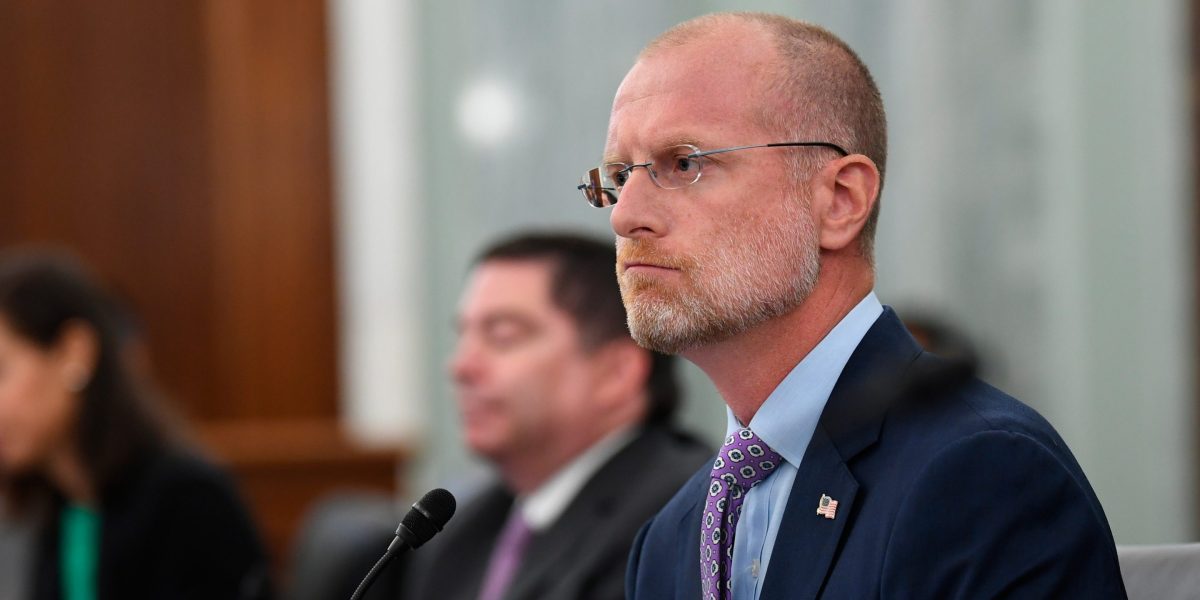
In an appearance on CNBC Thursday, FCC Chairman Brendan Carr cheered the moves by the two affiliate groups to push back against the network. While the Federal Communications Commission does not have power over the television networks, it does have the authority to suspend the licenses of their individual stations in local markets.

“We’re reinvigorating the FCC’s enforcement of the public interest,” Carr said, “and I think that’s a good thing.”

There was no immediate comment from Kimmel, whose contract is up in May 2026. ABC’s statement did not cite a reason for why his show was preempted.

President Donald Trump celebrated ABC’s move on the social media site Truth Social. “Congratulations to ABC for finally having the courage to do what had to be done,” he wrote.

Carr on Wednesday called Kimmel’s comments “truly sick” and said his agency has a strong case for holding Kimmel, ABC and network parent Walt Disney Co. accountable for spreading misinformation. He said the comic appeared to be making an intentional effort to mislead the public that Kirk’s assassin was a right-wing Trump supporter.

During his Monday evening monologue, Kimmel suggested that the suspect in Kirk’s killing, Tyler Robinson, might have been a pro-Trump Republican.

“The MAGA Gang (is) desperately trying to characterize this kid who murdered Charlie Kirk as anything other than one of them and doing everything they can to score political points from it,” Kimmel said. “In between the finger-pointing, there was grieving.”

Authorities say the 22-year-old grew up in a conservative household in southern Utah but was enmeshed in “leftist ideology.” His parents told investigators he had turned politically left and pro-LGBTQ rights in the last year. His voter status is inactive, meaning he did not vote in two regular general elections. He told his transgender partner that he targeted Kirk because he “had enough of his hatred.”

The business landscape around late-night television

Both Disney and Nexstar have FCC business ahead of them. Disney is seeking regulatory approval for ESPN’s acquisition of the NFL Network, and Nexstar needs the Trump administration’s blessing to complete its $6.2 billion purchase of broadcast rival Tegna.

For both companies, reinstating Kimmel after a suspension would risk the ire of Trump, who has already claimed that the show has been canceled.

Kimmel’s suspension comes two months after CBS announced that it was canceling Stephen Colbert’s show next May for financial reasons. But some critics have wondered if his stance on Trump played a role.

Both Colbert and Kimmel have made the president the frequent target of jokes. Soon after the Colbert cancellation, the FCC approved CBS parent company Paramount’s long-pending deal with Skydance.

Trump similarly celebrated Colbert’s impending exit.

“I absolutely love that Colbert got fired,” Trump said in July. “His talent was even less than his ratings. I hear Jimmy Kimmel is next.”

Within the past year, both Disney and CBS parent Paramount chose to settle lawsuits brought by Trump against their news divisions rather than fight it out in court.

In a post on X, FCC Commissioner Anna Gomez criticized the administration for “using the weight of government power to suppress lawful expression.”

“Another media outlet withered under government pressure, ensuring that the administration will continue to extort and exact retribution on broadcasters and publishers who criticize it,” said Ari Cohn, lead counsel for technology policy at the Foundation for Individual Rights and Expression. “We cannot be a country where late-night talk show hosts serve at the pleasure of the president.”

The scene outside Kimmel’s studio after show was suspended

Kimmel departed the Hollywood theater where his show is taped about three hours after ABC’s decision. He kept his head down as he entered a waiting vehicle.

An audience was lined up outside the theater when they were told Wednesday’s show was canceled.

“Interestingly enough, they waited to pull the plug on this right as the studio audience was about to walk in,” Tommy Williams, a would-be audience member from Jacksonville, Florida, told The Associated Press outside the theater. “They didn’t tell us what had happened. They just said that the show was canceled.”

More of what Kimmel said on his show

Kimmel said Trump’s response to Kirk’s death “is not how an adult grieves the murder of someone he called a friend. This is how a 4-year-old mourns a goldfish, OK?”

He also said that FBI chief Kash Patel has handled the investigation into the killing “like a kid who didn’t read the book, BSing his way through an oral report.”

He returned to the topic Tuesday night, mocking Vice President JD Vance’s performance as guest host for Kirk’s podcast.

He said Trump was “fanning the flames” by attacking people on the left. “Which is it? Are they a bunch of sissy pickleball players because they’re too scared to be hit by tennis balls? Or a well-organized deadly team of commandos? Because they can’t be both of those things.”

The move comes as the president, his administration and political party have stepped up their effort to police speech about Kirk’s death. Vance earlier this week urged Americans to turn in fellow citizens who mocked the assassination.

It is also the latest effort by the administration to use its power to lean on the media. Carr has launched investigations of outlets that have angered Trump, and the president has sued multiple media organizations for negative coverage.

___

Associated Press journalists Liam McEwan and Jaimie Ding in Los Angeles and Nicholas Riccardi in Denver contributed to this report.


Source link

Continue Reading

Business

Elon Musk’s wealth has soared past $600 billion—he’s now worth double the next richest person alive, Google’s cofounder Larry Page

Published

on


Elon Musk just woke up $168 billion richer. Even as the wealthiest man in the world, he is still setting new records and raising the bar for what ultra-wealthy looks like.

The serial CEO’s net worth shot up to $638 billion on Monday, making him the first person estimated to be worth more than $600 billion by Bloomberg’s wealth index

The 54-year-old witnessed an unprecedented wealth surge after SpaceX, an aerospace company he founded and leads, hit a $800 billion market cap in an insider share sale. SpaceX subsequently became the most valuable private company in the world—and by holding a 42% stake in the business worth $317 billion, Musk’s fortune soared. 

In fact, his fortune has multiplied so much that fellow billionaires can’t keep up; Oracle cofounder Larry Ellison very briefly knocked him from the top spot earlier this year, but swiftly lost $34 billion

Even the wealth of Google cofounder and ex-CEO Larry Page, who is the second richest person alive, pales in comparison to Musk’s bank account. Page is worth $265 billion: less than half of what the SpaceX CEO sits atop. 

And with Musk’s $1 trillion Tesla pay package (effective since it was approved in November) trickling into his bank account over the next decade, he’s solidified his spot as the richest person in the world by a longshot. 

How Musk became the richest person in the world

When Musk was first added to Bloomberg’s index in 2013, he only held $4.8 billion in wealth—still an eye-watering figure, but a far cry from his 2025 fortune. His next milestone came in 2020, when he was calculated to be worth at least $100 billion thanks to a soaring Tesla valuation. And within the last five years, he’s managed to accrue six times as much wealth—adding around $100 billion every year—as his businesses thrived. 

But Musk was never a stranger to wealth. 

The entrepreneur spent his final high school years attending an affluent South African boys school—surrounded by peers who later became politicians and award-winning novelists—while the rest of the country reeled from apartheid. Later, he headed to his mother’s country, Canada, before moving to the U.S. in pursuit of success.

Musk experienced his first wealth breakthrough while he was still in his early twenties. In 1995 he co-founded software company Zip2, which helped newspapers bring city guides to the internet. The business sold to Compaq for $307 million just four years later. But his next venture solidified his footing in the corporate world; in 1999 Musk then co-founded X.com, an online payment company which later merged with PayPal’s parent company Cofinity. By 2002, eBay acquired PayPal for a whopping $1.5 billion. 

Instead of simply riding the high of newfound wealth, Musk used the money to found and invest in a slew of other lucrative companies. In 2002, he founded SpaceX—his current ticket to $638 billion wealth. He also joined Tesla as an investor in 2004, becoming CEO four years down the road. In 2016, he launched neurotech business Neuralink, the same year he founded The Boring Company. And in one of his most daring—and contentious—aquisitions yet, Musk bought Twitter (now X) for $44 billion in 2022. 

But the vast majority of Musk’s wealth comes from his 12% stake in EV car business Tesla, and 42% share of rocket company SpaceX. He also owns around 33% of XAI Holdings, valued at roughly $105 billion by Bloomberg, following a merger with X and AI startup xAI. And aside from his investments, Musk has locked down a compensation package that’s unheard of. This November, Tesla shareholders voted in favor of a nearly $1 trillion, 10-year pay plan for the Tesla CEO. 

Criticism around Musk’s $1 trillion pay package

The first-of-its-kind $1 trillion compensation strategy encompasses 12 tranches of shares to be granted if Tesla hits certain milestones over the next decade, giving Musk increased voting power over the company. His ownership of Tesla is estimated to swell from about 12% to 25%, tacking an additional 423 million shares to Musk’s current holdings.

It’s a record-breaking pay package that has drawn scrutiny from spectators and proxy advisors alike. Even Pope Leo XIV chimed in on the situation, warning of growing income inequality at the upper echelons of business. 

“CEOs that 60 years ago might have been making four to six times more than what the workers are receiving, the last figure I saw, it’s 600 times more than what average workers are receiving,” the Pope told Catholic news siteCrux in September.

“Yesterday, the news that Elon Musk is going to be the first trillionaire in the world: What does that mean and what’s that about? If that is the only thing that has value anymore, then we’re in big trouble.”


Source link

Continue Reading

Business

Government belatedly reveals loss of 105,000 jobs in October as full DOGE cutbacks come into view

Published

on


The United States gained a decent 64,000 jobs in November but lost 105,000 in October as federal workers departed after cutbacks by the Trump administration, the government said in delayed reports.

The unemployment rate rose to 4.6%, highest since 2021.

Both the October and November job creation numbers, released Tuesday by the Labor Department, came in late because of the 43-day federal government shutdown.

The November job gains came in higher than the 40,000 economists had forecast. The October job losses were caused by a 162,000 drop in federal workers, many of whom resigned at the end of fiscal year 2025 on Sept. 30 under pressure from billionaire Elon Musk’s purge of U.S. government payrolls.

Labor Department revisions also knocked 33,000 jobs off August and September payrolls.

Workers’ average hourly earnings rose just 0.1% from October, the smallest gain since August 2023. Compared to a year earlier, pay was up 3.5%, the lowest since May 2021.

Healthcare employers added more than 46,000 jobs in November, accounting for more than two-thirds of the 69,000 private sector jobs created last month. Construction companies added 28,000 jobs. Manufacturing shed jobs for the seventh straight month, losing 5,000 jobs in November.

Hiring has clearly lost momentum, hobbled by uncertainty over President Donald Trump’s tariffs and the lingering effects of the high interest rates the Federal Reserve engineered in 2022 and 2023 to rein in an outburst of inflation.

American companies are mostly holding onto the employees they have. But they’re reluctant to hire new ones as they struggle to assess how to use artificial intelligence and how to adjust to Trump’s unpredictable policies, especially his double-digit taxes on imports from around the world.

The uncertainty leaves jobseekers struggling to find work or even land interviews. Federal Reserve policymakers are divided over whether the labor market needs more help from lower interest rates. Their deliberations are rendered more difficult because official reports on the economy’s health are coming in late and incomplete after a 43-day government shutdown.

Labor Department revisions in September showed that the economy created 911,000 fewer jobs than originally reported in the year that ended in March. That meant that employers added an average of just 71,000 new jobs a month over that period, not the 147,000 first reported. Since March, job creation has fallen farther — to an average 35,000 a month.

The unemployment rate, though still modest by historical standards, has risen since bottoming out at a 54-year low of 3.4% in April 2023.

“The takeaway is that the labor market remains on a relatively soft footing, with employers showing little appetite to hire, but are also reluctant to fire,” Thomas Feltmate, senior economist at TD Economics, wrote in a commentary. “That said, labor demand has cooled more than supply in recent months, which is what’s behind the steady upward drift in the unemployment rate.’’

Adding to the uncertainty is the growing use of artificial intelligence and other technologies that can reduce demand for workers.

“We’ve seen a lot of the businesses that we support are stuck in that stagnant mode: ‘Are we going to hire or are we not? What can we automate? What do we need the human touch with?’’’ said Matt Hobbie, vice president of the staffing firm HealthSkil in Allentown, Pennsylvania.

“We’re in Lehigh Valley, which is a big transportation hub in eastern Pennsylvania. We’ve seen some cooling in the logistics and transportation markets, specifically because we’ve seen automation in those sectors, robotics.’’

Worries about the job market were enough to nudge the Fed into cutting its benchmark interest rate by a quarter of a percentage point last week for the third time this year.

But three Fed officials refused to go along with the move, the most dissents in six years. Some Fed officials are balking at further cuts while inflation remains above the central bank’s 2% target. Two voted to keep the rate unchanged. Stephen Miran, appointed by Trump to the Fed’s governing board in September, voted for a bigger cut – in line with what the president demands.

Tuesday’s report shows that “the labor market remains weak, but the pace of deterioration probably is too slow to spur the (Fed) to ease again in January,” Samuel Tombs, chief U.S. economist at Pantheon Macroeconimics, wrote in a commentary. The Fed holds its next policy meeting Jan. 27-28.

Because of the government shutdown, the Labor Department did not release its jobs reports for September, October and November on time.

It finally put out the September jobs report on Nov. 20, seven weeks late. It published some of the October data – including a count of the jobs created that month by businesses, nonprofits and government agencies – along with the November report Tuesday. But it did not release an unemployment rate for October because it could not calculate the number during the shutdown.


Source link

Continue Reading

Business

Trump has ‘an alcoholic’s personality, chief of staff says in wide-ranging Vanity Fair interview. She calls it a ‘hit piece’

Published

on


Susie Wiles, President Donald Trump’s understated but influential chief of staff, criticized Attorney General Pam Bondi’s handling of the Jeffrey Epstein case and broadly defended the president’s aggressive second administration in a series of interviews published Tuesday in Vanity Fair.

Wiles told the magazine in a wide-ranging, revealing series of conversations that she underestimated the scandal involving Epstein, the disgraced financier, but sharply criticized how Bondi managed the case and the public’s expectations.

After the story was published, Wiles disparaged it as a “disingenuously framed hit piece on me and the finest President, White House staff, and Cabinet in history.”

“Significant context was disregarded and much of what I, and others, said about the team and the President was left out of the story,” she wrote in a social media post. “I assume, after reading it, that this was done to paint an overwhelmingly chaotic and negative narrative about the President and our team.”

Wiles did not deny the comments that were attributed to her.

THIS IS A BREAKING NEWS UPDATE. AP’s earlier story follows below.

WASHINGTON (AP) — Susie Wiles, President Donald Trump’s understated but influential chief of staff, criticized Attorney General Pam Bondi’s handling of the Jeffrey Epstein case and broadly defended the president’s aggressive second administration in a series of interviews published Tuesday in Vanity Fair.

Wiles told the magazine in a wide-ranging, revealing series of conversations that she underestimated the scandal involving Epstein, the disgraced financier, but sharply criticized how Bondi managed the case and the public’s expectations.

She also said Trump wants to keep bombing alleged drug boats in the waters off the coast of Venezuela until that country’s leader, Nicolas Maduro, “cries uncle.”

And Wiles at one point said she and Trump had a “loose agreement” that his retribution campaign would end before the first 90 days of his second term — but it continues well beyond the three-month mark.

Trump tapped Wiles after she managed his winning 2024 campaign. She is the first woman to ever serve as White House chief of staff and is known for shunning the spotlight. It is rare for her to speak as extensively and openly as she did about the president to the magazine, which published its lengthy interview with her — and other members of the White House staff and the Cabinet. Wiles has been speaking to Vanity Fair since just before Trump took office last January.

Asked about Epstein, Wiles said hadn’t really paid attention to “whether all these rich, important men went to that nasty island and did unforgivable things to young girls.”

She said she has read the Epstein file and that Trump is “not in the file doing anything awful.” He and Epstein were friends before they had a falling out.

The Justice Department is facing a Friday deadline to release everything it has on Epstein after Trump, after objecting to the release, signed legislation requiring that the papers be made public.

Wiles criticized Bondi’s handling of the case, going back to earlier in the year when she distributed binders to a group of social media influencers that included no new information about Epstein. That led to even more calls from Trump’s base for the files to be released.

“I think she completely whiffed on appreciating that that was the very targeted group that cared about this,” Wiles said of Bondi. “First she gave them binders full of nothingness. And then she said that the witness list, or the client list, was on her desk. There is no client list, and it sure as hell wasn’t on her desk.”

Wiles, over the series of interviews, described the president behind the scenes very much as he presents himself in public: an intense figure who thinks in broad strokes yet is often not concerned with the details of process and policy. She added, though, that he has not been as angry or temperamental as is often suggested, even as she affirmed his ruthlessness and determination to achieve retribution against those he considers his political enemies.

Trump, she said, has “an alcoholic’s personality,” even though the president does not drink. But the personality trait is something she recognizes from her father, the famous sports broadcaster Pat Summerall.

“High-functioning alcoholics or alcoholics in general, their personalities are exaggerated when they drink. And so I’m a little bit of an expert in big personalities,” she said, adding that Trump has “a view that there’s nothing he can’t do. Nothing, zero, nothing.”

On Venezuela, Wiles said Trump wants to keep the pressure on Maduro.

“He wants to keep on blowing boats up until Maduro cries uncle. And people way smarter than me on that say that he will.” Her comment, though, seemed to contradict the administration’s position that the strikes are about stopping drugs and saving American lives, not regime change.

She said the administration is “very sure we know who we’re blowing up.”

The continued strikes and mounting death toll have drawn scrutiny from Congress, which has pushed back and opened investigations.

Wiles described much of her job as channeling Trump’s energy, whims and desired policy outcomes — including managing his desire for vengeance against his political opponents, anyone he blames for his 2020 electoral defeat and those who pursued criminal cases against him after his first term.

“We have a loose agreement that the score settling will end before the first 90 days are over,” Wiles said early in his administration, telling Vanity Fair that she does try to tamp down Trump’s penchant for retribution.

Later in 2025, she pushed back. “I don’t think he’s on a retribution tour,” she said, arguing he was operating on a different principle: ”‘I don’t want what happened to me to happen to somebody else.’ And so people that have done bad things need to get out of the government. In some cases, it may look like retribution. And there may be an element of that from time to time. Who would blame him? Not me.”

Asked about the prosecution of New York Attorney General Letitia James for mortgage fraud, Wiles allowed: “Well, that might be the one retribution.”

—-

Barrow reported from Atlanta.


Source link

Continue Reading

Trending

Copyright © Miami Select.