Connect with us

Fashion

Euratex’s Mario Jorge Machado: “Over the past 18 months, 10% of textile jobs in Europe have been cut”

Published

on


Published


September 18, 2025

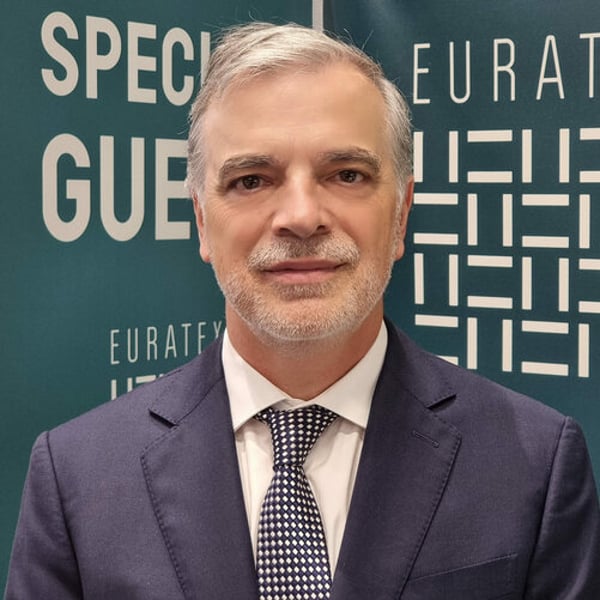
Mario Jorge Machado, president of the European textile industry confederation Euratex, was in Paris on September 16 to take part in an exceptional gathering of European federations, determined to stand up to the ultra-fast-fashion players Shein and Temu. The battle adds to the fallout from the U.S. tariff war, which is pushing producers in Asia to redirect output to Europe, where manufacturers continue to invest in improving their processes. There is, therefore, an urgent need for political action, the Euratex president tells FashionNetwork.com.

Mário Jorge Machado – MG/FNW

FashionNetwork: The first half of the year was marked by great uncertainty over U.S. tariffs. Do you expect Asian exports to Europe to increase as a result of Washington’s measures?

Mario Jorge Machado: The acceleration of Asian imports is already affecting Europe. Between January and June, European imports from Asian countries rose by 20%–30%. At the same time, prices fell by 15%–20%. This shows that Asian manufacturers are already offloading in Europe the garments they can no longer sell in the U.S. That is another form of unfair competition, because it amounts to product dumping in Europe. And the anti-dumping process is so complicated, so costly and so time-consuming that SMEs are unable to find the means to protect themselves against this new form of unfair competition. We are trying to maintain an open market in Europe, but this enables such unfair competitors to flout our rules and destroy our industry.

FNW: A European industry that invests in improving its production…

MJM: The situation is indeed very dangerous for an industry in which we have invested so much in decarbonisation, innovation, sustainability, reducing water consumption and the management of chemicals. We have done a great deal of work and made huge investments which, ultimately, should be reflected in our products.

And yet we see companies closing and textile jobs disappearing in Europe. We have already seen that over the last eighteen months, around 100,000 textile jobs have been lost in Europe. This is unacceptable. In a sector that employs 1.3 million people, this means that nearly 10% of European textile jobs have gone, and nothing has been done about it.

FNW: Following your election in 2024, you explained the urgent need to establish a fair textile market in Europe. Have there been any developments in this area since then?

MJM: Yes, Euratex is working on this at various levels in Brussels, which involves not only the commission, but also the council and parliament. We have already organised a dinner at the European Parliament with MEPs, to which we invited CEOs from across Europe so they could explain what is happening in the sector. And fairness is indeed a subject we return to frequently. We are also seeing tariff barriers being erected. We do not believe that is the right solution. We continue to believe in treaties, trade, free trade and fair trade. But we cannot play this game alone: if everyone else plays their cards under the table and only Europeans lay theirs on the table, we will lose. We cannot be naïve. We must defend our values and our industry.

FNW: Should we look beyond the textile industry for answers?

MJM: I say this very often: this is not just a problem for the textile industry. Textiles and clothing remain leading industries globally. And it is a sector where we are under unfair attack. We have to defend ourselves against those who do not play fair. How can we do this? As an industry alone, we cannot defend ourselves, because we are subject to the rule of law. It is the rule of law that must protect industry in Europe. We must comply. And that is the right way to proceed. We must comply with social and environmental standards, and with all applicable taxes in Europe. And that is normal. That is how things are supposed to be. But then, as Europeans, we cannot allow those who do not comply with all these rules to come here and sell their products.

FNW: So it’s transparency that should differentiate textile players?

MJM: We advocate transparency. Brands selling in Europe must be transparent about how they produce, both socially and environmentally. And if they do not produce properly—or if, at the very least, they do so abusively—they should not be rewarded for having low costs: their production costs may be low, but the environment pays the price.

Yet European companies that pass the cost of improved production through to the product find themselves squeezed out of the market by brands that do not comply with the same requirements, while their customers have no idea what lies behind the products they buy.

FNW: So there’s still work to be done with European consumers?

MJM: Clothing buyers assume that if they purchase a product and Europe allows it to be marketed, it is safe and regulated. As Europeans, we tend to believe we are protected when we buy something. We think the product is controlled and that we can buy it safely. But that is not true.

Faced with very low-priced products from outside Europe, the European Commission and European politicians are endangering the lives of European consumers by failing to take appropriate safety measures. At the same time, they are rewarding companies that offer cheaper products because they do not pass the real costs on to the price of the product. These companies are rewarded with access to European consumers. In the end, the textile companies that do the right thing are the ones that disappear from the market. This is totally unacceptable. We therefore need action from political leaders.

This article is an automatic translation.
Click here to read the original article.

Copyright © 2025 FashionNetwork.com All rights reserved.


Source link

Continue Reading

Fashion

Portuguese label Ementa makes its Paris debut

Published

on


Published


December 16, 2025

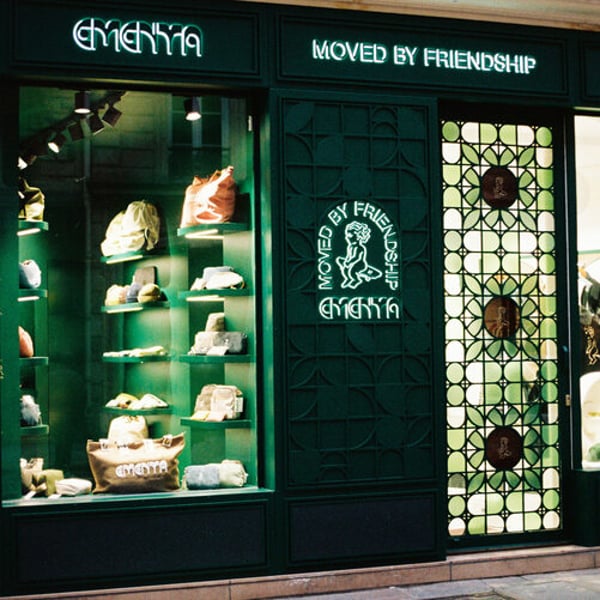
Just a stone’s throw from the bustle of Paris’ Les Halles, Ementa’s new boutique at 11, rue Montmartre gleams in green. The brand, ‘driven by friendship,’ has been revealing itself there, beyond its stained-glass doorway, since its official opening on December 6. It marks a new milestone for founders Emídio Silva, Nikita Gorev, and Raphael Castilho, whose adventure began amid Portugal’s markets.

Ementa opened its first boutique outside Portugal in Paris – Ementa

Born directly from the skateboarding world, Ementa launched in 2007. The three friends, then students at Academia da Amadora near Lisbon, shared the dream of creating their own label, inspired by the sponsor pieces from their sporting circle. They knew little about running a business, but that didn’t stop them. They took out a loan and financed production of their first thousand T-shirts.

A retail turning point beginning in 2021

By 2021, time had passed, but Ementa remained active. That year, an opportunity arose to open its first boutique at LX Factory in the Portuguese capital. The shop was fitted out almost entirely in the DIY spirit cherished by its founders. Around six months later, Ementa opened a second brick-and-mortar shop on Rua da Boavista, near Cais do Sodré, again in Lisbon.

The majority of its production is based in Portugal
The majority of its production is based in Portugal – Ementa

The third shop opened in 2023: Ementa’s flagship in Chiado, a lively district in southern Lisbon. ‘This project represented a far greater challenge than the previous ones,” the brand notes. “In 2024, we opened a boutique dedicated to collaborations with artists and exclusive collections, located right next to our first boutique at LX Factory,” it continues. The time then seemed ripe for Ementa to venture beyond the capital. On August 10, 2024, it inaugurated its fifth boutique, on Rua Sá da Bandeira in Porto- a ‘major challenge’ for the brand.

A mid-range positioning

This retail journey culminates today with the Paris opening. The brand also works with 27 stockists in total, including seven in France, one in Italy, two in Germany, and two in the Netherlands, with the remainder in Portugal. Its products are therefore available in several European countries. “Our aim is to be represented by avant-garde stockists with a sophisticated image and clear objectives,” says the brand.

Ementa draws inspiration from the world of skateboarding
Ementa draws inspiration from the world of skateboarding – Ementa

Drawing on its skateboarding heritage, the Portuguese brand’s offer spans a wide range of ready-to-wear pieces, including jackets, jumpers, screen-printed sweatshirts and T-shirts, cropped polo shirts, corduroy trousers, jeans, and accessories. As a lifestyle brand, Ementa also offers plenty of scarves, socks, sunglasses, caps, a few pieces of jewellery, and bags. Its prices sit below those of brands such as Palace Skateboards and Drôle de Monsieur, even though the majority of its production takes place in northern Portugal.

Ementa now aims to maintain a rhythm of a drop every fortnight, to bridge the gap between its autumn-winter and spring-summer collections. The brand hopes to continue its retail adventure with new openings, strengthening its existing boutiques, and international expansion.

This article is an automatic translation.
Click here to read the original article.

Copyright © 2025 FashionNetwork.com All rights reserved.


Source link

Continue Reading

Fashion

Parcel tax: the e-commerce sector calls on France not to break ranks with its European partners
Published

on


Published


December 16, 2025

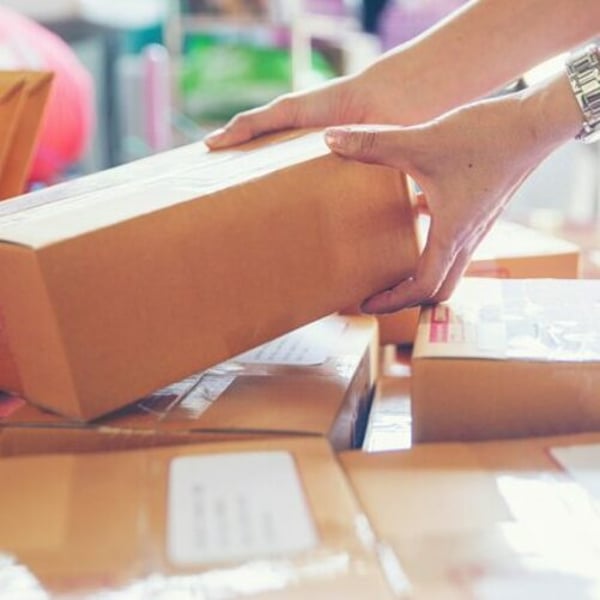
As the European Union prepares to impose a €3 levy on small non-EU parcels valued at under €150, the French Senate wants to increase the proposed national charge from €2 to €5. E-commerce organisation Fevad says this would be a mistake that could cost France half a billion euros and is urging lawmakers to change course.

Shutterstock

The Fédération française de la vente en ligne, which backs the French flat-rate tax proposal, is campaigning for the national levy to remain aligned with those of its neighbours. Several countries, including Belgium, the Netherlands, and Italy, are preparing their own €2 taxes on small non-EU parcels. In Fevad’s view, France would be shooting itself in the foot by falling out of step with neighbouring markets.

“To circumvent the new €5 French tax, non-EU platforms such as Shein and Temu will have little difficulty routing their small parcels destined for the French market via neighbouring countries where they already have logistics infrastructure, notably Belgium,” the federation says.

Fevad also points out that a €5 tax would cost France more than €500 million in lost revenue, due to parcels being redirected to port and airport hubs in neighbouring countries rather than in France.

A temporary European tax

This stance comes just days after the EU adopted a €3 EU-wide levy on non-EU parcels under €150. The measure will come into force on 1 July, but it will be temporary.

This flat-rate tax, irrespective of the parcel’s value, will apply pending the introduction of standard parcel taxation, which will then follow the usual tariff rules for personal consumer goods.

“While this is a step in the right direction towards levelling the playing field between EU-based and non-EU-based businesses, companies will also need clear operational arrangements to ensure legal certainty and to adapt their compliance models and internal IT systems in time,” says Luca Cassetti, secretary general of the European confederation Ecommerce Europe, of which Fevad is a founding member.

This article is an automatic translation.
Click here to read the original article.

Copyright © 2025 FashionNetwork.com All rights reserved.


Source link

Continue Reading

Fashion

Six Stories is expanding at pace so looks for major hires

Published

on


Published


December 16, 2025

UK fast-growing bridal and occasionwear brand Six Stories is on a major recruitment drive in order to support its “next phase of scale” backed by a “significant investment in senior talent”. 

Six Stories

After three consecutive years of “exceptional commercial performance and continued demand across its core categories”, the hiring drive includes newly-created roles such as head of Trade, head of Brand, Social Media manager, CRM manager and Paid Media manager.

Founder Lucy Menghini said the decision “reflects both the momentum behind the brand and the strategic foundations required for the business to accelerate further.”

She added: “Over the past three years our growth has exceeded every expectation, and it’s now essential that we build a senior team that can support the scale we’re heading into.”

She noted that its lofty 2026 strategy is about “elevating every part of the business, strengthening our brand, deepening our customer relationships, expanding internationally and continuing to lead in occasionwear.

“To do that, we need experts in place who can help us evolve while staying true to what makes Six Stories special. Investing in the right people ensures we’re building a lifestyle brand with longevity, ambition and real creative impact.”

The brand’s expansion follows a period of “rapid and sustained momentum”, recording 110% annual sales growth over each of the last three years. Meanwhile, the brand’s signature occasionwear has seen sales jump 250% in the past two years, while the bridesmaid category also grew 120% in the same period. 

The compamy says it sold eight dresses a second during Black Friday. 

And with 25% of sales already coming from the US, “international expansion will be a major focus for 2026”.

The retailer said demand for bridesmaid dresses and occasionwear in the US has “skyrocketed”, with sales up 391% year-on-year, prompting Six Stories to plan a series of “brand activations, partnerships, and targeted campaigns across key markets to leverage this strong customer base”.

Menghini added: “As we grow, our vision extends beyond individual collections. We want to continue leading in the bridal space and set a new vision for the women of 2026, creating a lifestyle destination that celebrates them. I believe 2026 will be our most transformative year yet.”

That will come as the brand unveils new collections, explores collaborations “with leading creatives, talent and household brands”, while broadening into new product categories and investing in initiatives that “personalise the customer journey, strengthening its reach and impact internationally”.

Copyright © 2025 FashionNetwork.com All rights reserved.


Source link

Continue Reading

Trending

Copyright © Miami Select.