
Fashion
London Fashion Week hopes to usher in a new era with leadership change

By
AFP
Published
September 18, 2025
London Fashion Week, under new leadership after 16 years, opens on Thursday with hopes of reinvigorating its runway schedule and alleviating the financial woes of its young designers.
“This season marks… the beginning of a new era for British fashion,” said Laura Weir, former creative director of luxury department store Selfridges, who replaced Caroline Rush as the head of the British Fashion Council (BFC) in April.
Weir faces an uphill battle to allay concerns about the relevance and international standing of the fashion week, given the recent departures of major fashion names to its star-studded counterparts in Milan, Paris, and New York.
“My main objective is to ensure London Fashion Week remains the ultimate platform to showcase and celebrate the very best of British creativity while continuing to support designers who have built the foundations of British fashion and forged paths internationally,” Weir told AFP ahead of LFW.
LFW’s June edition, initially launched to focus on menswear, was cancelled this year and replaced by a simple commercial showroom in Paris.
Following a lackluster schedule in February, marked by several absences as some designers opted to stage just one show a year due to the high costs, the BFC is hoping for a more exciting program this time.
To ease the financial burden, “we have waived membership fees to make the platform more accessible to designers,” said Weir.
The former Vogue journalist said the BFC had also “curated a schedule that speaks to London’s cultural relevance” and “doubled our investment in our international guest program to ensure heavyweight buyers, media and cultural voices are here in London.”
Since taking the helm, Weir has increased scholarship funding and secured a three-year funding commitment for the NewGen program, which supports emerging young designers, according to British Vogue.
Fabric scraps, crinolines
Despite its recent woes, LFW has remained a hub for discovering new and exciting fashion talent, partly thanks to the NewGen incubator.
Several designers have launched successful fashion careers off its back, like Irish designer Simone Rocha, known for her Victorian-style dresses adorned with lace and crinoline, or London-based Richard Quinn, whose elegant designs received a nod from the late Queen Elizabeth II.

LFW kicks off Thursday with up-and-coming British designer Maximilian Raynor, who has been recognized for his commitment to sustainable fashion, with his designs often featuring fabric scraps.
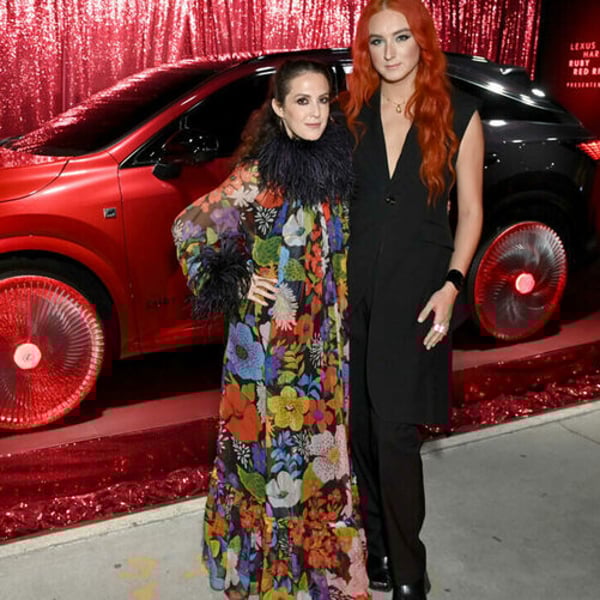
That runway will be followed by Harris Reed, the young British-American designer and creative director at Nina Ricci, whose gender-fluid designs have bewitched LFW attendees since he burst onto the scene five years ago.
In other good news for LFW, JW Anderson will return to the schedule after skipping the February edition.
However, the label will forego the runway in favor of a scaled-down dinner this year, as this summer Dior entrusted the artistic direction of all its collections — including men’s, women’s, and haute couture — to the prodigal son, Jonathan Anderson.
After stepping down as creative director of Spanish brand Loewe earlier this year, the Northern Irish designer has refocused his own label on a “lifestyle” concept, incorporating furniture, tableware, craft objects, and even honey.
Also presenting their spring/summer collections will be British fashion icons such as Paul Costelloe and Burberry, which weathered the storm of a difficult year for luxury fashion and US tariffs, as well as London catwalk regulars Roksanda and Dilara Findikoglu.
Copyright © 2025 AFP. All rights reserved. All information displayed in this section (dispatches, photographs, logos) are protected by intellectual property rights owned by Agence France-Presse. As a consequence you may not copy, reproduce, modify, transmit, publish, display or in any way commercially exploit any of the contents of this section without the prior written consent of Agence France-Presses.

Published
December 16, 2025
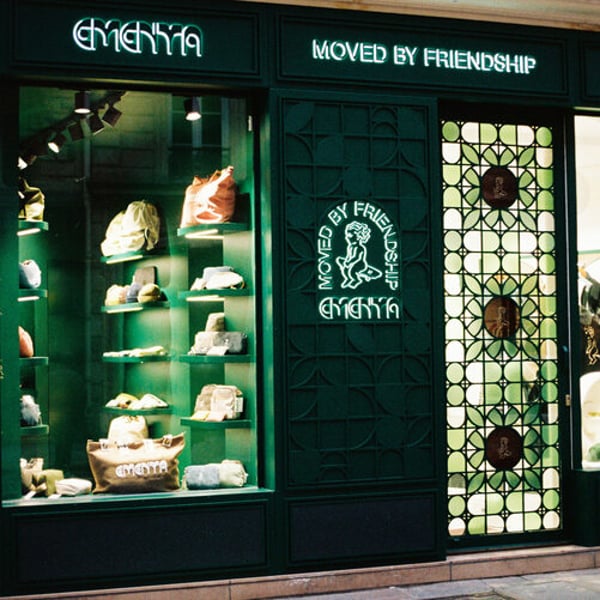
Just a stone’s throw from the bustle of Paris’ Les Halles, Ementa’s new boutique at 11, rue Montmartre gleams in green. The brand, ‘driven by friendship,’ has been revealing itself there, beyond its stained-glass doorway, since its official opening on December 6. It marks a new milestone for founders Emídio Silva, Nikita Gorev, and Raphael Castilho, whose adventure began amid Portugal’s markets.
Born directly from the skateboarding world, Ementa launched in 2007. The three friends, then students at Academia da Amadora near Lisbon, shared the dream of creating their own label, inspired by the sponsor pieces from their sporting circle. They knew little about running a business, but that didn’t stop them. They took out a loan and financed production of their first thousand T-shirts.
A retail turning point beginning in 2021
By 2021, time had passed, but Ementa remained active. That year, an opportunity arose to open its first boutique at LX Factory in the Portuguese capital. The shop was fitted out almost entirely in the DIY spirit cherished by its founders. Around six months later, Ementa opened a second brick-and-mortar shop on Rua da Boavista, near Cais do Sodré, again in Lisbon.

The third shop opened in 2023: Ementa’s flagship in Chiado, a lively district in southern Lisbon. ‘This project represented a far greater challenge than the previous ones,” the brand notes. “In 2024, we opened a boutique dedicated to collaborations with artists and exclusive collections, located right next to our first boutique at LX Factory,” it continues. The time then seemed ripe for Ementa to venture beyond the capital. On August 10, 2024, it inaugurated its fifth boutique, on Rua Sá da Bandeira in Porto- a ‘major challenge’ for the brand.
A mid-range positioning
This retail journey culminates today with the Paris opening. The brand also works with 27 stockists in total, including seven in France, one in Italy, two in Germany, and two in the Netherlands, with the remainder in Portugal. Its products are therefore available in several European countries. “Our aim is to be represented by avant-garde stockists with a sophisticated image and clear objectives,” says the brand.

Drawing on its skateboarding heritage, the Portuguese brand’s offer spans a wide range of ready-to-wear pieces, including jackets, jumpers, screen-printed sweatshirts and T-shirts, cropped polo shirts, corduroy trousers, jeans, and accessories. As a lifestyle brand, Ementa also offers plenty of scarves, socks, sunglasses, caps, a few pieces of jewellery, and bags. Its prices sit below those of brands such as Palace Skateboards and Drôle de Monsieur, even though the majority of its production takes place in northern Portugal.
Ementa now aims to maintain a rhythm of a drop every fortnight, to bridge the gap between its autumn-winter and spring-summer collections. The brand hopes to continue its retail adventure with new openings, strengthening its existing boutiques, and international expansion.
This article is an automatic translation.
Click here to read the original article.
Copyright © 2025 FashionNetwork.com All rights reserved.
Fashion
Parcel tax: the e-commerce sector calls on France not to break ranks with its European partners


Lidl launches holiday meal deal for less than $4 per person

2nd Doctor Who Pleaded Guilty in Matthew Perry Death Case Sentenced

US imports of Chinese textiles and clothing slump by 27%
-

 Politics8 years ago
Congress rolls out ‘Better Deal,’ new economic agenda
-
Entertainment8 years ago
New Season 8 Walking Dead trailer flashes forward in time
-
Politics8 years ago
Poll: Virginia governor’s race in dead heat
-
Entertainment8 years ago
The final 6 ‘Game of Thrones’ episodes might feel like a full season
-
Entertainment8 years ago
Meet Superman’s grandfather in new trailer for Krypton
-
Politics8 years ago
Illinois’ financial crisis could bring the state to a halt
-
Business8 years ago
6 Stunning new co-working spaces around the globe
-
Tech8 years ago
Hulu hires Google marketing veteran Kelly Campbell as CMO