
Business
Sardar Biglari’s 14-year war with Cracker Barrel has earned him $1 billion

Cracker Barrel unveiled a sleek new logo this summer. Stripped of its folksy Uncle Herschel mascot—a denim-clad old man perched on a chair beside a barrel—the marque was replaced with a pared-down silhouette of a stylized barrel and the restaurant’s name in a simplified, modern typeface. It was the product of a $700 million push intended to refresh the Southern-themed chain for a new generation.
Instead, the redesign detonated a culture war. It drew outrage from longtime diners. President Trump said “Cracker Barrel should go back to the old logo, admit a mistake based on customer response.” The conservative activist Robby Starbuck, writing in a post on X, said “Good morning @CrackerBarrel! You’re about to learn that wokeness really doesn’t pay.”
Oddly, it also attracted the fury of fellow dining chain Steak ‘n Shake.
In a series of posts on X, Steak ‘n Shake’s official account issued calls for Cracker Barrel CEO Julie Felss Masino to be fired. It mocked the rebrand, and posted images of red MAGA-style hats that read “Fire Cracker Barrel CEO” and “Biglari was right about everything.”
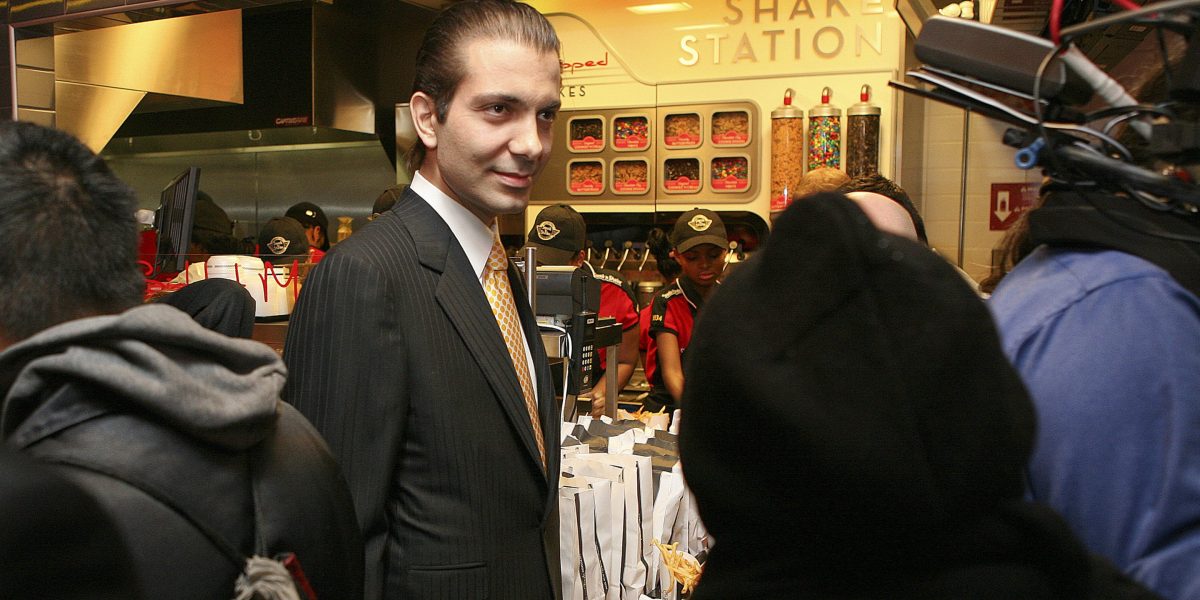
“Biglari” is a reference to activist investor (and Steak ‘n Shake owner) Sardar Biglari, who owns a $54.5 million stake in Cracker Barrel. He made a 120-page presentation to Cracker Barrel shareholders in 2024. His manifesto decried the Southern dining chain’s costly rebranding attempt as “obvious folly.” He pushed for board seats—he wanted to be chairman—and lampooned management’s “corporate myopia.” (Despite Biglari’s warnings, the board sided with Masino’s decision to modernize the brand.)
Photo Illustration by Avishek Das/SOPA Images/LightRocket via Getty Images
Within days of Cracker Barrel’s decision to ditch Uncle Herschel, the company’s market cap had shed $143 million, 15% of its value, forcing it to reinstate its old branding and pause plans to remodel Cracker Barrel locations. But for Biglari, one of the chain’s largest investors, the rollback merely stoked the flames of his 14-year insurgency against the company.
In fact, Bigalri has launched at least seven proxy battles at the company, most of which were unsuccessful. Cracker Barrel has previously dismissed Biglari’s motives as self-interested, accusing him of being an “activist shareholder” with a disruptive agenda, a reputation Biglari himself has cultivated throughout his storied career.
A taste for conflict
Biglari was born in Tehran in 1977. His father, a former military officer, was imprisoned following the Iranian revolution until his mother was able to negotiate his release with prison guards, according to reporting by the New York Times. The Biglari family then emigrated to the United States, settling in Texas in 1984, where they opened and operated a rug store. Biglari now resides in San Antonio, Texas.
In 1996, as a freshman at Trinity University in Hartford, Connecticut, Biglari got his first taste of running a business when—in the early days of the dot-com boom—he and a friend started a dial-up internet service provider called INTX Networking, after raising $15,000. The duo sold the business in 1999 for an undisclosed amount to Internet America, reportedly due to concerns about the tech bubble and the emergence of broadband technologies like cable and digital subscriber lines.
By this time, Biglari had become a fan of Warren Buffett, with whom he shares a birthday (August 30). Like Buffett, many of Biglari’s interests revolve around classic American brands that were neglected by their previous owners. “We view Biglari Holdings as a museum of businesses,” he wrote in a 2023 letter to shareholders. “The art we practice is that of collecting and building businesses.”
Photo by Paul Weaver/SOPA Images/LightRocket via Getty Images
After graduation, Biglari used the proceeds of the INTX sale to start a hedge fund, the Lion Fund, which would become his entry point into corporate warfare. It’s not clear how big a warchest Lioin wields, but by 2005 the fund bought a stake in a small steakhouse chain based in Roanoke, Virginia, called “Western Sizzlin.” As Biglari accumulated more shares, he began arguing the business was mismanaged and undervalued, and eventually became chairman of the board, in 2006. At the time, Western Sizzlin had long been in a period of decline, having filed for bankruptcy in 1992. The chain, however, was showing some signs of recovery under then-CEO James Verney.
Biglari went on to acquire and restructure Western Sizzlin by taking a page out of Warren Buffett’s book and creating a holding company that divided the chain into individual subsidiaries, each of which was treated as a separate business. Cash from each subsidiary was then redirected to the most beneficial investment within the holding company. The reorganization got clear results, with profits rising from under $1 million annually, pre-acquisition, to approximately $2.4 million by 2011. Rising profits occurred despite the number of open Western Sizzlin locations declining, going from 144 in 2005 to 94 in 2011.
“He’s whip smart. He’s very good at articulating his problems with corporate governance,” Jim Gillies, an analyst and advisor at the Motley Fool and longtime follower of Biglari, told Fortune. This ability to identify and address key operational issues, he said, has contributed to Biglari’s business wins.
Having seen success in his investment strategy, Biglari turned his attention towards ice-cream chain Friendly’s, where he accused the company’s leadership of wasting money and promoting a “self-interested culture.” He argued that Friendly’s cash flow had generally been negative since its public offering in 1997, which he attributed to the company’s “enormous” debt, totalling $131 million. Biglari also focused on alleged mismanagement by Friendly’s then-CEO and board, whom he accused of neglecting their fiduciary obligations to shareholders to line their own pockets and ignoring conflicts of interests related to the CEO’s external business ventures, namely his significant stake in another restaurant company. To up the pressure in his pursuit of two Friendly’s board seats, he rented billboards near the chain’s headquarters directing passersby to a website, “Enhance Friendly’s,” that detailed his plans for the business.
Although Biglari was unsuccessful in his crusade for control of Friendly’s, he cashed out his 15% ownership of the chain when it was acquired by a private equity firm in 2007 for $337 million, equal to $15.50 per share, a 30% premium over its prior price.
Biglari’s unconventional tactics led to one of the ice-cream chain’s founders, Curtis Blake, calling him a “corporate raider.” This characterization has since prompted comparisons to famed interventionist Carl Icahn.
“He’s not a guy who’s afraid of picking a fight,” Zeke Ashton, managing partner of Centaur Capital Partners, which owns shares in Biglari Holdings, once told DealBook.
Despite his confrontational reputation, Biglari notably avoids media coverage and has not in recent years participated in interviews. He declined to comment when reached by Fortune. Instead, the Iranian investor’s public relations modus operandi consists of strongly worded letters to shareholders, SEC filings, provocative online campaigns, and, most recently, memes.
The most successful deployment of these methods was his takeover of Steak ‘n Shake, in 2008. At the time, the chain was near insolvency, losing approximately $100,000 per day with only $1.6 million in cash against $27 million in debt. Biglari, who had purchased a 7% stake in the chain in 2007, became the company’s third-largest shareholder, owning more shares than all of Steak ‘n Shake’s then executive officers and directors combined.
Then, he replicated his Friendly’s strategy, buying “Enhance Steak ‘n Shake” billboards around the chain’s Indianapolis headquarters and railing against the chain’s years of financial decline to advocate for two board seats. During the 2008 financial crisis, Biglari seized on shareholder anger and economic uncertainty. He won a proxy contest with more than 70% of shareholder votes for two board seats, ousting then chairman Alan Gilman and former CEO James Williamson Jr. By August of that year, following a brief period of board infighting, Biglari was made CEO.
Biglari’s vision for Steak ‘n Shake was to revitalize the ailing brand by implementing tighter cost controls, improved service, and a more entrepreneurial mindset. He sought to improve customer experience in the company’s 500 restaurants in 19 states by adding background music and removing harsh fluorescent lighting that he felt made guests feel uncomfortable.
Under Biglari’s leadership, Steak ‘n Shake’s economic performance rebounded, with the stock price rising from around $5 when he became CEO to nearly $15 the following year. In 2010, that number reached approximately $50, and Steak ‘n Shake Company officially changed its name to Biglari Holding. In just three years, the chain went from losing around $30.8 million (as of 2009) to a gain of $41.2 million in operating earnings by 2011. Strong financial performance continued for Steak ‘n Shake into 2016 as the brand became Biglari’s cash cow, generating more than $250 million in total operational earnings and funding Biglari Holdings’ expansion into other business ventures.
Biglari’s Steak ‘n Shake victory led to the birth of Biglari Holdings. He pitched the rebranded Steak ‘n Shake Company to investors as the next Berkshire Hathaway. He even changed the company’s ticker to “BH” to echo Buffett’s firm. Biglari has 70% voting control over BH.
The belly of Biglari Holdings
While Biglari Holdings’ roots are in classic American dining brands, its investments are now diversified. In 2014, as Steak ‘n Shake was thriving, Biglari bought the men’s magazine Maxim for an estimated $12 million. His plan for the publication was to “build the business on multiple dimensions, thereby energizing our readership and viewership.” He officially took over as the magazine’s editor-in-chief in 2016 and has since reportedly exercised complete editorial control over the publication, including the decision to endorse President Donald Trump in the 2024 presidential election and the inclusion of Biglari’s signature on every magazine edition. Maxim, under Biglari, has reported steady losses of approximately $37 million over the past decade. He acknowledged in Biglari Holdings’ 2024 annual report that 2025 would be a “pivotal” year for the magazine as every subsidiary must be a “long-term supplier of cash.”
Biglari expanded aggressively from there. He acquired First Guard Insurance Company, a commercial trucking underwriter, in 2014. In 2020, he added Southern Pioneer Property & Casualty Insurance Co. Then he went into oil and natural gas, acquiring Southern Oil of Louisiana Inc. for $51.5 million in 2019 and 90% control of San Antonio-based Abraxas Petroleum for $80 million in 2022. He also, as of 2023, owns 402,000 shares of Ferrari with a market value of $135 million.
But underperforming restaurant brands remain a special source of fascination for Biglari. By July 2025 he had a 9.98% stake in the Jack in the Box burger chain. (The company adopted a “poison pill” defense to ward him off.) And he is currently the largest shareholder of the El Pollo Loco chicken chain, owning 15.5%.
The investments made Biglari a wealthy man. But that wealth was generated by self-serving conflicts of interest, his critics say, and—ironically—it has hobbled his ability to move against Cracker Barrel.
When governance meets Goliath
For more than a decade, Biglari Holdings and Biglari himself have been plagued by accusations of mismanagement due to ballooning executive pay, stock volatility, and a licensing deal that potentially advantages Biglari personally.
Between 2009 and 2015, Biglari took home nearly $76 million in compensation and bonuses, representing as much as 38% of Biglari Holdings’ operating income in that period. Until 2019, the pay package carried a cap of $10 million. That was quietly removed, allowing for far higher compensation depending on performance and acquisitions. His future net worth is secured by a 2013 licensing deal in which Biglari licensed the “Biglari” name to Steak ‘n Shake and Biglari Holdings for 20 years. If removed from his roles for anything other than malfeasance, or if the company were sold, he would be entitled to 2.5% of sales for five years—a payout potentially topping $100 million.
This deal got Biglari listed in the “Corporate Governance Hall of Shame” by the investor publication 13D Monitor, according to a copy seen by Fortune.
“Coming up in the first few years when he was gaining recognition, he very much sang from that hymnal of we’re all going to make money together. And then once he was in a position to put his thumb on the scale, he did,” Gillies said.
These factors have sparked multiple proxy fights and repeated calls for reform from activist firms like Groveland Capital. They have also derailed Biglari’s attempt to gain control of Cracker Barrel.
“The type of activism he conducts doesn’t really enrich corporate governance. It ingratiates himself more with shareholders and was easier to get away with years ago,” Ken Squire, founder and president of 13D Monitor, told Fortune. “Now that activists have become much more responsible and much more mainstream, the ones who haven’t evolved are finding it harder to get anything done.”
Throughout Biglari’s numerous attempts to secure board seats at the chain, executives at Cracker Barrel have cited his executive compensation as proof of his ill intentions for the brand. Others have pointed to Biglari’s practice of hanging his portrait in every Steak ‘n Shake location and the chain’s own financial struggles.
Steak ‘n Shake’s performance has been volatile over the past five years. It was especially affected by the COVID-19 pandemic, with periods of significant losses followed by a notable recovery in profitability driven by cost-cutting and a transition to franchising. The chain has shrunk to 426 Steak ‘n Shake locations as of 2024, from its peak of over 600.
Biglari—who once called himself “supremely insensitive to criticism”—is undeterred.
The case against Cracker Barrel
Biglari’s attack on Cracker Barrel began in the early 2010s when his reputation was bolstered by Steak ‘n Shake’s turnaround. Between May 2011 and December 2012, Biglari purchased 4,737,794 shares of Cracker Barrel for $241.1 million. By 2012, he held nearly 20% of Cracker Barrel’s outstanding stock. As with Steak ‘n Shake and Friendly’s, Biglari’s launched “EnhanceCrackerBarrel.com” as an investor-focused website. He began publishing press releases and shareholder letters criticizing management, and demanded board representation and strategic changes.
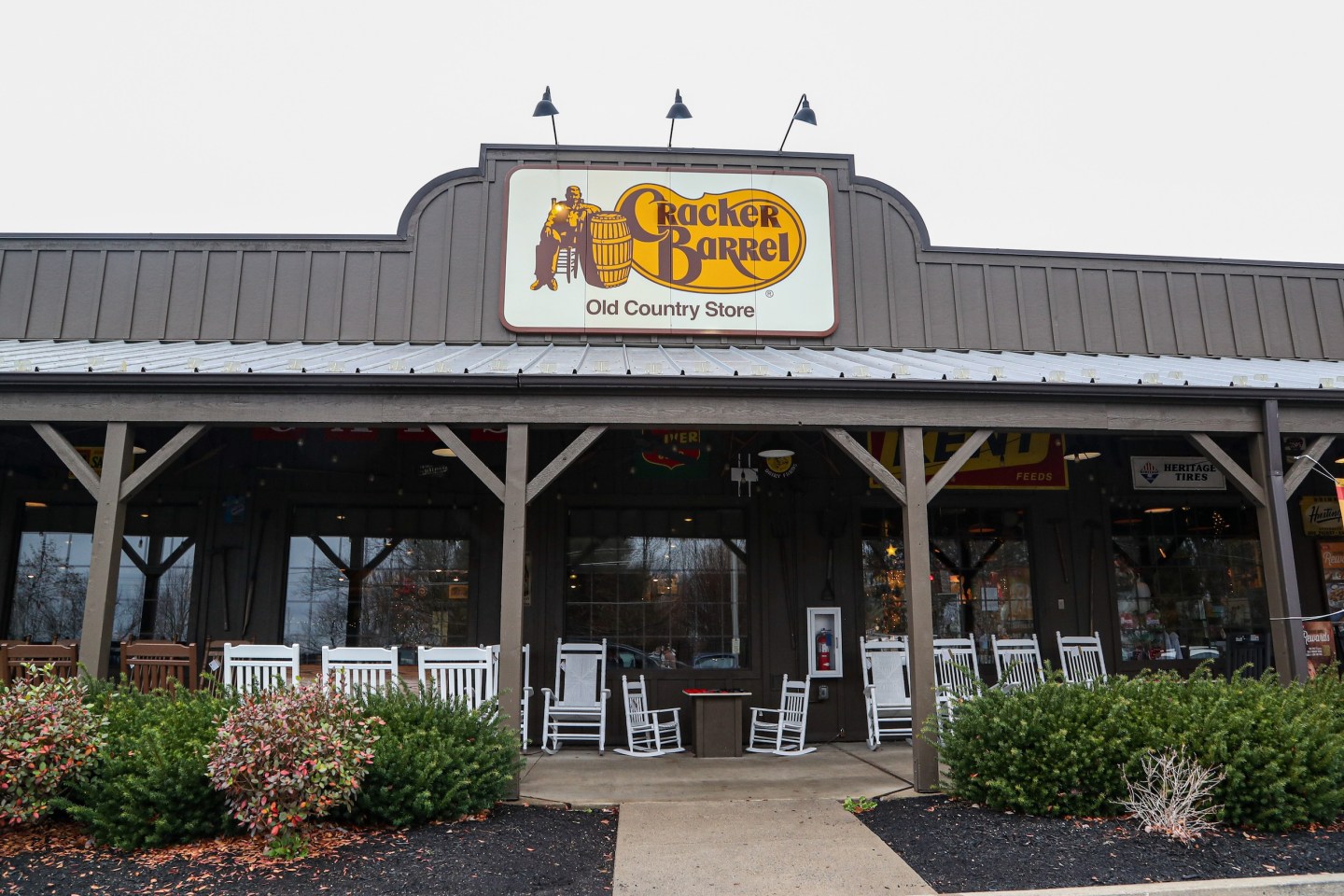
Photo by Paul Weaver/SOPA Images/LightRocket via Getty Images
Biglari’s core demands were to stop opening new stores entirely, eliminate the development team to save money, and focus exclusively on improving existing store operations rather than expansion. In his 2012 letter to shareholders, he criticized what he saw as Cracker Barrel’s fundamental failures, arguing that despite having “one of the greatest restaurant concepts ever created,” the company suffered from poor execution and misguided expansion strategies.
Biglari was particularly critical of the company’s store-level deterioration. In one analysis, he compared Cracker Barrel’s operating income of $164.9 million with 357 stores in fiscal 1998 ($462,000 per store) to 2012’s operating income of $181.3 million with 616 stores (only $294,000 per store). This declining per-unit profitability became a central theme in his critiques and proxy battles.
His first proxy battle for board representation occurred in 2011. Despite receiving endorsement from Glass Lewis (one of the major proxy advisory firms), Biglari received only 6.5 million shareholder votes compared to 12 million for the incumbent director. This defeat was the closest he ever came to victory over Cracker Barrel. Although it did succeed in triggering the replacement of then CEO Michael Woodhouse with Sandra Cochran, the following year he launched another campaign, nominating himself and an ally, only to receive nearly 1 million fewer votes.
In 2013, Biglari introduced a new strategy: demanding a special $20 per share dividend that would have been worth approximately $94.8 million to his holdings. To demonstrate the feasibility of this proposal, Biglari obtained a “highly confident letter” from Jefferies LLC confirming their ability to arrange up to $800 million in debt financing to fund such a dividend. Still, this proposal, board nominations, received only 5.9 million votes, with just 1.2 million coming from sources other than Biglari himself.
Biglari continued and failed to secure seats on the Cracker Barrel board through 2017 when he began quietly selling off shares. This strategic shift coincided with Cracker Barrel’s stock performance improving significantly, heading toward its eventual peak. Cracker Barrel’s stock reached its all-time high of $183.29 on November 27, 2018—a remarkable 234% return from Biglari’s initial investment price.
In 2020, however, Biglari’s criticism of Cracker Barrel was reignited after the company’s $133 million investment in Punch Bowl Social, a bar and entertainment concept, in 2019, failed during the pandemic. Cracker Barrel was forced to write off the entire investment.
In a 2020 letter to shareholders, Biglari predicted the Punch Bowl investment would “go down as one of the worst business blunders in the annals of restaurant history.” The decision wiped out 50% of the company’s pre-tax earnings from 2019, he claimed. Guest traffic had also fallen 18.6% from 2005 to 2019. (Declining guest traffic remains a consistent trend at Cracker Barrel.)
Using this to fuel an aggressive push for reform at Cracker Barrel, Biglari nominated his own board candidate, arguing that “losing $137 million of shareholders’ money in eight months” was sufficient reason to add “one board member with restaurant experience.” He further argued that should Cracker Barrel focus on enhancing its core operations, it could unlock over $600 million in added annual revenue.
CEO Cochran’s response was equally forceful. She characterized Biglari’s track record as having a “lagging performance and problematic governance practices at his own company.” She specifically cited Steak ‘n Shake’s same-store sales decline of 6.9% and foot-traffic decrease of 11.2% in 2019.
After more than a decade of proxy battles, 2022 brought a surprising truce when Cracker Barrel and Biglari entered into a Nomination and Cooperation Agreement. Under the agreement, Cracker Barrel expanded its board from 10 to 11 members and appointed Jody Bilney, one of Biglari’s preferred nominees, as an independent director. Bilney held significant credentials, having served as chief marketing officer for Humana and chief brand officer for Bloomin’ Brands.
Photo by GREGORY WALTON/AFP via Getty Images
When the cooperation agreement expired, however, Biglari immediately returned to his old ways, announcing his intention to nominate five candidates to Cracker Barrel’s board. The 2024 battle centered on Cracker Barrel’s strategic transformation plan under new CEO Julie Masino, who had replaced Sandra Cochran in 2023.
In his October 2024 shareholder letter, Biglari wrote: “Since 2019, the shareholders of Cracker Barrel have collectively lost over $2.9 billion in market value … Neither the appointment of Julie Felss Masino as the Company’s CEO nor her new transformation plan has restored shareholder value.”
The chain’s market value fell by approximately $287 million, and the stock price decreased by nearly 20%, in the 14 months following Masino’s appointment. But aales performance at the company showed gradual recovery. All the while, Cracker Barrel’s CEO and board compensation rose sharply. CEO pay increased from around $1 million in 2011 to more than $7 million in 2025.
Biglari echoed his initial warning that November, saying that “If you had $100 in Cracker Barrel stock in January 2019, five years later it is worth about $30. Therefore, there is just $30 to go before the entire investment is lost.” He warned of “a significant risk of a 50% loss or more if we are not elected to the Board.”
Cracker Barrel shareholders once again rejected Biglari’s nominees. But the company agreed to add Biglari’s pick of Michael Goodwin, former PetSmart CTO, to the board as a compromise.
A Cracker Barrel spokesperson defended the chain’s decision to raise its executive compensation packages, telling Fortune, “For the last several years the company has directly engaged with many of its largest shareholders to discuss a variety of topics, including executive compensation, and no shareholder ever expressed any disagreement or concern with the company’s executive compensation plans or practices. More broadly, Cracker Barrel’s shareholders have evidenced their support for the company’s executive compensation plans and practices by voting in favor of the company’s say-on-pay proposals each year by significant margins.”
Cracker Barrel’s financial outlook remains unsavory. Chain traffic has declined, down 2.7% in Q2 of 2025. Its stock is down 9.6% year-to-date in 2025 in a market where shares have risen 12% year to date through mid September. The chain’s struggles, according to Gillies, are a “spectacular” failure on the part of Cracker Barrel management.
Cracker Barrel, however, pointed to improving revenue growth in 2025 in an interview with Fortune. The company has reported four consecutive quarters of positive restaurant sales growth. Its revenue is up 1.5% year to date and 2.84% year-over-year. (In 2024, the company’s revenue increased by only 0.8%) This growth remains significantly below industry averages. Cracker Barrel competitor IHOP reported an 11.9% increase in revenue in Q2 2025 from the same period in 2024.
“Through his campaigns, Mr. Biglari has made numerous false and misleading claims about Cracker Barrel, its Board and management,” a Cracker Barrel spokesperson told Fortune. “We believe that Mr. Biglari’s unprecedented seven proxy solicitations against the Company in the past 14 years have been for purely self-interested reasons, and that his own actions and poor performance at Steak ‘n’ Shake and Western Sizzlin’ remain cautionary tales. We appreciate the support from our shareholders as they have consistently rejected his proposals and nominees by overwhelming margins each time.”
Biglari’s proxy battles stand as one of the longest and most contentious activist campaigns in restaurant industry history. Despite the defeats, his investment in Cracker Barrel has been extraordinarily profitable.
Biglari sold off much of his stake, beginning in 2020, and now controls less than 5% of Cracker Barrel. Yet his investment has generated nearly $1 billion in total gains through dividends, stock sales, and remaining holdings for Biglari.
“Cracker Barrel is painting Biglari as this short-term profiteer. It’s been 14 years. He’s still there,” Gillies said.



Portuguese label Ementa makes its Paris debut

Paul Renner campaign launches ‘Women for Renner Coalition’ with steering committee

A SpaceX IPO could be the largest public offering of all time—and Elon Musk’s biggest headache
-

 Politics8 years ago
Congress rolls out ‘Better Deal,’ new economic agenda
-
Entertainment8 years ago
New Season 8 Walking Dead trailer flashes forward in time
-
Politics8 years ago
Poll: Virginia governor’s race in dead heat
-
Entertainment8 years ago
The final 6 ‘Game of Thrones’ episodes might feel like a full season
-
Entertainment8 years ago
Meet Superman’s grandfather in new trailer for Krypton
-
Politics8 years ago
Illinois’ financial crisis could bring the state to a halt
-
Business8 years ago
6 Stunning new co-working spaces around the globe
-
Tech8 years ago
Hulu hires Google marketing veteran Kelly Campbell as CMO