U.S. online sales growth during the 2025 holiday season is expected to slow from last year, as price-conscious shoppers stay picky with their spending amid rising living costs, according to a Salesforce forecast.
Reuters
Salesforce projects online spending between November 1 and December 31 to rise 2.1% to $288 billion, lower than a 4% increase to $282 billion in the same period last year.
The outlook echoes recent reports from Deloitte and PwC, underscoring a subdued holiday season that will see shoppers prioritize essentials, hunt for deeper discounts and cut back on discretionary purchases as economic uncertainty weighs on sentiment.
In recent weeks, major retailers have issued mixed forecasts heading into the crucial holiday season. While Walmart and Macy’s have raised their outlook, toymaker Mattel cut its forecast.
“One of the things that we are … potentially concerned about is if more consumers get more surprises from import fees than they do now from carriers, that could potentially have an impact on e-commerce,” said Caila Schwartz, director of Strategy and Consumer Insights at Salesforce.
While retailers are expected to be more cautious with promotions this year, major chains including Amazon and Target announced their holiday deal days for October this week.
Amazon’s second Prime Day of the year will return October 7 and October 8. Target on Tuesday said it was kicking off its deals week from October 5, with products ranging from holiday decor to toys mostly priced under $20.
Walmart is also cutting prices on 500 items in the toy aisle, it announced on Tuesday.
Artificial intelligence-powered recommendations and agent-assisted shopping are expected to boost purchases, with Salesforce estimating that these technologies will drive $51 billion in U.S. online sales, 18% of overall projected sales.
Salesforce analyzed data from more than 1.5 billion global shoppers across 89 countries using its cloud platforms, while also blending research from consumer sentiment surveys of 5,500 people to generate its forecasts, it said.
Pepco’s preliminary results for FY25 showed the European value retail giant turning in a “strong financial performance” as it said “significant strategic execution delivers [a] transformational year”.
Pepco
The results, for the 12 months to the end of September, showed revenue rising 8.7% to €4.5 billion. Like for like (LFL) revenue growth was 2.6% after a 3% fall in the previous year. The gross profit margin rose to 48% from 47% and underlying EBITDA on an IFRS 16 basis was up 10.3% at €865 million. On a pre-IFRS 16 basis it was up 10.6% at €531 million. Underlying profit after tax rose 19.7% to €219 million.
All that came as the sale of Poundland was successfully completed in June 2025, “significantly simplifying the group structure”.
Pepco’s FMCG exit was also completed including the conversion of most Pepco plus stores in Iberia, “generating encouraging results”.
The company also saw an improved performance in Poland and Western Europe in general and the acceleration of its digital journey with a new website, app and loyalty scheme ready for launch in Q1 FY26.
It also said that the Dealz chain is now fully independent and the divestment process is intended to start next year as it explores strategic options for the business.
The big event during the year was the aforementioned sale of Poundland, the UK operation that had been a drain on the wider business in recent periods. With that now divested, it’s clear that the company is able to move forward and it confirmed that FY26 underlying EBITDA is expected to grow at least 9%.
That view is boosted by current trading. In the first financial quarter-to-date (1 October to 13 December 2025), Pepco LFL revenues have risen 3.9% excluding FMCG (LFL of +0.3% including FMCG).
It saw a solid start to the quarter in October but this was partially offset by a weaker November in line with the broader market, before returning to growth in December.
Dealz, as mentioned, is next to be divested but for now it’s dragging down the overall company performance, Pepco saying that this reflects “challenging trading conditions across all categories, particularly in health and beauty”.
Commenting on the results overall, CEO Stephan Borchert said: “2025 was a real turning point… the group has executed at exceptional pace, delivering significant progress in a short timeframe. The decision to refocus on Pepco and exclusively on our core categories of clothing and general merchandise has been validated by these strong results, in particular our gross margin and free cash performance, which were both ahead of expectations.
“We opened 247 net new stores with strengthened store economics and returns on capital for Pepco across our geographies, as we progressed our disciplined opening plans in both Western Europe, and Central and Eastern Europe. The performance of Western Europe has become a clear growth engine, exceeding our initial expectations. It is clear this region is now prepared for future accelerated growth.
“The development of our digital capabilities is progressing as per plan, and we are on track for launch during calendar Q1 2026.”
Activist investor Elliott Management has amassed a stake of more than $1 billion in Lululemon Athletica and is lining up a potential CEO candidate as it pushes to revive the struggling athletic apparel retailer, a source told Reuters on Wednesday.
Lululemon
Elliott has been working closely for months with veteran retail executive Jane Nielsen, former chief financial officer and chief operations officer at Ralph Lauren, and views her as a potential CEO candidate, the source added.
The hedge fund is now one of Lululemon’s biggest investors, with the move coming amid a busy year for Elliott that already includes a recent investment in PepsiCo and an earlier proxy fight at Phillips66.
The Wall Street Journal first reported the stake. Elliott and Lululemon did not immediately respond to Reuters’ requests for comment.
Last week, Lululemon said CEO Calvin McDonald would step down in January after seven years in the role, without naming a successor. Its share price rose after news of McDonald’s impending departure but has dropped about 60% from its peak two years ago.
The company, valued at $25 billion, now likely faces an expensive and drawn-out board dispute over the position of CEO. Its founder and largest shareholder, Chip Wilson, has also called for an urgent CEO search, led by new, independent directors with deep company knowledge to restore a product-first focus.
Wilson, who has previously courted criticism by saying some women’s body shapes “just actually don’t work” with Lululemon yoga pants, has publicly blamed McDonald and the board for the company’s lagging share price.
Known for its high-priced leggings and athleisure wear, Lululemon has ceded market share to newer brands such as Alo Yoga and to lower-cost private-label lookalikes, with executives voicing disappointment with product execution.
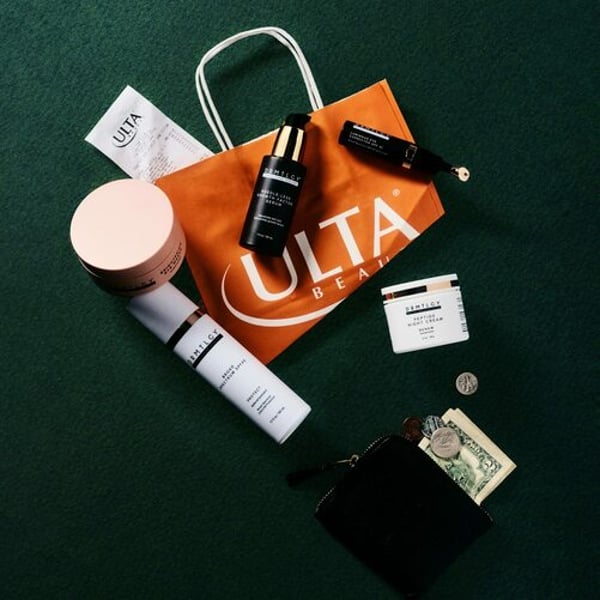
Clinical skincare brand Drmtlgy will make its brick-and-mortar debut at Ulta Beauty on December 26, rolling out to nearly all of the retailer’s more than 1,400 U.S. stores and online.
Drmtlgy makes retail debut at Ulta Beauty. – Drmtlgy
The exclusive launch marks a major expansion for the fast-growing brand, which is known for its evidence-based, dermatologist-trusted formulations. Through Ulta Beauty’s national footprint, Drmtlgy aims to broaden access to its technology-driven skincare and reach new consumers seeking clinically proven results.
“Joining Ulta Beauty marks an incredible milestone in Drmtlgy’s journey. Our mission has always been to bridge the gap between dermatological efficacy and everyday accessibility, and Ulta’s national presence allows us to do just that,” said Scott Futterman, co-founder & CEO of Drmtlgy.
“We’re excited to introduce our most-loved products to new customers across the country who are seeking real, clinically proven results.”
Founded by dermatology veterans, Drmtlgy develops and manufactures its products at an FDA-registered facility in Los Angeles, drawing on more than two decades of formulation and production experience. The brand has built a strong following among dermatologists, skincare professionals and consumers for delivering clinical-level performance without luxury pricing.
The Ulta Beauty launch will feature a curated assortment of 13 of Drmtlgy’s best-selling products, including the Luminous Eye Corrector, Needle-less Serum, Peptide Night Cream, and the Pumpkin Enzyme Mask.. Additional products, including the Advanced Neck Cream and SmrtSun Broad Spectrum SPF 45, will also join the lineup later in February.
“At Ulta Beauty, we continue to deepen our leadership in science-backed skincare by introducing brands that deliver meaningful, long-term skin benefits,” said Lisa Tamburello, vice president of merchandising at Ulta Beauty.
“Drmtlgy fills a key need in our assortment for medical-grade skincare that supports skin longevity, combining dermatologist-developed formulas with accessible price points. This launch reflects our commitment to meeting guests where they are in their skin journey – with trusted solutions designed to protect, strengthen, and maintain skin health over time.”