Connect with us

Business

A better way for companies to handle employee comments on Charlie Kirk’s death

Published

on


Matthew Dowd, a political analyst for MSNBC, was the first high-profile personality to suffer consequences for commenting on Charlie Kirk’s shooting in Utah last week: During a broadcast following Kirk’s murder in front of students gathered at Utah Valley University, Dowd referenced some of the controversial statements Kirk, a strident conservative activist and MAGA supporter, had made in the past. “Hateful thoughts lead to hateful words, which then lead to hateful actions,” Dowd said. “You can’t stop with these sort of awful thoughts you have and then saying these awful words and then not expect awful actions to take place.” 

MSNBC apologized for the comments and fired Dowd almost immediately. 

Since then, the list of people who have been fired for sharing their views on Kirk’s legacy has grown exponentially. They include Karen Attiah, a columnist at the Washington Post; Charlie Rock, a comms executive for the Carolina Panthers football team, and unnamed corporate employees at Nasdaq, research center the Broad Institute, and the law firm Perkins Cole. Other companies that have suspended or dismissed employees over social media statements or public comments include American Airlines, United, Delta, Walmart, and Office Depot. Meanwhile, the number of those who have been flagged by organized online conservative activists for having made what they consider inappropriate comments has reportedly reached into the thousands. 

Most of the statements about Kirk’s death that have landed people in trouble are pointed statements about the late activist’s extreme right positions on gun control, race and DEI, or on abortion, feminism, and LGBTQ+ issues. A few have gone further, celebrating Kirk’s murder or suggesting he brought it upon himself. But many of these comments explicitly condemn violence and the killing, while still taking issue with Kirk’s well-documented talking points. These cases have raised concerns about overzealous responses from companies, and left many companies unsure of how to proceed.  

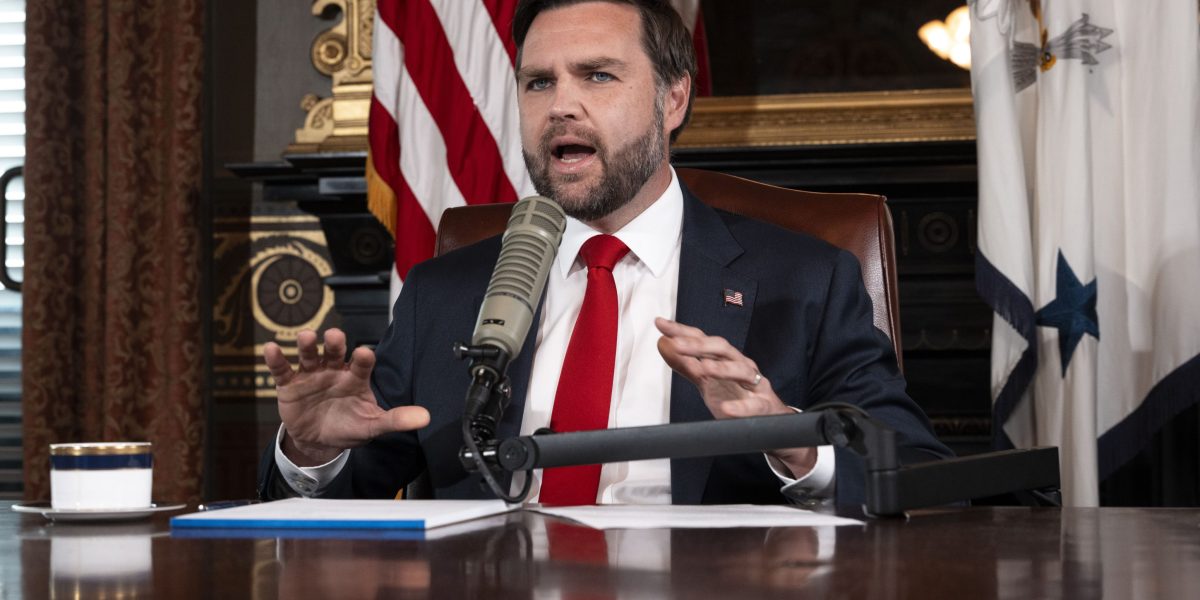
It’s a complicated question: Kirk was himself a critic of “cancel culture” who argued passionately for the importance of free speech. But as the guest host of Kirk’s podcast this week, Vice President JD Vance suggested that companies should take action against their employees for expressing opinions on Kirk’s death: “When you see someone celebrating Charlie’s murder, call them out—and, hell, call their employer.” Meanwhile, many progressives who cheered the firing of participants in the Jan. 6 rally that turned into riots are appalled by dismissals of Kirk’s critics now.

All to say that, for business leaders, the tragedy of what appears to be political violence (though the suspect’s motivation and political leaning remains the subject of speculation) has turned into a legal and reputational quagmire, raising complicated questions about how far employers should go in disciplining employees in an era when companies are also expected to support healthy debate and transparency. 

Some employers and employees remain unclear about where the red lines are and what happens when they’re crossed, says Jonathan Segal, an attorney and partner at Duane Morris in New York who specializes in employment law. 

But that’s not for a lack of experience. In the last two years alone, ideological divides have been exposed by the Israel-Gaza crisis, the murder of the UnitedHealthcare CEO Brian Thompson, and other politically motivated violence and murders in the U.S. 

The most important thing for companies to do is lay out a clear policy on speech, says Alison Taylor, a clinical professor in the Business and Society Program at NYU Stern School of Business, who says she’s watching in horror as the Kirk comments are reported and the dismissals play out. 

“It should be clear to anybody working in your company what you can and can’t say online, and what your code of conduct is,” Taylor says. (And the policy should be easy to find, not something hiding deep within a company’s online handbook.) “If you are firing people on the basis of these comments and you haven’t put out that guidance, I don’t think you can get away with that.”

The limits of free speech at work

One reason employers need to be proactive about social media policies is that employees remain confused about their protections. “Employees still ask about their First Amendment rights,” says Segal, “but generally speaking, there are no free speech rights in a workplace.” In the U.S., most private sector workers are at-will employees, and private employers have the right to fire people over rules set by a company’s code of conduct, he explains. Only those who work for the government have speech-related constitutional protections under federal or state laws, and even they face some limits.  

In most private workplaces, speech is not protected unless there is some legal principle that otherwise would shield employees from retribution, Segal said. (One example is a whistleblower comment about an employer’s conduct.) That doesn’t seem to be the case with the statements people are making about Kirk, he added.

Segal advises employers who are weighing their options following a contentious employee outburst to run through a series of questions to determine a course of action. Is the remark, on its face, encouraging violence or hatred? If so, the employer may face more risk for not terminating that person than for firing them, because of the message a company’s response sends to other employees and the public, says Segal.

It’s also worth examining who made the comment, Segal says. If it’s an executive or someone with more authority, they may be held to more rigorous standards, given that they’re more likely seen as company representatives and usually have employees reporting to them. The venue for the potentially odious comment is another relevant factor, says Segal. Some social media platforms, such as LinkedIn, more clearly tie a person to their place of work and reflect poorly on the employer.

But nuance also comes into play, especially when the statement is made outside of work or in the employee’s personal capacity. “Even if employees don’t have speech rights, per se,” he says, “how far do you want to go as a culture in admonishing people for statements they make outside?”

The importance of staying consistent

That’s the larger question that Taylor says has become “incredibly difficult” in recent years.  “A company may have broad, consistent principles that would apply to, let’s say, expressing racist hate speech online, and also apply to celebrating a murder,” she says, “And I can understand that both those things shouldn’t be allowed, but the problem that we really mustn’t get into is inconsistency.”

Taylor, who also works as a consultant with large global companies, reports that one firm she is working with previously encouraged employee activism and took strong stands on Russia and Ukraine, as well as domestic movements such as Black Lives Matter. Now, some companies that previously went out on a limb are regretting it, she says. Worse, some have swung to the opposite extreme, taking draconian stands on employee communications. 

“Regardless of what you think about Charlie Kirk, Israel, or DEI,” says Taylor, “it’s a terrible idea to look as if you shift in the breeze depending on who’s in power. That was a terrible idea in 2020 and it’s still a terrible idea in 2025.”

Still other business leaders who have refrained from switching positions have instead gone quiet, “afraid to stick their necks out at the moment on this question,” says Taylor. “So the general impression ends up being a little imbalanced.” 

The bottom line: “This is a perfect moment to get principles in place and have an organizational-wide discussion.”

Here’s what else leaders should keep in mind:

Create guidelines, not hard rules. To avoid the grey areas of policing political commentary outside work, companies can create policies that simply ask employees to pause before posting instead, says Segal. He suggested: “What you say may be seen as speaking for the company; please think twice before engaging in social media of a political nature.” Employees should also be reminded that posting a positive message about a political or controversial figure may also suggest that you endorse those persons’ views. 

Never take sides. Employers should be apolitical in when it comes to enforcing rules, says Segal. “If an employer is going to condemn and potentially terminate an employee for celebrating the murder or attempted murder of someone, they should do that whether the person’s on the left or the right,” he says. “That may not always go to legality, but that will always go to cultural credibility.”

Consider warnings or suspensions before terminations: Many of this week’s firings over Charlie Kirk have reportedly happened swiftly, without investigations or even conversations. But before terminating someone, an employer should consider taking less drastic action while sorting through the issues, says Taylor. “It’s a little bit like sexual harassment,” she says. “As soon as there’s an allegation and you say there’s zero tolerance, then you’ve kind of got a very blunt instrument—for a very complicated topic.”


Source link

Continue Reading

Business

Morgan Stanley strategist Michael Wilson says lackluster job numbers could actually be good news

Published

on


Ahead of the highly anticipated November jobs data to be released this week, even lackluster numbers may be greeted with relief by Wall Street.

A moderately cooling labor market could increase the likelihood of more rate cuts by the Federal Reserve—a tantalizing prospect for many investors eying future earnings growth—fueling bullish behaviors in the stock market, according to Morgan Stanley analysts.

“We are now firmly back in a good is bad/bad is good regime,” Michael Wilson, chief U.S. equity strategist and chief investment officer for Morgan Stanley, wrote in a note to investors on Monday.

Fed Chair Jerome Powell’s divisivecut last week, the Fed’s third cut in as many meetings, was based on consistent data showing a softening job market, including unemployment rising three months in a row through September, and the private sector shedding 32,000 jobs last month, per ADP’s November report

According to Powell, the quarter-point cut was defensive and a way to prevent the labor market from tumbling, adding that while inflation sits at about 2.8%, which is higher than the Fed’s preferred 2%, he said he expects inflation to peak early next year, barring no additional tariffs.

He added that monthly jobs data may have been overcounted by about 60,000 as a result of data collection errors, and that payroll gains may actually be stagnant or even negative.

“I think a world where job creation is negative…we need to watch that very carefully,” Powell said at the press conference directly following the announcement of the rate cut. 

Wilson suggested that Powell’s emphasis on the jobs data, as well as his de-emphasis on tariff-caused inflation, makes the labor market a crucial factor in monetary policy going into 2026. 

As a result of the government shutdown, the Labor Department’s job market report will be released on Tuesday, which will contain data from both October and November, and is expected to show a modest 50,000 payroll gain in November, with the unemployment rate ticking up from 4.4% to about 4.5%, consistent with the trend of a labor market that is slowing, but not suddenly bottoming out. 

‘Rolling recovery’ versus plain bad news

The Morgan Stanley strategist has previously argued that weak payroll numbers are actually a sign of a “rolling recovery,” with the economy in the early stages of an upswing slowly making its way through each sector. It follows three years of a “rolling recession” that Wilson said had kept the economy weaker than what employment and GDP figures suggested.

In Wilson’s eyes, because jobs data is a lagging metric, the trough of the labor cycle was actually back in the spring, coinciding with mass DOGE firings and “Liberation Day” tariffs. For a more accurate representation of the health of the economy, Wilson argued to look instead at the markets. The S&P 500, for example, is up nearly 13% over the last six months.

However, with Powell basing his policy decisions on data such as jobs, Wilson noted, the Fed could still see more room to cut, even as Morgan Stanley sees a labor market that is not in jeopardy.

“In real time, the data has not been weak enough to justify cutting more,” Wilson told CNBC last week prior to the Fed meeting. “But when they actually look at the revisions now…it’s very clear that we had a significant labor cycle, and we’ve come out of it, which is very good.”

But just as economists weren’t in consensus for the FOMC’s most recent rate cut, the possibility of more meager jobs numbers is not universally favored.

Claudia Sahm, chief economist at New Century Advisors and a former Fed economist, agreed the job data is a lagging economic indicator, but warned it could indicate a recession is underway, not that we’re already in the clear. What was particularly concerning to her was that lagging labor data could bear worse job news, as layoffs have yet to surge following shrinking job openings. 

She told Fortune ahead of the Fed’s decision last week that additional rate cuts would not be welcome news, but rather a sign the Fed had acted too late in trying to correct a battered labor market.

“If the Powell Fed ends up doing a lot more cuts, then we probably don’t have a good economy,” she said. “Be careful what you wish for.”


Source link

Continue Reading

Business

Actor Joseph Gordon-Levitt wonders why AI companies don’t have to ‘follow any laws’

Published

on


In a sharp critique of the current artificial intelligence landscape, actor-turned-filmmaker-turned- (increasingly) AI activist Joseph Gordon-Levitt challenged the tech industry’s resistance to regulation, posing a provocative rhetorical question to illustrate the dangers of unchecked development: “Are you in favor of erotic content for eight-year-olds?”

Speaking at the Fortune Brainstorm AI conference this week with editorial director Andrew Nusca, Gordon-Levitt used “The Artist and the Algorithm” session to pose another, deeper question: “Why should the companies building this technology not have to follow any laws? It doesn’t make any sense.”

In a broad-ranging conversation covering specific failures in self-regulation, including instances in which “AI companions” on major platforms reportedly verged into inappropriate territory for children, Gordon-Levitt argued relying on internal company policies rather than external law is insufficient, noting such features were approved by corporate ethicists.

Gordon-Levitt’s criticisms were aimed, in part, at Meta, following the actor’s appearance in a New York Times Opinion video series airing similar claims. Meta spokesperson Andy Stone pushed back hard on X.com at the time, noting Gordon-Levitt’s wife was formerly on the board of Meta rival OpenAI.

Gordon-Levitt argued without government “guardrails,” ethical dilemmas become competitive disadvantages. He explained that if a company attempts to “prioritize the public good” and take the “high road,” they risk being “beat by a competitor who’s taking the low road.” Consequently, he said he believes business incentives alone will inevitably drive companies toward “dark outcomes” unless there is an interplay between the private sector and public law.

‘Synthetic intimacy’ and children

Beyond the lack of regulation, Gordon-Levitt expressed deep concern regarding the psychological impact of AI on children. He compared the algorithms used in AI toys to “slot machines,” saying they use psychological techniques designed to be addictive.

Drawing on conversations with NYU psychologist Jonathan Haidt, Gordon-Levitt warned against “synthetic intimacy.” He argued that while human interaction helps develop neural pathways in young brains, AI chatbots provide a “fake” interaction designed to serve ads rather than foster development.

“To me it’s pretty obvious that you’re going down a very bad path if you’re subjecting them to this synthetic intimacy that these companies are selling,” he said.

Haidt, whose New York Times bestseller The Anxious Generation came recommended from Gordon-Levitt onstage, recently appeared at a Dartmouth-United Nations Development Program symposium on mental health among young people and used the metaphor of tree roots for neurons. Explaining tree-root growth is structured by environments, he brought up a picture of a tree growing around a Civil War–era tombstone. With Gen Z and technology, specifically the smartphone, he said: “Their brains have been growing around their phones very much in the way that this tree grew around this tombstone.” He also discussed the physical manifestations of this adaptation, with children “growing hunched around their phone,” as screen addiction is literally “warping eyeballs,” leading to a global rise in myopia shortsightedness.

The ‘arms race’ narrative

When addressing why regulations have been slow to materialize, Gordon-Levitt pointed to a powerful narrative employed by tech companies: the geopolitical race against China. He described this framing as “storytelling” and “handwaving” designed to bypass safety checks,. Companies often compare the development of AI to the Manhattan Project, arguing slowing down for safety means losing a war for dominance. In fact, The Trump administration’s “Genesis Mission” to encourage AI innovation was unveiled with similar fanfare just weeks ago, in late November.

However, this stance met with pushback from the audience. Stephen Messer of Collectiv[i] argued Gordon-Levitt’s arguments were falling apart quickly in a “room full of AI people.” Privacy previously decimated the U.S. facial recognition industry, he said as an example, allowing China to take a dominant lead within just six months. Gordon-Levitt acknowledged the complexity, admitting “anti-regulation arguments often cherrypick” bad laws to argue against all laws. He maintained that while the U.S. shouldn’t cede ground, “we have to find a good middle ground” rather than having no rules at all.

Gordon-Levitt also criticized the economic model of generative AI, accusing companies of building models on “stolen content and data” while claiming “fair use” to avoid paying creators. He warned a system in which “100% of the economic upside” goes to tech companies and “0%” goes to the humans who created the training data is unsustainable.

Despite his criticisms, Gordon-Levitt clarified he is not a tech pessimist. He said he would absolutely use AI tools if they were “set up ethically” and creators were compensated. However, he concluded without establishing the principle that a person’s digital work belongs to them, the industry is heading down a “pretty dystopian road.”


Source link

Continue Reading

Business

Fed chair race: Warsh overtakes Hassett as favorite to be nominated by Trump

Published

on


Wall Street’s top parlor game took a sudden turn on Monday, when the prediction market Kalshi showed Kevin Warsh is now the frontrunner to be nominated as the next Federal Reserve chairman, overtaking Kevin Hassett.

Warsh, a former Fed governor, now has a 47% probability, up from 39% on Sunday and just 11% on Dec. 3. Hassett, director of the National Economic Council, has fallen to 41%, down from 51% on Sunday and 81% on Dec. 3.

A report from CNBC saying Hassett’s candidacy was running into pushback from people close to President Donald Trump seemed to put Warsh on top. The resistance stems from concerns Hassett is too close to Trump.

That followed Trump’s comment late Friday, when he told The Wall Street Journal Warsh was at the top of his list, though he added “the two Kevins are great.”

According to the Journal, Trump met Warsh on Wednesday at the White House and pressed him on whether he could be trusted to back rate cuts. 

The report surprised Wall Street, which had overwhelming odds on Hassett as the favorite, lifting Warsh’s odds from the cellar.

But even prior to the Journal story, there have been rumblings in the finance world Hassett wasn’t their preferred choice to be Fed chair.

At a private conference for asset managers on Thursday, JPMorgan Chase CEO Jamie Dimon signaled support for Warsh and predicted Hassett was likelier to support Trump on more rate cuts, sources told the Financial Times.

And in a separate report earlier this month, the FT said bond investors shared their concerns about Hassett with the Treasury Department in November, saying they’re worried he would cut rates aggressively in order to please Trump.

Trump has said he will nominate a Fed chair in early 2026, with Jerome Powell’s term due to expire in May. 

For his part, Hassett appeared to put some distance between himself and Trump during an appearance on CBS’ Face the Nation on Sunday.

When asked if Trump’s voice would have equal weighting to the voting members on the rate-setting Federal Open Market Committee, Hassett replied, “no, he would have no weight.”

“His opinion matters if it’s good, if it’s based on data,” he explained. “And then if you go to the committee and you say, ‘well the president made this argument, and that’s a really sound argument, I think. What do you think?’ If they reject it, then they’ll vote in a different way.”


Source link

Continue Reading

Trending

Copyright © Miami Select.