U.S. retail sales increased more than expected in August as consumers bought a range of goods and dined out, but a weakening labor market and rising prices because of tariffs pose a downside risk to continued strength in spending.
Reuters
The third straight month of solid gains in sales reported by the Commerce Department on Tuesday is unlikely to prevent the Federal Reserve from cutting interest rates on Wednesday, given the widening cracks in the labor market. It could, however, urge caution against aggressive rate cuts, economists said.
Though sales were partially boosted by higher prices, the broad increase underscored the economy’s continued resilience despite mounting headwinds. Economists upgraded their gross domestic product estimates for the third quarter.
“The American consumer appears to be in good spirits. That’s good news for the economy, but it may heighten debate over how aggressively the Fed needs to cut rates,” said Ellen Zentner, chief economic strategist at Morgan Stanley Wealth Management.
“The Fed’s main concern right now is a softening labor market, but more data like this could convince the committee that it can proceed cautiously on rates.”
Retail sales rose 0.6% last month after an upwardly revised 0.6% advance in July, the Commerce Department’s Census Bureau said. Economists polled by Reuters had forecast retail sales, which are mostly goods and are not adjusted for inflation, rising 0.2% following a previously reported 0.5% gain in July.
Sales increased 5.0% on a year-over-year basis.
Adjusted for inflation, economists estimated monthly sales rose only 0.2%. Receipts at auto dealerships increased 0.5% after advancing 1.7% in July. That likely reflected higher prices as manufacturers reported a decline in units sold.
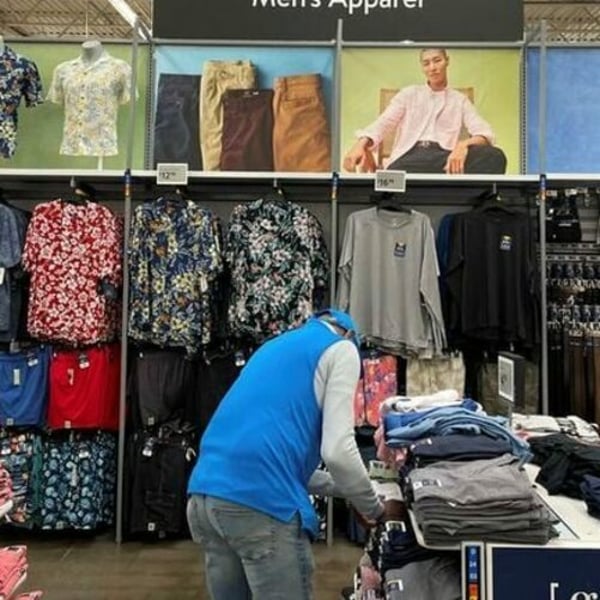
Clothing store sales advanced 1.0%, while receipts at sporting goods, hobby, musical instrument and book stores increased 0.8%. Food and beverage stores sales rose 0.3%.
Receipts at service stations increased 0.5% amid higher gasoline prices. The government reported last week that consumer prices increased by the most in seven months in August, with strong rises in the costs of food and apparel among other products.
Online sales shot up 2.0% after rising 0.6% in July.
“Consumers may be accelerating the timing of their purchases to get under the wire before tariff-related price hikes fully kick in,” said Stephen Stanley, chief U.S. economist at Santander U.S. Capital Markets.
Sales at electronics and appliance stores rose 0.3%. But receipts at furniture outlets fell 0.3%, while sales at building material and garden equipment retailers edged up 0.1%.
Households also boosted spending at restaurants and bars. Sales at food services and drinking places, the only services component in the report, increased 0.7% after slipping 0.1% in July. Economists view dining out as a key indicator of household finances.
Retail sales excluding automobiles, gasoline, building materials and food services increased 0.7% last month after an unrevised 0.5% advance in July.
These so-called core retail sales correspond most closely with the consumer spending component of GDP.
Economists estimated core retail sales rose 0.4% when adjusted for inflation. The Atlanta Fed raised its third-quarter GDP growth estimate to a 3.4% annualized rate from a 3.1% pace earlier. The economy grew at a 3.3% rate last quarter.
Stocks on Wall Street slipped ahead of the Fed’s rate decision and summary of new economic projections from policymakers. The dollar fell against a basket of currencies. U.S. Treasury yields rose.
The U.S. central bank is expected to deliver a quarter-percentage-point interest rate cut on Wednesday to support the labor market. The Fed paused its easing cycle in January because of uncertainty over the inflationary impact of import duties.
The Trump administration has argued that tariffs would be paid for exporting countries. But that has not been supported by data and signs point to inflation accelerating in the months ahead.
A separate report from the Labor Department’s Bureau of Labor Statistics showed import prices increased for a second straight month in August, driven by higher costs for consumer and capital goods as well as motor vehicles.
“The lack of any substantial decline in import prices given the surge in the effective tariff rate to roughly 15-16% suggests that those additional costs are being borne nearly entirely by U.S. businesses and consumers,” said Michael Hanson, an economist at J.P. Morgan.
The struggling labor market, characterized by meager job gains and rising unemployment as companies hold off hiring because of an uncertain economic outlook, poses a risk to consumer spending.
A Bank of America Institute survey found lower-income households were being impacted the most by the labor market weakness, with their after-tax wages and salaries increasing in August at the slowest pace since 2016. It also noted spending growth was the weakest among younger people and those born between 1965 and 1980, commonly referred to as Generation X.
“Households no longer hold excess liquid assets, and falls in home prices are offsetting some of the positive wealth effect from rising stock prices,” said Samuel Tombs, chief U.S. economist at Pantheon Macroeconomics. “They also are much more worried than usual about losing their jobs, suggesting that discretionary spending will struggle.”
While a third report from the Fed showed an unexpected 0.2% rise in factory production in August amid a rebound in motor vehicle production, tariffs continued to cast a shadow over the manufacturing sector. Output eased 0.1% in July. A U.S. appeals court last month ruled most of the tariffs were illegal.
“While tariff rates haven’t moved all that much in recent weeks, the administration looks to still be fine-tuning trade policy between different country-specific trade deals and product-specific tariffs that are still on the table,” said Shannon Grein, an economist at Wells Fargo.
“There’s also the pending Supreme Court ruling around the legality of universal tariffs likely to come in November.”
The ever-growing premium fashion brand Me+Em has opened its first boutique in Yorkshire, choosing Harrogate’s town centre Prospect Crescent for the new 1,300 sq ft space housed in a Grade II–listed former bank.
Me+Em
In keeping with the “global Me+Em design”, the Harrogate store features traditional English furniture mixed with modern design elements such as neutral-toned soft furnishings in fabrics by London-based designer Rose Uniacke.
The colour scheme for the “immersive space” is based on a rich forest green, a nod to the nearby Yorkshire Dales.
Large-scale haberdashery fixtures are used to showcase accessories and wardrobe staples, while bespoke bronze rails display curated product edits from the seasonal monthly collections.
Founded in 2009 by Clare Hornby, Me+Em’s ethos is that women “shouldn’t have to choose between quality and cost” while based on ‘intelligent style’ with a focus on “ensuring pieces are both flattering and functional, with a wear-forever appeal”.
The move into Yorkshire marks the latest chapter in Me+Em’s expansion, with the Harrogate store joining seven boutiques in London, including Marylebone High Street, King’s Road, Chelsea, Brook Street, Mayfair, Elizabeth Street Belgravia and at Battersea Power Station, plus stores in Manchester, Edinburgh. It’s the first UK store not in a major city. Internationally, the brand has two New York stores, plus Dallas Greenwich, Connecticut, and a soon-to-be-added Beverly Hills, California debut.
Lastest results filed last January showed the business to be progressing strongly. Group revenue increased by 24% to £147.9 million, driven by the success of its international business where revenues increased 50%. Gross profit was up 24% to £82.3 million with an improvement in margin to 56% from 55%.
Copenhagen-based fashion house Ganni has announced the appointment of three executives to key roles: Marcelo Noschese as president, Americas; Marie Valot as director of communications and public relations; and Guillaume Dacquet as director of marketing and image. All three will report directly to Ganni’s chief executive, Laura du Rusquec, and will work closely with the Executive Committee.
Marie Valot, Director of Communications and Public Relations, and Guillaume Dacquet, Director of Marketing and Image. – DR
Based in New York, Marcelo Noschese will be responsible for Ganni’s retail, wholesale, and e-commerce operations across the Americas. He has held senior leadership roles at houses including Prada, Louis Vuitton, and Ferragamo. Prior to joining Ganni, he was CEO of Prada Americas, overseeing operations in the US, Canada, and Latin America.
Marie Valot joins Ganni as director of communications and public relations. She has more than 15 years’ experience in brand communications, VIP and influencer strategies, and international partnerships. She previously led international communications for Balmain, Nina Ricci, and KCD Paris, where she spearheaded global campaigns, media strategies, and cross-functional projects.
Guillaume Dacquet has been appointed director of marketing and image. He joins Ganni from Estée Lauder Companies, where he worked on international rebranding initiatives and long-term communications platforms. He has also held roles within LVMH Beauty, notably for the Dior, Guerlain, Givenchy, Fresh, and Stella McCartney brands, in positions spanning strategic planning, consumer research, and innovation.
These three appointments form part of efforts to strengthen Ganni’s global organisation. According to Laura du Rusquec, the company’s chief executive, these hires are intended to support the implementation of the company’s long-term global vision.
Founded in Copenhagen in 2000, Ganni is a contemporary fashion house stocked by numerous international retailers and operating boutiques in Europe, the US, and Asia. A certified B Corp, the company publishes an annual responsibility report and develops initiatives focused on innovation, notably through its ‘Fabrics of the Future’ programme and projects related to the circular economy. L Catterton acquired a majority stake in the company in 2017.
This article is an automatic translation. Click here to read the original article.
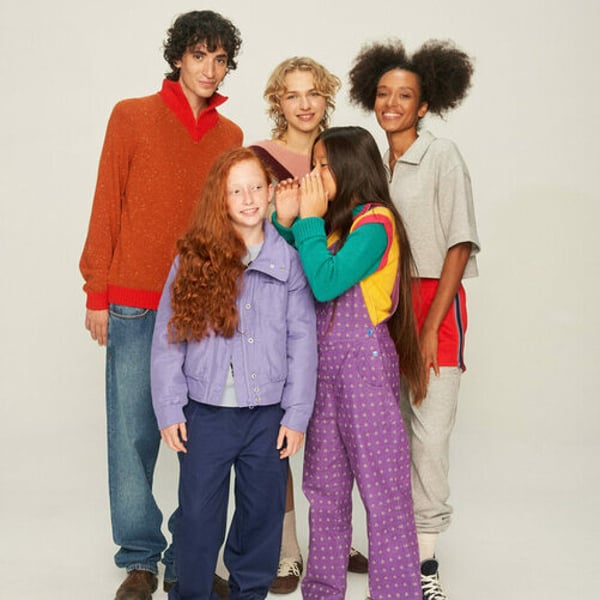
United Colors of Benetton has partnered with the fifth and final season of television series Stranger Things to launch a collaborative collection for men, women, and children in the Indian market.
United Colors of Benetton’s collaboration with Stranger Things – United Colors of Benetton
The casual wear collection was developed in close collaboration with Stranger Things’ costume designer Amy Parris and was inspired by Benetton’s own style archive, the brand announced in a press release. Some of the looks in the collection are reinterpreted 1980s archive pieces from Benetton, which have already featured the new series of Stranger Things, while others have been created in continuity with the original outfits.
“The connection between Benetton and Stranger Things came about almost by chance, at a vintage market in Los Angeles where I was looking for authentic ’80s pieces for the fourth season and where I repeatedly came across original United Colors of Benetton garments from that period,” said Parris in a press release. “Among them was a sweatshirt with the logo and the classic horizontal stripes, which was chosen for one of the characters and marked the first true encounter between the brand and Stranger Things. That intuition later led us to involve Benetton in creating the outfits of some of the fifth season’s protagonists, giving rise to a collaboration that unites the historical heritage of the brand with the aesthetics of the series.”
The ‘Stranger Colors of Benetton’ collection is accompanied by a campaign which mixes an ode to Benetton’s 1980s adverts with the world of Stranger Things. The selection of short- and long-sleeved T-shirts, sweatshirts, and knitwear has launched at Benetton’s stores and online in India with a second drop planned for February 2026.






 Politics8 years ago