Connect with us

Business

The stock markets have bought the Fed rumors — watch for them to sell on the news

Published

on


The S&P 500 hit a new record high yesterday, up 0.47% to 6,615.28. Futures contracts on the index are up 0.21% this morning.

The optimism is being driven by baked-in expectations that the U.S. Federal Reserve will deliver a 0.25% interest rate cut tomorrow. The cliché here is that the markets appear to have bought on the rumour of the cut, and once Chairman Jerome Powell delivers it, will lock in those profits by selling on the news. CME’s Fed Funds futures market—usually an accurate predictor— says there is a 96.1% chance of the Fed delivering a 25bps cut to the 4% level on Wednesday.

The Fed is likely to cut by 25 bps and not 50 because central banks like to keep their weapons in reserve for the future. The faster you shoot your bullets, the more quickly you run out of bullets, basically.

Goldman Sachs called this “peak Goldilocks” for stocks in a note to clients this morning. “Markets continued a broad ‘risk-on’ shift last week, boosted by the rally in Oracle following their bullish cloud revenue revisions, which supported the broader AI space. US inflation data was broadly in-line with expectations with a modest uptick in initial jobless claims, further supporting the Goldilocks backdrop, where a weak US labour market and anchored inflation allow for Fed easing,” the bank’s Christian Mueller-Glissmann and team wrote.

So the meeting will be boringly predictable, right?

Nope. 

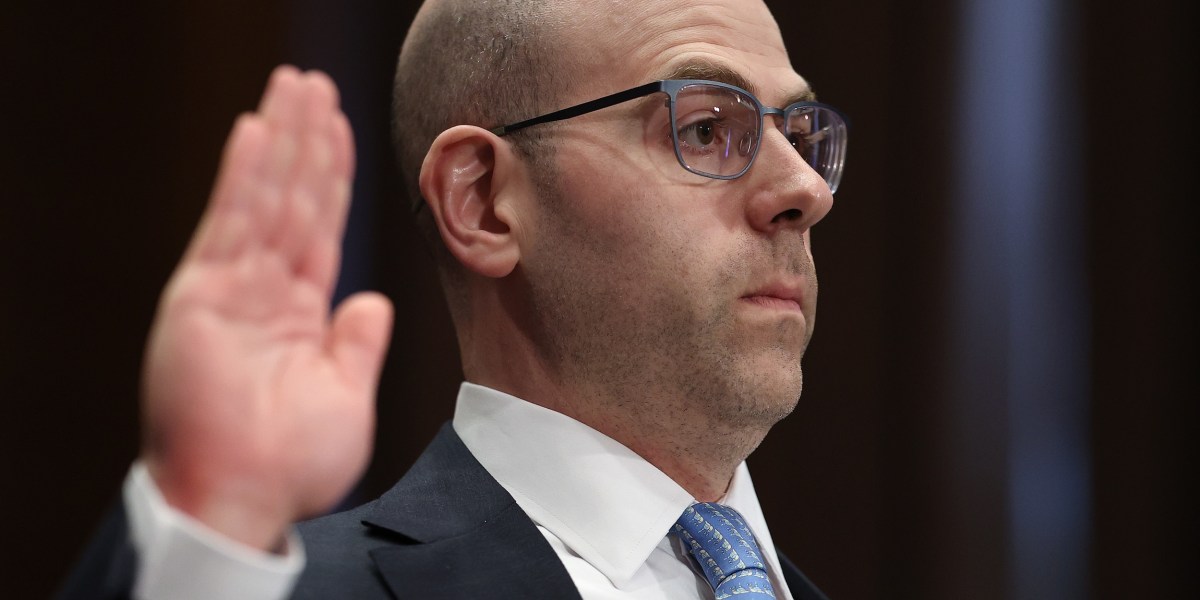
It will be tense. Chair Powell and Governor Lisa Cook have both been accused of criminal behaviour by the Trump Administration. They will be sitting across the table from Stephen Miran, a newly appointed Fed Governor parachuted into the Federal Open Markets Committee by President Trump, who wants to pressure the central bank to cut rates fast. God knows what they will say to each other during the coffee breaks.

Markets will move on Wednesday after Wall Street parses Cook’s statement and his Q&A for clues about future rate cuts beyond Wednesday. Here’s what analysts are saying about that:

“A 25bp rate cut is fully priced in, with a slim chance of a larger 50bp move following recent signs of labor market cooling. Investors will focus on the Fed’s updated macro projections – especially the rate path – with expectations leaning toward continued easing through year-end. The vote split will also be closely watched, as a three-way division among FOMC members hasn’t occurred since 2019,” Convera’s George Vessey told clients.

“If Chair Powell repeats the cautious guidance from his speech at Jackson Hole in August, markets could abruptly reprice their aggressive pre-meeting rate cut expectations,” said Bill Adams, Chief Economist for Comerica Bank.

“The market reaction is likely to be driven by the communication, the updated dot plot, and any comments from Chair Powell on the conditions required for further rate cuts.” David Doyle, head of economics at Macquarie Group said.

In all these potential scenarios the Fed is expected to continue delivering new rounds of cheaper money in the future—and that will be bullish for stocks. There’s only one thing going down in all of this: lower interest rates on the dollar sank the currency to its lowest point year-to-date. The USD lost 0.87% of its value on the DXY index in the last month—that’s a lot for a currency. It has lost 10.56% year-to-date.

Here’s a snapshot of the markets globally this morning:

  • S&P 500 futures were up 0.19% this morning. The index closed up 0.47% in its last trading session.
  • STOXX Europe 600 was down 0.26% in early trading. 
  • The U.K.’s FTSE 100 was down 0.28% in early trading.
  • Japan’s Nikkei 225 was up 0.3%.
  • China’s CSI 300 was down 0.21%. 
  • The South Korea KOSPI was up 1.24%.
  • India’s Nifty 50 was up 0.68% before the end of the session.
  • Bitcoin rose to $115.7K.
Fortune Global Forum returns Oct. 26–27, 2025 in Riyadh. CEOs and global leaders will gather for a dynamic, invitation-only event shaping the future of business. Apply for an invitation.


Source link

Continue Reading

Business

Ryan Serhant reveals his best networking advice: ‘Every room I go into, I use the two C’s’

Published

on


Ryan Serhant says he has a list of all the billionaires he’s met—all 101 of them. For the real-estate mogul whose brokerage, Serhant., is on track to close $6 billion in sales this year, building relationships with the ultra-wealthy is his “number one job.”

Serhant, 41, transformed himself from a struggling actor who only earned about $9,000 in his first year of real estate—in 2008, the week Lehman Brothers collapsed—into one of America’s most successful brokers. He’s closed more than $15 billion in real estate over his career, built a brokerage with more than 1,100 agents across 14 states, and parlayed his work into a Netflix series, Owning Manhattan. His estimated net worth is around $40 million. And at 41, he continues to set records: In the first 35 days of 2025 alone, his brokerage Serhant. surpassed $1 billion in closed and in-contract sales.

In a recent TikTok interview with The School of Hard Knocks, Serhant revealed the deceptively simple networking approach that has fueled his rise from struggling actor to one of the most successful real-estate brokers in the world: “Every room I go into, I use the two C’s.”

The formula? “You give someone a compliment, and you find something in common.”

Relationships > transactions

Serhant doesn’t stop at the initial conversation. Once he gets someone’s contact info, he says he follows up within 10 minutes. “I send them a quick note, a quick text. So, great meeting you seven-and-a-half minutes ago. Let’s do something great together,” he said.

Serhant says he keeps the message unread as a visual reminder, then continues to engage “until they buy or I die.” He says he tries to meet between five and 15 new people every day, and his contact list is actually “contact currency”—a network built on relationships, not just transactions.

Serhant said his $6 billion sales strategy revolves around approachability: “People hate being sold, but they love shopping with friends,” he said. “Your number one job as a salesperson is to create relationships. It’s not to sell product.”

This philosophy has driven some of his most significant deals. Earlier this year, Serhant said he sold properties in Palm Beach totaling $308 million over the phone, which he attributes entirely to “the trust in the relationship that I was able to create between a person who wanted to buy and a person who wanted to sell.”

“I don’t think I ever actually sell apartments or sell buildings,” Serhant added.

Advice for the next generation

Since launching Serhant. in September 2020, during the height of the COVID-19 pandemic, his firm has since become one of the fastest-growing real estate companies in the U.S. Serhant boasts a 99% agent retention rate at his brokerage.

When asked what message he would leave for younger people, Serhant shared wisdom gleaned from his billionaire clients: “Most people are in a race against time. Time is their greatest asset. The wealthiest people are in a race against moments,” he said.​ With this in mind, Serhant says he’d “rather regret the things I did than the things I never tried,” recommending others similarly “take the risk or lose the chance.”

You can watch Serhant’s full interview with The School of Hard Knocks below:

@theschoolofhardknocks $6 BILLION THIS YEAR 🤯 I interviewed real estate MOGUL @Ryan Serhant in New York City and I asked him how he got RICH! Since he’s met over 100 billionaires, I asked him for his best networking advice for anyone in business. I also asked him for his secret to sales since his company is going to do over $6 Billion in sales this year. Lastly, I asked him the best advice he’d give to the younger generation. #wealth#entrepreneur#financialfreedom♬ original sound – The School of Hard Knocks


Source link

Continue Reading

Business

Gen Z is defiantly ‘giving up’ on ever owning a home

Published

on


The housing market only continues to look more bleak for younger generations—and it shows. The average age for a first-time homebuyer recently jumped to 40, signaling the housing market is starved for affordability.

And younger generations are so disappointed and frustrated by the state of the housing market they’re spending more of their earnings than they’re saving, working less, and making risky investments, according to a recently published paper by Northwestern University and University of Chicago researchers. 

In other words, younger generations are “giving up.” That’s according to Northwestern’s Seung Hyeong Lee and Chicago’s Younggeun Yoo, who also cited a 2024 Harris Poll survey about the state of real estate that showed 42% of Americans and 46% of Gen Z respondents agreed with this statement: “No matter how hard I work, I will never be able to afford a home I really love.”

While households typically adjust consumption to stay on track with long-term goals like buying a home, younger people are crossing a “threshold at which they begin to give up on [buying a home] entirely.”

The idea this generation is “giving up” is also echoed by an analysis by Gen Z’s favorite economist Kyla Scanlon, who argues younger people face a sense of “financial nihilism,” a phenomenon in which they question the American Dream amid stagnant wages, student loan debt, and corporate dominance. 

Gen Z has “watched the American Dream rot before their eyes, as higher education becomes a luxury good, a housing crisis exacerbates the cost of living, all backdropped by political stagnation and rapid (perhaps even too rapid) technological advancement,” she wrote, making the point this generation has lived through not one, or two, but three major economic downturns. 

Gen Z is saving less than they’re spending

The first phenomenon Lee and Yoo outline regarding Gen Z’s defiance toward buying a home is that they’re spending more money than they’re bringing in. 

“We find that when home prices rise to the point where renters can no longer afford to buy a house within the foreseeable future by saving their wages, renters give up on home purchases and instead use their savings to increase consumption,” they wrote. 

Several other studies this year have shown Gen Z is doomspending rather than saving, with one study showing nearly half don’t even have an emergency fund saved up. A Bankrate survey also showed as many as 27% of Gen Z carry more debt than they do savings.

“Many Gen Zers find themselves walking a financial tightrope, torn between covering immediate expenses or setting money aside for emergencies and paying for goods on credit instead,” previously told Fortune.

Some of that may be due to the fact Gen Z expects to inherit money and assets from the $124 Great Wealth Transfer, but a Northwestern Mutual survey shows very few can expect a windfall of cash upon a relative’s death.

Gen Z works differently

We’ve all heard Gen Z supposedly doesn’t work as hard as other generations, which may or may not be true—it’s somewhat impossible to measure. Lee and Yoo found in their research Gen Z has cut down on their effort at work because they don’t think it’s worth it if they can’t afford long-term financial goals. They cite answers to psychographic questions asking about the importance of “always giving my best effort” at work. Their research shows the share of renters reporting low work effort is nearly twice the rate observed among homeowners.

“This shift is consistent with a reallocation of time and effort by discouraged renters,” the researchers wrote. “As the perceived returns to labor (in terms of progressing toward homeownership) diminish, so does the value they place on maintaining high work effort.”

Scanlon has a different take on Gen Z’s work effort, though. 

She argues, “maybe it’s not that they don’t want to do anything anymore, but rather they don’t want to do anything in the way that it’s always been done anymore.” 

Gen Z is making risky investments

The third way Gen Z is acting out against their inability to buy a home, the researchers argue, is by taking on risky investments, like buying cryptocurrencies. Their research also shows when buying a home for a Gen Zer seems unaffordable, they also increase their leisure spending.

“Renters with a plausible path to homeownership may exhibit lower risk tolerance, as significant losses could derail their progress toward that goal,” they wrote. “In contrast, those who have already given up on homeownership may perceive they have less to lose, and therefore engage more willingly in risky financial behavior.”

Other 2025 research indicates Gen Z is far more likely to own crypto than have a retirement account, illustrating how they’re more willing to take on riskier investments. And finance experts are worried about the pattern, they told Fortune’s Emma Burleigh.

“It’s never a bad thing for people in any generation to take interest in their personal finances,” Mark Smrecek, financial well-being market leader at Willis Towers Watson (WTW), told Fortune’s Burleigh. “I think as long as they’re looking at risk and reward based on what their goals are, it’s generally fine. But I do get concerned when I see over-indexing toward risky assets.”


Source link

Continue Reading

Business

‘Godmother of AI’ says degrees are less important than ‘how quickly can you superpower yourself’

Published

on


Founders and AI startups in Silicon Valley are valuing degrees less and are seeking out candidates who can work quickly, adapt and build AI models.

Fei-Fei Li, a Stanford professor and CEO of the AI startup World Labs, is known as the “Godmother of AI” for her work building a large-scale database of labeled images, which changed the way computers comprehend digital images and videos.

Li, also the founding co-director of Stanford’s Human-Centered AI Institute, said she values candidates’ experience and relationship with AI tools more than their educational background.

“When we interview a software engineer, I personally feel the degree they have matters less to us now,” Li said of the talent search process for her AI startup in an interview on The Tim Ferriss Show this week.

“Now, it’s more about what have you learned, what tools do you use, how quickly can you superpower yourself in using these tools — and a lot of these are AI tools,” she added. “What’s your mindset toward using these tools matter more to me.”

When discussing the broader impacts of AI on education and the labor market, Li said assessing qualified workers used to rely on which school job candidates graduated from and the degree they earned. But “that will be changing with AI being at the fingertip of so many people,” she said.

For her own talent acquisition, Li added that she wouldn’t hire software engineers who don’t “embrace AI collaborative software tools.” She explained this requirement is not because she believes AI software tools are perfect, but because she believes they show a person’s ability to grow with fast-moving technologies and them being able to use AI to their own benefit.

Li’s view of AI skills and their value proposition compared to college degrees echoes a similar sentiment from other leaders in the industry.

In October, Mark Zuckerberg, a Harvard dropout, said skills outweigh a flashy college degree when hiring for Meta—but he noted that entry-level roles at his company still require a bachelor’s.

Palantir CEO Alex Karp has even challenged the value of a college education by recently launching a four-year paid internship for young entrepreneurs not enrolled in college to instead learn by doing and to “skip the debt, skip the indoctrination.” 

As more tech leaders look for AI-fluent candidates, Li looks for candidates that can help realize her company’s mission.

World Labs aims to build AI that can process and replicate the three-dimensional world through spatial reasoning—a feat that would revolutionize the tech all over again. Li bootstrapped the startup into a more than $1 billion valuation after only four months, according to the Financial Times.

As she works towards the next AI breakthrough, Li said during the Fortune Most Powerful Women Summit in 2024 that AI could change the world, and that “everyone who cares” should have a place in the technological shift.

“It’s so important that people from all backgrounds feel they have a role,” Li said.


Source link

Continue Reading

Trending

Copyright © Miami Select.