Connect with us

Business

Appeals court rejects Trump’s bid to oust Lisa Cook from the Fed ahead of interest rate decision

Published

on


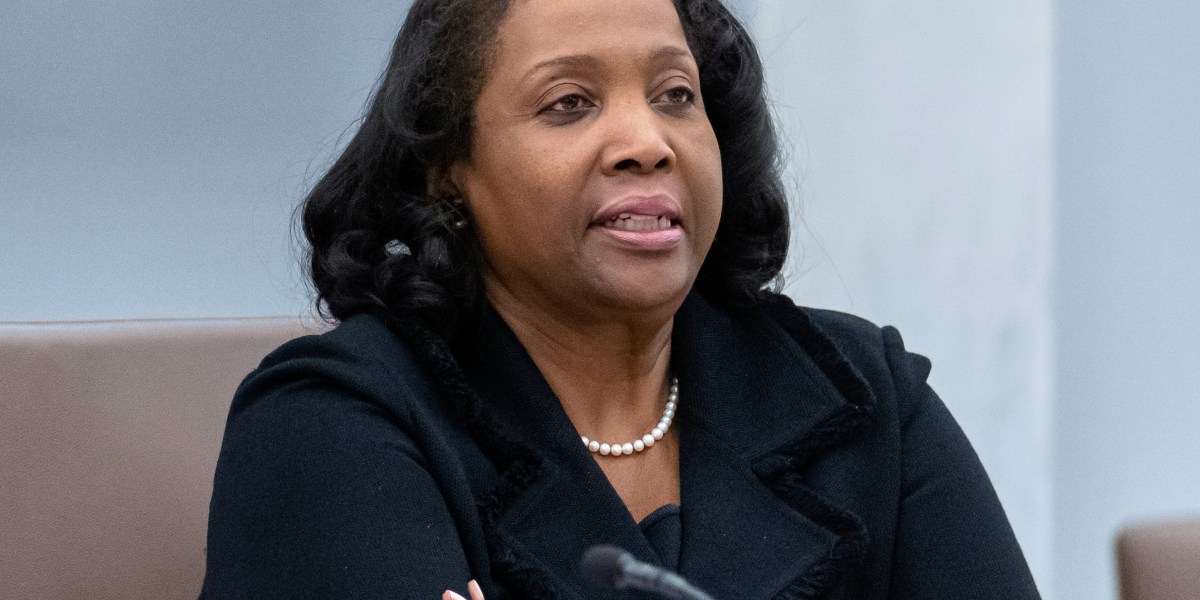
An appeals court ruled Monday that Lisa Cook can remain a Federal Reserve governor, rebuffing President Donald Trump’s efforts to remove her just ahead of a key vote on interest rates.

The Trump administration is expected to quickly turn to the Supreme Court in a last-ditch bid to unseat Cook. The Fed’s next two-day meeting to consider its next interest rate move begins Tuesday morning. And Cook’s lawsuit seeking to permanently block her firing must still make its way through the courts.

The White House campaign to unseat Cook marks an unprecedented bid to reshape the Fed’s seven-member governing board, which was designed to be largely independent from day-to-day politics. No president has fired a sitting Fed governor in the agency’s 112-year history.

Separately, Senate Republicans on Monday confirmed Stephen Miran, Trump’s nominee to an open spot on the Fed’s board. Barring any last-minute intervention from the Supreme Court, the Fed’s interest rate setting committee will meet Tuesday and Wednesday with all seven governors and the 12 regional bank presidents.

Twelve of those 19 officials will vote on changing the central bank’s short-term rate: All seven governors plus five regional presidents, who vote on a rotating basis.

Chair Jerome Powell signaled in a high-profile speech last month the Fed would likely cut its key rate at this meeting, from about 4.3% to 4.1%. Other borrowing costs, such as mortgage rates and car loans, have already declined in anticipation of the cut and could move lower.

Trump sought to fire Cook Aug. 25, but a federal judge ruled last week that the removal was illegal and reinstated her to the Fed’s board. Trump appointee Bill Pulte has accused Cook of mortgage fraud because she appeared to claim two properties as “primary residences” in July 2021, before she joined the board. Such claims can lead to a lower mortgage rate and smaller down payment than if one of them was declared as a rental property or second home. Cook has denied the charges.

In a 2-1 decision, the appeals court found that Cook’s due process rights were violated because the administration did not give her a formal opportunity to respond to the charges.

The attempt to fire Cook is seen by many legal scholars as a threat to erode the Fed’s longtime political independence. Economists prefer independent central banks because they can do unpopular things like lifting interest rates to combat inflation more easily than elected officials.

Many economists worry that if the Fed falls under the control of the White House, it will keep its key interest rate lower than justified by economic fundamentals to satisfy Trump’s demands for cheaper borrowing. That could accelerate inflation and could also push up longer-term interest rates, such as those on mortgages and car loans. Investors may demand a higher yield to own bonds to offset greater inflation in the future, lifting borrowing costs for the U.S. government and the entire economy.

Separately, Miran chairs the White House’s Council of Economic Advisers and said earlier this month he would take unpaid leave but otherwise keep his job while serving on the Fed’s board. It will be the first time in decades that an executive branch official has served at the Fed.

Miran has been appointed to finish a term that expires in January, but he could remain in the seat if no replacement is chosen.

Cook has denied any wrongdoing and has not been charged with a crime. According to documents obtained by The Associated Press, Cook did specify that her Atlanta condo would be a “vacation home,” according to a loan estimate she obtained in May 2021. And in a form seeking a security clearance, she described it as a “2nd home.” Both documents appear to undercut the administration’s claims of fraud.

Last week, U.S. District Court Judge Jia Cobb ruled that the administration had not satisfied a legal requirement that Fed governors can only be fired “for cause,” which she said was limited to misconduct while in office. Cook did not join the Fed’s board until 2022.

In their emergency appeal, Trump’s lawyers argued that even if the conduct occurred before her time as governor, her alleged action “indisputably calls into question Cook’s trustworthiness and whether she can be a responsible steward of the interest rates and economy.”

Trump has repeatedly attacked Powell and the other members of the Fed’s interest-rate setting committee for not cutting the short-term interest rate they control more quickly. Trump has said he thinks it should be as low as 1.3%, a level that no Fed official and few economists support.

Cook is the first Black woman to serve as a Fed governor. She was a Marshall Scholar and received degrees from Oxford University and Spelman College, and prior to joining the board she taught at Michigan State University and Harvard University’s Kennedy School of Government.

Fortune Global Forum returns Oct. 26–27, 2025 in Riyadh. CEOs and global leaders will gather for a dynamic, invitation-only event shaping the future of business. Apply for an invitation.


Source link

Continue Reading

Business

Hinge CEO bribed students with KitKats to get the $550 million-a-year business off the ground

Published

on


After more than a decade shaping modern romance, Justin McLeod is leaving Hinge behind to launch his next venture: Another dating app, with an AI twist, called Overtone.

Today, Hinge has more than 30 million users, with a date being set up every two seconds. But in 2011, when it launched, McLeod was just a young Harvard Business School student when he came up with the idea for the app “designed to be deleted.” And the fresh-faced, 20-something entrepreneur was so desperate for people to sign up to his app that he even bribed them with chocolate.

At the time, online dating largely took place on desktops and required real effort. The idea of swiping to find the love of your life (or a one-night stand) on your mobile phone seemed alien.

So convincing fellow students (who had no shortage of opportunities to meet people in class, dorms, and parties) to sign up to Hinge was challenging, McLeod tells Fortune.

“I remember the days of running around the college library in Washington, D.C., at this college, Georgetown, and bribing kids with KitKats to come try my app,” he laughs. “We would get dozens of users a day—maybe, if that.” 

Financing Hinge also required a lot of scrappiness, with McLeod recalling he had to “beg and borrow a lot” to get the app off the ground.

“I was out there networking and talking to as many people as I could and taking money from anyone who would give it to me. That’s just what it takes sometimes,” he says. “I was collecting—me—literally like, $5,000 checks and $10,000 checks to come and start Hinge.”

Hinge CEO’s big break came from a McKinsey job offer

These days, it’s hard enough landing an internship while studying—let alone walking straight into a full-time job right after graduating. But for McLeod, that wasn’t the case: He hadn’t even finished his second year of business school when McKinsey offered him a spot on its coveted grad scheme. 

A career in consulting would have set McLeod on a path to a six-figure salary, with Glassdoor estimating that the average consultant earns between $173,000 to $233,000 a year. McLeod’s sign-up bonus alone was $12,000.

It turned out to be the big break he needed—to finally get Hinge off the ground.

“I was able to keep putting off my offer for like a couple of years,” he recalls while adding that he “borrowed” the money to build his app.

“Once Hinge started to become successful and they saw I was the founder of it, they were like, ‘You’re probably not coming to be an analyst here are you?’ And, of course, by that time I had to pay it back.”

Why did McLeod choose the highly risky path of entrepreneurship when he could have had a comfortable career at McKinsey?

“I turned down my offer and started to work on Hinge, really because I was just so passionate about the idea. Once I started thinking about it, it was hard for me to stop. I really knew this was what I was meant to work on.”

Of course, it paid off: By 2015, Hinge had raised $26.35 million and had an estimated valuation of $75.5 million, before Match Group bought the company off McLeod for an undisclosed amount. 

The founder treated himself and his family to a nearly $13 million apartment in New York soon after. Meanwhile, Hinge brought in $396 million in 2023, last year and an estimated $550 million last year.

Advice for entrepreneurial Gen Z grads

Like McLeod, young people today aren’t dreaming of holding down a 9-to-5 gig after college or climbing the corporate ladder. Research consistently shows they want to be their own boss.

And they’re already making those dreams a reality: In fact, the second fastest-growing job title among Gen Z grads right now is “founder,” according to LinkedIn.

His advice for young entrepreneurs? “You have to be hopelessly idealistic and ruthlessly practical at the same time—that’s how you create something big and successful.”

“Some people who are like too in the hopelessly idealistic camp, dream, but never make something a reality, and people who are too in the ruthlessly practical camp do things but nothing that big or game-changing,” McLeod explains.

Instead, he says successful founders like himself constantly balance the two: Essentially dream big, but “pay attention to the very practical day-to-day realities in order to make that come to life.”

Meanwhile, to Gen Zers who don’t know what they want to do career-wise after school, his advice is to stop overthinking it—just give work a go, whether that’s starting your own business or dipping your toes in the rat race.

“I think people who get too self-involved in, like, what’s my career going to be? What am I going to do? They miss the opportunity to cultivate that passion, that interest for something out there in the world,” he says.

“I would never have figured out what I wanted if I just sat around like meditating about it. I had to work a summer in healthcare and realize that’s not it. I worked on a few other startup ideas before Hinge came to me and it was a lot of figuring out what I didn’t like or what didn’t resonate with me. But each time, I got a little bit smarter and a little bit closer.”

A version of this story originally published on Fortune.com on September 22, 2024.


Source link

Continue Reading

Business

Former ambassador: China is winning the biotech race. Patent reform is how we catch up

Published

on


The United States is at risk of losing one of the most important technology races of the 21st century: biotechnology. A 2025 report from a bipartisan, congressionally chartered commission warns that China is closing in on a win, and the United States has only a narrow window to respond.

The report, released by the National Security Commission on Emerging Biotechnology, offers dozens of recommendations, ranging from increasing federal investment and expanding domestic manufacturing to reducing reliance on Chinese suppliers and improving interagency coordination. But one issue receives too little attention. If the United States wants to compete, it must restore trust in the intellectual property rights that enable inventors to turn bold ideas into revolutionary products.

Patents make high-risk innovation financially viable. They allow startups to protect their discoveries, attract capital, and grow. Without reliable patent rights, promising research gets shelved — or picked up and advanced abroad.

This isn’t theoretical. The United States led past waves of innovation — like the explosion of biotech startups after the Bayh-Dole Act of 1980 and the 19th-century surge of invention that brought us the telephone and automobile — precisely because it backed inventors with clear, enforceable IP rights.

In biotech, the stakes are higher. The field is transforming how we treat disease, grow food, and manufacture everything from chemicals to advanced materials. And with artificial intelligence accelerating discovery, the pace is exponential. As the Commission notes, tools like AlphaFold from GoogleDeepMind can now model hundreds of millions of protein structures in days, a task that once took years.

China saw this future coming. For more than two decades, it has treated biotechnology as a national strategic priority, pouring money into research, building vast biomanufacturing capacity, and acquiring foreign IP through both legal and illicit means.

Today, Chinese firms produce many of the ingredients U.S. drugmakers rely on. According to the Commission, nearly 80% of American drugmakers depend on Chinese contractors for part of their supply chain.

In a crisis, that kind of reliance could leave Americans without access to critical medicine. The Commission outlines a scenario in which Chinese researchers develop a breakthrough cancer therapy and withhold it during a crisis over Taiwan.

Supply chains collapse. Doctors ration care. The White House faces an impossible choice: hold the line on foreign policy or secure access to lifesaving medicine.

The situation is fictional, but the threat is real.

It doesn’t stop there. The report warns that if China stays on its current path, it could soon control the biological data, manufacturing platforms, and AI tools driving the next generation of industrial and defense technologies.

When innovation stays on U.S. soil, so do the jobs, data, and supply chains that protect our citizens. If the technologies that define the future are instead developed under adversarial regimes, the United States risks dependence on foreign powers not only for products but for strategic capabilities. Falling behind wouldn’t just cost the United States market share. It would endanger national security and global influence.

The Commission is right to emphasize the need for a stronger domestic biotech sector. But efforts to achieve that goal will fall short unless we fix the foundation that enables innovation in the first place.

That foundation, our IP system, is under serious strain. Over the past decade, court decisions have blurred the boundaries of what qualifies for patent protection — what is “patent eligible” — especially in medical diagnostics, synthetic biology, and AI-enabled research.

And even when patents are granted, protecting them has become harder. A little-known administrative body called the Patent Trial and Appeal Board (PTAB) lets big corporations repeatedly try to invalidate competitors’ patents, forcing startups into expensive and drawn-out legal battles.

At the same time, a 2006 Supreme Court decision made it harder for courts to issue legal orders called injunctions — which stop infringers from continuing to use others’ inventions — even in cases of clear wrongdoing.

These trends have a chilling effect. Investors hesitate to fund science unless they can count on the underlying IP rights. In biotech, where it can cost billions of dollars and more than a decade to develop a single product, that hesitation can kill entire pipelines of innovation.

The good news is that Congress has tools to change course. Three bipartisan proposals in the House and Senate would help. One bill would restore clarity to patent eligibility standards. Another would reform PTAB procedures to curb duplicative challenges to patents. A third would make it easier for courts to block infringers by issuing injunctions.

Together, these reforms would reduce uncertainty, restore balance, and make the United States a more attractive place to innovate and invest.

We still have significant advantages: world-class research institutions, deep capital markets, and a free market that rewards bold ideas. But as the Commission warns, our lead is slipping — and time is short. To stay ahead in the race for biotech dominance, we need to fix the IP system that makes American innovation possible.

The opinions expressed in Fortune.com commentary pieces are solely the views of their authors and do not necessarily reflect the opinions and beliefs of Fortune.

Join us at the Fortune Workplace Innovation Summit May 19–20, 2026, in Atlanta. The next era of workplace innovation is here—and the old playbook is being rewritten. At this exclusive, high-energy event, the world’s most innovative leaders will convene to explore how AI, humanity, and strategy converge to redefine, again, the future of work. Register now.


Source link

Continue Reading

Business

Fists, not football: There is no concussion protocol for domestic violence survivors

Published

on


It’s fall in America, and that means football. With football comes questions and concerns about concussions in athletes. How long does it take to fully recover from a concussion? What happens if an athlete returns to play too soon after a concussion? How many concussions are too many?

But it’s not just sports where concussions occur. The most common cause of concussion in NCAA athletes is a car accident. The most common cause of a concussion overall is a fall. And a hidden demographic of people experience brain injuries at an alarming rate: domestic violence survivors.

Every minute, 32 people in the United States experience violence at the hands of an intimate partner. Roughly half of American women and 40% of American men will experience domestic violence at least once in their lives. Most incidents go unreported. One study found that just one in five victims sought medical help immediately after suffering a head injury. Nearly all these injuries involve a blow to the neck or head. 

Current research indicates that more than 75% of domestic violence survivors suffer one or more traumatic brain injuries. In my experience, the most common response to the question, “How many concussions have you suffered,” is “Too many to count.” 

On any given Sunday, you will see up to 30 medical professionals standing on the sidelines of a professional football game. At a high school game, you are likely to see paramedics within eyesight of the players on the field. There are no medical providers who stand outside the home of domestic violence survivors waiting for an injury to occur. There is no concussion protocol for those who are abused.

In addition to repeated impacts to the head, domestic violence survivors often suffer strangulation, being choked, resulting in decreased oxygen to the brain, loss of bladder and bowel function, seizures, and sometimes death.

The long-term consequences of repeated concussion and strangulation include sleep disturbancedizzinesspersonality changes, and memory problems. The most common complaint of a domestic violence survivor who suffers one or more concussions is headaches. One silver lining is that these symptoms are treatable.

Thanks to widespread education and awareness campaigns, athletes have benefited from a sea change in how brain injuries are recognized and treated. We need to bring that same standard of care to survivors of domestic violence by establishing a concussion protocol tailored to their needs.

We must ensure domestic violence survivors receive concussion screenings when they reach the doctor’s office or emergency department — regardless of whether they exhibit clear signs of a traumatic brain injury. New technologies can make brain injury screening simple and accurate. 

Diagnostic tests, like Abbott’s Alinity i TBI test, can help providers evaluate people for traumatic brain injuries with a small blood sample, by measuring two blood biomarkers in the brain. We recently implemented this testing capability at the WVU Rockefeller Neuroscience Institute. We’re one of the first to adopt the brain injury test, where results come back in just 18 minutes. That quick turnaround is especially useful in situations where a provider may have limited time with a survivor who is hesitant to seek medical care. Finally, we must offer everything we provide to athletes: cognitive screening, concussion rehabilitation, and VIP treatment.

At the WVU Rockefeller Neuroscience Institute in Morgantown, we design a comprehensive, tailored treatment plan for each patient, which may also include psychiatry, physical rehabilitation, and speech and vision therapy. Personalized approaches like this one help resolve subtle, lingering problems and prepare patients to protect their brain health after they check out of the hospital. Survivors of domestic violence are our VIPs.

Society has rightly taken steps to ensure athletes receive top-notch treatment whenever they experience a traumatic brain injury. Survivors of domestic violence are every bit as deserving of that level of attention and care.

The opinions expressed in Fortune.com commentary pieces are solely the views of their authors and do not necessarily reflect the opinions and beliefs of Fortune.


Source link

Continue Reading

Trending

Copyright © Miami Select.