Connect with us

Politics

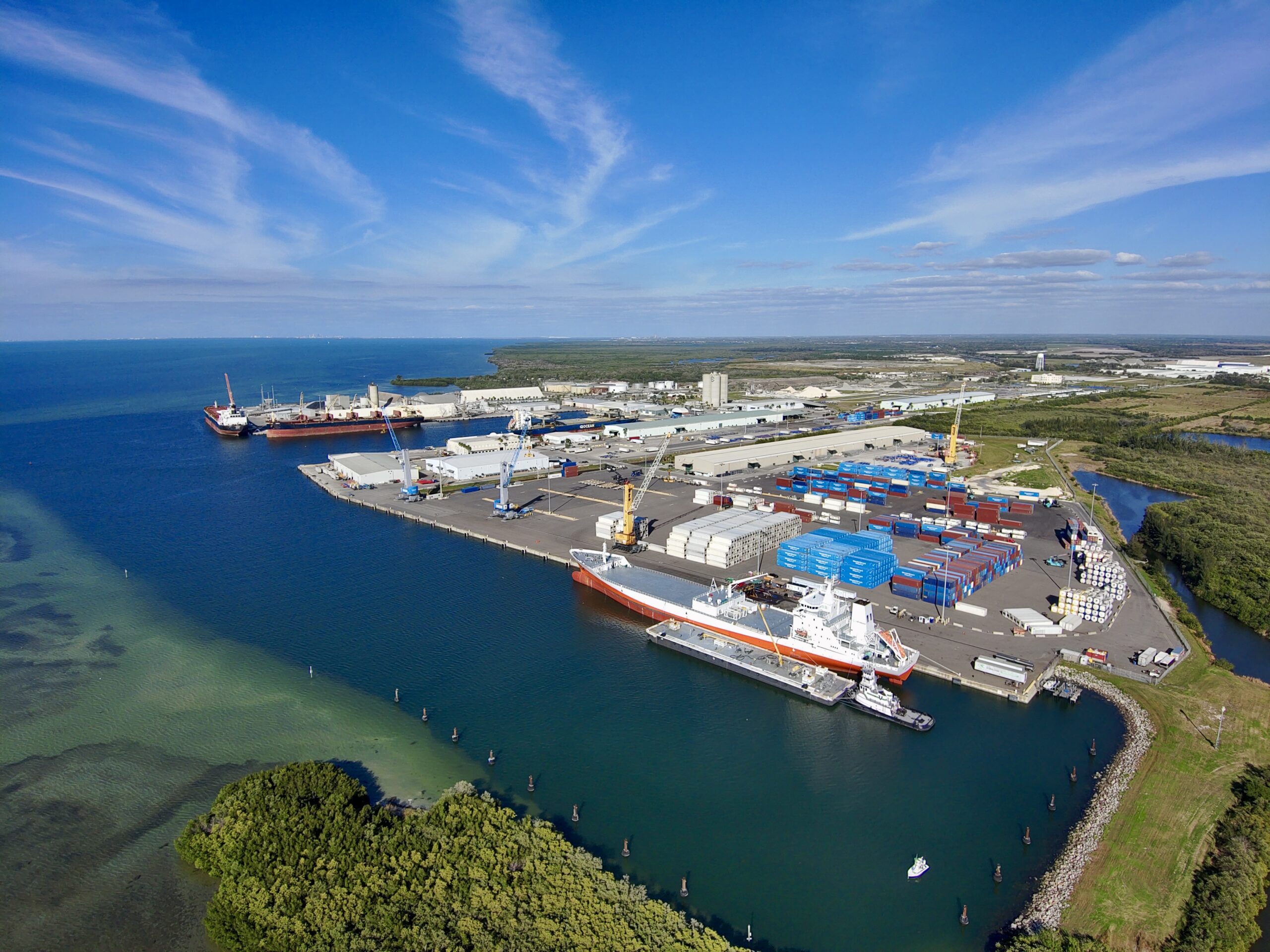
Florida Ports tap fresh talent to boost statewide economic development
Published

on


The Florida Seaport Transportation and Economic Development (FSTED) Council announced the election of its officers for the 2025–2027 term, charting a new course for the state’s maritime and economic initiatives.

The Council is responsible for implementing Florida’s seaport capital improvement projects at the local level, while its members consist of experienced port directors and representatives from the Florida Department of Transportation and FloridaCommerce.

Professional Engineer and Port of Fort Pierce Port Director Joshua Revord was elected Council Chair. 

Revord brings a wealth of knowledge to the role, including a bachelor’s degree in Ocean Engineering from the Florida Institute of Technology and a master’s degree in Coastal and Oceanographic Engineering from the University of Florida.

A native of St. Lucie County, Revord is currently leading the St. Lucie County Department of Port, Inlet & Beaches, while assisting the St. Lucie County County Commission with coastal management and port development.

The new Chair said in a statement that Florida’s 16 deepwater seaports are major economic drivers, responsible for turning the state into the world’s cruise ship capitol, while moving over 100 tons of cargo across the globe every year.

“Our ports play an essential role in supplying critical commodities, like food, fuel and healthcare supplies, that are fundamental to our daily lives, economic stability and overall well-being,” Revord said.

“Florida’s ports are also strengthening the economic potential for the state, by expanding workforce opportunities in traditional port trades, while further developing those skilled professions that are essential to support maritime dominance initiatives, including a renewed focus on shipbuilding, the mega yacht industry, and assisting in the state’s space initiatives. I look forward to supporting the FSTED Council’s continued, proven stewardship of our seaports through strategic and timely investments.”

Port Everglades CEO and Port Director Joseph Morris was elected Vice Chair. Morris previously served as Port Director and Deputy Port Director of Operations for the Massachusetts Port Authority.

Morris began his tenure at Port Everglades in July 2024 and holds a bachelor’s degree in business management from the University of Phoenix, and a Lean Six Sigma Green Belt Certification.

Morris has successfully completed the MAGNUM and MAGNET accelerated leadership training programs through APM Terminals.

Port of Pensacola Port Director Lance Scott was elected secretary and brings extensive experience in port operations, logistics and economic development to his role. Scott retired from the U.S. Navy as a Rear Admiral after serving more than 31 years.

Scott holds a bachelor’s degree in marine transportation from the U.S. Merchant Marine Academy and holds a master’s degree in national security and strategic studies from the Naval War College.


Post Views: 0


Source link

Continue Reading

Politics

Citizens Insurance recommending rate cuts for many policyholders in 2026

Published

on


Citizens Property Insurance Corp., which provides property insurance for Floridians who can’t get coverage elsewhere, is recommending lower rates for policyholders next year.

The Citizens Board of Governors approved the recommended rate reductions Wednesday. If the reductions get final approval by state regulators, it will be the first time since 2015 Citizens policyholders would see a decrease in policy payments.

The recommendation suggested statewide average rates to drop by 2.6% in 2026 for personal line policies. At that rate, according to a Citizens news release, the average premium for 3 out of every 5 policyholders would see premiums fall by 11.5%, or $359.

Citizens officials credit major overhauls to Florida’s insurance regulations this decade for prompting the recommended rate decrease.

“Critical reforms championed by Gov. Ron DeSantis and approved by the Florida Legislature have done what they were supposed to do: provide rate relief to policyholders and stability to the Florida market,” said Tim Cerio, Citizens President, CEO and Executive Director. “These 2026 rate proposals are further confirmation that Florida’s insurance market is thriving.”

While leaders at Citizens are enthused about the promise of falling insurance premiums, Citizens’ own county-by-county analysis and report shows the declines in premiums would not be universal in Florida. Several counties would still see increases in premiums, despite the proposed reductions for some areas.

Citizens, headquartered in Jacksonville, was created by the Legislature in 2002 as a nonprofit agency to provide insurance for property owners who can’t get coverage in the private market.

The nonprofit drew a flood of customers in recent years and mushroomed to 1.42 million policies at its peak in 2023. That figure fell to 385,000 this year due to many of the regulatory reforms. It was the lowest number of policies in the history of Citizens, and more than 546,000 policies were transferred to private insurance companies this year.

Citizens officials point out that after regulatory changes designed to reduce frivolous litigation were approved beginning this decade, some 17 new insurance companies have since entered the market in Florida and that has led to Citizens no longer being the largest property insurance organization in the state.

“Thanks to the Governor’s leadership and the Legislature’s actions, I can say unequivocally that Citizens has returned to its proper role as Florida’s insurer of last resort,” Cerio said. “It’s important now for us to stay the course and resist any effort to roll back the critical reforms responsible for this success.”

While the Citizens Board has made the recommendation of lower rates for policyholders, the nonprofit has to file the move with the Office of Insurance Regulation, which needs to conduct public hearings and reviews of the rate proposals. If the reductions are approved, they wouldn’t take effect until June 1.


Source link

Continue Reading

Politics

North Florida home sales, prices fall in November

Published

on


Single-family home sales and prices saw notable declines in November, according to the latest report from the Northeast Florida Association of Realtors (NEFAR).

The six-county First Coast region saw a definite drop in housing sales last month. The NEFAR report showed there was not only a decline in home sales compared to October, but in the year-over-year comparison as well.

There were 1,374 closed single-family houses sold across the First Coast region in November. That’s down by 6.9% from the 1,476 homes sold in November 2024. It’s also a steep 20.4% drop from the 1,726 homes sold in Northeast Florida in October 2025.

The housing market on the First Coat seems to be leaning toward buyers in another facet: the price of homes. The median sales price in the region for November came in at $375,000. That’s a 4.1% decline from November 2024, when the median price tag for a home was $390,992. The figure fell from October’s price as well, dropping 2.1% from $380,020.

Active inventory of homes for sale in North Florida, which had been climbing for much of the past year, showed a decline. There were 7,286 homes for sale in the six-county market. That’s down by 3.9% from November 2024’s figure of 7,585 and is a 4.4% drop from October’s number of 7,623.

In the individual county breakout, Duval County, the most populous in the North Florida region, showed similar trends to the regional figures.

There were 709 homes sold in the county, which is home to Jacksonville. That’s a 2.1% drop in the year-over-year comparison, when there were 724 homes sold. It’s also a whopping 22.9% decline from October’s figure of 919 homes sold. Duval’s median sales price did pick up, though, coming in at $330,000. That’s a 1.2% jump from a year ago and a 1.5% uptick from October.

St. Johns County, one of Florida’s fastest-growing counties and the largest suburb to Jacksonville, saw sales and prices tumble last month. There were 354 closed sales of homes in November. That’s a 10.6% drop from November 2024’s 396 home sales and a 13.7% drop from October’s figure of 410 homes sold. The median sales price in St. Johns came in at $508,993. That marks a 3% decline from a year ago and a 9.5% drop from October.

Nassau County, the last county before the Georgia state line, took a hit in home sales last month. There were 72 closed sales of single-family houses in November. It’s a 10% drop from a year ago, when there were 80, and a steep 30.1% decline from October, which saw 103 closed sales. The price of homes was a little more encouraging for sellers, as the median figure was $471,243 in Nassau. That’s a 1.1% increase from a year ago and 3% uptick from October.

Clay County also sustained a drop in both sales and prices in November. There were 188 home sales last month, marking a 19.3% fall from a year ago when there were 233 homes sold. It’s also a 20% drop from October, which saw 235 sales. Median sales prices also lagged last month in Clay, coming in at $350,000. That’s a 5.4% drop in the year-over-year comparison and a 2.5% decline from October.

Putnam and Baker counties are the least populated areas in the region and saw modest changes in the home sales market. Putnam posted 38 closed sales in November, which is a 35.7% increase from a year ago and a 13.6% decline from October. Baker County witnessed 13 closed home sales in November, a 13.3% decline in both the annual and monthly comparisons.


Source link

Continue Reading

Politics

Gov. DeSantis defends treatment of prisoners suspected of being illegal immigrants

Published

on


Gov. Ron DeSantis says there’s nothing wrong with how inmates at two high-profile South Florida lockups are being treated as they await adjudication and deportation for illegal entry to the United States.

If anything, he said those being kept at the Krome North Service Processing Center (Krome) and the Everglades Detention Facility (Alligator Alcatraz) are getting too many amenities, especially given their history.

“You have a lot of criminal aliens. If you look at their rap sheets, you’ve got people that are sexual predators, you’ve got people that have committed, you know, really serious offenses. They shouldn’t have been in this country to begin with. And now they’re making claims, ‘Oh, they’re being abused.’ None of that is substantiated,” DeSantis said.

Amnesty International is the latest group to condemn the treatment of immigrants with disputed documentation, saying it falls “far below international human rights standards.”

DeSantis scoffed at the idea that inmates at Krome, a federal facility, were kept in a “black box.”

He also said Alligator Alcatraz coddled its occupants by supplying a mess hall, a library and other amenities.

“I’m like, do you really need to have all this stuff?’ Because honestly, I thought it was over the top,” DeSantis said.

“And they’re like, ‘Well, you know, we don’t want to be in a situation where we’re being accused of mistreating them.’ I was like, they are going to accuse you of that no matter what. You put them up in the Ritz-Carlton, they are going to accuse you of doing that.”

The latest comments continue an unorthodox defense of the state-federal partnership that served as a prototype for other immigration lockups around the country.

DeSantis previously marveled at an inmate complaining about the quality of a sandwich.

“One of the illegals said that his ham sandwich was cold,” DeSantis remarked. “And I’m thinking to myself, you know, you’re entitled to toasted hoagies?”

Florida’s Director of Emergency Management Kevin Guthrie defended the facility’s turkey sandwiches against claims that they were “gray” and “nasty,” leading to that meditation.

DeSantis has also allowed that at least some of those removed from the country via the state-administered facility could have been done so despite being in America legally, saying that “human institutions” are prone to occasional errors.

In a lawsuit, the American Civil Liberties Union alleged that at Alligator Alcatraz, “detained people were told that they are only allowed one meal a day (and given only minutes to eat), are not permitted daily showers, and are otherwise kept around the clock in a cage inside a tent.”

In response, Guthrie dismissed space concerns, saying inmates have much more room than do people in state-run hurricane shelters.


Source link

Continue Reading

Trending

Copyright © Miami Select.