Connect with us

Business

Once richer than Peter Thiel, Pop Mart’s Wang Ning sees $6 billion vanish with Labubu hype

Published

on


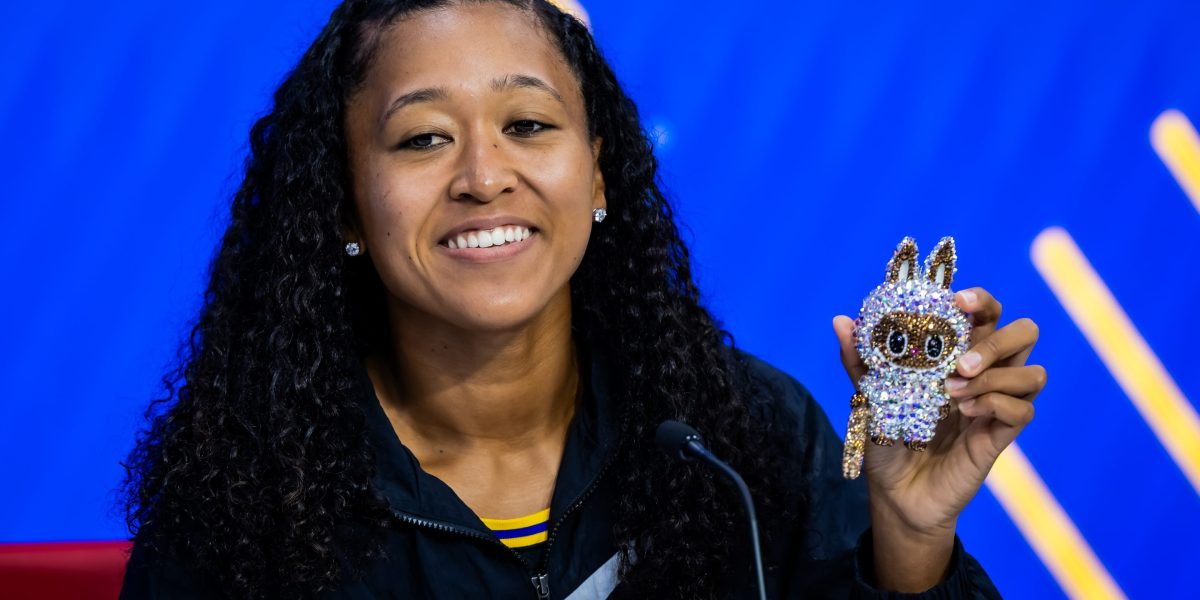
Just weeks ago, Pop Mart founder Wang Ning was riding high with a net worth of $27 billion, richer than Silicon Valley’s Peter Thiel, thanks to a rabbit-eared plush called Labubu.

The “ugly-cute” doll has been flaunted by celebrities from David Beckham to Blackpink’s Lisa, pushing resale prices to dizzying heights. 

But once the “cool hunters” move on, Wall Street does too, and Wang is finding that out the expensive way. 

Since Pop Mart’s peak on Aug. 26, the stock has plunged about 20%, erasing $13 billion in market cap—a quarter of his company’s worth—as the craze shows its age. The Beijing-based toymaker’s Hong Kong stock continued to dive on Monday, sliding as much as 9% in its steepest single-day tumble since the U.S. unveiled “Liberation Day” tariffs in April.

Wang has personally lost $6 billion of his own net worth since late August, according to a Forbes estimate. 

The sharp pullback follows a downgrade on Monday from JPMorgan, with analysts warning that the firm’s valuation leaves “little margin for error” after a 427% surge over the past year.

Pop Mart did not immediately respond to Fortune’s request for comment. 

From craze to comedown

For much of 2024 and early 2025, Pop Mart was the darling of the Hang Seng Index as Labubu dolls sparked a frenzy across Asia. But a toy with a hype built on its engineered scarcity—Labubu dolls are notoriously difficult to collect and have a thriving resale and forgery market—cannot be valuable forever.   

“The whole thing feels like the inevitable life cycle of something that becomes faddish, hits saturation, and then begins to fizzle,” Brook Duffy, a social media researcher and a communications professor at Cornell University, told Fortune. “Once too much attention gets lavished on a trend, it immediately loses its social currency.”

She compared Labubu’s rise and stall to the Tickle Me Elmo craze of the 1990s: first impossible to find, then suddenly everywhere, and finally no longer cool. 

Pop Mart’s breakneck growth hasn’t reversed yet. Sales have surged over the past two years, with revenue more than doubling in 2024 and climbing another 200% in the first half of 2025. 

But there are early signs of fatigue. Resale prices for Labubu collectibles are slipping, and analysts worry that the company remains heavily reliant on a single product.

“As soon as you saw celebrities showing them off, that was the tipping point for Gen Z,” Duffy explained. “What was scarce suddenly felt commercial.”

JPMorgan analysts echoed that skepticism in their downgrade, trimming their target price to HK$300 from HK$400. While Popmart’s first-half earnings and collaborations with brands like Uniqlo hit their marks, upcoming projects, including a Labubu animation series and interactive toy lines, have a speculative value so far, JPMorgan said.

Pop Mart, in other words, is a victim of its own success. After a five-fold stock rally over the past year, even minor disappointments—from weaker resale values or whispers about product quality—can trigger an outsized selloff. So what once looked like a runaway growth story now appears more to be a precarious bet. 

A test of staying power

The deep question is whether Labubu can have a “soft landing” from its craze and evolve from fad to franchise. 

 “The novelty is always going to wear off,” Duffy said. “You just don’t know when. That unpredictability is what keeps marketers up at night.”

Pop Mart is betting big on expansion, seeking to operate 200 foreign stores and vending machine “roboshops” by year’s end, and aims for overseas markets to contribute 60% of earnings by 2027. Labubu alone still accounts for more than a third of sales.

But sustaining cultural relevance is harder than scaling retail.

“Right now feels like a critical inflection point,” Duffy said. “In a social media era, the hype cycle moves at breakneck speed. Something that was everywhere yesterday can feel overexposed today.”

For Wang, the clock is ticking: find a way to keep Labubu fresh, or risk watching his billion-dollar mascot fade into the toy box of past fads.

Fortune Global Forum returns Oct. 26–27, 2025 in Riyadh. CEOs and global leaders will gather for a dynamic, invitation-only event shaping the future of business. Apply for an invitation.


Source link

Continue Reading

Business

Actress Natasha Lyonne is helping to shape the future of AI

Published

on


The actress, director, and wild-style futurist Natasha Lyonne is fascinated by technology. She speaks of the beauty and power of interstellar travel and muses about living long enough to walk a Hollywood red carpet as a reanimated cyborg.

But she also has a grave concern, she explained to Fortune’s Brainstorm AI audience on Monday in San Francisco: With all this boundless possibility, why is AI focused on replacing screenwriters instead of, say, figuring out a solution to fixing plastic bottles polluting the oceans? “I don’t think that’s an accident,”  said Lyonne, 46. “It’s about cutting costs.”

What the co-founder of the media production company Animal Pictures would like to see is people paid for their expertise, work, and creative ideas, and the democratization of filmmaking so more people can engage in a business that has traditionally had sky-high barriers to entry.

Her rallying cry to C-suites and AI leaders—delivered in her signature wry, New York City accent—is to think really hard about what it means to be human in this age where AI is all the rage, and act accordingly. “We are the ones who are deciding what this use is going to be and how we choose to use it,” Lyonne said. “I really want this to mean a seat at the table for more people to do even more extraordinary things.”

Lyonne, who was named one of TIME’s 100 Most Influential People in AI 2025, joked that she anointed herself CEO of Animal Pictures and updated her LinkedIn with the title because it “seemed like a vibe.” So Lyonne now technically shares the title with others in the C-suite, and she observes a widening divide between senior executives of the world who are deciding how AI will be implemented in companies, and the employees who could see their jobs and opportunities dry up. Even though this moment in AI development includes outside factors like competition with China and meeting Wall Street’s expectations, she argues that the industry must remember that there are serious decisions to be made that history will remember. 

Lyonne, who has been in the film business since she was a child actor, pointed out that it takes enormous human legwork—from casts, crews, and everyone from drivers to the creatives who bring ideas onto screens—to keep film and television plodding forward. AI companies that scrape content without permission or payment are neglecting that entire ecosystem, she said. “So I don’t think it’s super-Kosher copacetic to just kind of rob freely under the auspices of acceleration or China, right?”

The Russian Doll and Poker Face star is also a co-founder of Asteria Film Co., a generative AI film and animation studio. Asteria describes itself as being powered by the “first clean AI model”—the “clean” referring to AI that has been trained on models with creative work that is licensed or cleared, rather than content used without payment or permission.  She is also directing an upcoming film called Uncanny Valley using an AI video model called Marey that was created based on copy-right cleared, licensed data. The film reportedly doesn’t include AI actors, but it will blend generative AI filmmaking techniques with traditional human-led filmmaking.

As a child, she said, she studied Talmudic texts and interpretations in Aramaic—the ancient language used in Talmudic writings. The complexity in exploring layers of meaning and iterations of theory now informs her approach to AI in filmmaking., she said.

Lyonne said she dropped out of New York University to pursue a self-taught education in film at the indie movie theater The Film Forum. When asked what advice she’d give her younger teenage self, Lyonne suggested mastery of the kind that takes 10,000 hours of work to develop. “Really, really learn these tools,” she said. “It’s really about technique, and that takes a long time… that’s how you learn how to write and all that.”

The beauty of mastering a skill and knowing how to think and create is that then you can break those rules, said Lyonne. “I’m not so much interested in raging against the machine,” she said. “I’m interested in building new houses, new seats at the table.”


Source link

Continue Reading

Business

AI is taking over managers’ busywork—and it’s forcing companies to reset expectations

Published

on


AI isn’t just a new tool for the modern workplace; it’s already quietly reshaping how some companies are organized. Companies including Amazon, Moderna, and McKinsey are already eliminating management layers, working to flatten organizations, and deploying AI agents to automate routine work. 

As AI rewrites the corporate org chart, humans can avoid some managerial drudgery, according to industry leaders at Fortune’s Brainstorm AI conference. Managers currently spend a lot of time bogged down with digital tools and administrative tasks, Danielle Perszyk, a Cognitive Scientist at Amazon’s AGI SF Lab, said: “Whether you are a manager or an IC, you are tethered to your computer screen, and all of the productivity apps that we are using are actually undermining our productivity.”

AI agents functioning as “universal teammates” and doing some of these tasks could help managers escape this cycle, Perszyk said, allowing them to focus on strategy. Aashna Kircher, Group General Manager in the Office of the CHRO at Workday, said this could free up managers’ time for other kinds of work. “The role of the manager will very much be as a coach and enabler and a team work director, which theoretically has always been the role,” she said.

Toby Roberts, SVP of Engineering and Technology at Zillow, said that the shift toward AI agents could fundamentally change management structure. Escaping day-to-day minutiae could allow managers to oversee larger teams, he said.

However, as AI automates more of managers’ work, companies may need to reset expectations around what management means in the AI age.

“Historically, we’ve measured management by the output of their teams, not necessarily by the human qualities of being a manager,” Kircher said. Organizations need to build “accountability and incentive structures around rewarding the things that are going to be absolutely critical moving forward for people leaders.”

What AI can’t do

AI can also have negative downstream effects on interpersonal relationships if it is overused or misused. When managers over-rely on AI for collaborative work, organizations risk deteriorating people’s ability to work together effectively, said to Kate Niederhoffer, Chief Scientist and Head of BetterUp Labs.

“Direct reports’ perceptions of managers go down the more they perceive AI and agents to be used in moments of recognition or providing constructive feedback,” Niederhoffer said. “People perceive that humans are better at these empathetic and more essentially human tasks.”

Some managers already struggle with the emotional side of leadership, with many becoming “accidental managers”—employees who were promoted for their professional talents rather than people skills. 

But AI’s “synthetic empathy”—even if it’s sometimes more consistent than human interactions—is not the answer, said Stefano Corazza, Head of AI Research at Canva. “The more AI there is, the more authenticity is valued,” he said. “If your manager really shows that he will spend time with you and cares, that goes a long way.”


Source link

Continue Reading

Business

Jeff Williams, who just retired from Apple after 27 years, got called to join Disney’s board

Published

on


The Walt Disney Company is looking to expand its board of directors, and it’s nominated Jeff Williams, the former Apple COO once considered heir apparent to CEO Tim Cook, to join. Williams, who served as Apple’s chief operating officer from 2015 until stepping down in July and finally retiring on Nov. 15, will stand for election as an independent director at Disney’s 2026 annual shareholders meeting.

“Jeff Williams is a highly accomplished executive who for decades helped steward one of the most innovative and admired companies that serves billions of consumers across the globe,” James Gorman, chairman of the board at Disney, said in a press release. “Jeff’s proven leadership and unique experience at the intersection of technology, global operations and product design make him a valuable nominee to our board as the company continues to focus on creative storytelling and groundbreaking innovation.”

​Adding Williams, an Apple veteran of 27 years, would expand Disney’s board from 10 to 11 members. The current board includes James Gorman as chairman, along with GM CEO Mary Barra; former Cisco executive Amy Chang; former Sky CEO Jeremy Darroch; Permira senior advisor Carolyn Everson; Michael Froman, president of the Council on Foreign Relations; Disney CEO Bob Iger; WE Family offices CEO and managing partner Maria Elena Lagomasino, Lululemon CEO Calvin McDonald, and former CVS president Derica Rice.

The nomination comes at a critical time for Disney. The company is investing heavily in AI, mixed-reality experiences, and streaming technology as it works to modernize its business model. Disney has established an Office of Technology Enablement to pioneer AI-driven personalization across its platforms, while Iger has described plans to transform Disney+ into “a portal to all things Disney” using AI.

Williams brings a track record that aligns closely with these priorities. During his nearly three decades at Apple, he was responsible for launching the Apple Watch and architecting the company’s health and fitness strategy. He also oversaw Apple’s design team after its longtime chief Jony Ive retired in 2019, while also managing the company’s global supply chain, service, and support functions.

“I have long admired Disney’s legacy of pairing imagination with innovation—leveraging new technologies in bold, creative ways to bring to life timeless stories and entertain its guests,” Williams said in a statement. “It is an honor to be nominated to the board of this storied company. I look forward to working with Disney’s talented leadership team and contributing to the company’s ongoing journey of creativity and excellence.”

Williams joined Apple in 1998 as head of worldwide procurement and played a key role in rescuing the very first iPhone launch in 2007 from becoming a total disaster. He was promoted to vice president of operations in 2004 and became COO in 2015. Two years prior to that, in 2013, he began leading the Apple Watch project, which launched in 2015, and subsequently spearheaded the company’s expansion into health and fitness.

His retirement from Apple was announced in July, with Williams saying he wanted to “spend more time with friends and family, including five grandchildren and counting.” He officially left the company last month after a transition period during which he continued overseeing Apple’s design team directly under Cook. Sabih Khan, who had been serving as senior vice president of operations, succeeded Williams as COO.

Disney shareholders will vote on Williams’ election, along with the re-election of the company’s current 10 directors, at the 2026 annual meeting, which will likely be in March or April. The board is also leading the succession process for Iger. Last October, Gorman said the company expects to name his successor in early 2026; his current contract runs through December 2026. ​


Source link

Continue Reading

Trending

Copyright © Miami Select.