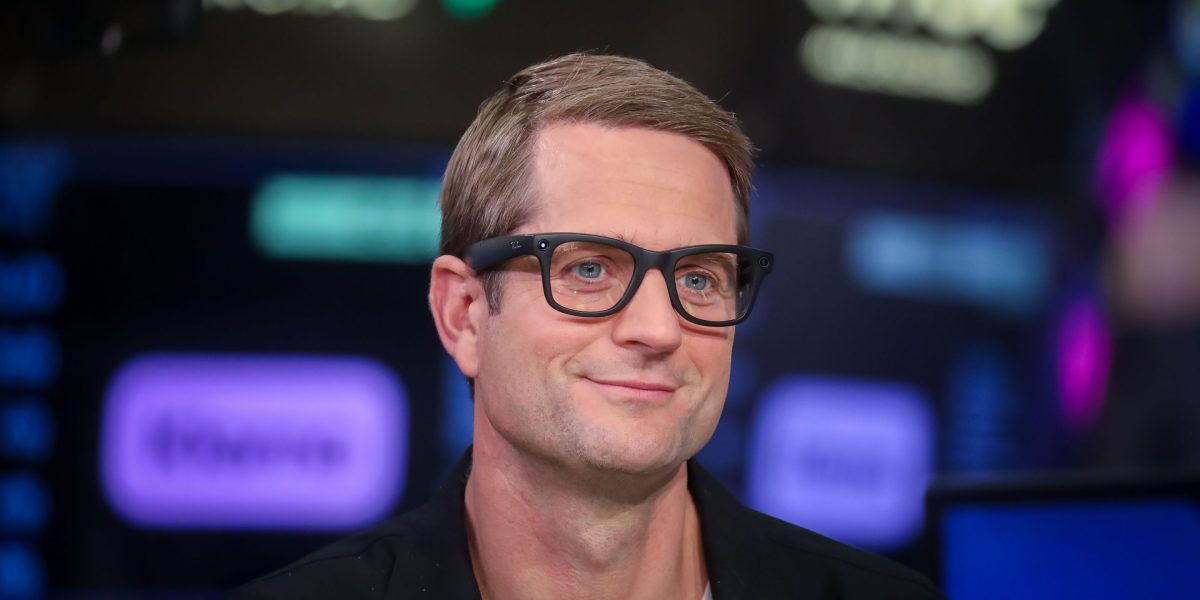
Jay Schroeder, the chief technology officer of CNH, was recently in Brazil, discussing artificial intelligence use cases to support the company’s research and development team. The agricultural equipment maker has put a lot of effort into governance and assessing certified tools from vendors, but the actual application of the technology within its own research division remains very nascent.
What has held Schroeder back, he says, are lingering concerns about the return on investment of AI. He cites an MIT study published over the summer that found that 95% of AI pilots fail.
“It’s great that we’ve got people engaged in AI,” says Schroeder, who quickly pivots to ask rhetorically, “How do we measure success? What are the things that we can measure to say, ‘This has been a worthwhile investment for CNH?’”
Schroeder, a three-decade veteran of CNH who began his career as an engineer focused on mid-range tractor transmission design, isn’t completely cautious when it comes to leveraging AI. The tech has been deployed across broad corners of the business including software development, to assist with drafting contracts, producing R&D database queries, and content management.
CNH has scored some wins that Schroeder has been able to track. The company is leaning on AI to assist software engineers who are focused on precision agricultural technology and the FieldOps farm management systems, where AI, machine learning, and sensors are applied to digitally enhance farming. Early data has shown that these engineers are reducing the time needed for documentation by 60%, giving them more time to write new code.
Another project underway involves AI-enabled spraying systems that use cameras and machine learning to detect the difference between weeds and planted crops when applying chemicals in the field. Farmers who use AI in this manner can reduce the amount of herbicides they use by 80%.
Other applications have more nebulous gains. CNH’s engineers participated in a pilot program where they were able to use AI to pull field reports from dispersed datasets across the company. Within three minutes, this generative AI tool can produce a report that includes details about a design project, CNH’s standards for developing the gear, field test reports, and other key information.
“Can you measure that?” asks Schroeder. He says that many hours are being saved from the work that would have gone into developing one of those reports manually in the past. But putting an exact figure on the time savings is more difficult.
Investments in AI and other emerging technologies, like autonomous robots, have become central to the pitch made by CNH and other tractor suppliers as farmers face intense cost pressures and feelthe dire effects of climate change. In the United Kingdom, where the Dutch-incorporated CNH has its headquarters and main operations, heat and drought led to around $1 billion in lost production this year. Three of the five worst harvests in the history of the U.K. have occurred since 2020, according to the figures from the U.K.-based nonprofit Energy and Climate Intelligence Unit.
Only 3% of the world’s land is suitable for crops, but the global population is growing by 35 million each year, according to CNH. Farmers have to squeeze out more efficiencies in the field to meet that rising demand.
“The biggest impact on a farmer’s profitability is the yield, besides commodity prices, obviously,” says Gerrit Marx, CEO of CNH, which ranks No. 217 on the Fortune 500 Europe. “In the end, we want to help the farmer make better decisions.”
Farm-equipment suppliers have been squeezed by the impact of tariffs, which has led to weakening demand for their expensive tractors, combines, and harvesters. Last month, CNH reported weaker year-over-year sales for the company’s third quarter, as shipments slowed to dealers that have been working their way through excess inventories. But even as it faces those headwinds, CNH has vowed to invest nearly $5 billion over five years into its U.S. manufacturing and R&D facilities.
“The solutions we’re developing for AG [agriculture] are really helping to feed the world,” says Schroeder. “I grew up on a family farm…so for me, it’s personal.”
CNH’s primary technology partner is Microsoft, and the company has been in active conversations with the tech giant to deploy some AI tools to support precision-technology product development. Already, all CNH employees have access to the free, web-based version of Microsoft Copilot, and about 1,000 of the “AI power users” have access to the premium license.
The company’s precision agricultural tech AI projects, Schroeder says, are still “mostly in the pilot phase. We have a long hill to climb.”
One AI tool that CNH launched externally at the beginning of 2025 is the “AI Tech Assistant,” which was deployed to hundreds of agricultural and construction dealer groups to field questions about any issues for CNH-branded machinery and propose a repair plan.
Marx says that every member of CNH’s global leadership team is running at least one generative or agentic AI pilot program within their respective fields.
He says CNH is looking for tangible benefits to business outcomes. One area of increased focus is the application of generative AI to produce conversational, real-time insights that can connect the dots between the seeds, fertilizers, and equipment a farmer has at their disposal, as well as current and near-future weather patterns, to help improve crop management and planning.
“Tomorrow, the agronomist will become a set of agentic AIs that help the farmer to make bigger decisions better,” says Marx.
John Kell
Send thoughts or suggestions to CIO Intelligence here.
NEWS PACKETS
The emerging federal-versus-state battle to regulate AI. In the wake of around 100 different laws adopted by 38 states during this year’s legislative session, President Trump this week moved to issue an executive order that would aim to prevent state’s from passing laws restricting AI. Over-regulating AI, Trump and his allies believe, will make it harder for the U.S. to compete with China. But state governors have expressed fears about the impact of AI—on hiring and employment, consumer protection, fraud, and other risks—motivating them to act in absence of federal regulations.
Nvidia wins Trump’s blessing to sell AI chips in China. On Tuesday, Trump announced that he had granted Nvidia permission to sell the company’s H200 AI chip to China, giving the AI chip maker an opportunity to chase billions in orders from the market that would purportedly only go to “approved customers.” But, the Financial Timesreported that China would limit access to H200 chips and that buyers would likely need to go through an approval process that would require them to explain why domestic providers are unable to meet their needs.
Nike cuts CTO role; Deere CIO retires. Athletic-gear giant Nike has eliminated two C-suite roles, including the CTO position, as CEO Elliott Hill aims to eliminate “layers” to accelerate a turnaround plan. CTO Muge Dogan is departing after just two years in the role. She previously spent more than 16 years at Amazon. Meanwhile, Deere & Co. announced that CIO Raj Kalathur would retire in January after 28 years at the agricultural machinery manufacturer. Kalathur has served as CIO since 2019 and oversaw Deere’s IT function and John Deere Financial, the financial-services provider for dealers and customers that buy the company’s equipment. Deere didn’t provide further details on who would succeed Kalathur.
IBM scoops up Confluent for $11 billion. Shares of data-streaming platform Confluent jumped after the company agreed to a $31-per-share cash takeover offer from IBM. It’s one of the tech giant’s largest takeovers ever in a deal that will bolster its AI offerings. IBM says that it expects that global data demand will more than double by 2028 and asserts that the IBM-Confluent combination will enable better and faster deployment of generative and agentic AI. As Bloomberg reports, IBM CEO Arvind Krishna has led efforts to reposition the company’s business around selling AI-related services to clients and buying up software companies. Those efforts appear to be paying off, with around 80% of IBM’s 300 clients who buy AI products being new over the past two quarters, IBM told the Wall Street Journal when it reported earnings in October.
New York Times, Chicago Tribune sue Perplexity. The New York Times and the Chicago Tribune have sued Perplexity, saying the AI startup is copying and distributing their exclusive content. This adds to a growing list of more than 40 court cases in the U.S. in which copyright holders have sued AI companies, the Times reports. The Times was also in court last week for its ongoing litigation with OpenAI, with the latter suffering a legal blow after a federal judge ruled that the ChatGPT maker must produce millions of anonymized chat logs from its users in a copyright case that stems from a late 2023 lawsuit by the news organization.
ADOPTION CURVE
EY says that AI-driven gains are being pumped into reinvestment, not job cuts. While headlines continue to swirl around AI’s impact on jobs—including the recent report from outplacement firm Challenger, Gray & Christmas that AI has been responsible for nearly 55,000 job layoffs in 2025—consulting giant EY is making the case that savings in AI are far more likely to be poured back into the business. Nearly all business leaders (96%) report AI-driven gains in productivity, but they are far more focused on reinvesting than eliminating jobs.
When asked what they’ve done with the dollars saved from AI, these leaders report spending to support existing AI capabilities (47%), develop new AI capabilities (42%), strengthen cybersecurity (41%), invest in R&D (39%), and upskilling and reskilling employees (38%), according to consulting giant EY’s fourth AI Pulse Survey. Only 17% report those gains led to reduced headcount.
“We see that a lot of companies are coming back with positive returns and are getting even more bullish in what their investment theses are,” Dan Diasio, EY global consulting AI leader, tells Fortune. “More of those executives are putting more capital towards AI, many of them doubling what their investments were over the course of the next 12 months.”
The EY survey data aligns with Diasio’s thinking. About 27% of respondents currently commits a quarter or more of their IT budget to AI, but that share of respondents is projected to nearly double to 52% in 2026. The group that spends half or more of their IT budget on AI is expected to quintuple, to 19% next year from just 3% today.
Courtesy of EY
JOBS RADAR
Hiring:
– USPTO is seeking a CIO, based in Alexandria, Virginia. Posted salary range: $208.4K-$225.7K/year.
– Signal Mutual is seeking a VP, head of IT, based in Norwalk, Connecticut. Posted salary range: $180K-$220K/year.
– Aritzia is seeking a head of cloud and infrastructure, based in Seattle. Posted salary range: $200K-$400K/year.
– Image Solutions is seeking a director of IT, based in Long Beach, California. Posted salary range: $180K-$200K/year.
Hired:
– Nationwideannounced that Michael Carrel will serve as CTO, elevated to the role after more than 30 years of experience at the insurance company. Most recently, Carrel served as SVP and CTO for Nationwide Financial, the financial services arm of the company. Carrel succeeds Jim Fowler, who is departing to join telecom company Lumen Technologies.
– Lumen Technologiesnamed Fowler as chief technology and product officer, effective January 5. Fowler will succeed Dave Ward, who is departing to assume the role of president and chief architect at software giant Salesforce. Fowler has served on Lumen’s board of directors since 2023 and will step down, effective immediately, in connection with his new role. He most recently served as CTO at Nationwide since 2018.
– Condé Nastappointed Vasanth Williams as chief product and technology officer, assuming the role this week and joining the media company’s executive leadership team. Most recently, Williams served as chief product officer and EVP of engineering at Major League Baseball. He also held technology roles at Amazon, Microsoft, and Yodle.
– 1-800-Flowers.com appointed Alexander Zelikovsky as CIO, leading IT applications and platforms, data architecture, data management, cybersecurity, and business intelligence. Prior to joining the online floral and gifts retailer, Zelikovsky most recently served as CIO at shipping and mailing company Pitney Bowes. He also held technology leadership roles at Huggies and Kleenex manufacturer Kimberly-Clark.
– Owens Corning elevated CIO Annie Baymiller, adding the EVP title, a promotion the building materials manufacturer said reinforces a recent company commitment to accelerate the usage of digital tools and analytics. Baymiller has served as the company’s CIO since 2023 and initially joined Owens Corning in 2006. She will continue to report directly to CEO Brian Chambers.
– Westfield appointed Lloyd Scholz as enterprise CIO, joining the property and casualty insurance company after most recently serving as senior managing director and CTO at insurance provider Markel. Prior to Markel, Scholz spent 16 years at credit-card giant Capital One in leadership roles focused on data engineering, analytics platforms, cloud strategy, and enterprise technology.
– DXC Technology promoted Russell Jukes to serve as chief digital information officer, an expanded role to oversee the IT services and consulting company’s end-to-end digital and AI agenda. Jukes has worked for DXC since 2017, when the company was formed through the merger of Hewlett Packard Enterprise’s enterprise services business division and Computer Sciences Corporation.