Connect with us

Business

Snowflake tops Fortune Future 50, new CFO highlights AI leadership

Published

on


Good morning. U.S. tech companies, particularly in software, have dominated the 2025 Fortune Future 50 list.

Snowflake, a cloud-based data storage company, takes the top spot on the list released this morning, followed closely by data, analytics, and AI provider Databricks. Both companies are fueled by the rise of AI in business—their platforms enable organizations to unlock and activate their own data as the foundation for artificial intelligence. Rounding out the top five are Celonis, DataRobot, and Astera Labs.

Since 2017, Fortune has partnered with the consulting firm BCG to publish the Future 50, an annual index of global companies, both publicly traded and venture-backed private firms, with the strongest prospects for above-average, long-term growth. The list highlights top scorers in “corporate vitality,” a measurable and manageable quality that reflects a company’s innate ability to expand.

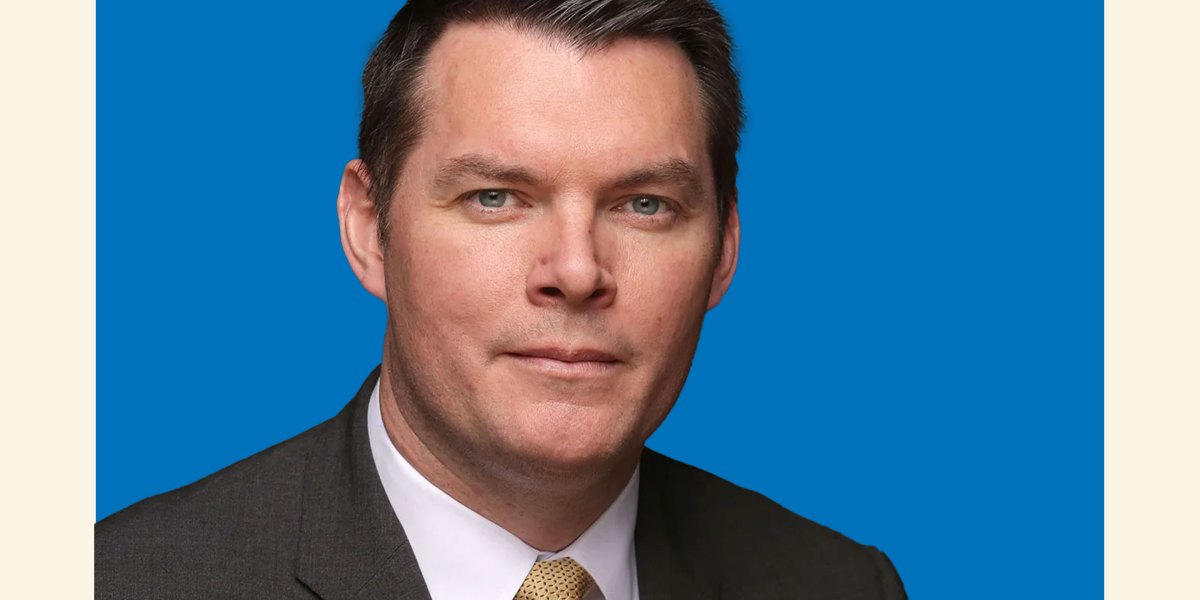
Snowflake is not only well-positioned for growth but also preparing for leadership changes. Earlier this month, the company announced that Brian Robins will become CFO on Sept. 22, succeeding Mike Scarpelli, who is retiring. Robins served as CFO of GitLab since 2020 and, before that, held CFO roles at Sisense, Cylance, AlienVault, and Verisign, a Nasdaq-listed company.

“Snowflake is at the center of the AI revolution,” Robins said in a statement. “I am thrilled to be a part of this hyper-growth phase.” He said he’s committed to helping the company scale efficiently to achieve its vision.

Sridhar Ramaswamy, CEO of Snowflake, echoed that sentiment: “We’re incredibly confident in our next chapter of growth with Brian taking the helm as our new chief financial officer. Brian’s deep commitment to operational rigor and long-term high growth aligns perfectly with Snowflake’s strategic direction.”

Robins will be tasked with sustaining Snowflake’s momentum. For the quarter that ended July 31, the company reported earnings of 35 cents per share, nearly double from the same period last year. Revenue climbed 32% to $1.1 billion, surpassing estimates of $1.09 billion.

With a new finance chief, rising demand for AI-powered solutions, and continued revenue growth, Snowflake is aiming to remain a dominant force. View the complete Fortune Future 50 list here.

Sheryl Estrada
sheryl.estrada@fortune.com

Leaderboard

Joshua Reed was appointed CFO of Alkermes plc (Nasdaq: ALKS), effective Sept. 15. Reed brings over 30 years of financial leadership experience. Most recently, he served as CFO of Omega Therapeutics, a then publicly traded biotechnology company. Before that, Reed was the CFO at Aldeyra Therapeutics. Earlier in his career, he spent more than a decade at Bristol Myers Squibb, culminating in his role as VP and head of finance operations for the U.S. and Puerto Rico.

Travis T. Thomas, CFO of Ring Energy, Inc. (NYSE American: REI), has resigned effective immediately to pursue other opportunities. According to the company’s announcement, his resignation was not the result of any disagreement between Ring Energy and Thomas regarding financial, operational, policy, or governance matters. Rocky Kwon, currently VP of accounting, controller, and assistant treasurer, has been appointed interim CFO. The company has begun a search for a permanent replacement.

Big Deal

Americans’ trust in the responsible use of AI has improved since Gallup began measuring the topic in 2023, according to a newly released report. This year, about a third (31%) of Americans surveyed said they trust businesses to use AI responsibly—3% said “a lot,” and 28% said “somewhat.” In 2023, only 21% expressed trust in businesses’ use of AI.

Still, skepticism remains. Forty-one percent of respondents this year said they do not trust businesses much when it comes to using AI responsibly, while 28% said they do not trust them at all.

The findings come from the latest Bentley University–Gallup Business in Society survey, based on responses from 3,007 U.S. adults in a web-based poll.

According to Gallup, the challenge businesses face as they deploy AI is clear: “They must not only demonstrate the technology’s benefits but also show, through transparent practices, that it will not come at the expense of workers or broader public trust.”

Courtesy of Gallup

Going deeper

“Unconscious Uncoupling: CFO Business Partnering 2025” is a report by Datarails based on a survey of 240 U.S. heads of sales, marketing, HR, IT, customer service, and R&D departments regarding their relationships with CFOs. Although finance teams have evolved into strategic business partners, nearly all business executives (97%) still view their finance chief’s primary role as “limiting spending.”


Overall, 51% of executives ranked poor communication as their biggest complaint in the relationship. IT executives reported having the strongest “business partner” relationship with the CFO’s office, according to the survey.

“Without finance partnership, businesses will continue to lose significant opportunities to drive growth,” said Didi Gurfinkel, CEO and co-founder of Datarails.


Overheard

“In the same way that every company became a technology company, I think that every company will become an AI company.”

—Robinhood CEO Vlad Tenev told David Rubenstein last week during an interview on Bloomberg Wealth.

This is the web version of CFO Daily, a newsletter on the trends and individuals shaping corporate finance. Sign up for free.


Source link

Continue Reading

Business

Fed chair race: Warsh overtakes Hassett as favorite to be nominated by Trump

Published

on


Wall Street’s top parlor game took a sudden turn on Monday, when the prediction market Kalshi showed Kevin Warsh is now the frontrunner to be nominated as the next Federal Reserve chairman, overtaking Kevin Hassett.

Warsh, a former Fed governor, now has a 47% probability, up from 39% on Sunday and just 11% on Dec. 3. Hassett, director of the National Economic Council, has fallen to 41%, down from 51% on Sunday and 81% on Dec. 3.

A report from CNBC saying Hassett’s candidacy was running into pushback from people close to President Donald Trump seemed to put Warsh on top. The resistance stems from concerns Hassett is too close to Trump.

That followed Trump’s comment late Friday, when he told The Wall Street Journal Warsh was at the top of his list, though he added “the two Kevins are great.”

According to the Journal, Trump met Warsh on Wednesday at the White House and pressed him on whether he could be trusted to back rate cuts. 

The report surprised Wall Street, which had overwhelming odds on Hassett as the favorite, lifting Warsh’s odds from the cellar.

But even prior to the Journal story, there have been rumblings in the finance world Hassett wasn’t their preferred choice to be Fed chair.

At a private conference for asset managers on Thursday, JPMorgan Chase CEO Jamie Dimon signaled support for Warsh and predicted Hassett was likelier to support Trump on more rate cuts, sources told the Financial Times.

And in a separate report earlier this month, the FT said bond investors shared their concerns about Hassett with the Treasury Department in November, saying they’re worried he would cut rates aggressively in order to please Trump.

Trump has said he will nominate a Fed chair in early 2026, with Jerome Powell’s term due to expire in May. 

For his part, Hassett appeared to put some distance between himself and Trump during an appearance on CBS’ Face the Nation on Sunday.

When asked if Trump’s voice would have equal weighting to the voting members on the rate-setting Federal Open Market Committee, Hassett replied, “no, he would have no weight.”

“His opinion matters if it’s good, if it’s based on data,” he explained. “And then if you go to the committee and you say, ‘well the president made this argument, and that’s a really sound argument, I think. What do you think?’ If they reject it, then they’ll vote in a different way.”


Source link

Continue Reading

Business

What happens to old AI chips? They’re still put to good use and don’t depreciate that fast

Published

on


New AI chips seem to hit the market at a quicker pace as tech companies scramble to gain supremacy in the global arms race for computational power.

But that begs the question: What happens to all those older-generation chips?

The AI stock boom has lost a lot of momentum in recent weeks due, in part, to worries that so-called hyperscalers aren’t correctly accounting for the depreciation in the hoard of chips they’ve purchased to power chatbots.

Michael Burry—the investor of Big Short fame who famously predicted the 2008 housing collapse—sounded the alarm last month when he warned AI-era profits are built on “one of the most common frauds in the modern era,” namely stretching the depreciation schedule. He estimated Big Tech will understate depreciation by $176 billion between 2026 and 2028.

But according to a note last week from Alpine Macro, chip depreciation fears are overstated for three reasons.

First, analysts pointed out software advances that accompany next-generation chips can also level up older-generation processors. For example, software can improve the performance of Nvidia’s five-year-old A100 chip by two to three times compared to its initial version.

Second, Alpine said the need for older chips remains strong amid rising demand for inference, meaning when a chatbot responds to queries. In fact, inference demand will significantly outpace demand for AI training in the coming years.

“For inference, the latest hardware helps but is often not essential, so chip quantity can substitute for cutting-edge quality,” analysts wrote, adding Google is still running seven- to eight-year-old TPUs at full utilization.

Third, China continues to demonstrate “insatiable” demand for AI chips as its supply “lags the U.S. by several generations in quality and severalfold in quantity.” And even though Beijing has banned some U.S. chips, the black market will continue to serve China’s shortfalls.

Meanwhile, not all chips used in AI belong to hyperscalers. Even graphics processors contained in everyday gaming consoles could work.

A note last week from Yardeni Research pointed to “distributed AI,” which draws on unused chips in homes, crypto-mining servers, offices, universities, and data centers to act as global virtual networks.

While distributed AI can be slower than a cluster of chips housed in the same data center, its network architecture can be more resilient if a computer or a group of them fails, Yardeni added.

“Though we are unable to ascertain how many GPUs were being linked in this manner, Distributed AI is certainly an interesting area worth watching, particularly given that billions are being spent to build new, large data centers,” the note said.


Source link

Continue Reading

Business

‘I had to take 60 meetings’: Jeff Bezos says ‘the hardest thing I’ve ever done’ was raising the first million dollars of seed capital for Amazon

Published

on


Today, Amazon’s market cap is hovering around $2.38 trillion, and founder Jeff Bezos is one of the world’s richest men, worth $236.1 billion. But three decades ago, in 1995, getting the first million dollars in seed capital for Amazon was more grueling than any challenge that would follow. One year ago, at New York’s Dealbook Summit, Bezos told Andrew Ross Sorkin those early fundraising efforts were an absolute slog, with dozens of meetings with angel investors—the vast majority of which were “hard-earned no’s.”

“I had to take 60 meetings,” Bezos said, in reference to the effort required to convince angel investors to sink tens of thousands of dollars into his company. “It was the hardest thing I’ve ever done, basically.”

The structure was straightforward: Bezos said he offered 20% of Amazon for a $5 million valuation. He eventually got around 20 investors to each invest around $50,000. But out of those 60 meetings he took around that time, 40 investors said no—and those 40 “no’s” were particularly soul-crushing because before getting an answer, each back-and-forth required “multiple meetings” and substantial effort.

Bezos said he had a hard time convincing investors selling books over the internet was a good idea. “The first question was what’s the internet? Everybody wanted to know what the internet was,” Bezos recalled. Few investors had heard of the World Wide Web, let alone grasped its commercial potential.

That said, Bezos admitted brutal honesty with his potential investors may have played a role in getting so many rejections.

“I would always tell people I thought there was a 70% chance they would lose their investment,” he said. “In retrospect, I think that might have been a little naive. But I think it was true. In fact, if anything, I think I was giving myself better odds than the real odds.”

Bezos said getting those investors on board in the mid-90s was absolutely critical. “The whole enterprise could have been extinguished then,” he said.

You can watch Bezos’ full interview with Andrew Ross Sorkin below. He starts talking about this interview gauntlet for seed capital around the 33-minute mark.

This story was originally featured on Fortune.com


Source link

Continue Reading

Trending

Copyright © Miami Select.