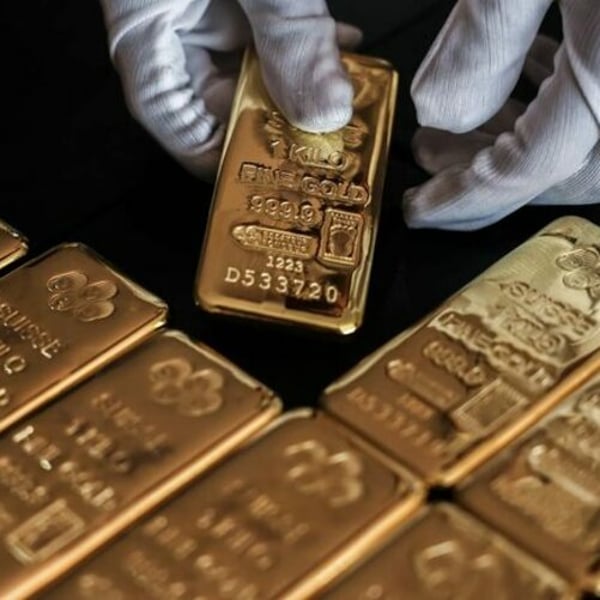
Thais are poised to buy more gold for a fifth straight year, as a rally in the local currency makes the bullion cheaper, complicating efforts by the central bank to curb the precious metal’s influence on the baht.
Bloomberg
With gold prices climbing to new highs, more Thais are turning to the yellow metal for higher returns and as a safe haven against mounting global and domestic political uncertainties, said Nuttapong Hirunyasiri, managing director of MTS Gold Group, one of Thailand’s largest bullion dealers.
Thai gold demand, excluding central bank purchase, is set to climb 10% this year to 53.7 tons, according to the Thai Futures Exchange. Demand in the first half jumped 21% to 20.7 tons, World Gold Council data show.
“Thai people love to buy gold,” Nuttapong said. “Even though prices continue to rise, many people keep buying. We are seeing activities on both sides — buying and selling.”
Thailand’s affinity for gold is both cultural and historic, with the metal commonly offered at Buddhist temples and many considering it as a traditional form of saving and passing down wealth. Demand soared 13% last year, and Thailand is the only country in the world to have posted four straight years of growth through the Covid pandemic, YLG Bullion International Co. said, citing WGC data.
The baht’s 7% rally this year to its highest level since 2021 is among the reasons driving local gold demand, said Jitti Tangsithpakdi, president of Thailand’s Gold Traders Association.
The Bank of Thailand has attributed baht’s surge partly to the rally in gold and vowed to rein in any wild swings. Thailand’s business and tourism groups have urged authorities to take steps to temper the gains as it hurts the country’s exports and tourism earnings.
The baht typically gets a boost when Thais sell gold, which is highly valued as an investment, as the dollar proceeds get converted into the local currency. It also has a much closer link to gold than other emerging Asian currencies.
Concerned about gold’s outsized influence, Thai central bank officials said they are working with the Finance Ministry to address currency moves that deviate from fundamentals.
But market players, including Jitti, downplayed the link, arguing that the baht’s gains stem more from a weaker dollar and optimism over a new government.
‘De-dollarization is also prompting people to turn to gold,” said Tipa Nawawattanasub, chief executive of YLG Bullion Futures Co. “Profit-taking in gold prices may be part of many reasons for the baht strength. But it’s not the major factor.”
Any attempts to wean Thais away from gold may prove difficult given the broader weakness in the Thai financial markets, where stocks are weak and government bond yields are at multi-year lows. With the outlook for gold prices still bullish, MTS Gold’s Nuttapong sees more Thais diving into gold.
“The sky is the limit for gold prices,” Nuttapong said. “The geopolitical problems as well as US President Donald Trump’s policies have fueled uncertainties and driven demand for gold.”
The thieves who stole crown jewels from the Louvre in October evaded police with just 30 seconds to spare due to avoidable security failures at the Paris museum, a damning investigation revealed on Wednesday.
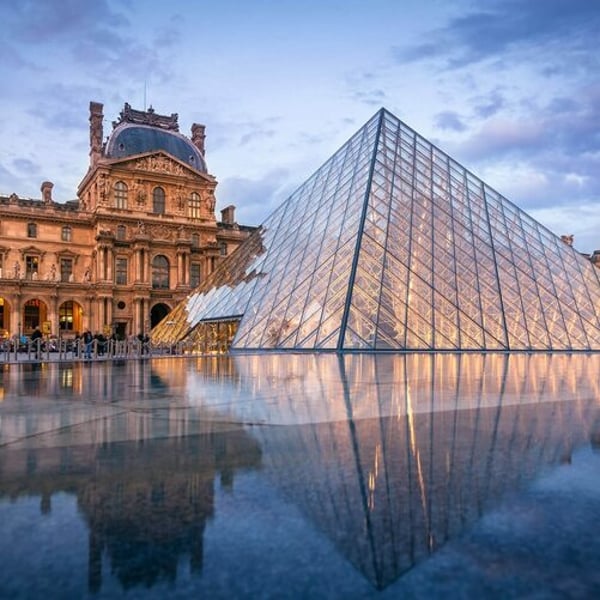
The glass entrance to the Louvre in Paris, France – DR
The probe, ordered by the culture ministry after the embarrassing daylight heist, revealed that only one of two security cameras was working near the site where the intruders broke in on the morning of Sunday October 19.
Agents in the security control room did not have enough screens to follow the images in real-time, while a lack of coordination meant police were initially sent to the wrong place once the alarm was raised, the report unveiled at the French Senate’s Culture Commission stated.
“It highlights an overall failure of the museum, as well as its supervisory authority, to address security issues,” the head of the commission, Laurent Lafon, said at the start of a hearing.
One of the most startling revelations was that the robbers left only 30 seconds before police and private security guards arrived on the scene. “Give or take 30 seconds, the Securitas (private security) guards or the police officers in a car could have prevented the thieves from escaping,” the head of the investigation, Noel Corbin, told senators.
He said that measures such as a modern CCTV system, more resistant glass in the door cut open with angle grinders, or better internal coordination could have prevented the loss of the jewels- worth an estimated $102 million- which have still not been found.
Major security vulnerabilities were highlighted in several studies seen by management of the Louvre over the last decade, including a 2019 audit by experts at the jewellery company Van Cleef & Arpels. Their findings stressed that the riverside balcony targeted by the thieves was a weak point and could be easily reached with an extendable ladder — exactly what transpired in the heist.
Corbin confirmed that under-fire Louvre boss Laurence des Cars had not been aware of the audit which was ordered by her predecessor, Jean-Luc Martinez. “The recommendations were not acted on and they would have enabled us to avoid this robbery,” Corbin said, adding that there had been a lack of coordination between the two government-appointed administrators.
Police believe they have arrested all four intruders, who escaped on powerful motorbikes, having carried out the heist in the Apollo Gallery in around 10 minutes in total, according to the investigation. The revelations on Wednesday are likely to pile more pressure des Cars, the first woman in the role who was appointed by President Emmanuel Macron in 2021.
Questions have swirled since the break-in over whether it was avoidable and why a national treasure that is the world’s most-visited museum appeared to be so poorly protected. France’s lower house of parliament is carrying out its own inquiry, while des Cars and Martinez are set to be grilled by senators next week.
Last month, France’s state auditor said security upgrades had been carried out at a “woefully inadequate pace” and the museum had prioritised “high-profile and attractive operations” instead of protecting itself.
Senior police officer Guy Tubiana, a security advisor at the culture ministry who took part in the investigation, told senators he was “stunned” by what he had discovered at the museum. “There was a succession of malfunctions that led to catastrophe but I never would have thought the Louvre could have so many malfunctions,” he said.
Staff at the Louvre at set to go on strike on Monday to demand management act against what they see as understaffing and overcrowding at the museum, which welcomed 8.7 million people last year. At the weekend, the museum revealed that a water leak had damaged 300 to 400 journals, books and documents in the Egyptian department in late November.
Frasers Group’s Gieves & Hawkes brand is continuing to expand at retail and has returned to the city of Bath with the opening of a store in the newly redeveloped Shire’s Yard.
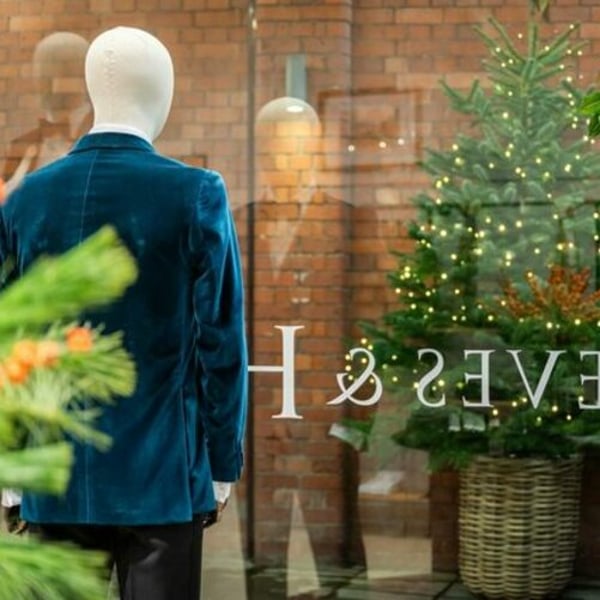
Gieves & Hawkes, Bath
Bath is a key destination for both UK and and international tourists, as well as having an affluent local catchment, so it looks like a strong move for the heritage menswear brand.
The 2 Broad Street store is set across three floors in a prime location at the heart of the city with the company saying the opening is “a significant moment in the brand’s continued celebration of craftsmanship and heritage”.
The space covers 2,085 sq ft and showcases the full breadth of the Gieves & Hawkes offering, from ready-to-wear tailoring and “refined” casualwear to the made-to-measure service for which the label is known.
Managing director Jason Gerrard said of the opening: “Bath is a city where Gieves & Hawkes has enjoyed a longstanding presence and loyal following. The opening of our new store is within the exceptional Shire’s Yard development, and we are privileged to be part of its vibrant community. Our new store represents our long-term commitment to Bath and the Southwest.”
Gieves & Hawkes, Bath
The Bath return is part of an ongoing national expansion strategy. Earlier this year, in a 254-year retail first, the brand opened a store-in-store within Frasers Group’s Flannels flagship in Leeds.
At the time Frasers said the debut “marks a significant milestone in the brand’s history and is a precursor to a wider regional expansion strategy to tap into a desire for craftsmanship, integrity, and authenticity outside of the capital”.
German womenswear brand Marc Cain has named a new CEO and it’s clearly preparing well in advance as he’ll take the reins of the business as of June next year.
Dr. Patric Spethmann – MARC O’POLO
He’s Dr Patric Spethmann, who will be responsible for all areas of the business. Helmut Schlotterer, founder and owner of Marc Cain, will remain chairman of the board, “primarily to mentor Patric Spethmann and act as a coach and advisor”.
So what is it about Spethmann that made the company (whose products are available internationally include the US and UK) pick him? He joins from Marc O’Polo, where he most recently held the position of COO. There, his focus was on “optimising internal processes, increasing the efficiency of workflows and organising structures”.
“In Patric Spethmann, we have gained a leader who brings with him many years of experience in the industry. Together, we will set the course for maintaining our brand and values and strategically driving them forward. This puts us in an excellent position for the future and enables us to respond quickly and efficiently to the challenges of the new era,” Schlotterer said.
And Spethmann added: “I am very much looking forward to joining Marc Cain in June 2026. As a leading player in the field of premium women’s fashion, I am particularly impressed by the company’s extraordinary innovative strength and its clear focus on forward-looking technologies. This combination of creativity, quality and progressive thinking makes Marc Cain, in my opinion, a company that sets trends for the entire industry.”