Connect with us

Business

Third Space’s CEO follows an 80/20 rule for eating out, competes in triathlons at 54-years-old and has made startup investments he regrets
Published

on


What would you do if you had a six-figure salary? Perhaps you’d never cook another meal again or indulge in a monthly Thai massage and a Soho House membership to unwind from the stress that comes with being at your A game.

Here at The Good Life you don’t have to imagine what life at the top looks like anymore: Get real-life inspiration for how the most successful live their lives.


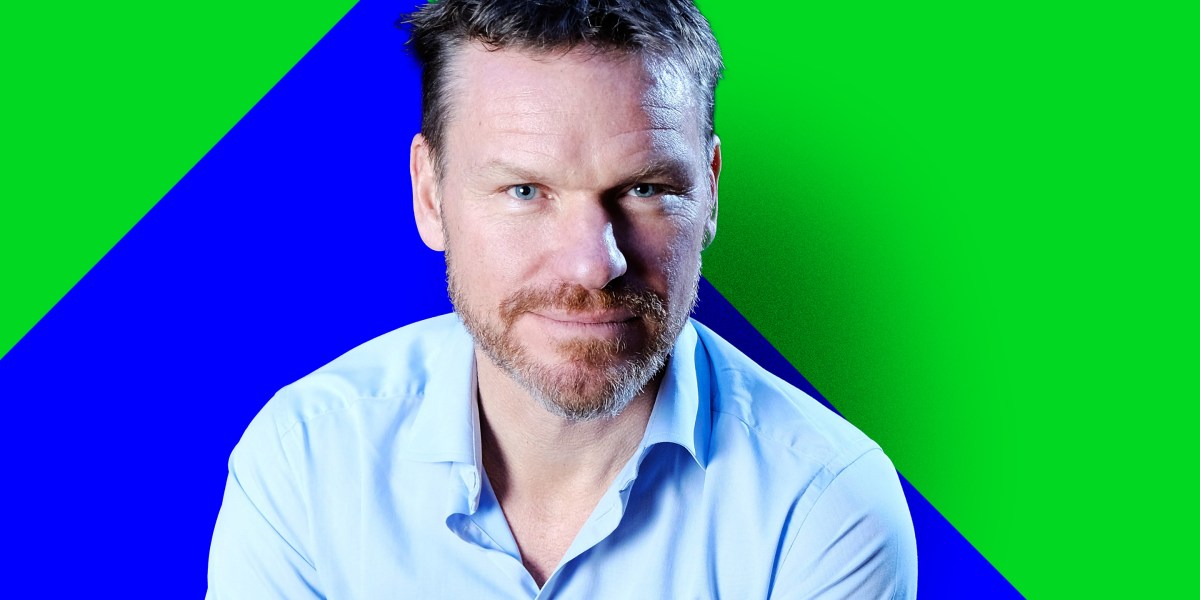
Today Fortune meets Colin Waggett, the CEO of London’s hottest high-end gym, Third Space—perhaps better known as the spot where David Beckham and Prince Harry have worked out. Britain’s answer to Equinox has taken London’s luxury gym market by storm.

Despite only opening its first club in 2001 and having a hefty price tag of £220-to-£250 a month, Third Space is rapidly growing a loyal fan base of millennials. This is thanks, in part, to its Instagramable interiors and classes (hello, hot yoga). 

35,000+

Number of Third Space members.

But also, Waggett’s extensive industry experience: He was Fitness First’s CEO for over seven years before launching his own boutique gym, Psycle, which was acquired in 2014 for an undisclosed amount. 

Under his helm, Third Space has quadrupled in size when it comes to revenue and membership size. Last year, it secured an £88.5 million cash injection to help the brand scale up à la Equinox which has over 40 fancy fitness clubs across the pond. Although Third Space has only just opened its 11th club, it’s already too tight a squeeze for its 35,000-plus members and several sites are now operating a waiting list. With high-end gyms seriously en vogue, Waggett’s is personally on the lookout for new locations.

The finances

Fortune: What has been the best investment you’ve ever bought?

I invested in Third Space in 2015. I can’t tell you how much—but it is a great business.

The worst?  

I’ve done a handful of investments in startups that have gone bust…

Third Space set within the 23-acre Wood Wharf district:

Third Space in Wood Wharf.

Courtesy of Third Space

Courtesy of Third Space

Courtesy of Third Space

Do you carry a wallet?

Not since Covid. Apple Pay all the way.

What personal finance advice would you give your 20-year-old self?  

Save a bit regularly, but back yourself. I’d rather invest in a business I know, understand and am involved in, than a fund that invests in businesses I know nothing about, paying fees to someone I’ve never met.

What’s the one subscription you can’t live without? 

Strava – can I have two? And Spotify.

Garmin Marq smartwatches during the 2024 CES event in Las Vegas, Nevada, US, on Wednesday, Jan. 10, 2024. The event typically doubles as a preview of how tech giants and startups will market their wares in the coming year and if early announcements are any indication, AI-branded products will become the new "smart" gadgets of 2024. Photographer: Bridget Bennett/Bloomberg via Getty Images
Colin’s go-to watch is from American-Swiss company, Garmin.

Bridget Bennett—Bloomberg/Getty Images

Where’s your go-to watch from? 

My Garmin Fenix 6.

What’s your go-to work wardrobe?

Paul Smith, LuluLemon, Eton, Vulpine.

DETROIT, MICHIGAN, UNITED STATES - 2022/02/07: Lululemon logo seen at one of their Stores in downtown Detroit. (Photo by Stephen Zenner/SOPA Images/LightRocket via Getty Images)
When it comes to work attire, Lululemon is a favorite for Third Space CEO.

Stephen Zenner—SOPA Images/LightRocket/Getty Images

If you have children, what do your childcare arrangements look like? 

My kids are 21 and 18, so they can now pick me up from the pub when I need them to.

The necessities

How do you commute to work? 

I take the train from Winchester — it provides a very productive hour each way of reading, writing and thinking.

Save a bit regularly, but back yourself. I’d rather invest in a business I know, understand and am involved in, than a fund that invests in businesses I know nothing about, paying fees to someone I’ve never met.

How do you get your daily coffee fix?  

I love my Sage espresso coffee machine — homemade is the best. One of my colleagues is a total coffee nut, so he makes sure we pick the best coffee shops wherever we are in London. The office favourite is Hideaway Coffee House on Brewer Street in Soho. 
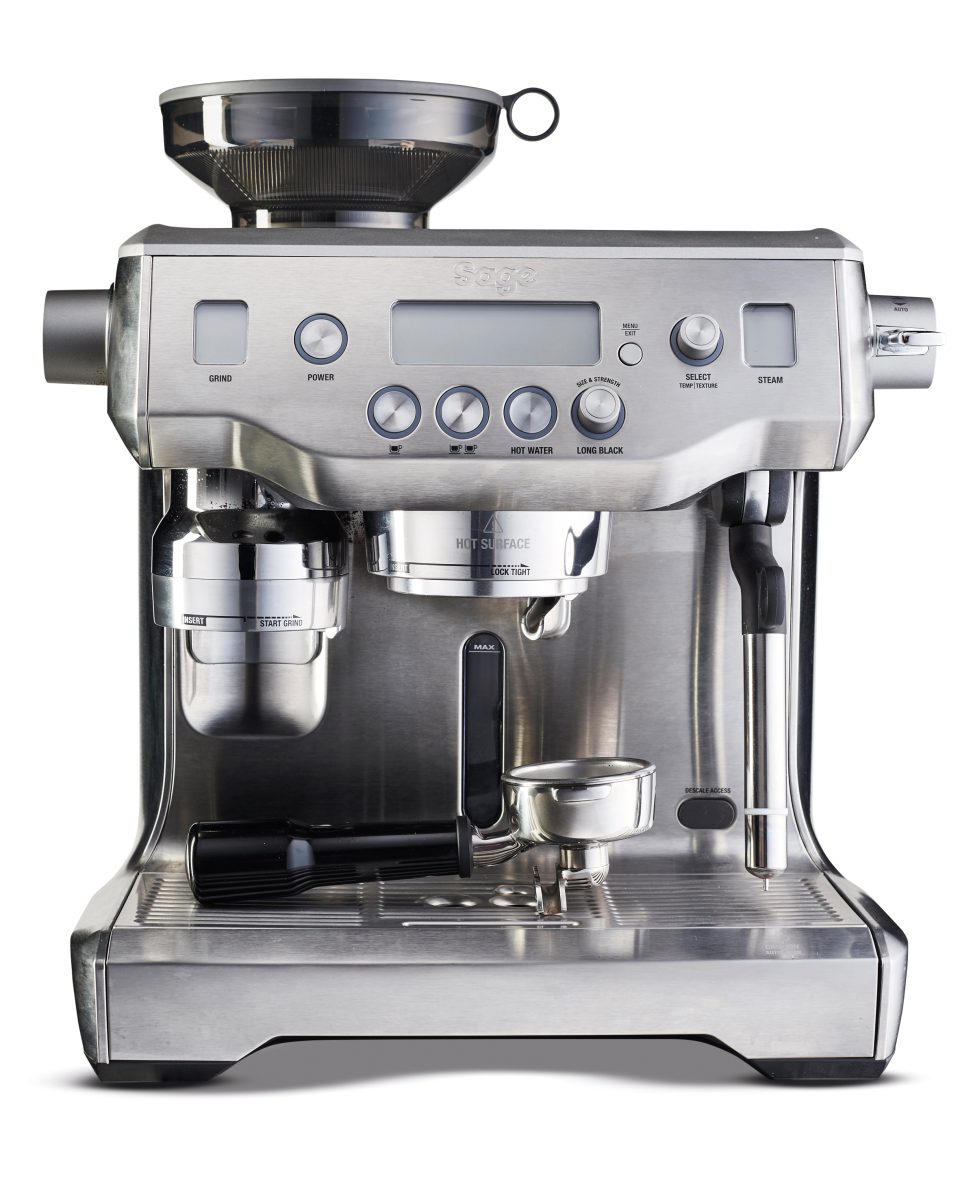
A Sage The <a href="https://fortune.com/company/oracle/" target="_blank">Oracle</a> coffee machine, taken on May 12, 2017. (Photo by Joseph Branston/T3 Magazine/Future via Getty Images)
Waggett usually gets his daily coffee fix at home, using his Sage espresso coffee machine.

Joseph Branston—T3 Magazine/Future/Getty Images

Do you have lunch al desko?    

Often, yes. We have our own food business called Natural Fitness Food, or NFF for short, which is super healthy, macro controlled, fresh and delicious. My current favourite is the Hot Smoked Salmon which has 38g of protein.

How often in a week do you dine out versus cook at home? 

We eat in 5 nights and eat out 2. I am lucky my wife is a fantastic cook, and I tend to cook one night at the weekend. 

The treats

How do you unwind from the top job? 

I work out a lot at our clubs (obviously!) and ride my bike through the Hampshire countryside or through the Mountain ranges of Europe when I get the chance. I also play golf and compete in the odd triathlon. And, of course, spending time with family, friends and wine.

View of the Harbour and Across the Bay
Colin and his family have a house on the North Coast of Cornwall, which backs onto dunes, the sea and surf.

Deejpilot via Getty

What’s the best bonus treat you’ve bought yourself? 

I always need another bike. My latest is the Pinarello F12. 

Take us on holiday with you, what’s next on your vacation list?

3 or 4 ski trips, some downhill, some touring, and heli (off-trail, where the skier reaches the top of the mountain by helicopter) if I’m lucky. All my family and friends are ski nuts. I tend to also go on a cycling trip with friends to some mountains somewhere. We have a house on the North Coast of Cornwall to escape to, which backs onto dunes, the sea and surf — I’ll get in the water every day and walk or run the cliff tops with the family and the dog. And then somewhere interesting or hot. Last year it was Sumba and Komodo in Indonesia, this year Croatia. How many is that? Not enough!

Here at The Good Life you don’t have to imagine what life at the top looks like anymore: Get real-life inspiration for how the most successful live life. Dive into our other ‘The Good Life’ profiles.

Fortune wants to hear from European leaders on what their “Good Life” looks like. Get in touch: orianna.royle@fortune.com.

Fortune Global Forum returns Oct. 26–27, 2025 in Riyadh. CEOs and global leaders will gather for a dynamic, invitation-only event shaping the future of business. Apply for an invitation.


Source link

Continue Reading

Business

Binance has been proudly nomadic for years. A new announcement suggests it’s chosen an HQ

Published

on


For years, Binance has dodged questions about where it plans to establish a corporate headquarters. On Monday, the world’s largest crypto exchange made an announcement that indicates it has chosen a location: Abu Dhabi, the capital of the United Arab Emirates.

In its announcement, Binance reported that it has secured three global financial licenses within Abu Dhabi Global Market, a special economic zone inside the Emirati city. The licenses regulate three different prongs of the exchange’s business: its exchange, clearinghouse, and broker dealer services. The three regulated entities are named Nest Exchange Limited, Nest Clearing and Custody Limited, and Nest Trading Limited, respectively.

Richard Teng, the co-CEO of Binance, declined to say whether Abu Dhabi is now Binance’s global headquarters. “But for all intents and purposes, if you look at the regulatory sphere, I think the global regulators are more concerned of where we are regulated on a global basis,” he said, adding that Abu Dhabi Global Market is where his crypto exchange’s “global platform” will be governed.

A company spokesperson declined to add more to Teng’s comments, but did not deny Fortune’s assertion that Binance appears to have chosen Abu Dhabai as its headquarters.

Corporate governance

The Abu Dhabi announcement suggests that Binance, which has for years taken pride in branding itself as a company with no fixed location, is bowing to the practical considerations that go with being a major financial firm—and the corporate governance obligations that entails.

When Changpeng Zhao, the cofounder and former CEO of Binance, launched the company in 2017, he initially established the exchange in Hong Kong. But, weeks after he registered Binance in the city, China banned cryptocurrency trading, and Zhao moved his nascent trading platform. Binance has since been itinerant. “Wherever I sit is going to be the Binance office,” Zhao said in 2020.

The location of a company’s headquarters impacts its tax obligations and what regulations it needs to follow. In 2023, after Binance reached a landmark $4.3 billion settlement with the U.S. Department of Justice, Zhao stepped down as CEO and pleaded guilty to failing to implement an effective anti-money laundering program.

Teng took over and promised to implement the corporate structures—like a board of directors—that are the norm for companies of Binance’s size. Teng, who now shares the CEO role with the newly appointed Yi He, oversaw the appointment of Binance’s first board in April 2024. And he’s repeatedly telegraphed that his crypto exchange is focused on regulatory compliance.

Binance already has a strong footprint in the Emirates. It has a crypto license in Dubai, received a $2 billion investment from an Emirati venture fund in March, and, that same month, said it employed 1,000 employees in the country. 


Source link

Continue Reading

Business

Leaders in Congress outperform rank-and-file lawmakers on stock trades by up to 47% a year

Published

on


Stocks held by members of Congress have been beating the S&P 500 lately, but there’s a subset of lawmakers who crush their peers: leadership.

According to a recent working paper for the National Bureau of Economic Research, congressional leaders outperform back benchers by up to 47% a year.

Shang-Jin Wei from Columbia University and Columbia Business School along with Yifan Zhou from Xi’an Jiaotong-Liverpool University looked at lawmakers who ascended to leadership posts, such as Speaker of the House as well as House and Senate floor leaders, whips, and conference/caucus chairs.

Between 1995 and 2021, there were 20 such leaders who made stock trades before and after rising to their posts. Wei and Zhou observed that lawmakers underperformed benchmarks before becoming leaders, then everything suddenly changed.

“Importantly, whilst we observe a huge improvement in leaders’ trading performance as they ascend to leadership roles, the matched ‘regular’ members’ stock trading performance does not improve much,” they wrote.

Leadership’s stock market edge stems in part from their ability to set the regulatory or legislation agenda, such as deciding if and when a particular bill will be put to a vote. Setting the agenda also gives leaders advanced knowledge of when certain actions will take place.

In fact, Wei and Zhou found that leaders demonstrate much better returns on stock trades that are made when their party controls their chamber.

In addition, being a leader also increases access to non-public information. The researchers said that while companies are reluctant to share such insider knowledge, they may prioritize revealing it to leaders over rank-and-file lawmakers.

Leaders earn higher returns on companies that contribute to their campaigns or are headquartered in their states, which Wei and Zhou said could be attributable to “privileged access to firm-specific information.”

The upper echelon also influences how other members of Congress vote, and the paper found that a leader’s party is much more likely to vote for bills that help firms whose stocks the leader held, or vote against bills that harmed them. And stocks owned by leadership tend to see increases in federal contract awards, especially sole-source contracts, over the following one to two years.

“These results suggest that congressional leaders may not only trade on privileged knowledge, but also shape policy outcomes to enrich themselves,” Wei and Zhou wrote.

Stock trades by congressional leaders are even predictive, forecasting higher occurrences of positive or negative corporate news over the following year, they added. In particular, stock sales predict the number of hearings and regulatory actions over the coming year, though purchases don’t.

Investors have long suspected that Washington has a special advantage on Wall Street. That’s given rise to more ETFs with political themes, including funds that track portfolios belonging to Democrats and Republicans in Congress.

And Paul Pelosi, former House Speaker Nancy Pelosi’s husband, even has a cult following among some investors who mimic his stock moves.

Congress has tried to crack down on members’ stock holdings. The STOCK Act of 2012 requires more timely disclosures, but some lawmakers want to ban trading completely.

A bipartisan group of House members is pushing legislation that would prohibit members of Congress, their spouses, dependent children, and trustees from trading individual stocks, commodities, or futures.

And this past week, a discharge petition was put forth that would force a vote in the House if it gets enough signatures.

“If leadership wants to put forward a bill that would actually do that and end the corruption, we’re all for it,” said Rep. Anna Paulina Luna, R-Fla., on social media on Tuesday. “But we’re tired of the partisan games. This is the most bipartisan bipartisan thing in U.S. history, and it’s time that the House of Representatives listens to the American people.”


Source link

Continue Reading

Business

Macron warns EU may hit China with tariffs over trade surplus

Published

on


French President Emmanuel Macron warned that the European Union may be forced to take “strong measures” against China, including potential tariffs, if Beijing fails to address its widening trade imbalance with the bloc.

“I’m trying to explain to the Chinese that their trade surplus isn’t sustainable because they’re killing their own clients, notably by importing hardly anything from us any more,” Macron told Les Echos newspaper in an interview published on Sunday.

“If they don’t react, in the coming months we Europeans will be obliged to take strong measures and decouple, like the US, like for example tariffs on Chinese products,” he said, adding that he had discussed the matter with European Commission President Ursula von der Leyen.

Macron has just returned from a three-day state visit in China, where he pressed for more investment as Paris seeks to recalibrate its relationship with the world’s second-largest economy. France’s goods trade deficit with China reached around €47 billion ($54.7 billion) last year, according to the French Treasury. Meanwhile, China’s goods trade surplus with the EU swelled to almost $143 billion in the first half of 2025, a record for any six-month period, according to data released by China earlier this year.

Tensions between France and China escalated last year after Paris backed the EU’s decision to impose tariffs on Chinese electric vehicles. Beijing retaliated by imposing minimum price requirements on French cognac, sparking fears among pork and dairy producers that they could be targeted next.

‘Life or Death’

Macron said the US approach to China was “inappropriate” and had worsened Europe’s position by diverting Chinese goods toward the EU market.

“Today, we’re stuck between the two, and it’s a question of life or death for European industry,” Macron said, while noting that Germany — Europe’s biggest economy — doesn’t entirely share France’s stance.

In addition to Europe needing to become more competitive, the European Central Bank too has a role to play in strengthening the EU’s single market, Macron said, arguing that monetary policy should take growth and jobs into account, not just inflation, he said.

He also said the ECB’s decision to continue selling the government bonds it holds risks pushing up long-term interest rates and weighing on economic activity.

“Europe must — and wants to — remain a zone of monetary stability and credible investment,” Macron said.


Source link

Continue Reading

Trending

Copyright © Miami Select.