Connect with us

Politics

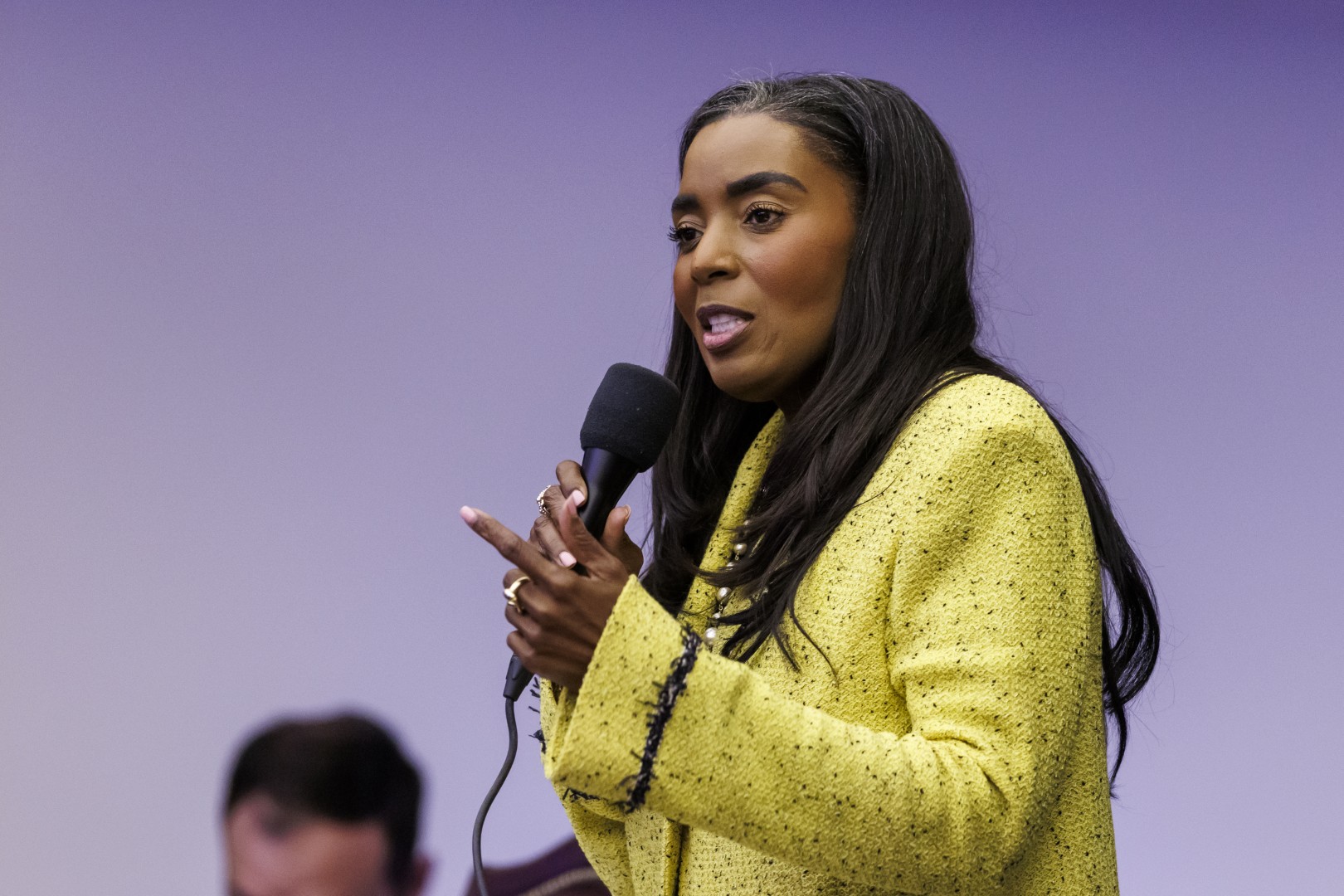
Barbara Sharief refiles bill to strengthen protections against violence
Published

on


If you’re at risk of serious violence, Sen. Barbara Sharief wants to provide more access to safety measures.

That’s the goal of legislation (SB 32) she has refiled for the coming Session.

If passed, the measure would expand protections under existing injunction statutes, substituting “repeat violence” with “repeat or serious violence.”

In short, the changes would expand a court’s ability to issue restraining orders and take other protective actions. Under current law, someone seeking help from courts must show repeat incidents of threats or violence.

Under SB 32, a single serious act — bodily injury or a death threat directed at the petitioner — would qualify.

“Every Floridian deserves to feel safe,” Sharief, a Broward County Democrat, said in a statement. “SB 32 would ensure victims have access to protection before tragedy strikes.”

The measure, which pends a House companion, would maintain the existing definition of violence as “any assault, aggravated assault, battery, aggravated battery, sexual assault, sexual battery, stalking, aggravated stalking, kidnapping, or false imprisonment, or any criminal offense resulting in physical injury or death, by a person against any other person.”

It would also update Florida Statutes to align with those changes, “covering risk protection orders, domestic violence and electronic tracking devices to create a more consistent and effective framework for public safety,” a press note from Sharief’s Office said.

Sharief’s Office added that Broward County State Attorney Harold Pryor, Miami-Dade State Attorney Katherine Fernandez Rundle and Broward Sheriff Gregory Tony all support the bill, which is a retooled version of legislation (SB 308, HB 285) she and St. Petersburg Democratic Rep. Michele Rayner carried during the 2025 Session.

Both the Senate and House versions of the bill died without a hearing.

SB 32 was among seven bills Sharief filed Monday. Others focus on rate filings for property insurers, historic cemeteries and four health care-focused bills.

One such bill is a refiled version (SB 42) of “Patterson’s Law,” which received unanimous approval in the Senate earlier this year and would, if passed, help innocent parents disprove false child abuse claims in cases where their children have rare illnesses that cause physical injuries.


Post Views: 0


Source link

Continue Reading

Politics

Rob Long wins Special Election to succeed late Joe Casello in HD 90

Published

on


Delray Beach Commissioner Rob Long is bound for state office after winning a Special Election for House District 90.

Long captured 63% of the vote to defeat Republican lobbyist Maria Zack and independent businesswoman Karen Yeh, who took 35% and 1% of the vote, respectively.

He will now finish the term of Democratic state Rep. Joe Casello, who died in July, and again face voters next November if he seeks re-election.

“I am humbled and grateful for the support of the people of District 90, and I’m ready to get to work,” Long said in a statement.

“Joe Casello was a dedicated public servant who always put this community first. I intend to continue his legacy by fighting every day to make life more affordable, support our first responders, strengthen our public schools, keep our neighborhoods safe, and protect our environment. Voters sent a clear message tonight: they want a representative who will stand up for them and deliver results.”

HD 90 is a Democratic-leaning district in Palm Beach County that spans Boynton Beach, Delray Beach, Golf, Gulf Stream, Briny Breezes and parts of Highland Beach, Manalapan and Ocean Ridge.

Voters had starkly different options on Tuesday’s Special Election ballot.

Long, a civil engineer, ran on his record in local government and environmental work. He emphasized public safety, infrastructure, redevelopment and water quality as his primary issues, highlighting his past service on the Palm Beach Soil & Water Conservation District and role on the Palm Beach Transportation Planning Agency Board.

He also significantly outraised his opponents. Through Dec. 4, Long and his political committee reported collecting close to $152,000 and having roughly $91,000 on hand, drawing support from labor groups, environmental and LGBTQ organizations, police and firefighter unions, trial lawyers and business interests like Associated Industries of Florida and the Florida Association of Realtors.

Florida Rising, a progressive organization that endorsed Long and phonebanked and door-knocked on his behalf, celebrated his victory with a statement.

Rob Long has won decisively — and voters made themselves heard loud and clear: they want a champion in Tallahassee who legislates for people, not for corporate interests,” said the group’s Chief Advocacy and Political Officer, Moné Holder. “In a moment when the GOP/MAGA supermajority has repeatedly shown its disregard for working families by governing for billionaires and spreading false narratives, Long’s win signals the beginning of a new and desperately needed chapter in the capital.”

The Florida Democratic Legislative Campaign Committee (DLCC) said the race’s outcome “sets the tone” for a fruitful 2026 for progressives.

“His win sends a clear message from voters that Florida’s working families are paying attention and they’re ready to vote for Democratic state leaders who are fighting to address the issues they care about,” DLCC President Heather Williams said in a statement. “The DLCC will carry this momentum into 2026 as we flip seats in red, blue, and battleground areas.”

Long’s backers included every Democratic legislator from Palm Beach County and several members of Congress. House Democratic Leader Fentrice Driskell and her successor in the post, Parkland Rep. Christine Hunschofsky, shared comments welcoming Long to their caucus.

“We’ll never forget our friend Joe Casello, and I know Rob Long will honor his legacy of service with the same passion and dedication,” Driskell said. “We are eager to welcome him to the Caucus and get to work delivering real results for Floridians.”

Hunschofsky said long ran “an excellent race, focused on issues that actually matter to families.”

“His experience in local government means he will be an important voice with common-sense solutions to Tallahassee. Floridians are overwhelmed by the affordability crisis that is making everything more expensive. The people want solutions and they want them now,” she said. “I know Rob is up for the task, but he has some big shoes to fill. Joe Casello was a good man and an excellent leader for his community.”

At one point, Long’s list of supporters also included Republican businessman Bill Reicherter, whom Zack narrowly defeated in the GOP Primary in late September.

Reicherter endorsed Long in early October after telling the South Florida Sun-Sentinel that Zack is a “single-issue conspiracy theorist.” But in a late-breaking press release Zack’s campaign published last week, Reicherter apparently reversed his position, urging voters to back her instead and criticizing Long’s record on public safety and city priorities.

Zack, a longtime lobbyist and founder of The Strollo Group, leaned into a hard-right platform centered on eliminating property taxes, “stopping the harm of illegal immigration” and expanding school choice. She also promises to support law enforcement.

Her campaign materials showcase photos with national Republican figures and endorsements from former U.S. House Speaker Newt Gingrich and anti-abortion group Florida Right to Life.

She also brought heavy baggage into Election Day. Zack’s nonprofit, Nations in Action, has promoted debunked claims that satellites over Italy helped hack U.S. voting machines in 2020 — a QAnon-linked theory known as “ItalyGate” — and claimed to have uncovered evidence to “shadow government” conspiracies to “depopulate countries through a COVID attack.”

Zack, who is credited as a “conspiracy theorist” in the 2024 film, “Stopping the Steal,” has said she “can’t tell” who really won that election, but assumes it was Donald Trump.

Her campaign finance reporting has also drawn scrutiny. Initial filings showed tens of thousands of dollars in spending that wasn’t backed by reported contributions or loans, an apparent violation of state law barring campaigns from operating in the red.

Zack later amended her reports to add nearly $32,000 in self-loans and called the discrepancy a bookkeeping mistake.

Zack raised about $82,000 directly, more than 40% of which came from her bank account, with the rest coming from out-of-state donors and high-profile supporters like former Trump spouse Marla Maples.

Yeh, meanwhile, raised $1,900, of which all but $700 went to a qualifying fee. She ran on a promise to support legislation that expands affordable housing and cracks down on property title fraud.


Source link

Continue Reading

Politics

Rolando Escalona wins runoff for Miami Commission, denying Frank Carollo a trip back to City Hall

Published

on


First-time candidate Rolando Escalona just denied perpetuating a Miami political dynasty.

With all precincts reporting, a full tally of early votes and a partial count of mail-in ballots, Escalona took 53% of the vote in a runoff race, defeating former City Commissioner Frank Carollo for a seat on the panel long held by the Carollo family.

Escalona, who moved to Miami from Cuba 11 years ago, will succeed outgoing Commissioner Joe Carollo, Frank’s brother, in representing District 3, which spans Little Havana, East Shenandoah, West Brickell and parts of Silver Bluff and the Roads.

“Tonight, the people of District 3 made history and sent a powerful message that our future belongs to those who put residents first, not political dynasties. I am humbled and deeply grateful to the voters who believed in a new generation of leadership, in accountability, in transparency — and in the promise that City Hall can once again work for the people it serves,” Escalona said in a statement.

“My journey from arriving in Miami with nothing, to earning the opportunity to represent this community I love, is only possible because of the trust and support of neighbors across Little Havana, East Shenandoah, The Roads, and beyond. Now the real work begins: restoring integrity, fixing what’s broken, ensuring safer streets, improving city services, and helping every family and small business in District 3 thrive. I am ready to serve, ready to listen, and ready to deliver results on day one.”

The contest was marked by unusual turbulence, as both candidates faced eligibility challenges that threatened to knock them off the ballot.

Escalona survived a residency challenge in October after a rival candidate accused him of faking his address. A Miami-Dade Judge rejected the claim following a detailed, three-hour trial that examined everything from his lease records to his Amazon orders.

And after the Nov. 4 General Election — when Carollo took about 38% of the vote and Escalona took 17% to outpace six other candidates — Carollo cleared his own legal hurdle when another Judge ruled he could remain in the race despite the city’s new lifetime term limits that, according to three residents who sued, should have barred him from running again.

The plaintiffs have since filed a motion to appeal the ruling, which found that removing Carollo from the ballot would be unconstitutional and disenfranchise voters who supported both him and the referendum that led to the new term limits.

Escalona, 34, insisted voters were ready to move on from the chaos and litigation surrounding Joe Carollo, whose tenure included a $63.5 million judgment against him for violating the First Amendment rights of local business owners and the cringe-inducing firing of a Miami Police Chief, among other controversies.

A former busboy who rose through the hospitality industry to manage high-profile Brickell restaurant Sexy Fish while also holding a real estate broker’s license, Escalona ran on a promise to bring transparency, better basic services, lower taxes for seniors and improved permitting systems to the city.

He vowed to improve public safety, support economic development, enhance communities, provide more affordable housing, lower taxes and advocate for better fiscal responsibility in government.

Carollo, a 55-year-old CPA by trade, argued the district needs an experienced leader. He pointed to his record balancing budgets and pledged a residents-first agenda focused on safer streets, cleaner neighborhoods and responsive government.

He was the top fundraiser in the District 3 race this cycle, amassing about $501,000 between his campaign account and political committee, Residents First, and spending about $389,500 by the last reporting dates.

Escalona, meanwhile, reported raising close to $109,000 through his campaign account and spending all but $6,000 by Dec. 4.


Source link

Continue Reading

Politics

Gelien Perez, Willy Marrero win runoffs for Hialeah City Council

Published

on


Hialeah voters just picked two new local policymakers in runoff elections for the City Council.

In a race for the panel’s Group 3 seat, Gelien Perez outpaced Jessica Castillo with nearly 80% of the vote.

For the Group 4 seat, William “Willy” Marrero took 71% of the vote to defeat Javier Morejon.

Tuesday’s contests presented one of the first real tests of how much sway new Mayor Bryan Calvo — who made history last month as the youngest person ever elected Hialeah Mayor — will have as he prepares to take office.

He endorsed Perez and Marrero, a strategic pairing that blended rival factions from the mayoral contest into his new governing coalition. Both ran with political slates opposing him.

He told the Miami Herald last month that he hoped to create “a coalition to approve the agenda,” without an expectation that Perez and Matteo “will vote with (him) 100% of the time.”

They also promised to give him an advantage in the upcoming appointment to fill Jesus Tundidor’s soon-to-be-vacant seat. Tundidor ran unsuccessfully for Mayor.

(L-R) Jessica Castillo and Gelien Perez competed in Group 3. Images via the candidates.

Perez, a 35-year-old former city Human Resources Director and one-time mayoral aide, campaigned on supporting first responders and small businesses, improving infrastructure and parks, expanding senior services and rejecting millage rate increases.

But her tenure as HR Director drew scrutiny. A Miami-Dade ethics probe found employees under her influence received sizable raises. At the same time, she acted as their real estate agent.

Castillo, 37, ran as an independent voice focused on transparency, accountability, traffic relief, infrastructure upgrades and lower taxes. She kept her campaign largely offline, with no website and minimal social media activity.

(L-R) William “Willy” Marrero and Javier Morejon ran for the City Council’s Group 4 seat. Images via LinkedIn and Javier Morejon.

Marrero, a 23-year-old Florida International University student and former Council aide, ran on a platform that emphasized affordability, issues facing working families and seniors, and support for first responders.

Earlier this year, three Council members attempted to appoint him to the same seat he now seeks, but opposition from others blocked the move.

Morejon, a 34-year-old land-use specialist with an extensive volunteer résumé, ran on a promise to prioritize infrastructure repairs, government transparency, beautification and reducing the cost of city services.

Hialeah elects Council members at large, meaning all voters in the city could cast ballots in both races.

Tuesday’s winners earned four-year terms.


Source link

Continue Reading

Trending

Copyright © Miami Select.