John Lewis Partnership (JLP) is getting back on track its first-half results seemed to show on Thursday, as it appeared unperturbed by a wider loss that included a number of one-off items such as higher tax, investment costs and a packaging levy.
The six months to 26 July saw sales rising 4% to £6.2 billion as customer satisfaction reached a high and both the eponymous department stores and Waitrose supermarkets “outperformed their markets”.
Looking beyond the shock of much higher losses, its results statement did contain good news for the employee-owned company that just a few years ago seemed to be sabotaging its own operations by shedding experienced retail execs, looking for growth in areas wholly unconnected to retail and falling behind its peers in terms of tech and systems. That saw its previous good results being interrupted and staff (‘Partner’) bonuses being cancelled.
But new management with a strong background in retail seems to be turning things around.
The company said its results show “positive momentum as a direct result of our customer focused investments”. Those investments are designed to drive long-term, sustainable growth and in the first half it accelerated its investment in store upgrades, digital services and essential modernisation to its technology and supply chain.
As mentioned, the result was that 4% increase in group sales while total revenue grew 5% to £5.4 billion. Its customer numbers also rose 4% and it saw “pleasing growth” in its loyalty schemes.
JLP’s loss before tax and exceptional items was £33 million, with the figure significantly impacted by one-off costs that it hadn’t had to deal with a year earlier. On a like-for-like basis, that same loss was broadly flat compared to last year’s £4 million deficit and was partly driven by heavy investment designed to drive long-term growth.
With exceptional items included, the loss before tax was £87 million with £54 million of exceptional items relating to its ongoing transformation and non-cash asset impairments. A year ago that loss had been £29 million.
The net loss was £62 million, wider than the £19 million deficit of H1 2024, with Partner bonuses, tax and exceptional items denting the latest figure to the tune of £29 million.
The company expects the majority of its sales and profit to come in the second half and said its investments have been helping to build momentum over the first half.
Looking at its individual operations, Waitrose supermarket sales rose 6% to £4.1 billion with a 3% rise in volumes. Adjusted operating profit was £110 million.
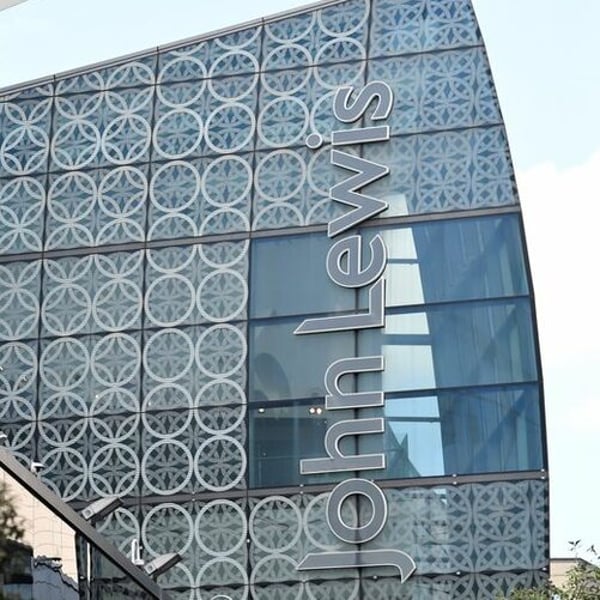
Meanwhile John Lewis sales rose 2% to £2.1 billion. The company said it has attracted more customers through its commitment to operating quality, style and value, “which has resonated strongly”. The retailer has been investing heavily in John Lewis with big initiatives in both fashion and beauty, adding new fashion labels for instance and upgrading beauty spaces.
It undertook a major refurbishment of its Liverpool store, added more omnichannel shopping options including ‘deliver from store’ and rapid online delivery and the recent return of its 100-year-old Never Knowingly Undersold promise “has continued to drive sales, relevance and value for money perceptions”.
It said: “These investments and a renewed focus on compelling value, compounded by a sales mix shift towards Technology and Beauty, impacted gross margin in the short term.”
The adjusted operating loss was £53 million in the first half, down £4m, including incremental non-like-for-like taxation costs of £7 million from the new EPR packaging levy and incremental National Insurance Contributions.
It added that its first-half investment “allows us to look forward with confidence; our focus is now heading into peak where we see significant opportunity for all our core assortments”.
Chairman Jason Tarry said of all this: “Our clear focus on accelerating investment in our customers and our brands is working: more customers are shopping with us, driving sales, and helping Waitrose and John Lewis outperform their markets. We achieved our highest recorded levels of positive customer satisfaction.
“The investments we are making, combined with our plans for peak trading, provide a strong foundation for the remainder of the year. While we are reporting a loss in the first half, we’re well positioned to deliver full year profit growth, which we’ll continue to invest in our customers and Partners.”
Calvin Klein opened on Tuesday a new global flagship in New York City, marking the brand’s return to its hometown.
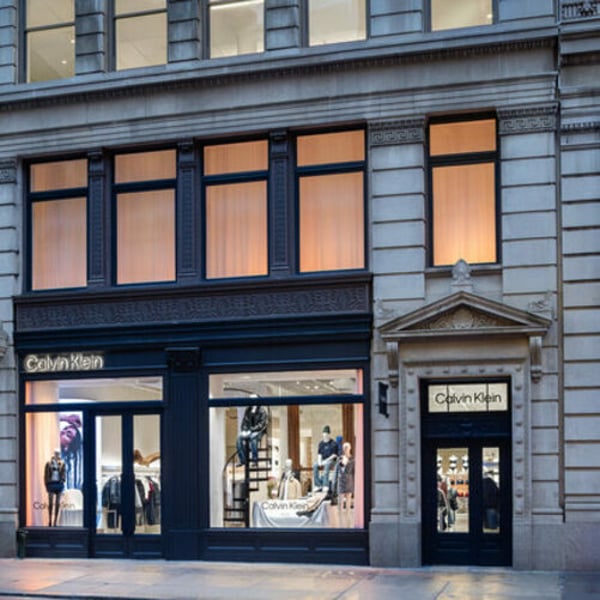
Calvin Klein opens new flagship store in SoHo, New York. – Calvin Klein
Located at 530 Broadway in SoHo, the over 3,000-square-foot store draws inspiration from New York’s signature loft apartments, characterized by open wood ceilings, cast columns and concrete flooring, paired with neutral tones and stainless steel fixtures.
Meanwhile, the store’s exterior is finished in the brand’s charcoal tone, with large windows displaying a seasonal visual concept created in partnership with Perron Studios.
The store features curated spaces with denim and underwear at the center of the assortment, alongside men’s and women’s apparel and accessories. Beginning in spring 2026, the location will offer select styles from Calvin Klein Collection during designated periods. To mark the opening, the SoHo flagship is releasing a limited capsule collection of tees, sweatshirts, hats and totes featuring custom Calvin Klein SoHo branding.
“We are proud to return to one of the world’s most fashionable cities – and the birthplace of our iconic brand – with an elevated retail expression,” said David Savman, global brand president, Calvin Klein.
“This new global flagship, located just steps from our landmark Houston Street billboard, is a tribute to Calvin Klein’s New York heritage. It represents both the evolution of our retail experience and a tangible expression of the world of Calvin Klein. Calvin Klein embodies a distinctive, global way of living that meets culture, and this store is the latest step on our journey of taking our brand to the next level.”
The store follows recent flagship openings in Paris and Tokyo and reflects the company’s strategy to create premium lifestyle destinations built around its minimalist design DNA.
“New York is central to the DNA of the Calvin Klein brand,” added Stefan Larsson, CEO, PVH Corp.
“This homecoming is a key milestone as we build Calvin Klein into one of the most desirable lifestyle brands in the world. Step by step, we’re deepening brand relevance, driving consumer engagement and strengthening brand positioning across North America and globally.”
The Italian competition authority said on Tuesday it had opened two investigations into Swiss watchmaker Swatch and Japan’s Citizen Watch.
Reuters
The probes involve an alleged infringement of European rules on the fixing of retail prices displayed online by the groups’ authorised distributors.
The two companies may be limiting price competition among their retailers through a vertical agreement, by imposing retail prices on their distributors and adopting “retaliatory commercial measures” against those that fail to comply, the antitrust authority said in a statement.
The agency’s officials carried out inspections at the Italian offices of Swatch and Citizen on December 3.
Swatch and Citizen did not immediately respond to a request for comment.
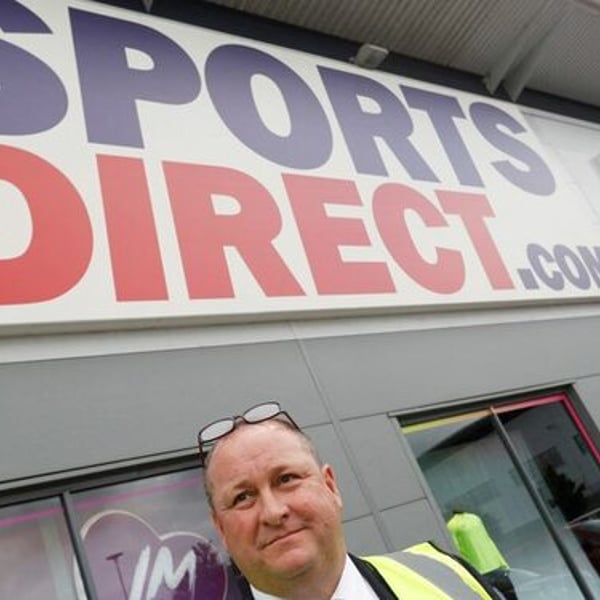
British retail tycoon Mike Ashley has pledged around 670 million pounds ($890.6 million) worth of shares in his sportswear and fashion retailer Frasers Group Plc as collateral for a loan from HSBC, according to filing on Tuesday.
Reuters
Ashley’s holding company, MASH Beta Limited, which holds the majority of Frasers’ issued share capital, pledged about 103.6 million ordinary shares.
Frasers’ shares were down about 1.3% at 646.5 pence as of Tuesday’s last close.
This move comes after the company’s heavy investments in newer geographies and taking or increasing shareholding in recent months across companies, from fashion groups to electrical retailers. Mike Ashley holds roughly a 73% stake in Frasers, according to data compiled by LSEG.
The company whose portfolio includes Sports Direct, House of Fraser and Flannels, reaffirmed its full-year profit forecast earlier this month.





 Politics8 years ago