
Business
e.l.f. Beauty’s CDIO says she’s responsible for AI’s foundation, but that these tools aren’t an IT mandate
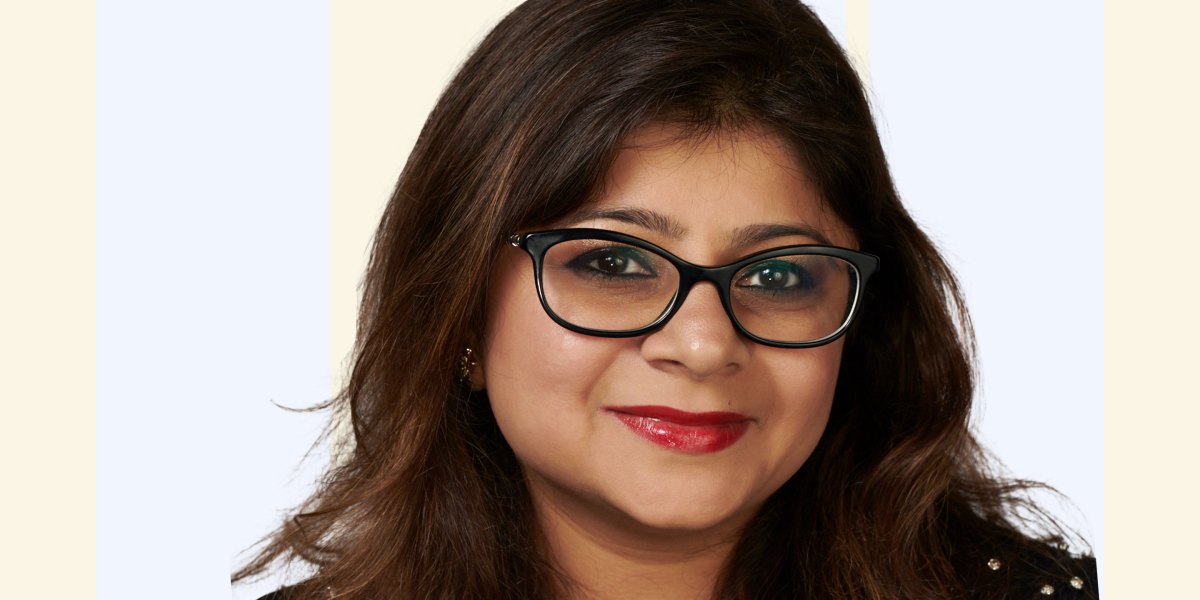
Ekta Chopra, the chief digital information officer of e.l.f. Beauty, says the fast-growing beauty brand is piloting 85 different agentic artificial intelligence use cases. But giving employees more access to generative AI tools doesn’t come with a mandate from IT.
“We want to give the tools in the hands of the people,” said Chopra. “This is not an IT project.”
Chopra set up a cross-functional AI steering committee earlier this summer with leaders from a variety of departments including legal, marketing, research and development. This group is responsible for propelling the agentic AI pilots forward, with the goal of getting most of these agents into full production within six months. “Power users,” employees across the business who are the most eager to use AI in their workflows, are serving as testers during the early pilot phase.
As CDIO, Chopra of course acts as a champion of generative AI and helps make it pervasive across the company with AI tools that can assist employees with research inquiries, IT requests, and data analytics.
Chopra also spearheaded implementing all of the guardrails so that e.l.f. Beauty’s employees can embrace agentic AI, which can complete more complex tasks with little human intervention, but do so securely. The necessary “pipes,” as Chopra calls them, include training the company’s proprietary data on a large language model that’s built on Amazon Web Services and selecting two vendors, Microsoft Copilot and Writer, to help create the AI agents.
The big bet on agentic AI comes as e.l.f. Beauty, which was ranked No. 3 on Fortune’s list of fastest growing companies in 2024, expands internationally and has posted 26 consecutive quarters of net sales growth. Generative AI tools are a key foundation to e.l.f. Beauty’s future growth aspirations, according to Chopra, with all investments centered around three buckets.
The first, “operative,” is focused on agentic AI, while “creative” involves the exploration of image generation and design tools like Adobe Firefly and Midjourney to speed up asset generation. Chopra says that these technologies will be especially beneficial as e.l.f. Beauty continues to expand into new foreign markets with unique languages. The last of the three buckets, “collaborative,” is for the biggest and boldest ideas that could upend how e.l.f. Beauty develops new products or operates its supply chain.
Some internal applications of generative AI that Chopra has already deployed include “B.F.e.l.f,” the company’s internal version of ChatGPT, which is used by 80% of employees.
Another generative AI tool, called “e.l.f.uencer,” whips up responses to consumer comments on social media platforms like TikTok and Instagram. The AI-written copy is a blend of the e.l.f. Beauty’s style book and the last five years of human crafted social responses. All of the tool’s drafts are always approved by an employee before being made public. Previously, around half of all social comments from the brand’s followers were answered by e.l.f. Beauty’s team. Today, with generative AI, that figure is closer to 90%.
Chopra also launched a new IT sidekick known as “e.l.f.line,” which can already produce the work equivalent to one human help desk employee, answering common tech questions related to onboarding or software troubleshooting. “e.l.f.phabet” is an internal research tool, while “e.l.f.alytics,” which is still in beta testing, acts as a data analyst. “e.l.f.alytics” answers inquiries like “show me our sales from yesterday,” but also has user-based guardrails, only sharing data that’s relevant to the role of the person that’s writing the prompt.
A learning and development portal called “e.l.f. you!” offers the broader employee base explainers about topics ranging from agentic AI to large language models, while also teaching them how to develop better prompts to engage with LLMs.
“Everyone is going to be on a different learning curve,” says Chopra, who asserts that the average search on Google is just three to four words, while it is 23 for ChatGPT. “If you don’t give AI the context, you’re not going to get the answer that you’re looking for.”
While generative AI will be a big, ongoing undertaking, Chopra says she’s relieved to have completed a big IT project to transition the company’s enterprise resource planning system from NetSuite to SAP. The ERP change allows e.l.f. Beauty to integrate key business processes like finance, manufacturing, and supply chain in a cloud version of the German company’s software.
Chopra says the switch was needed to support international growth, while also giving e.l.f. Beauty the proper technology base to leverage new AI advancements that can further automate repetitive tasks.
“It’s not all about savings; it’s about productivity,” says Chopra. “It is also about creating a culture that’s AI first, so people are not scared of AI.”
John Kell
Send thoughts or suggestions to CIO Intelligence here.
NEWS PACKETS
IT employment data appears choppy for August. The Wall Street Journal reported that the IT industry’s unemployment rate fell to 4.5% in August from 5.5% the prior month, citing data from consulting firm Janco Associates. CIO Dive, meanwhile, reported that IT unemployment grew for a second consecutive month in August, citing CompTIA’s review of Bureau of Labor Statistics data. CompTIA’s data found that tech unemployment reached 3%, up from 2.9% in July. Even with the increase in joblessness, American employers added 247,000 net new tech jobs last month.
Salesforce trims 4,000 customer service jobs due to AI. As economists increasingly express concern that the soft overall jobs market (not just for IT) could be partly due to the rapid adoption of AI, Salesforce CEO Marc Benioff said that his company was able to cut 4,000 customer service jobs because AI is able to handle workloads that were previously handled exclusively by staff. AI is evolving into a messaging conundrum for CEOs and technologists, who want to tout the savings they can unlock from their AI investments but run the risk of being blamed if the jobs market suffers. Separately, FastCo and other outlets report that software giant Oracle has been laying off employees across several states, even as the company’s stock hit a fresh high in August.
Anthropic blocks services from Chinese-owned companies. Anthropic has expanded the AI startup’s ongoing restrictions on “authoritarian” regimes to now cover any company that’s majority-owned by entities from countries including China. “We continue to advocate for policies like strong export controls to prevent authoritarian nations from developing frontier AI capabilities that could threaten national security,” Anthropic said in a statement last week. Separately, the AI startup also generated some headlines for agreeing to pay $1.5 billion to a group of authors and publishers, after a judge ruled that the company had illegally downloaded copyrighted books. The settlement was later lamented by a judge who signaled he may not approve it, which would result in the case going to trial.
Databricks raises $1 billion in latest funding round. Data analytics startup Databricks has raised $1 billion from investors including Thrive Capital and Andreessen Horowitz, reports the WSJ, and said its annual revenue run rate beginning in July now tops $4 billion. Driving that figure, which represents a 50% increase year over year, is robust demand for the company’s AI products. In an interview with the WSJ, CEO and co-founder Ali Ghodsi said roughly 650 customers were each paying Databricks $1 million a year for its products and services. Ghodsi also disclosed that the company had positive free cash flow in the past 12 months, though he didn’t share operating costs.
ADOPTION CURVE
Mainframe’s AI halo may be held back by a skills gap. Generative AI will deliver big benefits in mainframe environments according to a survey of 500 senior leaders, who anticipated a collective $12.7 billion in cost savings and $19.5 billion in higher revenue over the next three years.
But a lack of skilled talent may hold back these lofty aspirations. Seven out of ten respondents reported difficulty in finding the skilled talent that they need to modernize their mainframes computers. The top three areas where skills shortages remain a problem are AI (42%), cloud (37%), and systems integration (33%).
Hassan Zamet, a global practice leader at Kyndryl, tells Fortune that as technologies like AI, cloud, and the mainframe blend together, workers can’t corner themselves as specialists. “It’s no longer, ‘I’m going to take a narrow sliver on the mainframe and try to become the best at it,’” says Zamet.
The findings were commissioned by IT services provider Kyndryl, which spun off from IBM in 2021, and responses were only from enterprises that make use of mainframes from IBM, Fujitsu, and other leading brands.
Courtesy of Kyndryl
JOBS RADAR
Hiring:
– M&T Bank is seeking a CIO for consumer and business banking, based in Buffalo, New York. Posted salary range: $157.5K-$292.5K/year.
– Stored Energy Systems is seeking a CIO, based in Longmont, Colorado. Posted salary range: $200K-$250K/year.
– GenScript is seeking a head of U.S. IT, based in Piscataway, New Jersey. Posted salary range: $140K-$180K/year.
– Uare.ai is seeking a CTO, based in Los Altos, California. Posted salary range: $200K-$350K/year.
Hired:
– Etsy has expanded the role of Rafe Colburn, the e-commerce website’s CTO, to now serve as chief product and technology officer, effective September 8. In his new role, Colburn will oversee the product and engineering organizations. The appointment follows the departure of Nick Daniel, who had served as chief product officer, and departed Etsy on September 5 to pursue other opportunities.
– Southern Glazer’s Wine & Spirits announced Steve Bronson to the role of CIO, joining the alcohol beverage distributor after most recently serving as senior vice president of global technology infrastructure and operations at fast-food giant McDonald’s. Prior to McDonald’s, Bronson held senior technology leadership roles at CDK Global, Nike, and Anheuser-Busch InBev.
– Rush Street Interactive announced the appointment of Shubham Tyagi as CTO, joining the online casino and sports betting company after most recently serving as CTO for sports programmer Warner Bros Discovery Sports. Earlier in his career, Tyagi held senior engineering roles at Macy’s, Turner Broadcasting, and XO Communications.
– Confluent announced the appointment of Stephen Deasy as CTO, joining the data analytics company after most recently serving as CTO of Benchling, a cloud-based software company for biotechnology research and development. Deasy also previously served as VP of engineering at software company Atlassian and held past leadership roles at Groupon, VMware, and EMC Computer Systems.
– Thumbtack named Chris Patalano as CTO, where he will oversee the engineering team, AI and ML, and the infrastructure and technology strategy. Patalano joins Thumbtack, which connects homeowners with local businesses that perform services on their homes, after most recently serving as EVP of product engineering at accounting software provider Xero. He also held leadership roles at Pandora, Apple Music, and Beats Music.
– SCWorx appointed Anders Ohlsson as CTO, joining the healthcare data management company after holding senior leadership roles at software provider WideOrbit. As CTO, Ohlsson will oversee product development and innovation initiatives.
– Butterfly Network named Victor Ku as SVP and CTO of the ultrasound developer. He joins after most recently serving as VP of R&D, engineering, and the project management office at imaging systems and optical components maker Headwall Photonics.