Connect with us

Business

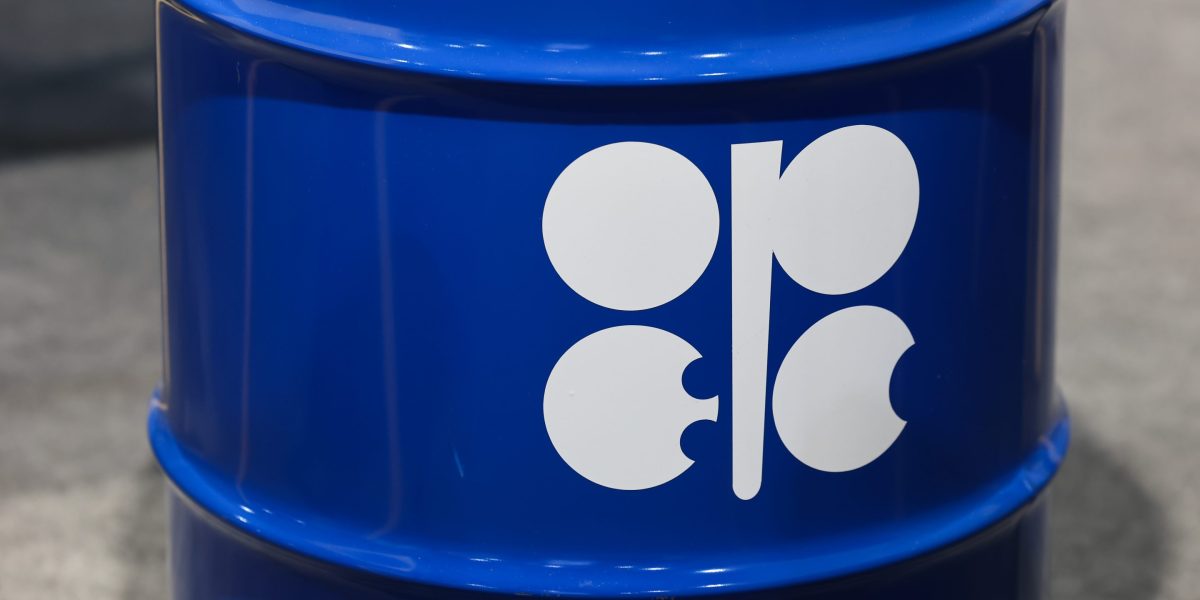
Oil prices could fall even further as key OPEC+ members OK production hike to gain market share

Published

on


Eight key members of the OPEC+ alliance said Sunday they have agreed to again boost oil production, in a strategy analysts saw as a bid to gain a bigger market share of crude sales.

Oil ministers in the V8 grouping — comprising Saudi Arabia, Russia, Iraq, the United Arab Emirates, Kuwait, Kazakhstan, Algeria and Oman — decided to increase production by 137,000 barrels a day (bpd) from next month, they said in a statement.

Those countries had already increased production by 2.2 million bpd in recent months.

In their statement issued after an online meeting on Sunday, they said that the new incoming cycle could see up to an extra 1.65 million bpd eventually coming onto the market.

“OPEC+ caught the market off guard today — instead of pausing, the group signalled ambition with a production hike. The barrels may be small, but the message is big,” said Jorge Leon, an analyst at Rystad Energy.

“OPEC+ is prioritising market share even if it risks softer prices,” he said.

Oil prices are currently hovering around $65-70 per barrel, having tumbled 12 percent this year as global producers outside OPEC+ ramp up supply and tariffs curb demand.

OPEC+ — which comprises the 12-nation Organization of the Petroleum Exporting Countries (OPEC) and its allies — had in recent years seen through several output cuts amounting to a total of almost six million bpd.

Analysts, up to a week ago, had been saying the V8 was likely to maintain their current output levels in October.

By raising them, even by a relatively modest 137,000 bpd, the V8 instead indicated that OPEC+ was willing to weather prices falling below $60 a barrel if it meant regaining market share.

Leon said: “In reality, the actual production boost will be far smaller, given capacity limits and the compensation mechanism. But perception often matters more than physical barrels.”

Still, he said, “the move raises questions about unity: countries like Russia depend on high prices to fund their war machine, while others are willing to test lower prices for market share”.

Geopolitical factors

The real test for OPEC+ will be the last three months of this year, a period when seasonal demand tends to be lower, he said.

Oil specialists are keeping a close eye on Moscow’s war in Ukraine as well as developments regarding US-Russia relations — geopolitical factors that could impact oil prices.

US President Donald Trump, whose efforts to mediate between Russia and Ukraine have failed to produce a breakthrough, has recently targeted Russian oil and those who buy it.

In August, he imposed higher tariffs on India as punishment for its purchases of Russian oil.

In a meeting with allies of Ukraine who gathered in Paris on Thursday, Trump told leaders via a video conference that he was frustrated with EU purchases of Russian oil, particularly by Hungary and Slovakia.

Curbing Russian exports could free up market space for OPEC+ nations.

Fortune Global Forum returns Oct. 26–27, 2025 in Riyadh. CEOs and global leaders will gather for a dynamic, invitation-only event shaping the future of business. Apply for an invitation.


Source link

Continue Reading

Business

Nearly 400 millionaires and billionaires are demanding Davos leaders to tax them more: ‘Tax us. Tax the super rich.’

Published

on


While the wealthiest business leaders from U.S. president Donald Trump to Nvidia CEO Jensen Huang touch down in the Swiss town of Davos to discuss the state of the world, a cohort of the ultra-rich are already sounding the alarm. Hundreds of millionaires and billionaires released an open letter in time for the World Economic Forum, calling on leaders attending the conference to fight raging wealth inequality with taxes. 

“Millionaires like us refuse to be silent. It is time to be counted. Tax us and make sure the next fifty years meet the promise of progress for everyone,” the letter stated

“Extreme wealth has led to extreme control for those who gamble with our safe future for their obscene gains. Now is the time to end that control and win back our future.”

So far, nearly 400 millionaires and billionaires across 24 countries have signed the letter condemning extreme wealth, including the likes of Hollywood actor Mark Ruffalo, Disney heirs Abby and Tim Disney, and real estate developer Jeffrey Gural.

The open letter is part of a “Time to Win” campaign, led by wealth redistribution organizations including Patriotic Millionaires, Millionaires for Humanity, and Oxfam. It criticized global oligarchs with riches who have “bought up” democracies, exacerbated poverty, stifled tech innovation, dampened press freedom, and overall, “accelerated the breakdown of our planet.” After all, 77% of millionaires from G20 nations think extremely wealthy individuals buy political influence, and 71% believe those with riches can significantly influence elections, according to a poll conducted for Patriotic Millionaires.

The Time to Win wealthy signatories offer a simple solution: “Tax us. Tax the super rich.”

“As millionaires who stand shoulder to shoulder with all people, we demand it,” the open letter continued. “And as our elected representatives—whether it’s those of you at Davos, local councillors, city mayors, or regional leaders—it’s your duty to deliver it.

Stars and billionaires are calling out the super-rich for being ungenerous 

As the world mints hundreds of thousands of millionaires yearly and billionaire wealth soars to record highs, some leaders can’t stand to stay quiet. Celebrities and the ultra-rich haven’t just sent a message to money-hoarders with the Time to Win letter—some have even called out billionaires in person, questioning their existence. 

“If you’re a billionaire, why are you a billionaire? No hate, but yeah, give your money away, shorties,” Eilish said onstage last year at the WSJ Magazine Innovator Awards with Meta mogul Mark Zuckerberg, worth $214 billion, in attendance. 

Even the most philanthropic members of the ultra-rich club are wary of their peers’ lack of charity. Billionaires have started their own initiatives like Warren Buffett, Melinda French Gates, and Bill Gates’ The Giving Pledge, which attracted more than 250 billionaires who pledged to donate at least half of their wealth during their lifetimes, or in their wills. But efforts have largely fallen short. Last year, French Gates admitted that the signatories haven’t given enough; And in a letter to shareholders, Buffett fessed up to the fact that billionaires aren’t following through. 

“Early on, I contemplated various grand philanthropic plans. Though I was stubborn, these did not prove feasible,” Buffett wrote. “During my many years, I’ve also watched ill-conceived wealth transfers by political hacks, dynastic choices, and, yes, inept or quirky philanthropists.”

Billionaire and millionaire wealth is on the rise 

There’s more people rolling in riches than ever before, and it’s fueling an equity crisis at the bottom of the economic ladder. 

In 2024 alone, the U.S. minted 379,000 new millionaires—over 1,000 millionaires every day—as the proportion of Americans in the ultrawealthy club swelled by 1.5%, according to a 2025 report from investment bank UBS. This cohort held about $107 trillion in total wealth at the end of that year: more than four times the amount they owned at the turn of the millennium. 

In 2000, there were only 13.27 million everyday millionaires, but by the end of 2024, the group swelled to 52 million people worldwide. 

While it might appear that eye-watering riches are spreading out to a larger number of individuals, it’s mainly concentrating at the top. America’s top 20% household earners—averaging a net worth of $4.3 million—accounted for about 71% of the U.S.’s total wealth at the end of 2024, according to 2025 data from the Federal Reserve. 

Meanwhile, the bottom half of American households, averaging about $60,000 in wealth, owned just 2.5% of the country’s wealth. For the vast majority of U.S. citizens, joining the millionaire club—and even more so, the billionaire club—is a total pipe dream.


Source link

Continue Reading

Business

Trump fast tracks ‘three-week’ nuclear approval for big tech to fuel AI race

Published

on


President Donald Trump offered Silicon Valley an extraordinary deal on Wednesday: Build your own nuclear power plants to fuel AI, and his administration will approve them in just three weeks.

Speaking at the World Economic Forum in Davos, Switzerland, Trump addressed a room of tech executives struggling with an aging U.S. electrical grid.

“I came up with the idea,” Trump said. “You people are brilliant. You have a lot of money. You can build your own electric generating plants.”

Trump talked for about 10 minutes about energy in his speech, making it clear Trump views a straining electric grid as a central economic risk of 2026. As artificial intelligence pushes electricity demand to record highs, the administration is framing power shortages as an existential threat to growth and national security. Slashing approval timelines, Trump argued, is a necessary response to an energy system he said he believes is fundamentally unprepared for the AI era.

“We needed more than double the energy currently in the country just to take care of the AI plants,” Trump said. 

The proposal marks a radical departure from the traditional Nuclear Regulatory Commission (NRC) process, which historically requires four to five years for environmental and design approvals as well as rigorous site selection. Trump claimed that while tech leaders initially “didn’t believe him,” he assured them the government would deliver approvals for oil and gas plants in just two weeks, with nuclear projects following in three.

Trump said he wasn’t “a big fan” of nuclear power before, but now sees it as a newly viable solution due to safety improvements. 

“The progress they’ve made with nuclear is unbelievable,” he said. “We’re very much into the world of nuclear energy, and we can have it now at good prices and very, very safe.” 

While the potential upcoming wave of small modular nuclear reactors (SMR) could receive regulatory approvals in less than two years, there is little basis for going through an approval process with the Nuclear Regulatory Commission in closer to three weeks, and such an expedited process would trigger widespread concerns about safety and environmental risks.

Trump also touted a new energy alliance with Venezuela, noting the U.S. secured 50 million barrels of oil last week following the “end of an attack” on the nation that led to the deposition of President Nicolás Maduro. He said the new cooperation between the two nations would make Venezuela “fantastically well” while driving U.S. gasoline prices toward $2.00 a gallon.

Gasoline prices are the main inflationary measure by which costs have fallen during the first year of the new Trump administration. But they’re nowhere close to $2.00 per gallon. The national average for a gallon of regular unleaded is $2.76 per gallon this week, down 32 cents from a year ago, primarily because of rising OPEC oil production.

But Trump drew a sharp contrast with Europe’s energy landscape. Trump mocked the “Green New Scam,” citing a 64% spike in German electricity prices and the “catastrophic” decline of energy production in the United Kingdom. He targeted the North Sea and the proliferation of wind farms, which he labeled “losers” that “kill the birds.”

“Stupid people buy” wind farms, Trump laughed.


Source link

Continue Reading

Business

Slipping on ICE: innocent retailers are the latest collateral damage from Trump’s perpetual noise machine

Published

on


In her classic 1961 book The Death and Life of Great American Cities, pioneering urbanologist Jane Jacobs advised that the key to safe cities is “more eyes on the street.”  She advocated that the best way to get these was to have neighborhoods filled with stores and restaurants. With local business providing a multitude of reasons for people to be active in city street life, eyes on the street would follow. It was these eyes that were mentioned by Minnesota Gov. Tim Walz in his January 14 primetime media appeal for the public to witness and document the increasingly horrific actions of the agency known as ICE, the once celebrated U.S. Immigration and Customs Enforcement office.

Increasingly known for daily video footage of seemingly arbitrary and brutal force, used by masked ICE agents against shoppers and workers at retail shops and restaurants, Walz urged shoppers to “take out that phone and hit record.” The public has been horrified by the killing of Renee Good, an unarmed 37-year-old mother of three and an American citizen, who was shot multiple times in the face by an ICE agent in her own Minneapolis neighborhood. But the footage of ICE brutality is everywhere, and much of it is occurring in retail establishments.

Consider the vivid hypocrisy of the ICE agents who were seen feasting at the popular El Tapatio Mexican Restaurant in Willmar, Minnesota, and then returning later to arrest the owner and employees of this café that had graciously served them. ICE actions have led several local establishments to close for foot traffic, taking only phone orders, while others reported sales drops of 75%. 

As for larger enterprises, with recent raids occurring in Los Angeles, Charlotte, and Phoenix, Fortune 500 giants around the nation including  Home Depot, Walmart, Target, Ross, Keurig Dr Pepper, and Constellation Brands have all increasingly warned about the impact of ICE raids on their businesses. Patrons and laborers at one Walmart in Van Nuys, California, faced multiple raids in the same day with people tackled and dragged away from ICE agents. Calls for boycotts of retailers who aid and abet ICE enforcement are understandable but retailers are also victims here. They can and should do more to make their roles more clear.

The eyes on the street

The impact of such ICE invasions into Minnesota is being shared nationally, with profound cost to local commerce and also local communities. Local merchants serve a deeper purpose to society than selling goods that are often available through ecommerce. Retail stores are among the last remaining shared civic spaces—places where people of all backgrounds still cross paths in the course of everyday life. Shopkeepers are community pillars because they build social ties, foster local identity, boost the economy by keeping money local, and act as hubs for connection, often providing personalized service and supporting local events, making neighborhoods more vibrant, resilient, and unique places to live and shop. They transform basic commerce into meaningful relationships and community gathering spots, strengthening the social fabric. 

America’s great retailers have long understood this. From Walmart’s Sam Walton to J.C. Penney to The Home Depot co-founders Bernie Marcus and Arthur Blank, retail legends have long described stores not merely as institutions of public trust. Blank has spoken of retail as a civic platform—a space where people from different walks of life come together in ordinary, human ways. Marcus has emphasized that Home Depot was built on dignity: respect for customers, respect for workers, and a belief that welcoming people into shared spaces strengthens communities rather than fragments them.

So, what could possibly disrupt that vision?

Last week, videos ricocheted across social media showing federal immigration agents restraining a man inside a Walmart in Minnesota and detaining individuals at the entrance of a Target. Days later, in Los Angeles, Home Depot parking lots—long informal hiring sites for day laborers—again became flashpoints for enforcement actions and community backlash. These were just a few of many ICE raids playing out across the country, in locales as varied as New York, Georgia, Texas and beyond, where shoppers have reported increased immigration enforcement activity near department stores and shopping centers, triggering protests, boycotts, and a growing sense that retail spaces are being repurposed into stages for public confrontation. 

This is surely not the retail experience that Marcus and Blank had in mind when they spoke of dignity and friendly community commons.

President Donald Trump is likely pulling this lever unprovoked to tear apart communities’ harmonious fabric as the kind of diversionary tactic that he often utilizes. Trump’s first year has been soundly rated a failure in all major national polls and in each dimension of national and international priorities.  Barely 37% say that Trump places the good of the country above his personal gain, and 32% say that he’s in touch with the problems ordinary Americans face in their daily lives. As we write about in our new book, Trump’s Ten Commandments, the president has long resorted to “perpetual noise machine” distractions when faced with plummeting poll numbers and challenges on the economy and affordability, seeking to divert attention away from his difficulties. This diversion comes at a real cost to retailers and to the American economy.

Multiple major national polls reveal that the ICE mission is failing, with most Americans condemning these raids as making American cities less safe — with 82% of Democrats and Democratic-leaning independents leaning in this direction, but also 67% of Republicans and Republican-leaning independents. Even MAGA-friendly podcaster Joe Rogan launched a harsh takedown of ICE, likening them to the Gestapo secret police of Nazi Germany.

In fact, Minneapolis Police Chief Brian O’Hara, recently showed on Fox TV that, before the ICE invasions, all major categories of crime including violent crimes like murders and carjacks were down last year from 20% to 50%. Former Secretary of Homeland Security Jeh Johnson has shown this weekend that there has been no surge of undocumented immigrants in Minneapolis to justify what is now five times the number of federal law enforcement officers as there are municipal police.

It appears that even Trump is recoiling, offering a surprising criticism of ICE overreach in a New York Times interview this week. Indeed, unless there is some inexplicable policy goal to get Americans to buy ladders, hammers, toilet seats, piles of bricks, washers, dryers, and garage doors online instead of at neighborhood stores, there is no reason why retailers need to become ground zero.

Why would ICE want to hurt businesses that form the backbone of the American economy? After all, we don’t know how good UPS is at delivering garage doors house-to-house, or if FedEx could really handle deliveries of bricks, sinks, and toilets, if they were bought from Amazon instead of from neighborhood stores. While that notion might seem ridiculous, there is nothing funny or ludicrous about the fact that these administration/ICE overreaches risk serious and genuine economic damage if they continue unabated.

The facts about retailers’ lack of complicity

While ICE might be slipping on the ice, the activists who are attacking America’s most beloved retailers as somehow “complicit” with ICE raids in their stores are similarly slipping up. That narrative is wrong, and retailers need to throw rock salt urgently, to avoid flipping over themselves. Here are the facts, which are too often lost in the crossfire, and should be clarified urgently.

First, retailers need to clarify that they have not been complicit and have had no advance knowledge of these raids. Retailers are not accessories with ICE, nor enablers; they are also victims, caught in the crossfire of a political and legal dispute they did not choose.

This clarification is urgent, because critics on all sides misrepresent what retailers can—and cannot—do. One widely circulated myth holds that retailers invite ICE into their stores. In reality, ICE agents, like any law enforcement officers, may enter public spaces open to all customers without needing a warrant.

Another myth suggests that retailers can simply “ban ICE” from their properties if they choose, with some choosing to do so while other stores invite them in with open arms. That, too, misunderstands the law. A retail store is not a private home. As a public-facing space, retailers cannot selectively exclude certain groups—whether law enforcement or anyone else—from areas open to the general public. A store manager cannot “kick out ICE” the way they might remove a shoplifter. Even if a retailer tried to ban ICE, or any other law enforcement agency, from their otherwise public facing spaces, the law enforcement agency could simply ignore it under the law, and the retailer could be subject to a variety of legal claims, including discrimination or obstruction by the affected government entities. Some have suggested that perhaps stores could put whistles by the cash registers or parking lots, but in reality, retailers have no control.

A third myth claims that retailers are facilitating the arrest of their employees or customers. That is false. As Federal law enforcement officers, ICE agents have the authority to make arrests in any public spaces based on probable cause, without the consent—or cooperation—of the venue. While there are allegations that surveillance cameras operated by such retail partners as Flock Safety are being use to assist ICE raids as some activist investors charge,  retailers should assert this electronic collaborating is not true—consistent with denials by Flock Safety.

Retailers did not ask to be put into the middle of America’s political and legal fight over immigration. But they are being drafted nonetheless, and need to scream these facts loudly from the mountaintops to deescalate a worsening situation. Fortunately, they are not likely to use needlessly incendiary language the way some overreacting public officials do. Home Depot’s public statements capture the hard edge of their dilemma: the company has said it is neither notified in advance nor coordinating with immigration enforcement, while also acknowledging that it cannot legally interfere with federal agencies.

Now that retailers find themselves in the middle, they deserve something too often missing from this debate: truth, and they need to be screaming this truth loudly from the mountaintops. They are neither covert Quisling collaborators nor law enforcement-subverting antagonists. They are institutions built to welcome the public of all stripes, not to adjudicate federal policy—and they should not be targeted as such by either side.

Some may wonder, why target retailers? If the goal is to trigger unruly public unrest to justify presidential invocation of the insurrection act as some charge, why not visit the spirited crowds at WWE instead. The average Home Depot store has an impressive 2,000 transactions a day but a WWE slapdown such as Raw or Westlemania easily draws five times as many for 10,000 heated fans. If the goal is to capture foreign guests, why not raid the Metropolitan Opera crowds filled with EU national as performers or the American Ballet Theater or the Colorado Ballet known for their high Russian degree of heritage dancers, or the several hundred heavily promoted high kicking Shen Yun performances each year sponsored by the Chinese Falun Gung religious movement.

It is painful to see ICE arrests taking place in the aisles, parking lots, and entry foyers of Minneapolis stores. Who would have thought that even the raucous reputation of the Minnesota Vikings would look refined compared to the hard-edged, ICE enforcement actions? Perhaps they should drop their cowardly masks to hide their identities by donning Viking helmets with horns to more accurately dress for their retail raids. Regardless of the bias in whatever racial or political agenda may be behind this nightmarish remake of Eugene O’Neil’s dark drama of societal miscreants, The Iceman Cometh, the ICE men are making sure their own approval rating melts, while doing damage to both commerce and community safety.

The opinions expressed in Fortune.com commentary pieces are solely the views of their authors and do not necessarily reflect the opinions and beliefs of Fortune.

This story was originally featured on Fortune.com


Source link

Continue Reading

Trending

Copyright © Miami Select.