
Politics
Winner and Loser of the Week in Florida politics — Week of 8.31.25
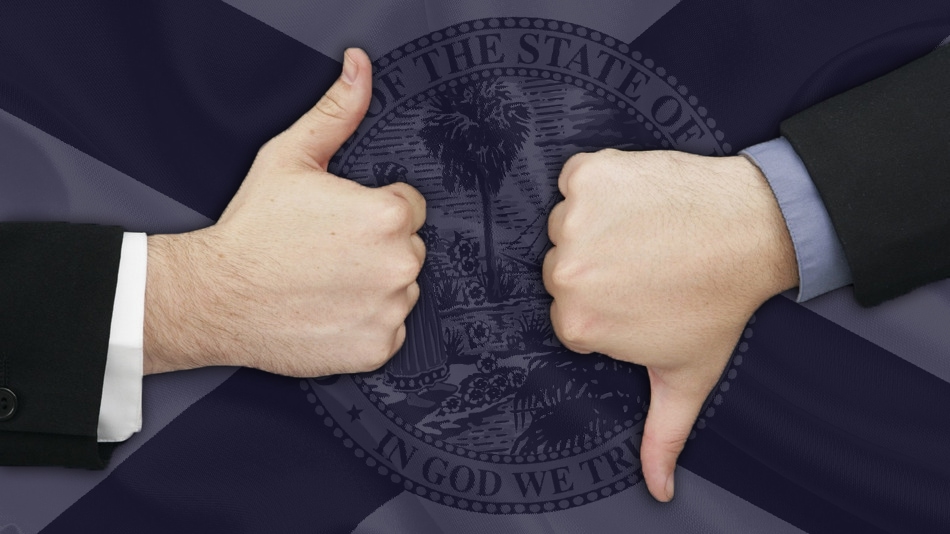
Summer may be nearing its close, but you can count on Florida to continue delivering scorching hot takes.
State leaders touched off a national firestorm this week by announcing plans to end all vaccine mandates, including long-standing requirements for schoolchildren.
Gov. Ron DeSantis and Surgeon General Joseph Ladapo framed the move as a victory for “medical freedom,” with Ladapo even comparing mandates to slavery. The proposal would roll back rules that for decades have required shots against measles, polio, chickenpox and other preventable diseases before students can attend public school.
Public health experts quickly blasted the plan. Pediatricians, the American Medical Association, and infectious disease specialists warned that ending mandates could reverse decades of progress in eradicating deadly illnesses. The World Health Organization and CDC have both credited widespread childhood vaccination with saving millions of lives each year.
What makes this moment especially striking is how the goalposts have shifted. During the COVID pandemic, skepticism in Florida was framed as resistance to the COVID vaccine — a fight over a new shot, developed quickly, and mandated in workplaces and schools.
But this week’s announcement shows that was just a ruse and that the COVID debate was a precursor, opening the door to dismantling confidence in all vaccines, even those that have long been considered the bedrock of modern public health.
It’s fair for individuals to feel they should have a choice over what goes into their bodies. But vaccines have always been about more than the individual — they’re about the community.
A single person opting out might feel like an act of freedom. Tens of thousands opting out, however, risks the return of measles outbreaks in schools or polio resurfacing in neighborhoods. That’s the balance Florida is now choosing to test.
Now, it’s onto our weekly game of winners and losers.
Winners

Honorable mention: Lavon Bracy Davis, RaShon Young. Two Democrats are celebrating after coasting to victory in Special Elections this week.
In the Orlando-area Senate District 15, LaVon Bracy Davis won handily with nearly three-quarters of the vote, succeeding the late Sen. Geraldine Thompson. Bracy Davis, who had already been serving in the House, was long seen as the favorite, and Tuesday’s result confirmed it.
Meanwhile, her former Chief of Staff, RaShon Young, scored an equally decisive win in House District 40 to succeed Bracy Davis, topping his Republican opponent with about 75% support. Young, just 27, becomes the first Generation Z Democrat in the Legislature, a milestone that underscores both his political rise and the influence of Bracy Davis’ mentoring.
Neither result came as a surprise — both districts lean blue and the candidates were favored from the start once they won their respective Primary contests. But now it’s official, and Bracy Davis and Young can turn their focus from campaigning to governing.
Almost (but not quite) the biggest winner: Everglades. Florida’s “River of Grass” is earning major support thanks to a significant federal funding boost to continue momentum in restoration efforts.
Rep. Mario Díaz-Balart, Vice Chair of the House Appropriations Committee, announced that the 2026 Energy and Water Development and Related Agencies Appropriations Act would contain $461 million for Everglades restoration, money that Díaz-Balart pushed to secure.
The House passed the measure by the narrowest of margins Thursday, 214-213. It will next go to the Senate.
This funding comes as part of a larger federal commitment on water projects. The bill for Fiscal Year 2026 appropriates more than $57 billion, including vital support for the U.S. Army Corps of Engineers — central to delivering Everglades restoration projects — and works in tandem with existing state investments to accelerate progress on the ground.
These federal dollars come on top of recent momentum. The Legislature allocated over $1.4 billion for restoration in the latest budget, and that’s on top of billions of dollars allocated in years prior.
The funding blitz show leaders aren’t content to deal with delays and half-measures. There’s real money on the table and clear direction from both Tallahassee and Washington. It’s turning the Everglades into a rare Florida success story — one where politics, policy and persistence are working to do good for Florida.
The biggest winner: John Temple. Temple has been tapped as the new President of Lake–Sumter State College, making him the latest in a long list of Republican politicians turned higher ed leaders.
Temple, however, has experience in education. A former teacher and K–12 administrator who holds a master’s in educational leadership from Nova Southeastern, Temple brings both academic credentials and real-world governance experience to the role.
His new position fills the void left by interim President Laura Byrd, after the abrupt departure of President Heather Bigard last year. Temple, who will depart his seat representing House District 52, was unanimously selected by the college’s Board of Trustees to step into the top post after serving as the institution’s associate vice president for workforce development. The board cited his deep ties to the region and understanding of Lake and Sumter counties’ educational and economic needs.
Temple’s move continues the trend in Florida of GOP legislators stepping into the C-suite of academia. In February, former House Majority Leader Adam Hasner became President of Florida Atlantic University. Also earlier this year, Manny Díaz Jr., a former state education commissioner and lawmaker, was tapped as interim President of the University of West Florida.
The list extends to Richard Corcoran, ex-Speaker and Education Commissioner, now at the helm of New College of Florida. And of course Jeanette Nuñez, the state’s former Lieutenant Governor, is now leading Florida International University.
The concentration of GOP names in the top slots, now including Temple, reinforces DeSantis’ push to remake Florida’s educational system. The only question is: Who will be next?
Losers
Dishonorable mention: John Kevin Lapinski. Few people deserve the loser label more than Lapinski. The 41-year-old Margate man has been sentenced to 25 years in federal prison after authorities uncovered an arsenal of weapons and a detailed plan to carry out hate-fueled violence against Black and Jewish Americans.
Inside his home, investigators say they found rifles, handguns, body armor, silencers, smoke grenades, thousands of rounds of ammunition and tactical gear. Alongside all of that was a grotesque “hit list” of targets that included local synagogues, schools, and even U.S. Rep. Jared Moskowitz, a Jewish Congressman from South Florida.
Lapinski wasn’t just fantasizing — prosecutors linked him to a 2024 incident where a Jewish family’s home and car were shot up. His stockpile showed clear intent to not just harm individuals, but terrorize communities.
Federal prosecutors called his actions a direct threat to the safety and fabric of South Florida. They’re right. And the fact that his list included a sitting member of Congress makes it even more chilling. Lapinski will spend the next quarter century behind bars, which is exactly where he belongs.
Almost (but not quite) the biggest loser: Venezuela diaspora. The Trump administration moved forward with a sweeping rollback of legal protections for Venezuelan migrants, announcing the end of temporary protected status (TPS) for around 257,000 migrants, removing both work permits and deportation relief for families who fled the crisis in Venezuela.
The fallout is especially sharp in Florida, which is home to around 49% of all Venezuelan immigrants in the U.S. Major metro areas across the state had become new homes and economic anchors for thousands of these migrants. Now, they will have to prepare for upheaval.
The potential economic effects are enormous. TPS holders in Florida have filled jobs across health care, hospitality, construction and service industries — sectors already struggling with labor shortages. Many also run small businesses, paying taxes and employing fellow Floridians. Removing tens of thousands of workers from the legal labor force risks undercutting local economies, slowing growth in South Florida and Central Florida in particular.
And we emphasize the “legal” there. Trump came in on a mandate to adjust U.S. policy regarding illegal immigration, an issue on which former President Joe Biden failed. The Trump administration may argue the TPS program had been abused, and that the economy should rely on American workers. That is a massive gambit to take given all of the other uncertainty in the economy, prompted largely by his own decision-making.
Late Friday, a Judge stepped in and attempted to pause any changes to the TPS program. But the Trump administration is clearly continuing to push ahead until a compliant Supreme Court can weigh in. Delay or no delay, the writing appears to be on the wall here.
The biggest loser: Paul Renner. Renner finally made it official this week, jumping into the 2026 race for Governor. But the former House Speaker enters the field already overshadowed and betrayed.
Byron Donalds declared months ago, is sitting on a pile of cash, and has quickly consolidated support among conservatives. Donalds has been a fixture on Fox News and the national MAGA circuit, building both name recognition and a donor network that stretches far beyond Florida. Renner, by contrast, is less well-known and lacks the same fundraising infrastructure.
That’s why Renner could have used help from his most powerful ally — DeSantis. As Speaker, Renner carried the Governor’s agenda through the Legislature: expanding school choice, passing constitutional carry, cutting taxes and eliminating diversity, equity and inclusion programs at universities. He regularly branded those victories as part of “the Free State of Florida,” burnishing DeSantis’ image nationally while keeping the House in line with the Governor’s priorities.
And what good did that loyalty get him? Well, DeSantis promptly threw Renner under the bus. Within hours of his announcement, the Governor dismissed the candidacy as “ill-advised” and said he would not be supporting him.
For someone pitching himself as the continuity candidate — the natural heir to DeSantis’ Florida legacy — it was a brutal public rejection. And as Renner complied in making the Legislature an arm of the executive branch under DeSantis — work that House Speaker Daniel Perez and Senate President Ben Albritton have sought to undo to varying degrees — one has to ask what the point of it all was.
Now, Renner faces a steep climb. He starts with little statewide name recognition, less money than his chief rival and the added weight of a very public rebuke from the Governor he loyally served.
Launch weeks are supposed to build momentum. Instead, Renner’s rollout underscored just how much ground he has to make up — and how alone he may be on the trail.
Post Views: 0