
Fashion
Giorgio Armani: What does the future hold for the group?

Translated by
Nazia BIBI KEENOO
Published
September 6, 2025
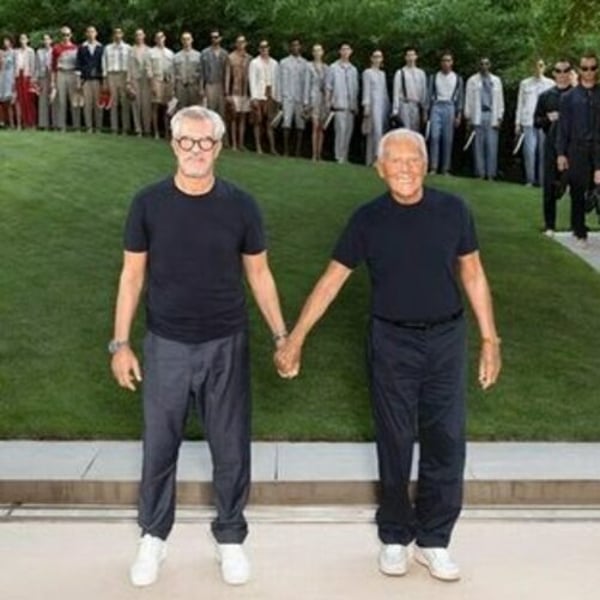
The legendary Italian couturier, who passed away on 4 September, leaves behind a highly coveted luxury empire. As succession questions multiply, the future of the Giorgio Armani brand now takes center stage.
“Giorgio Armani has always made independence of thought and action his trademark. Today, as in the past, the company reflects this spirit. His family and collaborators will continue the adventure of the group in respect and continuity of these values,” stated the company when announcing the death of the iconic designer. These clear words, however, open the door to many questions about the future of the empire left behind by “King Giorgio.”
Between the company and his personal estate — including properties, artworks, real estate investments, shares, the Olimpia Milano basketball team, and the Armani/Silos museum — Giorgio Armani leaves behind a fortune estimated between €11 billion and €13 billion. With no direct heirs, he was free to designate how his estate would be managed. His last wishes will be revealed once his will is opened.
His immediate family includes his sister, Rosanna (86), and her son, Andrea Camerana (55), as well as his two nieces, Silvana (69) and Roberta (54), the daughters of his late brother, Sergio. All are members of the board of Giorgio Armani SpA, as is his longtime right-hand and managing consultant, Pantaleo “Leo” Dell‘Orco (72), who oversees the menswear collections. The designer has long referred to them as his intended successors.
The board also includes Yoox founder Federico Marchetti and Rothschild banker Irving Bellotti, who is also a board member of the Giorgio Armani Foundation, created in 2016 to ensure continuity of the company’s vision.
In a recent interview with How To Spend It, the Financial Times supplement, Giorgio Armani reiterated this succession plan: “My succession plan consists of gradually transferring the responsibilities I have always assumed to those closest to me, such as Leo Dell’Orco, to family members and to the entire team.” He added, “I would like the succession to be organic and not a moment of rupture.”
The founder controlled 99.9% of Giorgio Armani SpA, with the Giorgio Armani Foundation holding the remaining 0.1%. In 2024, the group employed nearly 8,700 people globally and posted €2.3 billion in revenue — a 6% drop from the previous year. Net profit also fell sharply, from €163 million in 2023 to €51.6 million. Europe accounts for 49% of revenue, with the Americas and Asia-Pacific each contributing 21%.

Armani meticulously prepared for this transition. The company’s revised articles of association were first approved in 2016 and finalized in September 2023. These statutes will take formal effect upon the opening of the succession. According to press reports at the time, the structure includes various share categories and voting rights, with a potential public listing allowed five years after the statutes take effect. Furthermore, 75% of shareholders must approve any mergers, spin-offs, amendments, or capital increases at an extraordinary general meeting.
During the transition, management may be handled by a select leadership committee. Creatively, Armani leaves behind a globally recognized design language and aesthetic. For now, it’s difficult to imagine another designer stepping into his shoes. The in-house design studio, led in part by Leo Dell’Orco, is expected to continue developing upcoming collections.
The responsibility of preserving the brand’s identity and value, estimated to be worth between €6 billion and €12 billion, depending on the analysts, will rest with the family and senior leadership. How this heritage is managed and evolved in the near future will shape Giorgio Armani SpA’s trajectory — and may invite interest from global luxury groups and investment funds.
This article is an automatic translation.
Click here to read the original article.
Copyright © 2025 FashionNetwork.com All rights reserved.
Published
January 21, 2026
To coincide with Milan Fashion Week, the S|STYLE 2025- Denim Lab is setting up at Fondazione Sozzani for an edition devoted to the future of sustainable denim and water management in the textile industry. Led by the S|STYLE Sustainable Style platform, founded in 2020 by independent journalist and curator Giorgia Cantarini, this initiative forms part of an ongoing programme of research and experimentation into responsible innovations applied to contemporary fashion.
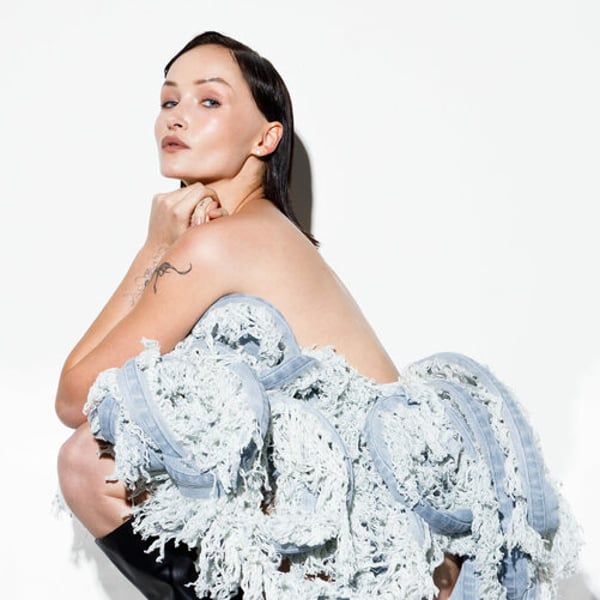
The exhibition, open to the public on September 27 and 28, features a site-specific art installation by Mariano Franzetti, crafted from recycled and regenerative denim. Conceived as an immersive experience, it brings fashion design, technological innovation and artistic expression into dialogue.
Water: a central issue in fashion sustainability
Developed in collaboration with Kering‘s Material Innovation Lab (MIL), the Denim Lab brings together a selection of young international designers invited to create a denim look using low-impact materials and processes. They benefit from technical support and access to textiles developed with innovative technologies aimed at significantly reducing water consumption, chemical use, and the carbon footprint of denim production.
This edition places water at its core, an essential issue for a fabric whose production has traditionally demanded substantial volumes of water, from cotton cultivation through to dyeing and finishing. Denim therefore serves as an emblematic testing ground, both familiar and closely associated with the environmental challenges facing the fashion industry.

The fabrics were developed by PureDenim Srl, a specialist in low-impact dyeing techniques, while treatments and finishes were applied by Tonello Srl, a recognised leader in sustainable washing and finishing technologies. The selected designers, from Europe, Asia, and Africa, each offer a distinctive interpretation of denim, blending formal exploration, textile innovation and reflection on the contemporary uses of clothing.
This article is an automatic translation.
Copyright © 2026 FashionNetwork.com All rights reserved.
Fashion
GoldenTree to buy about $200 million of Saks Global bankruptcy financing, Bloomberg News reports


As risk skyrockets, current and former CFOs are in demand for audit committees

The Denim Lab project examines the environmental impact of denim at Milan Fashion Week

Exclusive: Alphabet’s CapitalG names Jill Chase and Alex Nichols as general partners
-

 Politics8 years ago
Congress rolls out ‘Better Deal,’ new economic agenda
-
Entertainment9 years ago
New Season 8 Walking Dead trailer flashes forward in time
-
Politics9 years ago
Poll: Virginia governor’s race in dead heat
-
Politics8 years ago
Illinois’ financial crisis could bring the state to a halt
-
Entertainment9 years ago
The final 6 ‘Game of Thrones’ episodes might feel like a full season
-
Entertainment9 years ago
Meet Superman’s grandfather in new trailer for Krypton
-
Business9 years ago
6 Stunning new co-working spaces around the globe
-
Tech8 years ago
Hulu hires Google marketing veteran Kelly Campbell as CMO