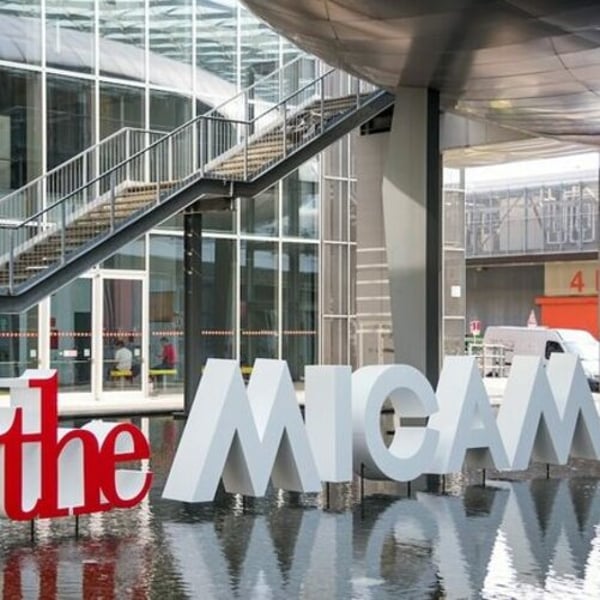
The international trade show dedicated to footwear, Micam, is preparing to cut the inaugural ribbon on its 100th edition—an impressive milestone set against the backdrop of an increasingly complex global market. From September 7 to 9, 870 brands will exhibit at Fieramilano Rho, including 469 from abroad, mainly from Spain, Turkey, Brazil, Germany, and Portugal. The event is expected to welcome more than 30,000 buyers from 150 countries.
DR
“Micam 100 will be a celebratory edition, but with a strong look to the future. The Micam Next schedule is the evolution of Micam X. The content is curated by an exceptional partner, Wired Italia, which will delve into trends related to technological innovation, sustainability, and new consumption models. We want every visitor to find inspiration, strategic contacts, and concrete tools to evolve their business,” explained Giovanna Ceolini, president of Assocalzaturifici and Micam, to FashionNetwork.com.
While the show will preview exhibitors’ Spring/Summer 2026 collections, its legacy will be explored through a special exhibition titled “100 Steps into the Future.” For each decade, the showcase will feature two iconic models: one lifestyle model that reflects everyday trends, and one technical-sports model that represents innovation and performance.
“The exhibition is a tribute to the history of Micam and, at the same time, a projection into the future of the industry. A path marked by decades will retrace the history of Micam, telling the story of its evolution in taste, technology, design, and Italian identity on the world stage. ‘100 Steps into the Future’ is an exciting journey into the cultural heritage of footwear, but also a reflection on the challenges that lie ahead. It’s an invitation to rethink the concept of value by combining tradition and innovation in a shared vision,” Ceolini continued.
Micam 100 will spotlight 12 emerging labels. Among them is Le Plagiste (France), relaunched in 2022 by co-founders Simon Michel and Rodolphe Stephan, offering elegant, casual footwear inspired by the French art of living. Also featured is Canella Brand Shoes (Peru), founded by 30-year-old Daniella Pedraglio, which draws inspiration from Peruvian culture and utilizes local, eco-sustainable materials. Bróg (Ireland), created by Brazilian designer Danieli Bergin, combines Irish heritage with elegance and sustainability, utilizing LWG-certified leather and biodegradable packaging. Nuosmiq (South Korea) presents genderless designs and upcycling projects made from sustainable materials. Then, launched by Soojin Kim in 2020, supports Seongsu-dong artisans by creating handmade shoes that merge classical and contemporary design.
Also exhibiting from abroad are the Nigerian label Wuman, founded by Ekwerike Chukwuma, which collaborates with artisans in Nigeria and Kenya using local materials and traditional techniques; Dutch brand Sassy Icon, launched in 2022 by Michelle Schager, which combines Dutch creativity with Italian craftsmanship and a focus on women’s empowerment and social impact; and the British label Marco Castelli Collection, created by the Sicilian model of the same name. Representing Italy are Lancialy Milano; Apice, founded by 20-year-old Zarina Pistonesi, which creates shoes inspired by her family’s footwear heritage; Le Signe; and Servati, which offers 100% recyclable 3D-printed sneakers.
A spotlight on young Italian brands is also possible thanks to the collaboration with ICE and MAECI. Participating companies include Next Milano, known for high-performance 3D-printed footwear for sport, lifestyle, and work; Steve’s, a Turin-based brand founded in 2022 by siblings Filippo and Giulia Gandini, which has made sustainability its core value, using materials such as apple peel waste for uppers and 100% biodegradable rubber soles; and YU.SH, a luxury footwear company that merges Florentine craftsmanship with cutting-edge technology.
“Investing in new generations and emerging talents is an unavoidable priority. The future of the footwear industry depends on our ability to enhance talent and foster intergenerational dialogue. Young people bring new ideas, environmental awareness, digital skills, and a global vision that can strengthen our know-how,” Ceolini concluded. “Micam and Assocalzaturifici are strongly committed to creating synergies between companies, schools, academies, and emerging designers, promoting training paths, shared projects, and opportunities for concrete visibility. Human capital is the real strategic lever to face tomorrow.”
This article is an automatic translation. Click here to read the original article.
The demerger of Unilever‘s ice cream division, to be named ‘The Magnum Ice Cream Company,’ which had been delayed in recent months by the US government shutdown, will finally go ahead on Saturday, the British group announced.
Reuters
Unilever said in a statement on Friday that the admission of the new entity’s shares to listing and trading in Amsterdam, London, and New York, as well as the commencement of trading… is expected to take place on Monday, December 8.
The longest federal government shutdown in US history, from October 1 to November 12, fully or partially affected many parts of the federal government, including the securities regulator, after weeks without an agreement between Donald Trump‘s Republicans and the Democratic opposition.
Unilever, which had previously aimed to complete the demerger by mid-November, warned in October that the US securities regulator (SEC) was “not in a position to declare effective” the registration of the new company’s shares. However, the group said it was “determined to implement in 2025” the separation of a division that also includes the Ben & Jerry’s and Cornetto brands, and which will have its primary listing in Amsterdam.
“The registration statement” for the shares in the US “became effective on Thursday, December 4,” Unilever said in its statement. Known for Dove soaps, Axe deodorants and Knorr soups, the group reported a slight decline in third-quarter sales at the end of October, but beat market expectations.
Under pressure from investors, including the activist fund Trian of US billionaire Nelson Peltz, to improve performance, the group last year unveiled a strategic plan to focus on 30 power brands. It then announced the demerger of its ice cream division and, to boost margins, launched a cost-saving plan involving 7,500 job cuts, nearly 6% of the workforce. Unilever’s shares on the London Stock Exchange were steady on Friday shortly after the market opened, at 4,429 pence.
This article is an automatic translation. Click here to read the original article.
Burberry has named a new chief operating and supply chain officer as well as a new chief customer officer. They’re both key roles at the recovering luxury giant and both are being promoted from within.
Matteo Calonaci becomes chief operating and supply chain officer, moving from his role as senior vice-president of strategy and transformation at the firm.
In his new role, he’ll be oversee supply chain and planning, strategy and transformation, and data and analytics. He succeeds Klaus Bierbrauer, who’s currently Burberry supply chain and industrial officer. Bierbrauer will be leaving the company following its winter show and a transition period.
Matteo Calonaci – Burberry
Meanwhile, Johnattan Leon steps up as chief customer officer. He’s currently currently Burberry’s senior vice-president of commercial and chief of staff. In his new role he’ll be leading Burberry’s customer, client engagement, customer service and retail excellence teams, while also overseeing its digital, outlet and commercial operations.
Both Calonaci and Leon will join the executive committee, reporting to Company CEO Joshua Schulman.
JohnattanLeon – Burberry
Schulman said of the two execs that the appointments “reflect the exceptional talent and leadership we have at Burberry. Both Matteo and Johnattan have been instrumental in strengthening our focus on executional excellence and elevating our customer experience. Their deep understanding of our business, our people, and our customers gives me full confidence that their leadership will help drive [our strategy] Burberry Forward”.
Traditional and occasion wear designer Puneet Gupta has stepped into the world of fine jewellery with the launch of ‘Deco Luméaura,’ a collection designed to blend heritage and contemporary aesthetics while taking inspiration from the dramatic landscapes of Ladakh.
Hints of Ladakh’s heritage can be seen in this sculptural evening bag – Puneet Gupta
“For me, Deco Luméaura is an exploration of transformation- of material, of story, of self,” said Puneet Gupta in a press release. “True luxury isn’t perfect; it is intentional. Every piece is crafted to be lived with and passed on.”
The jewellery collection features cocktail rings, bangles, chokers, necklaces, and statement evening bags made in recycled brass and finished with 24 carat gold. The stones used have been kept natural to highlight their imperfect and unique forms and each piece in the collection has been hammered, polished, and engraved by hand.
An eclectic mix of jewels from the collection – Puneet Gupta
Designed to function as wearable art pieces, the colourful jewellery echoes the geometry of Art Deco while incorporating distinctly South Asian imagery such as camels, butterflies, and tassels. Gupta divides his time between his stores in Hyderabad and Delhi and aims to bring Indian artistry to a global audience while crafting a dialogue between designer and artisan.