
Fashion
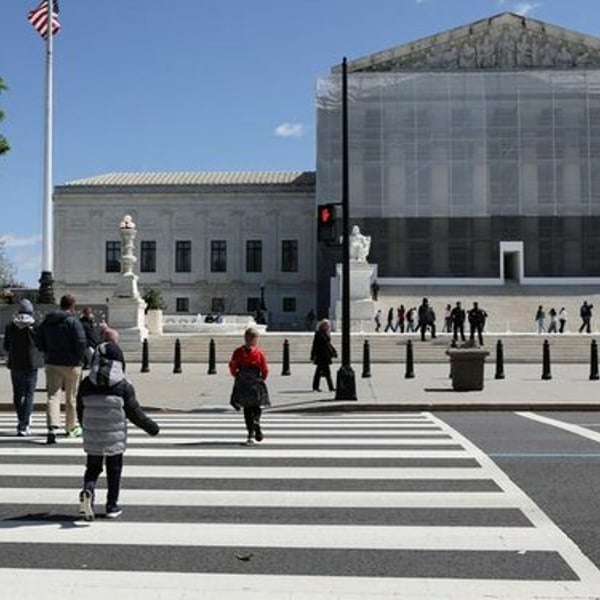
Trump takes tariffs fight to US Supreme Court

Published
January 21, 2026
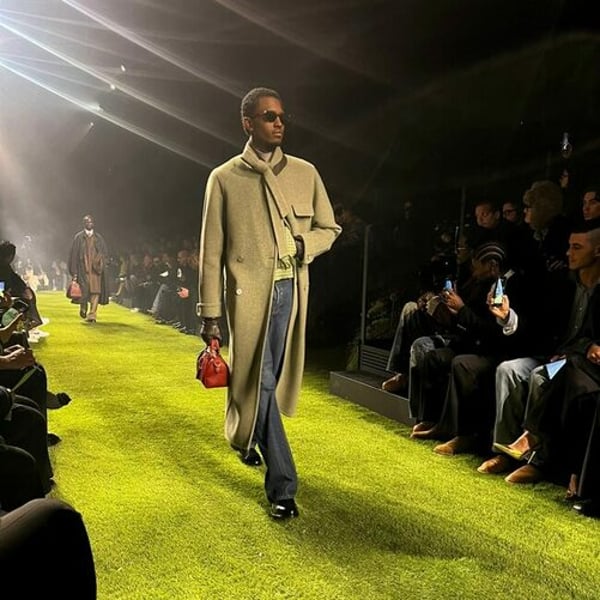
Louis Vuitton has always been about hyper-savvy brand connections, all the way to its latest show whose centerpoint was a beautiful modernist architectural set.
From Bauhaus to Drophaus, the term Vuitton’s menswear creative director Pharrell Williams used to describe this elegant apartment, made in collaboration with the architectural firm Not A Hotel: a prefabricated house concept envisioned as a timeless space for future living. Think a blend of midcentury modern-meets-Joseph Dirand.
An ideal setting for this expression of modernist mode by Williams, which opened Paris Fashion Week Men’s at the Louis Vuitton Foundation on a wet Tuesday night in Paris. And don’t be surprised if some of the furniture Pharrell designed for this model home turns up in the hotel Louis Vuitton is said to be building on the Champs-Élysées.
A raised model home built inside a plywood crate the size of a small stadium, on which was stencilled in half-meter high letters “Louis Vuitton Fall-Winter 26 Men’s Collection”.
An ideal Instagram backdrop for hundreds of guests, or micro and mega influencers. Many of whom where sat front row wearing the hand-made, caramel-colored Babouche slippers Williams kindly sent as a gift with his formal invitation.
A huge show backed up by a gospel choir attired in black professors’ gowns at one end, facing a full orchestra at the other.

Without question, the most commercially minded yet also timeless of Pharrell’s five shows so far for the house, focused on crisp, cohesive tailoring. Opening with classic six-button jackets and the flared pants that Pharrell favors, many composed in new LV technical fabrics reflective under light.
Though the heart of the matter was the travel-wear: natty crinkly jerkins so one never needs to fear coming off a long-haul flight with a crumpled look. Padded urban ski jackets with fur-trimmed hood, or chambray shell jackets for a little dash.
One also had to love the splendid ankle-brazing gents coats, finished with matching woollen bows, or vicuna zippered and pocketed sweatshirts. Above all, the American designer toned way down the streetwear, and concentrated on contemporary tailoring, and casual chic, albeit never too quiet but rippling with panache.
In accessories, a fab’ new series of monogram backpacks, elongated and finished with extra micro pockets should be huge hits. Many boasting cuddly fox companions that looked like must-have ornaments.
And, of course, it would not be a Pharrell Vuitton show without a few mammoth trunks. Two standouts this season were an uncanny light-filled, stained-glass-window version of a Tiffany lamp, followed by a beautifully made intarsia vista of Pont Alexandre III and the Eiffel Tower.

All of which won Pharrell a huge ovation – led by a powerhouse front row that included First Lady Brigitte Macron; “Adolescence” protagonist Stephen Graham; it-guy Djo; and crooner, John Legend.
Williams took a leisurely bow, backed up by a soundtrack he produced at the Louis Vuitton in-house recording studios. It included compositions like Pray For Ya by John Legend; Sex God by Jackson Wang (feat. Pusha T); Disturbing The P by A$AP Rocky (feat. Pharrell Williams); and The One by Voices of Fire (feat. Pharrell Williams) and Hit-A-Lik by Quavo.
In a word, another hit show, and collection, by Williams. Not bad going for what is technically his night job.
Copyright © 2026 FashionNetwork.com All rights reserved.
Published
January 20, 2026
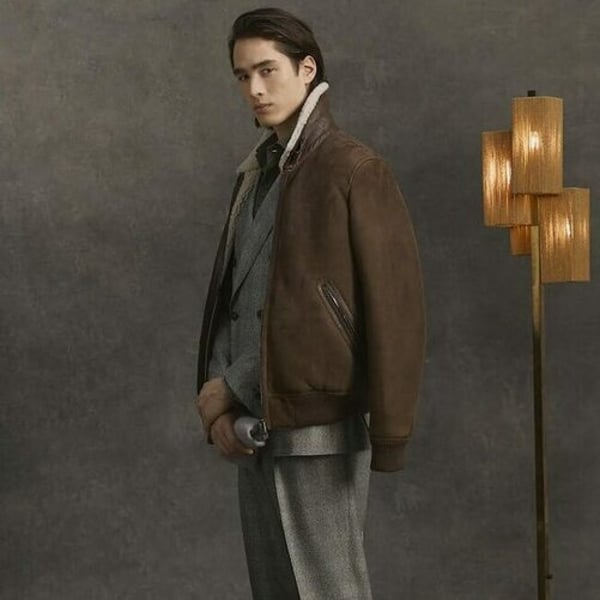
High-end menswear brand Canali recorded a slight decline in turnover in the 2025 financial year, to 205 million euros from 210 million in 2024; a decrease “linked to contingencies in certain international markets,” according to president and CEO Stefano Canali, who nonetheless describes himself as “very optimistic” about business in 2026.
“Right now, I think we have a kind of alignment of the stars: the right collection, backed by a credible brand that has been around for 91 years and offers top-quality products at a fair price. This is our formula for success in 2026,” the manager tells FashionNetwork.com. “The Autumn-Winter 2026/27 collection presented in Milan marks a further evolutionary step in the wake of the changes we set in motion about four years ago, designed to ensure that our offering is increasingly lifestyle-oriented while remaining consistent with our sartorial DNA, from which we will never depart, and to reflect, in a credible, authentic and recognisable way, the evolution of customers’ tastes around the world. Our DNA, tied to the highest-quality canvassed suit, therefore permeates every element of the collection, from outerwear to shoes and knitwear.”
“We are talking about the very highest quality of materials,” Canali continues, “exceptional construction quality, a unified colour palette, and a collection that can be easily mixed and matched, creating a clear and distinctive identity for the Canali brand. The ultimate goal, which we believe we have further achieved with this collection, is an elevated and sophisticated offer that is, at the same time, genuinely easy to buy and to mix and match throughout the week according to the customer’s needs. It offers the functionality and versatility in garments that people are looking for.”

The market was almost shocked to see certain price rises applied by fashion and luxury brands. What are your thoughts on this? “Price rises are not an issue for Canali,” the CEO responds unequivocally. “Our brand has always maintained a very fair pricing position, which matters even more today, because customers out there- as they have been telling us, obsessively, for some time- no longer accept certain price points, which we, moreover, have never charged.”
Stefano Canali aims to ensure that in 2026 the overall message of the collection is increasingly amplified across all distribution channels- wholesale, directly operated retail, and online, launched in-house 10 years ago and considered “a service complement to the physical channel.” The executive signals upcoming store openings (50 directly operated Canali mono-brand stores, over 1,000 wholesale accounts worldwide), but declines to disclose details, remaining focused on healthy, credible growth in all countries.

The North American market accounts for 50% of the brand’s sales. Any issues with US-imposed tariffs, and with the strengthening of the euro against the dollar? “Clearly, exchange-rate fluctuations affect prices; however, it is an issue we have always dealt with throughout my time at this company,” says Stefano Canali. “Let’s remember that over two decades the euro went from being worth $0.82 to $1.60, and everyone is still here. The market clearly adapts; and of course all brands have to make their own assessments of the most appropriate price to charge in each area, but that will never be a problem.”
This article is an automatic translation.
Click here to read the original article.
Copyright © 2026 FashionNetwork.com All rights reserved.


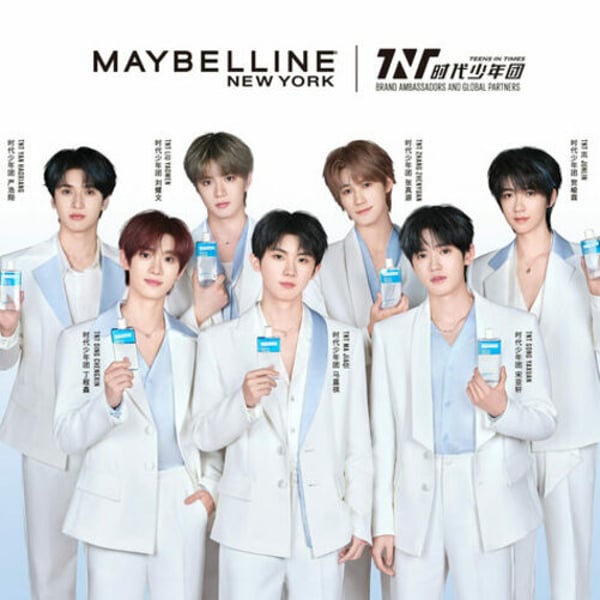
Maybelline names Teens in Times as brand ambassadors

Senate advances Jason Pizzo bill extending PTSD workers’ comp coverage to 911 dispatchers

Americans are paying nearly all of the tariff burden as international exports die down, study finds
-

 Politics8 years ago
Congress rolls out ‘Better Deal,’ new economic agenda
-
Entertainment9 years ago
New Season 8 Walking Dead trailer flashes forward in time
-
Politics9 years ago
Poll: Virginia governor’s race in dead heat
-
Politics8 years ago
Illinois’ financial crisis could bring the state to a halt
-
Entertainment8 years ago
The final 6 ‘Game of Thrones’ episodes might feel like a full season
-
Entertainment9 years ago
Meet Superman’s grandfather in new trailer for Krypton
-
Business9 years ago
6 Stunning new co-working spaces around the globe
-
Tech8 years ago
Hulu hires Google marketing veteran Kelly Campbell as CMO