
Politics
Jury begins deliberation in Donna Adelson trial for the murder of Dan Markel
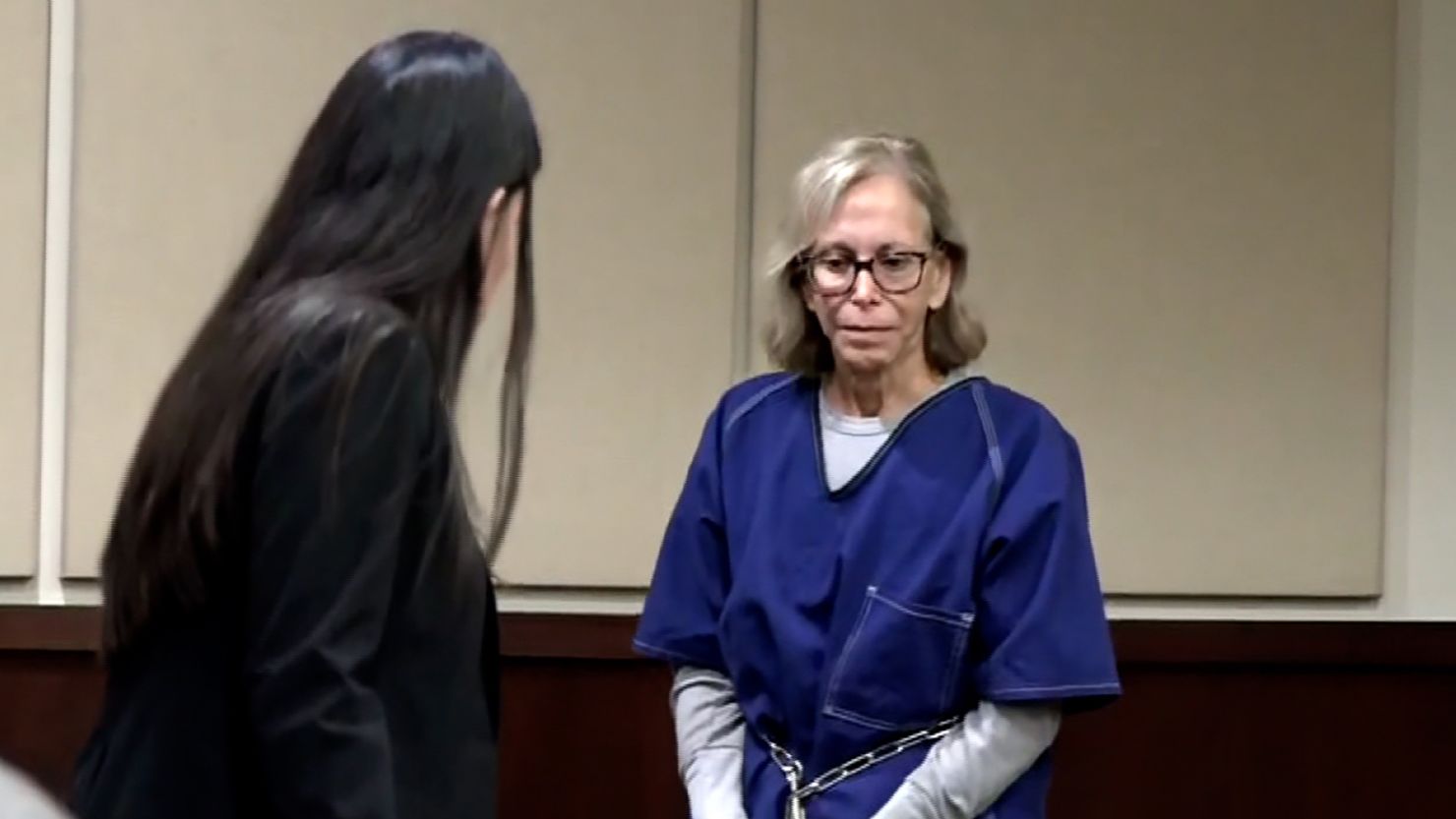
After 11 years of investigations, four prior convictions, and enough twists to fill a true-crime anthology, the murder-for-hire case of slain Florida State University law professor Dan Markel is again center stage – this time with family matriarch Donna Adelson in the hot seat. The state and defense have rested their cases, and a jury now begins its deliberations.
Assistant State Attorney Sarah Kathryn Dugan set the tone for the state with a methodical opening that walked jurors through a clear timeline of malice and motive. And Assistant State Attorney Georgia Cappleman closed with an emphatic reiteration of the hard facts, plus a side dish of sarcasm and an extra helping of clarity.
It’s not every day a state prosecutor begins closing arguments with a meme, but that’s precisely what Cappleman did: showing the jury the best demonstrative the internet has to offer to describe what happens when various conspirators all turn against one another:
In opening, Dugan told jurors that over the years, every defendant in the Markel saga pointed the finger elsewhere: Katherine Magbanua’s first trial team floated one theory (blame the hitmen). Her retrial team floated another (blame Charlie and the hitmen behind her back). Charlie Adelson’s attorney, Dan Rashbaum, spun an elaborate yarn that Charlie was the unwitting victim of a “two-crime” tale – first the murder (which, oops, he had nothing to do with), then a web of extortion spun by Magbanua and the killers to milk the Adelsons for cash. Rashbaum had asked jurors to imagine that Charlie’s loose mob-tough talk on wiretaps was misinterpreted week after week, and that a secret plot by the real culprits framed him. The jury didn’t buy it. They quickly convicted Charlie on all counts, decisively dismissing the extortion-on-layaway theory as the nonsense that it was.
And in closing, Cappleman revisited this same theme, bolstered by the (lack of a singular) defense that had been shared during trial. Defense attorneys Jackie Fulford and Josh Zelman didn’t quite commit to which alternative theory jurors should embrace: they flirt with the notion that Donna and Charlie were victims – duped or extorted by the “real” masterminds (take your pick: A vengeful Magbanua? A jealous Sigfredo Garcia? Both?) who supposedly killed Markel without Adelson family involvement and then shook them down for hush money. On the other hand, they hint that if anyone in the family was calling shots, maybe Charlie and Wendi Adelson acted behind mom’s back, while Donna innocently remained in the dark. It’s a head-scrambling double narrative: either Donna is an extortion victim or a clueless bystander to her son’s solo machinations.

Hence, every Spiderman pointing fingers at every other Spiderman involved in killing Markel.
Let’s walk back for a moment …
“The reason that we’re here today is that this defendant, Donna Adelson, is part of a conspiracy to hire a hitman to kill her former son-in-law,” Dugan began, laser-focused on the core allegation.
From there, she painstakingly connected the dots stretching back to 2013, when Donna’s daughter Wendi Adelson lost a court battle to relocate her kids to South Florida. That defeat – delivered by none other than Dan Markel, the boys’ father – left Donna seething. In Dugan’s telling, Donna hated Markel and was determined not to give up her quest to bring her grandkids to Miami. Relocation was “non-negotiable,” and every setback only steeled Donna’s resolve.
To drive the point home, prosecutors dropped a heavy binder of the Adelson-Markel divorce filings onto the evidence table – a tactile exhibit of the contentious legal battle that preceded the murder. Bizarrely, despite Wendi Adelson’s concession that her divorce was in fact “contentious,” defense witness – family law attorney Kristin Bailey – would later offer testimony claiming the Adelson-Markel divorce was your everyday, low-key, amicable split, and that there was nothing to see here.

Cappleman eviscerated Bailey’s account – and some of her credibility with it, as Bailey refused to concede that even though the docketed events of the Adelson-Markel divorce might not have been super unusual to a seasoned divorce lawyer, they could in fact still be quite upsetting to the parties involved.
Jurors were shown evidence of the extent to which Donna involved herself far beyond the normal bounds of a concerned mother. Donna’s emails revealed extreme meddling in her children’s lives, Wendi’s in particular. She planned and orchestrated Wendi’s separation (according to her eldest, estranged son Robert, taking particular enjoyment in how they timed the news to Markel to hit immediately before he took the stage to give a speech), edited and co-wrote divorce filings, and even set up dating profiles to pre-screen men for Wendi to date in South Florida.
After the court blocked Wendi’s move in 2013 and Markel sought to curb Donna’s unsupervised visits due to her badmouthing him to the kids in 2014, the Adelsons’ “problem” reached a boiling point. Dugan and Cappleman surgically outlined how that problem was ‘solved’: Charlie, his sister, and their parents paid for Dan Markel to be killed to erase him from his children’s lives.
The prosecution mapped out the cast of conspirators, communication and other evidence “like train cars” linking them. Each car in this macabre train carried evidence: financial records of payments from Charlie and Donna to his girlfriend/middlewoman Magbanua; Charlie’s infamous “TV for a hitman” joke (he claimed he bought Wendi a TV as a divorce gift because it was cheaper than hiring a hitman); wiretapped calls with Donna speaking in code about “the TV” and “paperwork;” and bundles of stapled $100 bills that had apparently been literally laundered by Donna herself (mold still on the cash) before being paid to the hitmen.
For veteran “Justice for Dan” followers, much of this was familiar: The undercover FBI “bump” in 2016 that rattled the Adelsons by hinting at blackmail and caused them to start talking amongst each other in predictable patterns; Donna and Charlie’s hurried phone calls fretting that someone “knew details;” and the parade of prior prosecutions that already put away the hitmen (Garcia and Luis Rivera), the go-between (Magbanua), and self-described “Maestro,” Charlie himself.
New trial, new evidence
Despite a repeat of many facts in this trial, there are also a few new things that even the most observant true crime junkies haven’t yet seen.
For starters, Donna referred to Markel as “Jibbers.” In the first trial, in 2019, Wendi claimed she may never have even seen the name in writing, and wasn’t even sure how “Jibbers” was spelled – (“it could be with a J or G,” she pondered to the judge, before Cappleman reminded her that this moniker is how Markel was saved in her phone). In the next set of trials, Wendi claimed the name was just something silly she called Markel to make him less “scary” to her when he was being difficult. Come to find out, however, “Jibbers” meant something far from silly.
“Jew in Boots” – Wendi wrote to her friend, a play on the “puss in boots” character (per Wikipedia, an anthropomorphic cat who uses trickery and deceit to gain power, wealth, and the hand in marriage of a princess for his penniless and low-born master). “Jew in Boots,” “JIB,” or “Jibbers” – that’s what this nickname means, a direct dig at Markel’s Jewish faith – something central to his identity far beyond what she realized she’d signed up for when marrying him.
We also learned more about how profoundly Donna shared Wendi’s animus toward Markel’s practice of Judaism, calling him a “religious zealot” and “extremist” and fretting that their children may come to adopt these observances themselves, leaving Wendi (and her non-kosher kitchen) an “outsider” to the boys.
And, while we already knew that Wendi seemingly set up her then-boyfriend Jeff Lacasse as a patsy for the crime, we learned a bit more in this trial. Just a few weeks before the murder, she did something unprecedented in her relationship with her eldest brother Robert: Texting him a photo of her and her “new boyfriend” Lacasse, claiming “the parents” didn’t know about Jeff – despite her parents having met Lacasse six or seven times over the past many months. Right after the murder, recalling this exchange, Robert alerted the FBI about the presence of a “secret” boyfriend. This piled onto suspicious that were already cast in Lacasse’s direction by Wendi (who told law enforcement that Lacasse was jealous, was increasingly burdened by the impact the divorce litigation was having on his relationship with Wendi and just happened to drive a nearly identical car to those rented by the hitmen, scheduled to leave town on same route hitmen ultimately would take after shooting Markel.)
New information came out that Donna – in her meticulously-detailed 2014 day planner – wrote a note detailing the make, model, and license plate of Danny’s vehicle. Her entry for Wendi’s minivan included no license tag, eliminating the defense that perhaps she just kept track of all vehicles her grandchildren traveled in. And of course, this is relevant considering the hitmen needed to know which car to track through Tallahassee.
And likely even more telling is a conversation Donna had with son Robert a few days after Markel’s murder. “Don’t talk to the police,” she warned Robert, who replied that he had already talked with the FBI. “That’s okay,” Donna said to Robert, “you don’t know anything anyway.”
How would Donna know such a thing, unless she herself was involved?
In the years that followed, Donna would hang up or deflect any conversation Robert attempted to have about the murder. To Rob asking who might have done it, Donna once said, “I don’t know and I don’t care. It doesn’t concern me.”
Their last call was in 2016 following the arrest of the two hitmen. Robert asked if they’d heard the news. Donna hung up.
Robert’s testimony was somber, clear, and courageous – a rare display of authenticity, and a testament to the character that sets him apart from most people, his family of origin especially.
Finally, we learned more about Donna’s attempt to identify non-extradition countries immediately after Charlie’s conviction, and how she secured an emergency visa to Vietnam before FBI agents nabbed her at the jetway of a Miami flight.
The defense doesn’t commit to just one defense
‘The defense theory isn’t just missing pieces. It’s missing borders, a picture and any semblance of glue. Our scathing assessment of Charlie Adelson’s failed courtroom gambit could just as easily apply to the scattershot strategy unfurling in his mother’s trial.
In stark contrast to the prosecution’s expansive timeline of evidence, Donna Adelson’s defense team spent their opening argument contracting – shrinking Donna’s role, and seemingly shrugging at the big picture. Fulford opened with a casual message to jurors that boiled down to: Yes, a lot of bad things were said, but none of it proves Donna did anything.
And this is exactly how she wrapped Adelson’s case. Fulford told the jury they may end up back in the room thinking, “Charlie did it and it sure looks like Wendi did it,” but that those feelings have nothing to do with her client.
“Not a single piece of evidence was discussed that shows that Donna Adelson planned this, hired anybody, or intended that this happen,” Fulford emphasized. In other words, sure, Charlie and Wendi might have organized and paid for the hit (even the defense conceded the state can prove Charlie’s guilt), but Donna as mastermind? Outrageous, Fulford implied – twice. It’s “outrageous” that prosecutors put Donna “at the top of this pyramid” without a smoking gun tying her to the crime.
To hear the defense tell it, Donna Adelson is just a sweet 75-year-old grandmother, “a normal person, just like all of us,” who happened to be entangled in a nightmare not of her making. Fulford deliberately humanized her client: Donna as the doting mom and grandma who helped arrange Skype calls for Markel to speak to his kids, who took the boys to piano lessons and playgrounds, who was so caring that Wendi once described her as a “co-parent.”
This kindly grandma image is the defense’s counterweight to the state’s “dragon lady” matriarch. Fulford suggested that yes, Donna and her daughter “squabbled” with Markel during the divorce – who didn’t in a messy breakup? – but once the relocation fight ended in court, “the issue was finished.” Why, she prodded the jury, would a doting Bubbe plot to murder her grandkids’ father over a dead dispute?
It’s a question meant to plant reasonable doubt, but it sidesteps a mountain of evidence. In fact, the defense conspicuously avoided offering any alternative explanation for all the damning facts the state presented. Fulford’s opening neither mentioned the plethora of wiretapped calls with Donna fretting about being “jumped up” (extorted) after the FBI’s fake blackmail attempt, nor explained away Donna’s deep involvement in the events surrounding the murder. Instead, the strategy is essentially denial and deflection. As Fulford put it, motive isn’t proof (an interesting argument, considering the defense would later deny even motive as a factor).
Donna’s desperate desire to move the kids and her “squabbling” with Markel, the defense insists, don’t equate to a murder conspiracy without a direct link. Keep an open mind, Fulford beseeched.
Their defense relied on chipping at bits of evidence here and there, raising objections (often earning stern admonitions from the judge about “wasting the jurors’ time” not to mention repeat witness sequester violations), and repeatedly reminding the jury that Donna is a grandmother – as if that title were a shield against criminal intent.
This latter argument leaves a particularly bitter taste in the mouths of case observers who know more than these 12 jurors do about the “Tale of Two Grandparents” in this case: On one hand, Wendi’s parents who essentially raised Dan’s children after his murder, an on the other hand, Dan’s parents, who were cut off form their grandchildren for a full six years following the first set of arrests in 2016, and who had to climb mountains (and change Florida law) to begin to gain even a semblance of contact again.
What this jury will decide …
Despite the repeat characterization by Donna’s lawyers and friends that she’s merely a normal, loving grandmother, the defense is contradicted most strongly by her own acts.
What loving grandmother would be willing to subject her grandchildren to a charade of baptisms, conversion to Catholicism, and new Sunday school classes simply as a ruse to anger their father enough to allow relocation?
What loving grandmother expresses zero curiosity, concern, or remorse in the murder of her grandchildren’s father – something that Robert Adelson also testified to, sharing how no other member of the Adelson family showed any interest in discussing the tragedy, and more so, how they’d hang up and shut down if he tried to
What loving grandmother books searches for non-extradition countries and books a flight to one (Vietnam) right after her son is found guilty of murder?
This jury of 12 peers will ultimately decide those questions and this: What loving grandmother hires hitmen, then goes on with her life as though nothing happened … for ten full years until her arrest.
Post Views: 0