Connect with us

Business

Nestlé fired its scandal-clad CEO without a payout—a ‘really unusual’ move, expert says

Published

on


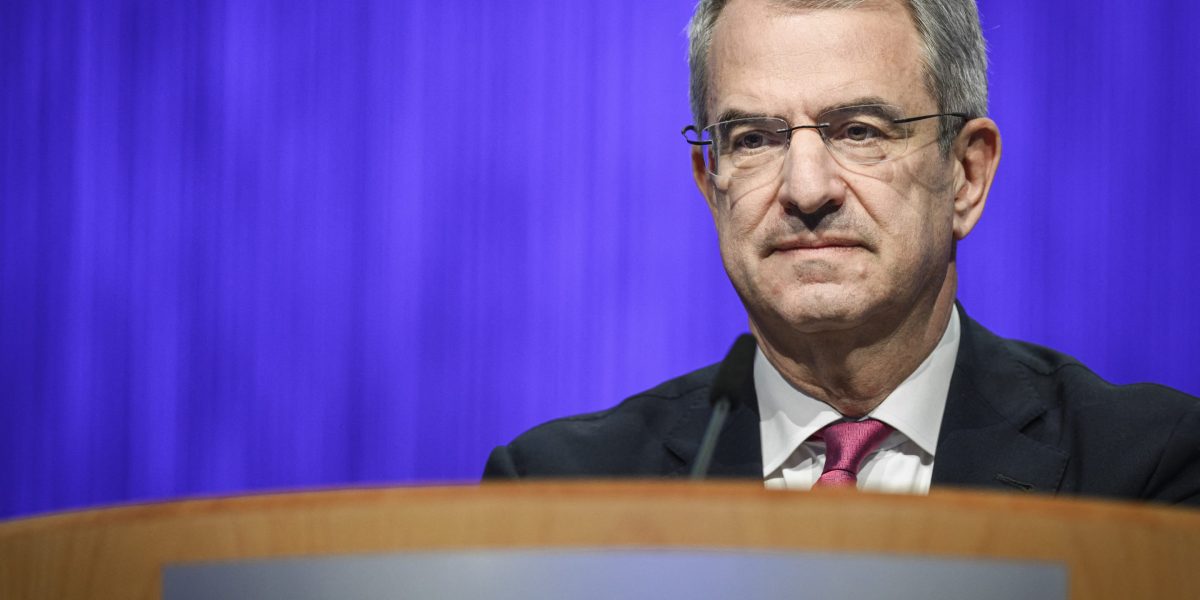
When Nestlé abruptly ousted its chief executive Laurent Freixe over Labor Day weekend after revelations of a romantic relationship with a direct subordinate, one detail stood out: He was shown the door without a severance package.

That, according to corporate-governance veteran Nell Minow, is almost unheard of in the C-suite.

That is really unusual,” she told Fortune. “I think that’s actually a badge of success for corporate governance, because that’s something investors have been concerned about for a long time: CEOs being dismissed and somehow getting to stay on.”

Nestlé confirmed to Fortune that Freixe will not receive a severance package. 

For years, high-profile executives who crossed ethical lines have left with multimillion-dollar parachutes. Famously, Steve Easterbook, the former executive of McDonald’s, walked away from the role with a hefty sum of $40 million after getting caught having a consensual sexual relationship with a subordinate. McDonald’s later clawed back $105 million from Easterbook after finding he hadn’t disclosed sexual relationships with other subordinates at the fast-food giant.  

Adam Neumann—after leading a disastrous charge to take the company he founded, WeWork, public—received $445 million in a payout package during his ouster. And after 346 people died in two crashes during Dennis Muilenburg’s tenure as CEO, he was not awarded severance, but was still left with more than $60 million in his pocket from other stock options. 

Minow said these different outcomes show that boards are not always consistent in how they police misconduct, but said one thing remains consistent: Social media has left directors with fewer options to look the other way. 

“There has been bad behavior in the boardroom for a long time,” Minow said. “But partly because of social media, partly because of the way things get out, the board is under more pressure to respond.”

The reputational fallout from bad behavior can be brutal. A Polish CEO who was recently caught on video snatching a U.S. Open souvenir hat from a child watched his company’s online reviews collapse to near zero in days. The “John” from Papa Johns caused Major League Baseball to pull their promotion with the pizza chain after he said the N-word during a media-training call in 2018. 

Boards are slowly adapting, Minow argued. Some have begun docking bonuses or moving faster to terminate CEOs “for cause,” meaning the executive in question committed serious misconduct that warrants dismissal without severance pay. But she warned many still demonstrate  a double standard. 

“If you see some hypocrisy in the board, by the way that they handle the CEO versus the way they handle a middle manager, that’s a green light for employees to behave badly themselves.”

Even the apology, she said, operates as a test of governance. Minow keeps what she calls an informal “hall of shame” of poor executive apologies. The worst, she explained, dodge responsibility or fail to show how the company will prevent a repeat. The best are blunt, swift, and backed by action.

Ultimately, Nestlé’s move may prove a turning point. By denying Freixe a golden parachute, the Swiss food giant signaled that boards are starting to treat reputational risk as seriously as financial risk, and that missteps at the top no longer guarantee a cushy landing.

Fortune Global Forum returns Oct. 26–27, 2025 in Riyadh. CEOs and global leaders will gather for a dynamic, invitation-only event shaping the future of business. Apply for an invitation.


Source link

Continue Reading

Business

SpaceX to offer insider shares at record-setting valuation

Published

on


SpaceX is preparing to sell insider shares in a transaction that would value Elon Musk’s rocket and satellite maker at a valuation higher than OpenAI’s record-setting $500 billion, people familiar with the matter said.

One of the people briefed on the deal said that the share price under discussion is higher than $400 apiece, which would value SpaceX at between $750 billion and $800 billion, though the details could change. 

The company’s latest tender offer was discussed by its board of directors on Thursday at SpaceX’s Starbase hub in Texas. If confirmed, it would make SpaceX once again the world’s most valuable closely held company, vaulting past the previous record of $500 billion that ChatGPT owner OpenAI set in October. Play Video

Preliminary scenarios included per-share prices that would have pushed SpaceX’s value at roughly $560 billion or higher, the people said. The details of the deal could change before it closes, a third person said. 

A representative for SpaceX didn’t immediately respond to a request for comment. 

The latest figure would be a substantial increase from the $212 a share set in July, when the company raised money and sold shares at a valuation of $400 billion.

The Wall Street Journal and Financial Times, citing unnamed people familiar with the matter, earlier reported that a deal would value SpaceX at $800 billion.

News of SpaceX’s valuation sent shares of EchoStar Corp., a satellite TV and wireless company, up as much as 18%. Last month, Echostar had agreed to sell spectrum licenses to SpaceX for $2.6 billion, adding to an earlier agreement to sell about $17 billion in wireless spectrum to Musk’s company.

Subscribe Now: The Business of Space newsletter covers NASA, key industry events and trends.

The world’s most prolific rocket launcher, SpaceX dominates the space industry with its Falcon 9 rocket that launches satellites and people to orbit.

SpaceX is also the industry leader in providing internet services from low-Earth orbit through Starlink, a system of more than 9,000 satellites that is far ahead of competitors including Amazon.com Inc.’s Amazon Leo.

SpaceX executives have repeatedly floated the idea of spinning off SpaceX’s Starlink business into a separate, publicly traded company — a concept President Gwynne Shotwell first suggested in 2020. 

However, Musk cast doubt on the prospect publicly over the years and Chief Financial Officer Bret Johnsen said in 2024 that a Starlink IPO would be something that would take place more likely “in the years to come.”

The Information, citing people familiar with the discussions, separately reported on Friday that SpaceX has told investors and financial institution representatives that it is aiming for an initial public offering for the entire company in the second half of next year.

A so-called tender or secondary offering, through which employees and some early shareholders can sell shares, provides investors in closely held companies such as SpaceX a way to generate liquidity.

SpaceX is working to develop its new Starship vehicle, advertised as the most powerful rocket ever developed to loft huge numbers of Starlink satellites as well as carry cargo and people to moon and, eventually, Mars.


Source link

Continue Reading

Business

U.S. consumers are so strained they put more than $1B on BNPL during Black Friday and Cyber Monday

Published

on


Financially strained and cautious customers leaned heavily on buy now, pay later (BNPL) services over the holiday weekend.

Cyber Monday alone generated $1.03 billion (a 4.2% increase YoY) in online BNPL sales with most transactions happening on mobile devices, per Adobe Analytics. Overall, consumers spent $14.25 billion online on Cyber Monday. To put that into perspective, BNPL made up for more than 7.2% of total online sales on that day.

As for Black Friday, eMarketer reported $747.5 million in online sales using BNPL services with platforms like PayPal finding a 23% uptick in BNPL transactions.

Likewise, digital financial services company Zip reported 1.6 million transactions throughout 280,000 of its locations over the Black Friday and Cyber Monday weekend. Millennials (51%) accounted for a chunk of the sizable BNPL purchases, followed by Gen Z, Gen X, and baby boomers, per Zip.

The Adobe data showed that people using BNPL were most likely to spend on categories such as electronics, apparel, toys, and furniture, which is consistent with previous years. This trend also tracks with Zip’s findings that shoppers were primarily investing in tech, electronics, and fashion when using its services.

And while some may be surprised that shoppers are taking on more debt via BNPL (in this economy?!), analysts had already projected a strong shopping weekend. A Deloitte survey forecast that consumers would spend about $650 million over the Black Friday–Cyber Monday stretch—a 15% jump from 2023.

“US retailers leaned heavily on discounts this holiday season to drive online demand,” Vivek Pandya, lead analyst at Adobe Digital Insights, said in a statement. “Competitive and persistent deals throughout Cyber Week pushed consumers to shop earlier, creating an environment where Black Friday now challenges the dominance of Cyber Monday.”

This report was originally published by Retail Brew.


Source link

Continue Reading

Business

AI labs like Meta, Deepseek, and Xai earned worst grades possible on an existential safety index

Published

on


A recent report card from an AI safety watchdog isn’t one that tech companies will want to stick on the fridge.

The Future of Life Institute’s latest AI safety index found that major AI labs fell short on most measures of AI responsibility, with few letter grades rising above a C. The org graded eight companies across categories like safety frameworks, risk assessment, and current harms.

Perhaps most glaring was the “existential safety” line, where companies scored Ds and Fs across the board. While many of these companies are explicitly chasing superintelligence, they lack a plan for safely managing it, according to Max Tegmark, MIT professor and president of the Future of Life Institute.

“Reviewers found this kind of jarring,” Tegmark told us.

The reviewers in question were a panel of AI academics and governance experts who examined publicly available material as well as survey responses submitted by five of the eight companies.

Anthropic, OpenAI, and GoogleDeepMind took the top three spots with an overall grade of C+ or C. Then came, in order, Elon Musk’s Xai, Z.ai, Meta, DeepSeek, and Alibaba, all of which got Ds or a D-.

Tegmark blames a lack of regulation that has meant the cutthroat competition of the AI race trumps safety precautions. California recently passed the first law that requires frontier AI companies to disclose safety information around catastrophic risks, and New York is currently within spitting distance as well. Hopes for federal legislation are dim, however.

“Companies have an incentive, even if they have the best intentions, to always rush out new products before the competitor does, as opposed to necessarily putting in a lot of time to make it safe,” Tegmark said.

In lieu of government-mandated standards, Tegmark said the industry has begun to take the group’s regularly released safety indexes more seriously; four of the five American companies now respond to its survey (Meta is the only holdout.) And companies have made some improvements over time, Tegmark said, mentioning Google’s transparency around its whistleblower policy as an example.

But real-life harms reported around issues like teen suicides that chatbots allegedly encouraged, inappropriate interactions with minors, and major cyberattacks have also raised the stakes of the discussion, he said.

“[They] have really made a lot of people realize that this isn’t the future we’re talking about—it’s now,” Tegmark said.

The Future of Life Institute recently enlisted public figures as diverse as Prince Harry and Meghan Markle, former Trump aide Steve Bannon, Apple co-founder Steve Wozniak, and rapper Will.i.am to sign a statement opposing work that could lead to superintelligence.

Tegmark said he would like to see something like “an FDA for AI where companies first have to convince experts that their models are safe before they can sell them.

“The AI industry is quite unique in that it’s the only industry in the US making powerful technology that’s less regulated than sandwiches—basically not regulated at all,” Tegmark said. “If someone says, ‘I want to open a new sandwich shop near Times Square,’ before you can sell the first sandwich, you need a health inspector to check your kitchen and make sure it’s not full of rats…If you instead say, ‘Oh no, I’m not going to sell any sandwiches. I’m just going to release superintelligence.’ OK! No need for any inspectors, no need to get any approvals for anything.”

“So the solution to this is very obvious,” Tegmark added. “You just stop this corporate welfare of giving AI companies exemptions that no other companies get.”

This report was originally published by Tech Brew.


Source link

Continue Reading

Trending

Copyright © Miami Select.