Connect with us

Fashion

Lanvin Group sales drop 22% in first half as flagship brand falters

Published

on


Translated by

Nazia BIBI KEENOO

Published


September 1, 2025

Lanvin Group continues to struggle with declining sales and profitability in 2025. The Chinese luxury conglomerate, listed on the New York Stock Exchange and formerly known as Fosun Fashion Group, owns brands including Wolford, Sergio Rossi, St. John, and Caruso. For the first half of 2025, the Group reported revenue of €133 million, representing a 22% year-over-year decline. Its namesake label, Lanvin, experienced a dramatic sales collapse of over 40%. Gross profit also declined by 26.8%, falling to €71.9 million, while gross operating losses deepened.

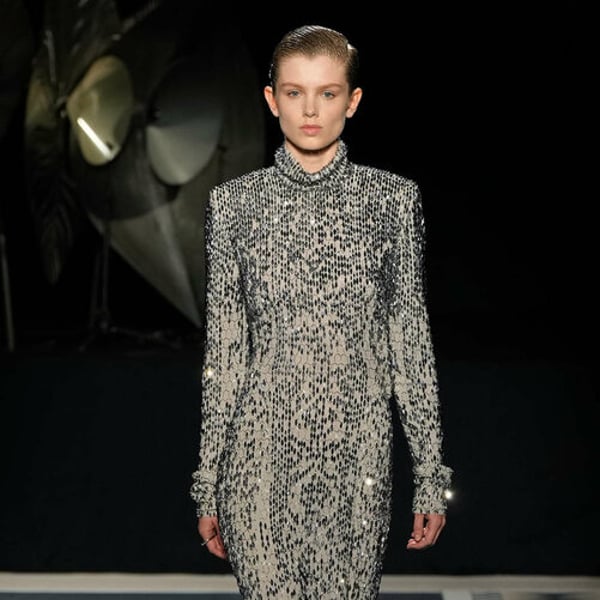
Lanvin sales slump in first half – ©Launchmetrics/spotlight

The downturn, according to Group management, reflects ongoing weakness in the global luxury market, compounded by “lower wholesale sales in the EMEA region” and the Group’s strategic pivot toward direct-to-consumer sales, which dropped 23%. Lanvin’s performance was a significant drag on the Group’s overall figures.

Once positioned as Lanvin Group’s strongest asset, the Paris-based label fell to third place in the portfolio within one year. Sales for the brand plummeted by 42.1%, sliding from €48.2 million in H1 2024 to €27.9 million by June 30, 2025. Regionally, Lanvin’s sales plunged by over 60% in Greater China and by 47% in Europe. The label’s gross profit dropped to €15.1 million, down from €28 million in the prior year, with a gross margin of 58%.

The Group described this period as “a time of transition,” noting that multi-brand retailers adopted a wait-and-see approach ahead of the debut of Lanvin’s new aesthetic. British designer Peter Copping, appointed as artistic director at the end of 2024, revealed his first collection for the house in January. Wholesale sales dropped by 61.8%. Still, Lanvin Group sees potential in early signs of retail recovery: “Lanvin and Sergio Rossi recorded a strong quarter-on-quarter rebound in retail and online, highlighting early signs of renewed consumer interest,” the company said.

Mixed results across other brands

Sergio Rossi, which also underwent a creative transition with the arrival of designer Paul Andrew—whose debut collection is expected in the second half of the year—saw first-half sales fall by 25% to €15.3 million. Gross margin slipped by 9% to €6.2 million, a shift attributed to a revised product assortment.

Sales at American luxury knitwear brand St. John remained relatively stable, falling just 0.8% to €39.6 million. Meanwhile, the Wolford brand reported €32.9 million in revenue, a 22.6% decline. Menswear specialist Caruso reported sales of €17.6 million, a 10.7% decrease.

Losses deepen as the Group looks ahead

Adjusted gross operating loss (Ebitda) for the Group rose from -€42 million in the first half of 2024 to -€52 million one year later. Gross margin dropped to 54%, down from 58%. According to the company, the decline was due to the sale of off-season inventory during the creative transition, underutilization of production facilities, and changes to product mixes. “Although all brands took steps to improve sales and manage inventory levels, these efforts were offset by the industry-wide headwinds encountered during the period,” the company said.

A focus on rebuilding brand momentum

“In the first half, we focused on operational discipline and laying the foundations for future growth,” said Lanvin Group Executive Chairman Andy Lew, who was appointed earlier this year. “With a new creative direction across our houses, supported by targeted marketing and refined channel strategies, we expect to build brand momentum and increase consumer engagement in the second half. We remain agile and focused on execution, while reinforcing the desirability of our brands and preparing for the recovery.”

This article is an automatic translation.
Click here to read the original article.

Copyright © 2025 FashionNetwork.com All rights reserved.


Source link

Continue Reading

Fashion

2026 trends: As fashion embraces sustainability, texture and statement pieces

Published

on


Published


January 20, 2026

After a 2025 marked by confirmed trends, Luxurynsight and Heuritech unveil their 2026 trend calendar, revealing a fashion landscape centred on sustainability, textures, volumes and statement pieces.

Last year, several signals stood out: suede, boat shoes and the colour cinnamon far exceeded expectations, as did the Euro summer theme, which propelled buttermilk yellow alongside gingham and oversized polka dots. These latter trends recorded growth of between +17% and +87%, confirming their rapid adoption and long-term potential, while the “city boy” aesthetic—with its vertical stripes, raw denim and cylindrical “duffle” bags—left its mark on urban menswear, signalling an appetite for versatile, functional silhouettes inspired by major global metropolises.

DR

For 2026, the calendar highlights month-by-month trends, each with its own growth forecast. January opened with fur detailing, turning fur into subtle accents on collars, hems and accessories, with visibility forecast to rise by +15% in the first quarter and over the next twelve months.

February spotlighted leather trousers, seen on red carpets and sports grounds, with growth forecast at +8% in the first quarter and +2% over the year, while animal prints and croc-embossed leather complement the masculine aesthetic.

March was dominated by raw denim, appearing in trousers, jackets and monochrome silhouettes, with growth of +11% in the first quarter and +9% over the year. In April, performance football trainers benefited from anticipation of the World Cup, with +12% forecast for the second quarter and +14% over twelve months, while pink trainers emerge as a distinct phenomenon at +19%.

May spotlighted loafers, reinterpreted in suede with playful details such as laces, forecast at +15% in the second quarter and +14% over the year, with suede continuing to gain ground across all categories of footwear. June saw the emergence of shades of green and yellow, “greenfinch” for men and “pickle green” for women, with growth of +15% and +7% respectively—versatile colours suited to sportswear and urban pieces—while tones such as aqua green are set to stand out.

July highlighted draping, celebrating volume, fluidity and sculptural forms across blouses, skirts and trousers, with +5% expected in the third quarter and +7% over the year, while draped tops and dresses reach +15% and +12%. August showcased irregular, tennis-inspired horizontal stripes, forecast at +10% in the third quarter and +5% over twelve months, creating a strong, modern motif.

DR

September introduced structured bags, with +10% visibility in the third quarter and +18% over the year, adopted particularly by consumers seeking a minimalist yet sculptural style. October spotlighted flat-lock stitching details, bringing a technical and graphic finish to silhouettes, forecast at +19% in the fourth quarter and +1% over twelve months.

November confirmed the rise of large polka dots, an oversized and photogenic print, expected to grow by +147% in the fourth quarter and +43% over the year, driven by links with contemporary art and visibility at events such as Art Basel Paris.

Finally, December saw the return of tartan, with +16% for men and +12% for women over the year, incorporating coordinating pieces and varied silhouettes from accessories to over shirts, confirming the relevance of reworked classics in a unisex and sustainable winter wardrobe.

The use of artificial intelligence and machine learning algorithms enabled this study to detect emerging signals and anticipate consumer behaviour. The combination of quantitative precision and qualitative expertise ensures actionable forecasts, offering brands a strategic guide to meeting the expectations of a demanding audience attuned to the stylistic coherence and sustainability of their fashion choices.

This article is an automatic translation.
Click here to read the original article.
Copyright © 2026 FashionNetwork.com All rights reserved.


Source link

Continue Reading

Fashion

Bloomingdale’s names Russ Patrick GMM of home

Published

on


Published


January 20, 2026

Bloomingdale’s has appointed Russ Patrick as its new general merchandise manager of home.

Bloomingdale’s names Russ Patrick GMM of home. – Bloomingdale’s

Patrick joins Bloomingdale’s after a 33-year career at Neiman Marcus, where he most recently served as senior vice president, general merchandise manager and head merchant of men’s, gifts, home and children’s. He departed the Dallas-based retailer in 2023, and has since acted as an industry consultant. 

“The strength of the team, the clarity of the vision and the opportunity ahead make Bloomingdale’s the destination,” Patrick said. “I’m energized to take on this next chapter as GMM of Home, contributing to the continued evolution of such an iconic company, and to do so in New York — the center of retail energy.”

In his new role, Patrick succeeds Dan Leppo, who transitioned last March to sister company Macy’s as senior vice president and general merchandise manager of men’s and kids’.

Copyright © 2026 FashionNetwork.com All rights reserved.


Source link

Continue Reading

Fashion

Diversity, equity and inclusion under strain across global retail sector: IADS

Published

on


Published


January 20, 2026

Long regarded as a core pillar of corporate strategy, DE&I (diversity, equity and inclusion) is now going through a turbulent period. Under intensifying political, economic and social pressures, it has reached a pivotal moment. The sixth White Paper from the International Association of Department Stores (IADS) examines whether inclusion remains a fundamental priority or risks being pushed into the background.

Inclusion in the United States is under strain amid pressure from the presidential administration – Shutterstock

The 2025 edition looks at DE&I at a time when commitments are being put to the test. The year 2024 saw heightened scrutiny of inclusion programmes. In January 2025, the signing of a controversial US presidential executive order entitled “Ending Radical and Costly Government Diversity, Equity and Inclusion Programs and Preferences” prompted immediate reactions from major North American companies fearing legal reprisals, according to IADS.

The myth that inclusion penalises businesses

The 2025 report draws on a set of concrete observations from an analysis of the practices of leading retailers worldwide. It highlights four dimensions in which DE&I, when embedded in day-to-day operations, serves as a measurable driver of performance. Firstly, organisations with diverse leadership teams report stronger decision-making and greater strategic agility.

Secondly, companies that value inclusion see improved employee retention, thereby reducing turnover costs in a historically volatile sector. Thirdly, inclusion fosters more effective communication within teams, which reduces operational errors and strengthens cohesion.

DE&I is a legacy of civil rights struggles

Finally, retailers note that some of the most relevant ideas come directly from frontline teams who, thanks to their diverse experiences, contribute significantly to innovation and to adapting to varied customer expectations. These findings show that DE&I is not only an ethical value, but also a concrete driver of organisational effectiveness.

Despite conservative rhetoric, inclusion and diversity are an asset for companies, says IADS
Despite conservative rhetoric, inclusion and diversity are an asset for companies, says IADS – Shutterstock

The report also notes that DE&I forms part of a longer legacy, rooted in the civil rights movement and in the historic demands of retail frontline teams for fair treatment and safer working conditions. However, contemporary expectations, often unclear or poorly defined, have given rise to what some stakeholders describe as “DE&I fatigue”, fuelled by doubts about the sincerity of commitments rather than by clear strategic thinking.

Inclusion, between intention and ‘strategic advantage’

The White Paper further points out that DE&I cannot be one-size-fits-all: priorities vary by region — from gender parity, ethnicity and disability to socio-economic background and national integration — and expectations regarding language and transparency differ considerably. For international groups, tailoring local approaches while upholding universal principles of equity is a major operational challenge.

Finally, IADS sets out the conditions that enable inclusion to take root for the long term: listening to employees, setting clear behavioural expectations, fostering collaboration between stores and headquarters, and ensuring fairness in recruitment and development processes. Beyond intention, these capabilities help retailers turn DE&I into a tangible strategic advantage, strengthening resilience, engagement and relevance in a constantly evolving environment.

Founded in 1928, IADS coordinates exchanges between department stores worldwide and publishes an annual White Paper on a key industry issue. Previous publications have focused on the Covid-19 pandemic, digital transformation, sustainability, retail media and the role of middle management.

This article is an automatic translation.

Copyright © 2026 FashionNetwork.com All rights reserved.


Source link

Continue Reading

Trending

Copyright © Miami Select.