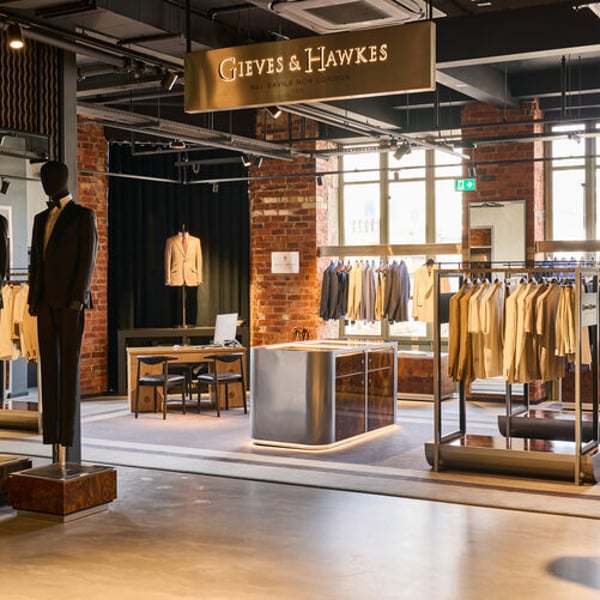
News of big behind-the-scenes boardroom activity at Frasers Group with the appointment of a new chairman from Monday (1 September), a new key board appointment and the departure of three non-execs ahead of its upcoming AGM. And for good measure, there are remuneration issues for its chief executive.
First, its long-standing chairman David Daly will be stepping down at the company’s AGM on 24 September after eight years in the role. He is succeeded immediately by board member Sir Jon Thompson who takes up the post on Monday (1 September).
Sir Jon’s appointment “marks an important step in supporting Frasers Group’s long-term strategy as it continues to strengthen its position as a global business”, the group said in its stock market announcement.
Thompson joined the board in June 2024 as a non-executive director, bringing with him extensive experience in corporate governance and major project management.
Meanwhile, Andy Lyon is expected to be appointed as a non-executive director. He’s a former partner at PwC and his deep expertise includes acting as audit partner for Next and its credit business.
Frasers, meanwhile, is also looking for two further non-execs as David Daly, Ger Wright and Helen Wright aren’t seeking re-election at the AGM.
CEO Michael Murray, said of the changes: “I would like to thank David for his outstanding leadership, guidance, and the wealth of expertise he brought to the board, which has been instrumental in helping us deliver on our Elevation Strategy.
“I’m equally delighted to announce our proposed new appointment with Andy, as well as Jon’s confirmed appointment to chair, as we enter the next phase of our strategy. Jon’s deep experience in corporate governance and strategic leadership will be invaluable as we continue to grow as a leading global retail business.”
Meanwhile, Murray is expected to miss personal performance targets linked to the share price that would have secured a £100 million bonus this year, according to reports. However, the fast-expanding retail group has proposed a new remuneration scheme for its CEO. The deal includes a new five-year bonus scheme with a lowered share price target — from £15 to £12.
Murray, who’s been group CEO since 2022, is understood to have waived his salary for three years in a row in order to focus on meeting targets for the potential £100 million award. The current bonus is conditional on the group achieving a pre-tax profit of at least £500 million and a £15 share price for 30 consecutive dealing days.
The two conditions must be met before October for Murray to receive the payout under the current scheme. While the group has met the earnings goal, the share price is only trading at about £6.80.
Of the decision to amend the target for the next five years, Frasers said: “The committee views this as an appropriate share price target for all executive share scheme awards (including those for the chief executive) in the current macroeconomic and political environment which is challenging for all businesses in the UK and also internationally.”
A host of celebrities and high-end brands have donating goods to ensure Savile Row’s latest annual ‘Pop-Up Crisis’ store will continue to support the Crisis charity event that has so far raised over £650,000 since 2018.
Image: Crisis charity
Across 8-13 December, the pop-up store at 18-19 Savile Row in London’s Mayfair will sell a curated selection of designer clothing, past stock and samples from luxury brands.
Celebs donating goods include Rosie Huntington-Whiteley, Naomie Harris, David Gandy, Jarvis Cocker, Louis Partridge, Jamie Redknapp and Emma Corrin, among others, for a week-long event and raffle with all proceeds going to help end homelessness across Britain.
Hosted by landlord The Pollen Estate, the temporary shop is also selling designer goods donated by Savile Row tailors including Mr Porter, Wales Bonner, Crockett & Jones and many other luxury brands from Barbour, Tod’s to Manolo Blahnik and Watches of Switzerland Group.
This year, celebrity model and fashion entrepreneur David Gandy will also be curating an exclusive online edit on shopfromcrisis.com, including donations from his own wardrobe as well as items from friends including Redknapp’s brand Sandbanks, Hackett and Aspinal of London.
Gandy said: “Having supported Crisis for a number of years, I’m delighted to have had the opportunity to curate my own online edit this year with the help of some of my close friends. It means a lot to know that donations from my own wardrobe are going towards such an important cause. Whether you’re looking for the perfect Christmas gift or to treat yourself, your purchase can help make a real difference to people facing homelessness this Christmas.”
Liz Choonara, executive director of Commerce and Enterprise at Crisis, added: “Pop-Up Crisis is such an iconic event in the Crisis calendar and one that we look forward to every year. We’re thrilled to be partnering with the team once again for another week celebrating the iconic craftsmanship and style of Savile Row – with all proceeds going towards our crucial work to end homelessness.”
Specialist outdoor clothing producer Dryrobe has won a trademark case against a smaller label. The win for the business, which produces waterproof towel-lined robes used by cold water swimmers, means the offending rival must now stop selling items under the D-Robe brand within a week.
Image: Dryrobe
A judge at the high court in London ruled the company was guilty of passing off its D-Robe changing robes and other goods as Dryrobe products and knew it was infringing its bigger rival’s trademark reports, The Guardian newspaper.
The company said it has rigorously defended its brand against being used generically by publications and makers of similar clothing and is expected to seek compensation from D-Robe’s owners for trademark infringement.
Dryrobe was created by the former financier Gideon Bright as an outdoor changing robe for surfers in 2010 and became the signature brand of the wild swimming craze.
Sales increased from £1.3 million in 2017 to £20.3 million in 2021 and it made profits of £8 million. However, by 2023 sales had fallen back to £18 million as the passion for outdoor sports waned and the brand faced more competition.
Bright told the newspaper the legal win was a “great result” for Dryrobe as there were “quite a lot of copycat products and [the owners] immediately try to refer to them using our brand name”.
He said the company was now expanding overseas and moving into a broader range of products, adding that sales were similar to 2023 as “a lot of competition has come in”.
On Friday, France demanded a series of measures from Shein to demonstrate that the products sold on its website comply with the law, but dropped its initial request for a total three-month suspension of the online platform, which had been based on the sale of child-like sex dolls and prohibited weapons.
Shutterstock
At a hearing before the Paris court, a lawyer representing the state said that Shein must implement controls on its website, including age verification and filtering, to ensure that minors cannot access pornographic content. The state asked the court to impose a suspension of Shein’s marketplace until Shein has provided proof to Arcom, the French communications regulator, that these controls have been implemented.
Shein deactivated its marketplace- where third-party sellers offer their products- in France on November 5, after authorities discovered illegal items for sale, but its site selling Shein-branded clothing remains accessible. The state invoked Article 6.3 of France’s Digital Economy Act, which empowers judges to order measures to prevent or halt harm caused by online content.
“We don’t claim to be here to replace the European Commission,” the state’s lawyer said. “We are not here today to regulate; we are here to prevent harm, in the face of things that are unacceptable.” At the time of writing, the hearing is still ongoing.
In a statement issued last week, the Paris public prosecutor’s office said that a three-month suspension could be deemed “disproportionate” in light of European Court of Human Rights case law if Shein could prove that it had ceased all sales of illegal products. However, the public prosecutor’s office said it “fully supported” the government’s request that Shein provide evidence of the measures taken to stop such sales.
France’s decision comes against a backdrop of heightened scrutiny of Chinese giants such as Shein and Temu under the EU’s Digital Services Act, reflecting concerns about consumer safety, the sale of illegal products, and unfair competition. In the US, Texas Attorney General Ken Paxton said on Monday that he was investigating Shein to determine whether the fast-fashion retailer had violated state law relating to unethical labour practices and the sale of dangerous consumer products.
This article is an automatic translation. Click here to read the original article.