Connect with us

Politics

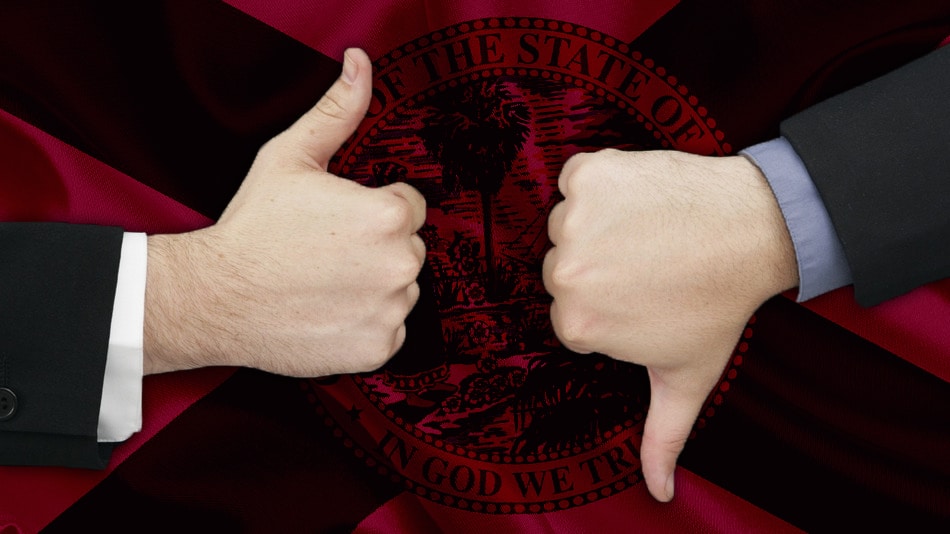
Winner and Loser of the Week in Florida politics — Week of 8.24.25
Published

on


Labor Day signals the unofficial end of Summer — and the start of a political season already heating up in Florida.

With the state’s 2026 Primary now less than a year away, the outlines of some key races are starting to come into focus.

In Southwest Florida, the path is clearing for Rep. James Buchanan in the open Senate District 22 contest. Rep. Fiona McFarland, once floated as a possible contender, announced she’ll instead seek re-election to the House and endorsed Buchanan for the Senate seat. That gives Buchanan momentum heading into a Primary that will likely decide the successor to now-Republican National Committee Chair Joe Gruters.

Meanwhile, in Palm Beach County, the pending HD 87 Special Election is shaping up into an early intraparty fight. Meg Weinberger, a prominent ally of President Donald Trump, endorsed Republican businessman Jon Maples to succeed Mike Caruso after Gov. Ron DeSantis appointed Caruso as Palm Beach County Clerk.

That’s notable, as Caruso’s wife, Tracy Caruso, had already filed to succeed him in 2026 and will likely swap over to the Special Election as well once it’s scheduled. Caruso is a noted DeSantis ally, meaning it appears we’ll get a proxy war between Team Trump and Team DeSantis here, even as both camps try to play nice in public.

Yes, far more Floridians are focused on the start of football season than Primary positioning (and rightfully so). But the 2026 cycle is officially upon us.

Now, it’s onto our weekly game of winners and losers.

Winners

Honorable mention: Kindred Lubeck. A Florida State University graduate found her name splashed across global headlines thanks to perhaps the biggest celebrity engagement story of this century.

Lubeck, a 2018 FSU graduate is suddenly in the spotlight after it was revealed that she designed the engagement ring Travis Kelce gave to Taylor Swift, a proposal that immediately captured attention around the world.

Lubeck, a Neptune Beach native, earned her degree in psychology at Florida State before pursuing a different passion: jewelry design. Her father made a career as a goldsmith. So after college, Lubeck began working with her father to learn the ropes.

She built on that crash course to launch her own company, Artifex Fine Jewelry, in New York in 2024. Until now, her work was largely known within design circles and among clients seeking one-of-a-kind pieces, though she had some viral success on social media.

But that success blew up when her name was linked to Swift’s engagement.

For FSU, it’s another alum making waves in an unexpected arena. For Lubeck, it allows a relatively young designer with Florida roots to field global attention, with her brand introduced to millions of Swifties who now are potential customers.

It’s a breakthrough moment for a Florida-born talent.

Almost (but not quite) the biggest winner: Adam Botana. Rep. Botana just proved that politics can have a playful side, and he went massively viral doing it.

Botana has a side hustle with “Cinnamon Rolls by Omar,” a business owned by his family and named after his father.

In Michigan for the Summer at the Midland County Fair, Botana was making some of his family’s famous giant cinnamon rolls as a child watched through a window. An Instagram reel shows Botana spreading sugar for a bit before playfully tossing it right at the child’s face — protected by the window’s glass, of course. The kid flinched, his parents laughed, and the internet ate it up.

As in, to the tune of more than 7.4 million likes and counting.

Florida is a state where lawmakers are often in the headlines for bitter fights, especially during this past Session which saw plenty of Republican-on-Republican attacks in addition to the standard interparty scuffles. Botana served up something lighter — showing he can sprinkle in humor as he represents Southwest Florida.

It may not change the course of next year’s Session, but the reel gave him a sugar rush of attention, and reminded voters that sometimes the best politics come with a little frosting on top.

The biggest winner: University of Florida. It was a strong week in Gainesville on two fronts, with the school making progress regarding both its reputation and leadership.

UF earned national recognition, with Forbes ranking UF the No. 5 public university in the country and placing it No. 30 overall on its list of America’s Top Colleges. The ranking highlighted UF’s value, student outcomes and return on investment, affirming its status as one of the top-performing schools in the nation.

That momentum carried into the administrative arena. After months of turmoil following the collapse of UF’s last presidential search — when the State University System Board of Governors shot down Michigan’s Santa Ono — the school finally landed on a steady hand.

UF Trustees tapped Donald Landry, a physician-scientist from Columbia University and President of the American Academy of Arts and Sciences, as interim President. Landry’s appointment, pending Board of Governors approval, was broadly welcomed as a pragmatic choice that restores stability.

The news shows UF is working to shore up leadership credibility while still maintaining its status as one of the best-performing universities in the nation.

And with football season around the corner, optimism isn’t confined to the classroom, with Gators fans hoping Billy Napier’s team can turn a corner and compete for a title.

Losers

Dishonorable mention: Florida Memorial University. Another Florida university didn’t fare so well this week, however.

A bitter leadership battle is looming over FMU after the university’s Board of Trustees named William McCormick Jr., its interim President and an alumnus, as permanent President.

Hours later, seven Trustees and the alumni association President slammed the move as a “coup,” calling it “illegal” and a “painful and shameful moment” for the institution. Interim Board Chair Brandon Dumas argued that only he or an authorized representative can call meetings, adding that the McCormick decision was a violation of the university. Dumas has sued to invalidate the vote.

In response, Walter Weatherington, who resumed the Chair role on Aug. 10, defended McCormick’s appointment as legitimate, emphasizing a third-party evaluation and a majority Board vote. He called Dumas’ continued resistance “unfortunate” and insisted that Dumas had rightly been removed for violations.

It remains to be seen how the legal fight will play out and who will ultimately come out on top here. But the fight has already left FMU with dueling Chairs, a President whose legitimacy is in dispute and Trustees openly at war.

Instead of celebrating new leadership, the university is stuck in a courtroom drama that raises doubts about its governance and stability. For students, faculty and alumni, it’s an unsettling look for an institution just starting its Fall term.

Almost (but not quite) the biggest loser: Visit Orlando. For an agency that markets Central Florida as a premier destination, Visit Orlando is now facing the kind of bad press no amount of glossy ads can fix.

Orange County officials say Visit Orlando may have misappropriated as much as $20 million in tourist development tax revenues dating back to 2019 by improperly mixing public hotel-tax dollars with private funds.

County Commissioner Mayra Uribe didn’t mince words. “It’s $20 million, and it shouldn’t be taken lightly,” she said, pointing out that those dollars could have gone to programs the region needs.

Other Commissioners objected to what they saw as extravagant spending, including more than $100,000 on lobbyists and $28,000 on a legislative event in Tallahassee — expenses they argue should never have come from restricted funds.

Orange County Comptroller Phil Diamond warned that Visit Orlando’s practices risk legal liability and urged the agency to refund misclassified funds while tightening oversight. CEO Casandra Matej defended the group, insisting that they cooperated fully with auditors and have already resolved many complaints.

A reminder that this all comes just a few months after lawmakers took direct aim at local tourism promotion agencies and tourist development councils. That massive upheaval sputtered out this Session, but there’s no telling what the Legislature will do as preliminary meetings for the 2026 Session begin in just over a month. And if this criticism bears out, it’s going to give skeptics in Tallahassee all the ammo they need.

The biggest loser: Alligator Alcatraz. Florida’s high-stakes immigration gambit is unraveling — fast.

Alligator Alcatraz appears to be crumbling under the weight of lawsuits. Instead of standing as the shining example of Trump and DeSantis’ hard-line immigration policy, the facility is quickly becoming synonymous with detainee suffering, environmental harms and taxpayers getting gouged.

Last week, a federal Judge ordered the site to wind down, citing failures to complete required environmental reviews before building in protected wetlands. The state’s attempt to delay that ruling failed this week, with the Judge declining to pause her order that new detainees are barred from entering and infrastructure like fencing and generators must be removed.

Meanwhile, a leaked memo from Division of Emergency Management Executive Director Kevin Guthrie said the site could reach zero detainees within days, as the order ties the hands of the federal government. The Trump administration, for its part, has pushed back against the idea that they’ll go down without a fight in court.

Florida taxpayers are also facing a massive bill. The state has already sunk more than $400 million into contracts, with final losses estimated at $218 million, considering shutdown and potential restart cost.

What was once billed as a bold symbol of Florida’s hard-line immigration stance now looks more like a boondoggle. Alligator Alcatraz was supposed to project strength. Today it projects failure.


Post Views: 0


Source link

Continue Reading

Politics

Debra Tendrich turns ‘pain into policy’ with sweeping anti-domestic violence proposal

Published

on


Florida could soon rewrite how it responds to domestic violence.

Lake Worth Democratic Rep. Debra Tendrich has filed HB 277, a sweeping proposal aimed at modernizing the state’s domestic violence laws with major reforms to prevention, first responder training, court safeguards, diversion programs and victim safety.

It’s a deeply personal issue to Tendrich, who moved to Florida in 2012 to escape what she has described as a “domestic violence situation,” with only her daughter and a suitcase.

“As a survivor myself, HB 277 is more than legislation; it is my way of turning pain into policy,” she said in a statement, adding that months of roundtables with survivors and first responders “shaped this bill from start to finish.”

Tendrich said that, if passed, HB 277 or its upper-chamber analogue (SB 682) by Miami Republican Sen. Alexis Calatayud would become Florida’s most comprehensive domestic violence initiative, covering prevention, early intervention, criminal accountability and survivor support.

It would require mandatory strangulation and domestic violence training for emergency medical technicians and paramedics, modernize the legal definition of domestic violence, expand the courts’ authority to order GPS monitoring and strengthen body camera requirements during investigations.

The bill also creates a treatment-based diversion pathway for first-time offenders who plead guilty and complete a batterers intervention program, mental-health services and weekly court-monitored progress reporting. Upon successful completion, charges could be dismissed, a measure Tendrich says will reduce recidivism while maintaining accountability.

On the victim-safety side, HB 277 would flag addresses for 12 months after a domestic-violence 911 call to give responders real-time risk awareness. It would also expand access to text-to-911, require pamphlets detailing the medical dangers of strangulation, authorize well-check visits tied to lethality assessments, enhance penalties for repeat offenders and include pets and service animals in injunctions to prevent coercive control and harm.

Calatayud called it “a tremendous honor and privilege” to work with Tendrich on advancing policy changes “that both law enforcement and survivors of domestic abuse or relationship violence believe are meaningful to protect families across our communities.”

“I’m deeply committed to championing these essential reforms,” she added, saying they would make “a life-or-death difference for women and children in Florida.”

Organizations supporting HB 277 say the bill reflects long-needed, practical reform. Palm Beach County firefighters union IAFF Local 2928 said expanded responder training and improved dispatch information “is exactly the kind of frontline-focused reform that saves lives.”

The Florida Police Benevolent Association called HB 277 a “comprehensive set of measures designed to enhance protections” and pledged to help advance it through the Legislature.

The Animal Legal Defense Fund praised provisions protecting pets in domestic violence cases, noting research showing that 89% of women with pets in abusive relationships have had partners threaten or harm their animals — a major barrier that keeps victims from fleeing.

Florida continues to see high levels of domestic violence. The National Coalition Against Domestic Violence estimates that 38% of Florida women and 29% of Florida men experience intimate-partner violence in their lifetimes — among the highest rates in the country.

With costs rising statewide, HB 277 also increases relocation assistance through the Crimes Compensation Trust Fund, which advocates say is essential because the current $1,500 cap no longer covers basic expenses for victims fleeing dangerous situations.

Tendrich said survivors who contributed to the bill, which Placida Republican Rep. Danny Nix is co-sponsoring, “finally feel seen.”

“This bill will save lives,” she said. “I am proud that this bill has bipartisan support, and I am even more proud of the survivors whose bravery drives every line of this legislation.”


Source link

Continue Reading

Politics

Ash Marwah, Ralph Massullo battle for SD 11 Special Election

Published

on


Even Ash Marwah knows the odds do him no favors.

A Senate district that leans heavily Republican plus a Special Election just weeks before Christmas — Marwah acknowledges it adds up to a likely Tuesday victory for Ralph Massullo.

The Senate District 11 Special Election is Tuesday to fill the void created when Blaise Ingoglia became Chief Financial Officer.

It pits Republican Massullo, a dermatologist and Republican former four-term House member from Lecanto, against Democrat Marwah, a civil engineer from The Villages.

Early voter turnout was light, as would be expected in a low-key standalone Special Election: At 10% or under for Hernando and Pasco counties, 19% in Sumter and 15% in Citrus.

Massullo has eyed this Senate seat since 2022 when he originally planned to leave the House after six years for the SD 11 run. His campaign ended prematurely when Gov. Ron DeSantis backed Ingoglia, leaving Massullo with a final two years in office before term limits ended his House career.

When the SD 11 seat opened up with Ingoglia’s CFO appointment, Massullo jumped in and a host of big-name endorsements followed, including from DeSantis, Ingoglia, Agriculture Commissioner Wilton Simpson, U.S. Sens. Ashley Moody and Rick Scott, four GOP Congressmen, county Sheriffs in the district, and the Florida Chamber of Commerce.

The Florida LGBTQ+ Democratic Caucus is endorsing Marwah.

Marwah ran for HD 52 in 2024, garnering just 24% of the vote against Republican John Temple

Massullo has raised $249,950 to Marwah’s $12,125. Massullo’s $108,000 in spending includes consulting, events and mail pieces. One of those mail pieces reminded voters there’s an election.

The two opponents had few opportunities for head-to-head debate. The League of Women Voters of Citrus County conducted a SD 11 forum on Zoom in late October, when the two candidates clashed over the state’s direction.

Marwah said DeSantis and Republicans are “playing games” in their attempts to redraw congressional district boundaries.

“No need to go through this expense,” he said. “It will really ruin decades of progress in civil rights. We should honor the rule of law that we agreed on that it’ll be done every 10 years. I’m not sure why the game is being played at this point.”

Massullo said congressional districts should reflect population shifts.

“The people of our state deserve to be adequately represented based on population,” he said. “I personally do not believe we should use race as a means to justify particular areas. I’m one that believes we should be blind to race, blind to creed, blind to sex, in everything that we do, particularly looking at population.”

Senate District 11 covers all of Citrus, Hernando and Sumter counties, plus a portion of northern Pasco County. It is safely Republican — Ingoglia won 69% of the vote there in November, and Donald Trump carried the district by the same margin in 2024.


Source link

Continue Reading

Politics

Miles Davis tapped to lead School Board organizing workshop at national LGBTQ conference

Published

on


Miles Davis is taking his Florida-focused organizing playbook to the national stage.

Davis, Policy Director at PRISM Florida and Director of Advocacy and Communications at SAVE, has been selected to present a workshop at the 2026 Creating Change Conference, the largest annual LGBTQ advocacy and movement-building convention.

It’s a major nod to his rising role in Florida’s LGBTQ policy landscape.

The National LGBTQ Task Force, which organizes the conference, announced that Davis will present his session, “School Board Organizing 101.” His proposal rose to the top of more than 550 submissions competing for roughly 140 slots, a press note said, making this year’s conference one of the most competitive program cycles in the event’s history.

His workshop will be scheduled during the Jan. 21-24 gathering in Washington, D.C.

Davis said his selection caps a strong year for PRISM Florida, where he helped shepherd the organization’s first-ever bill (HB 331) into the Legislature. The measure, sponsored by Tampa Democratic Rep. Dianne Hart, would restore local oversight over reproductive health and HIV/AIDS instruction, undoing changes enacted under a 2023 expansion to Florida’s “Parental Rights in Education” law, dubbed “Don’t Say Gay” by critics.

Davis’ workshop draws directly from that work and aims to train LGBTQ youth, families and advocates in how local boards operate, how public comment can shape decisions and how communities can mobilize around issues like book access, inclusive classrooms and student safety.

“School boards are where the real battles over student safety, book access, and inclusive classrooms are happening,” Davis said. “I’m honored to bring this training to Creating Change and help our community build the skills to show up, speak out, and win — especially as PRISM advances legislation like HB 331 that returns power to our local communities.”

Davis’ profile has grown in recent years, during which he jumped from working on the campaigns and legislative teams of lawmakers like Hart and Miami Gardens Democratic Sen. Shevrin Jones to working in key roles for organizations like America Votes, PRISM and SAVE.

The National LGBTQ Task Force, founded in 1973, is one of the nation’s oldest LGBTQ advocacy organizations. It focuses on advancing civil rights through federal policy work, grassroots engagement and leadership development.

Its Creating Change Conference draws thousands for four days of training and strategy-building yearly, a press note said.


Source link

Continue Reading

Trending

Copyright © Miami Select.