
Politics
Plans for new Tampa Bay ferry service motor ahead

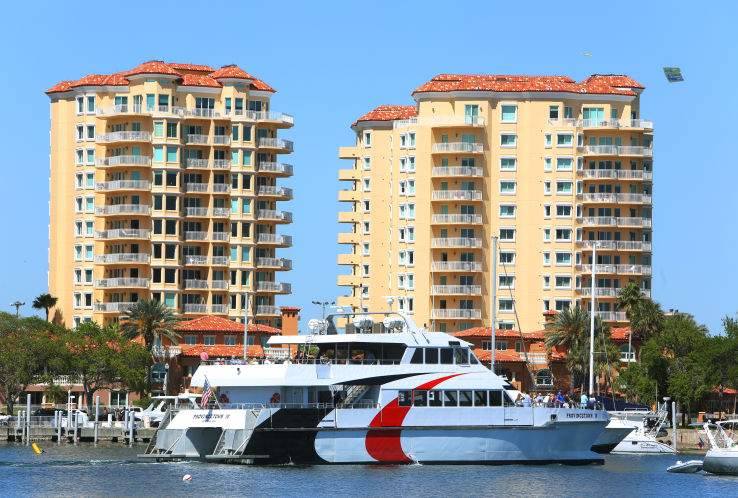
The search for an operator to ferry passengers between St. Petersburg and Tampa is anchors aweigh, and a new, more frequent service will relaunch in about a year.
The Pinellas Suncoast Transit Authority (PSTA) released a request for proposals Aug. 5 for an experienced partner to operate and manage the Tampa Bay ferry. Darden Rice, chief planning and community affairs officer, said the agency has received “very strong interest.”
Interested businesses have until Aug. 28 to submit proposals. The competitive procurement process immediately followed federal approval of a $4.8 million grant transfer between the Hillsborough Area Regional Transit Authority (HART) and PSTA.
“We’re not just bringing back the Cross Bay Ferry,” Rice told the Catalyst. “We’re bringing back a much better, reliable, year-round service that Tampa Bay people really want and deserve.
“There’s a new way to get across the bay.”
The Cross Bay Ferry began offering seasonal waterborne transportation between downtown Tampa and St. Petersburg in 2016. Boston-based HMS Ferries operated the service.
Hillsborough County terminated its operating agreement with the company in April, after HMS announced plans to replace its catamaran-style vessel with one that cruises at about half the speed. Local governments officially scuttled the ferry May 1, amid its much-anticipated first year of continuous service.
HART received the federal grant, which was nearing its sunset date, in 2021. PSTA will oversee a new Tampa Bay ferry, and hopes to purchase two high-speed vessels with the money.
“The real advantage here, and what’s different about this, is that PSTA will own the boats,” Rice said. “That is what gives us the opportunity to pass on the savings to the City of St. Petersburg and the City of Tampa, who are funding partners.”
Rice believes those savings “could be passed on to our riders, as well.” In May, CEO Brad Miller stated that leasing the ferries would generate $1 million annually, and PSTA could use the revenue to bolster its bus system.

He also noted that PSTA secured a state funding match that will save the regional partners $1.2 million. The agency will not subsidize the service.
The operational cost for the Cross Bay Ferry was $615 per hour for 2,763 service hours. According to initial estimates, the price tag for a new service with two vessels is $250 hourly for 5,482 hours.
Rice said the $4.8 million would only cover one new vessel. PSTA is also “open to looking at lightly-used” ferries, and an operator could “come to the table with a proposal to use their own boat.”
The selected applicant will help inform those decisions, and Rice said “everything is negotiable at this point.” PSTA has received “really strong interest from everyone – from very reputable local ferry operators to some of the bigger national companies.”
A combination of experience, business strategy and cost will determine the winner. PSTA’s governing board must subsequently approve a five-year contract with a five-year extension option.
“We’ve been happy with the people who have reached out and shown interest so far,” Rice said. “We’re anticipating a healthy number of responses.”
PSTA will not reuse the Cross Bay’s moniker. Rice called the previous service a seasonal experiment and said it is a “whole new day” for waterborne transit in Tampa Bay.
The goal is to launch a ferry that “people can count on” for daily commutes to work, school or events. Rice believes offering trips later in the evening will also promote tourism.
“We’re also integrating our ferry with our bus and mobility services,” she added. “I think this is about giving our region a new, sustainable transportation option that takes cars off of bridges, eases congestion and creates a memorable experience to get across the water.”
Rice noted that Tampa Bay is one of the few coastal, urban areas without a robust transit system. The new ferry service could eventually connect to Clearwater, Manatee County and other coastal communities.
In May 20224, Pinellas County’s planning agency, Forward Pinellas, and the St. Petersburg Area Chamber of Commerce enlisted a national consultant to complete a market feasibility. Connecting the entire Tampa Bay region via ferry service, Rice said, “is truly the hope. The identity of our region is tied to that body of water.”
__________
Republished with permission from The St. Pete Catalyst.
Post Views: 0
Politics
Gov. DeSantis proposes handing all USF Sarasota-Manatee facilities to New College of Florida
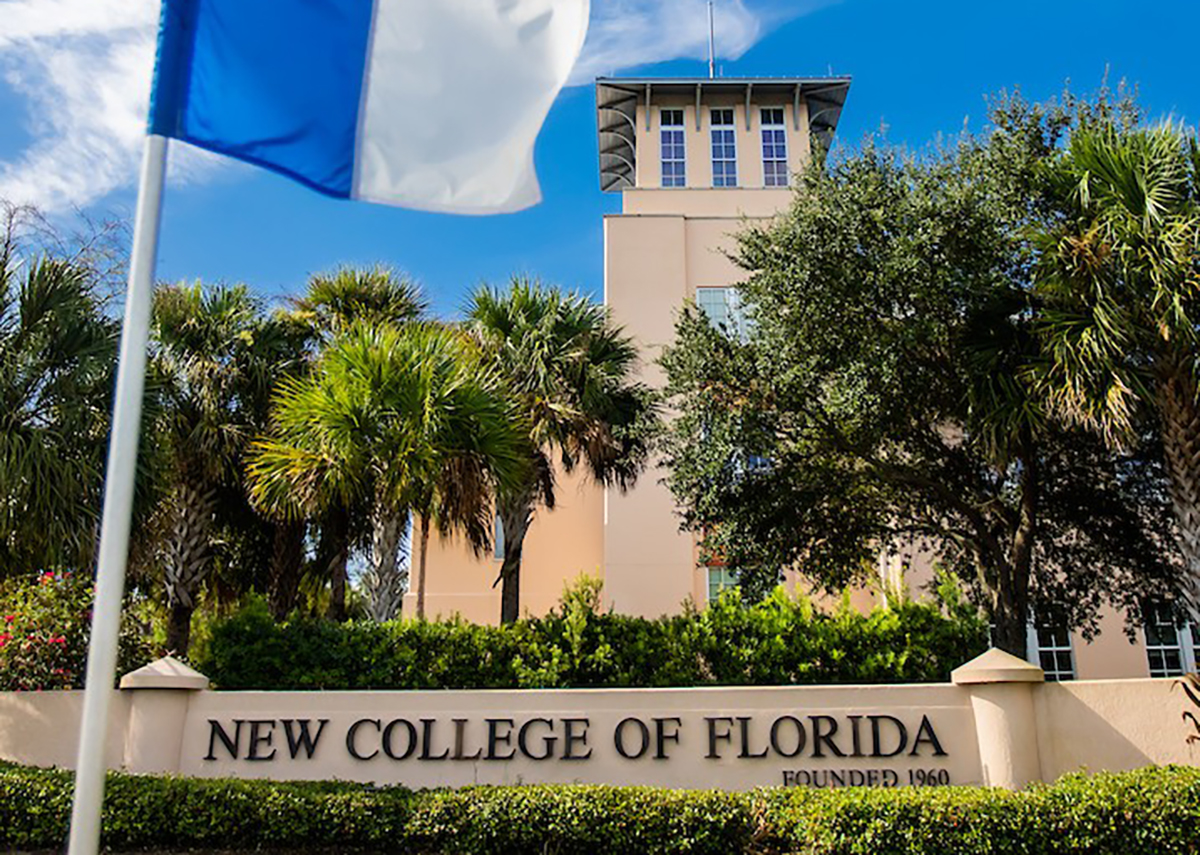
Gov. Ron DeSantis is supporting a plan that boots the University of South Florida from its Sarasota-Manatee campus and shifts every building, dorm and facility to New College of Florida, which would mark a dramatic reshaping of Sarasota’s higher education landscape.
The measure, pitched as part of the Governor’s 2026-27 budget proposal, would create a new section of Florida law directing the two institutions to shift all real property, buildings, leaseholds and related liabilities associated with the Sarasota-Manatee campus from USF to New College.
The conforming bill specifies that no students, employees, fund balances, research contracts or grants would be part of the transfer, which applies only to real estate, fixed capital facilities, certain furnishings and any outstanding debts tied to those facilities. It would also guarantee that current USF Sarasota-Manatee students can continue finishing their degrees for up to four more years.
If approved, New College would be required to assume full legal and financial liability for the campus’s outstanding facility debt no later than Oct. 30, 2026. Until that assumption is complete, New College would make monthly payments of $166,617 to USF to cover the debt service. Failure by New College to make those payments would void the transfer and return the facilities to USF.
The real property transfer would need to be completed by July 1, 2026, with specific assets and liabilities identified in a joint agreement approved by both schools’ Boards of Trustees and submitted to the Board of Governors.
The bill includes guiding principles for determining what moves to New College and what remains with USF. Permanently affixed buildings and general classroom furnishings would transfer, while movable equipment, intellectual property, computers assigned to USF personnel, fund balances and items of historical significance to USF would remain with USF.
The bill also requires that existing residential contracts on the Sarasota-Manatee campus be honored by New College through at least Aug. 15, 2027. If the two universities disagree on any aspect of the transfer, the Board of Governors must resolve outstanding issues by Sept. 30, 2026.
The measure includes teach-out protections for USF students who enrolled before the bill takes effect. Those students must receive priority access to classroom and support space in the transferred facilities for up to four academic years to allow them to complete their degrees locally. New College would be required to make that space available to USF free of charge. USF would also be barred from assigning newly admitted students to the Sarasota-Manatee campus as their home campus going forward.
The bill provides civil immunity to both institutions, and their Trustees and employees, for actions taken to comply with the act.
Representatives from New College of Florida and University of South Florida Sarasota-Manatee did not immediately return requests for comment.

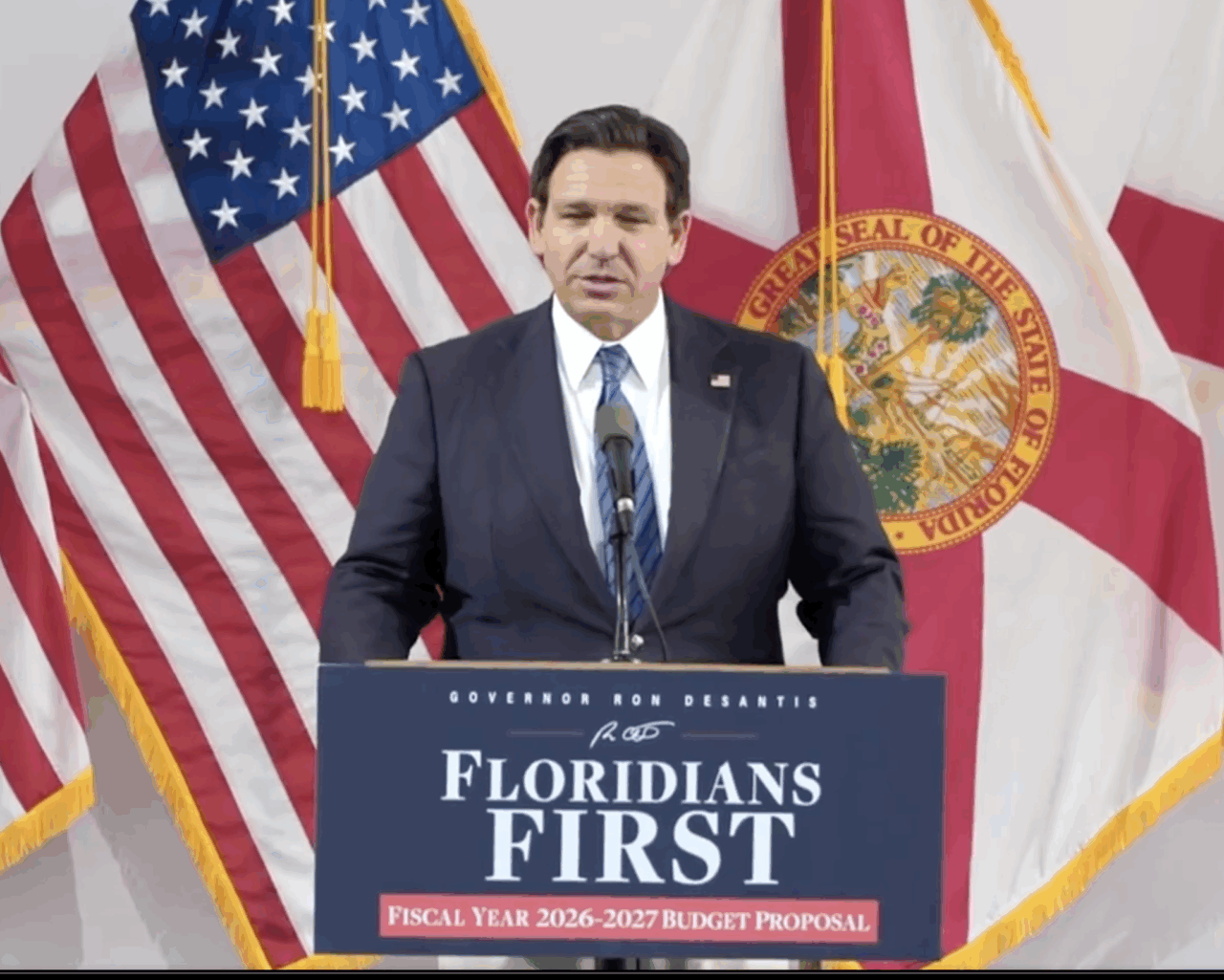
Gov. Ron DeSantis is looking to prioritize road construction projects and beef up infrastructure in his 2026-27 budget proposal.
DeSantis is calling for $15.4 billion for the Florida Department of Transportation (FDOT) in addition to $14.3 billion for the State Transportation Work Program, which handles construction and maintenance of Florida’s roads, bridges, rails, seaports and other public transportation systems.
Speaking at a budget press conference in Orlando, DeSantis said his proposal provides “major support for infrastructure and transportation.”
“Over $14 billion for our state work program — that more than funds everything we need to do,” DeSantis said as he unveiled a $117 billion proposed spending plan ahead of the upcoming Legislative Session.
The fully released budget plan gives more detail on how DeSantis wants to carry out his priorities.
The Governor wants to allocate $4.9 billion for highway construction and maintenance. That entails constructing 181 new lane miles, $1.4 billion for resurfacing 2,622 lane miles, about $873 million for repairing 38 bridges and replacing 21 others. In addition, DeSantis wants to allocate about $204 million for community trail projects.
DeSantis is also pushing for investments to be made at the state’s airports and seaports.
Under DeSantis’ plan, aviation improvements would get nearly $389 million and seaports could receive nearly $156 million for infrastructure upgrades.
“I don’t think you’re going to find another state that’s doing more meaningful things on transportation” and other issues while also maintaining a “stable budget,” DeSantis said at his budget press conference.
The state’s growing space industry would also benefit from DeSantis’ budget proposal which allocates $93 million through the FDOT Spaceport Improvement Program and $10 million for the Aerospace Investment Fund to help recruit companies to the state.

“As Florida’s space industry continues to reach new heights, infrastructure needs along the Space Coast will continue to be a priority, which is why the budget includes $5 million in startup funding to Space Florida to work alongside state agencies to establish additional wastewater capacity for Florida’s commercial launch providers,” DeSantis’ budget proposal added.
“These proposed investments are in addition to the nearly $700 million in funding through the FDOT Work Program to improve community infrastructure in Brevard, Indian River, and Volusia counties.”


Gov. DeSantis proposes handing all USF Sarasota-Manatee facilities to New College of Florida

Why free-to-play platforms win casual sports fans

Billionaire Palantir cofounder Joe Lonsdale calls elite college undergrads a ‘loser generation’ as data reveals rise in students seeking support for disabilities
-

 Politics8 years ago
Congress rolls out ‘Better Deal,’ new economic agenda
-
Entertainment8 years ago
New Season 8 Walking Dead trailer flashes forward in time
-
Politics8 years ago
Poll: Virginia governor’s race in dead heat
-
Entertainment8 years ago
The final 6 ‘Game of Thrones’ episodes might feel like a full season
-
Entertainment8 years ago
Meet Superman’s grandfather in new trailer for Krypton
-
Politics8 years ago
Illinois’ financial crisis could bring the state to a halt
-
Business8 years ago
6 Stunning new co-working spaces around the globe
-
Tech8 years ago
Hulu hires Google marketing veteran Kelly Campbell as CMO