Connect with us

Business

Target’s incoming CEO started as an intern at the $44 billion retail giant 20 years ago—he advises Gen Z who want to copy him to ’embrace feedback’

Published

on


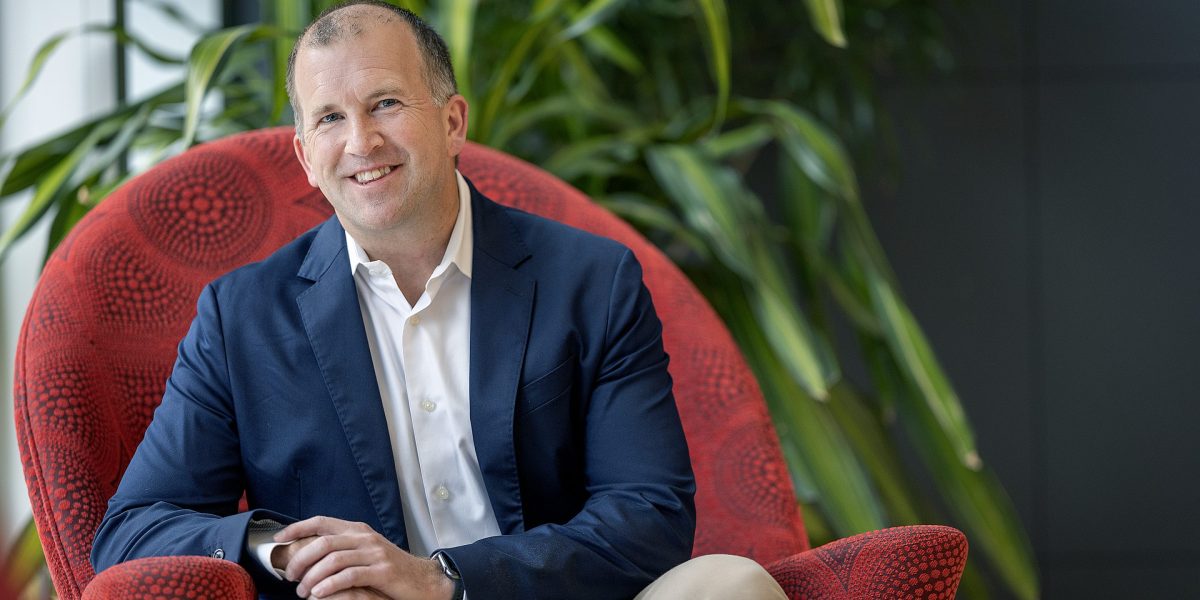
Target’s incoming CEO, Michael Fiddelke, is living proof that internships are more than just grabbing coffee for middle managers and doing drudge work—sometimes they can be career catapults. 

What started as a summer placement in Target’s finance department two decades ago has turned into the top job: On Feb. 1, the 49-year-old will succeed Brian Cornell as CEO.

While Gen Z have an affinity for job hopping, Fiddelke said he instantly liked the people and the pace at the $44 billion retail giant. He quickly realized he was “built for” operating in its fast-paced environment, and hasn’t looked back since.

Looking back, the incoming CEO admits he probably wouldn’t have guessed he’d still be here today: “As I started my Target career as an intern, I never anticipated or even imagined the path my career would take,” the incoming CEO said of the experience in a recent post on LinkedIn. “Where you start is almost never where you’ll finish.”

Fiddelke’s work ethic was forged long before he set foot in corporate retail, growing up on a small farm in Iowa. His family farmed beef, sheep, corn, and soybeans. After that, they spent time building small businesses, including a liquor store and Super 8 hotels. 

He went on to study engineering at the University of Iowa, work as a Deloitte consultant, and earn an MBA from Northwestern.

It was while Fiddelke was in business school, that he landed that fateful summer internship at Target—and the rest is history. Since joining in 2003, he’s worked across merchandising, finance, operations, and HR. Most recently, he’s served as CFO and then COO, roles that gave him a seat at the retailer’s biggest shifts. 

The incoming chief tells Gen Z interns to ‘make the most of the moment’

With more than two decades of experience at the retail giant, the multimillionaire incoming chief exec recently shared his advice for Gen Z graduates kickstarting their internships, reflecting on a time when he was navigating his journey in corporate America. 

“Be relentlessly curious. Slow down and ask questions. Embrace feedback. And make the most of the moment by making connections at Target and with your fellow interns,” Fiddelke wrote in the same LinkedIn post, just months before Target’s official announcement of his promotion to CEO. 

Like many recent graduates toggling their LinkedIn status to “#Opentowork,” Fiddelke reminded Gen Zers that he relates to the pressure of having everything figured out by the time you’re 18. 

“Where you start is almost never where you’ll finish. Your career, your passions and even your goals will evolve. Make the best decisions you can with what you know now. Stay flexible and give yourself permission to adjust as you go,” he said when addressing a group of teenagers in his hometown.

Fiddelke also urged Gen Zers to “be kind and curious,” noting that his teams have performed better when doing so. As managers label Gen Z  the hardest group to work with, he reminds young workers that being nice to work with can actually help you stand out and succeed.

“In a fast-moving world that often feels divided, kindness is nourishing,” he said. 

Fortune has contacted Fiddelke for comment.

These CEOs have climbed the ranks from the bottom up too

Fiddelke isn’t the first CEO to start his career in the bottom ranks. Juvencio Maeztu will become Ikea’s new CEO this November after climbing the company’s corporate ladder for 25 years. The current deputy chief and CFO started off as a store manager in Spain in 2001.

Walmart’s top boss followed a similar path. Doug McMillon started unloading trailers for $6.50 an hour at age 17 in the summer of 1984, before working his way through a string of promotions. Since then, he’s scaled the retail giant’s ranks to become the company’s youngest CEO since its founder, Sam Walton. 

Likewise, Pano Christou only started working at Pret because his McDonald’s coworker left the company to join the food chain—intrigued by the very new sandwich shop, he quit his McDonald’s job to join him. “I just thought: this looks like a fun environment to work in—so I joined them at 22,” Christou told Fortune. “The rest is history.” He’s now its CEO and earning millions in the top job.

“I’m in a very different situation now—but I don’t forget that £2.75 ($3.40) an hour was the starting point of my career.” 

Introducing the 2025 Fortune Global 500, the definitive ranking of the biggest companies in the world. Explore this year’s list.


Source link

Continue Reading

Business

Robinhood launches staking for Ethereum and Solana in ongoing crypto expansion

Published

on


Robinhood is doubling down on crypto offerings. The trading app will launch staking for Ethereum and Solana in New York starting on Tuesday, according to the company, allowing customers to earn yield on cryptocurrency. 

The company will let customers stake in New York and plans to expand across the country. “We’re proud of the momentum we’ve seen with staking and especially excited that staking is now available to customers in New York, which has one of the most rigorous regulatory frameworks in the country,” wrote Johann Kerbrat, senior vice president and general manager of Robinhood Crypto, in a note to Fortune

Staking has been part of the crypto universe for nearly a decade, rewarding users who lock up a stash of tokens in order to help operate a blockchain network. But uncertainty over its legal status has meant it has been mostly experienced crypto users who have engaged in it using their own wallets.

In 2023, the exchange Kraken agreed to pay $30 million to settle allegations that it broke the Securities and Exchange Commission’s rules by offering staking. Robinhood’s launching of crypto stakes reflects a looser regulatory environment under President Donald Trump’s administration. 

“These crypto enhancements are strategic chess moves positioning Robinhood for the anticipated transformation of financial infrastructure through blockchain technology and tokenization—particularly with the regulatory clarity we expect under the current administration,” said Caydee Blankenship, senior equity research analyst at CFRA Research. 

Robinhood also announced a push into global crypto markets. In Europe, it will add perpetual futures contracts on several coins, and it will also enter the Indonesian market, as it agreed to buy a brokerage and crypto platform in the country. 

Robinhood is not new to crypto, as users on the platform have been able to trade Bitcoin and Ethereum since 2018. However, the company has beefed up its crypto arm this year. In June, Robinhood completed a $200 million acquisition of Bitstamp, the world’s longest-running crypto exchange. Crypto transactions accounted for more than 21% of the company’s revenue, as of last month’s earnings report. 

Robinhood’s expansion of their digital assets could help them challenge other crypto exchanges, according to Romeo Alvarez, research analyst at William O’Neil. “Robinhood is stepping up its efforts to compete on a global basis with larger trading platforms like Coinbase, Binance, OKX, and Kraken,” he said.  

The last few days have seen other big banks vie for staking. On Friday, BlackRock filed for a stake Ethereum ETF, the iShares Ethereum Staking Trust (ETHB). The Wall Street giant already has an Ethereum ETF (ETHA), but that one does not have staking components. 


Source link

Continue Reading

Business

Amazon robotaxi service Zoox to charge for rides in 2026, with ‘laser-focus’ on transporting people, not deliveries, says cofounder

Published

on


Amazon’s self-driving robotaxi subsidiary, Zoox, expects to start charging passengers for rides in Las Vegas in early 2026, with paid rides in the San Francisco Bay Area coming later next year, a company executive said Monday.

The move, which would represent a key milestone for Zoox as it seeks to catch up with Alphabet’s Waymo, depends on obtaining federal regulatory and state approvals, Zoox Co-founder and chief technology officer Jesse Levinson told the audience at Fortune’s Brainstorm AI event in San Francisco on Monday.

And while robotaxi rival Waymo recently partnered with DoorDash to test food deliveries with driverless cars, Levinson said that Zoox is “laser focused” on moving people around cities, an addressable market he sees as being “just profoundly huge.” That directive has come “all the way from the very top” at Amazon, he added, despite the retailer’s significant interest in driverless package delivery.

“It’s harder to move people around than packages in terms of what you have to do with your vehicle,” Levinson said. On the other hand, automating package delivery is rife with its own challenge because the boxes have to get in and out of the vehicle, which isn’t as straightforward as people who can move themselves, he added.

Zoox crossed the 1 million mile technical threshold for autonomous rides just last week, Levinson said. The company’s distinct, carriage-seated vehicles, which have no steering wheels or manual controls, currently provide rides to passengers free of charge in portions of Las Vegas and Zoox is slowly opening up the waitlist to use the service in San Francisco.

Despite the progress and the plans to start charging fares, Zoox won’t generate revenues that are meaningful to Amazon, its $2.4 trillion parent company, for at least several more years, Levinson said. 

“This is pretty expensive,” said Levinson. “Over the next few years, it will start to be a really interesting business because the revenue you can generate from the robotaxi is quite a bit more than the expense to run robotaxi.”

That’s the point at which the business will become more “financially interesting,” he added.

Building cars without human drivers in mind

While creating a driverless robotaxi service comes with various challenge, Levinson believes it will ultimately be a key method for moving people around dense urban areas.

“Our view is that people aren’t doing this, not because it’s not a good idea, but because it’s just really hard,” said Levinson. “It takes a lot of time, it’s very cross functional, and it’s expensive. But I do think over time this is going to be a much more popular way of human transportation”

One of the gaps between a driverless robotaxi service like Zoox and Waymo, said Levinson, is in the way the cars are built. Rather than retrofitted vehicles that were manufactured with a human driver in mind, Zoox cars were built to be driverless. Levinson said the four-passenger cabins have carriage seating, active suspension, individual screens for each seat, and four-zone climate control. 

“The cars that have been designed over the last 100 years are for humans,” Levinson said. “All the choices, their shape, their architecture, what components they have in them—they were all designed for human drivers.” Levinson said Zoox offers a more cushy, social rider experience that he thinks will be a differentiator among competitors like Waymo and potentially Tesla’s robotaxi fleet. 

Another competitive element for Zoox is its battery, said Levinson. The bigger battery is more environmentally and economically friendly because it requires less charging.

“The economic opportunity and the opportunity for customers [as we] create this whole new category of transportation is actually much more exciting and even more financially compelling than simply taking something they do today and saving a bit of money,” he said.


Source link

Continue Reading

Business

What’s the top concern among billionaires? Not a financial crash or debt crisis. It’s tariffs

Published

on


Money can’t buy you love, but surely billions of dollars ought to be enough to insulate you from global uncertainty and provide some peace of mind, right? Maybe not.

According to the latest UBS Billionaire Ambitions Report, which surveyed superrich clients around the world, only 1% said, “I am not worried about any economic, market, or policy factors negatively impacting the market environment over the next 12 months.”

Meanwhile, the most widely cited concern by billionaires was tariffs, with 66% saying it will most likely harm market conditions over the coming year. Close behind was “major geopolitical conflict” at 63% and policy uncertainty at 59%.

And while Wall Street is worried about soaring U.S. debt, other sovereign borrowers, and AI hyperscalers issuing more bonds, a comparatively low 34% of billionaires flagged a debt crisis as the biggest thing keeping them up at night.

Other risks that are top-of-mind elsewhere but were lower on the list for billionaires were global recession (27%), a financial market crisis (16%), and climate change (14%).

To be sure, UBS pointed out there are regional differences in what billionaires are worried about. For example, 75% of billionaires in the Asia-Pacific region cited tariffs, compared with 70% in the Americas citing higher inflation or major geopolitical conflict.

That’s as President Donald Trump’s trade war has hit China and Southeast Asia with steep duties, while Japan and South Korea face lower but still historically high tariffs.

On the other end of the trade war, importers in the U.S. are passing along some tariff costs to American consumers, who are increasingly anxious about high prices and affordability.

In fact, Trump’s tariffs may actually cool inflation for the rest of the global economy while keeping price pressures sticky at home.

The president and the White House insist costs are lower, but the consumer price index has seen its annual rate accelerate steadily since Trump’s “Liberation Day” shocker in April.

Of course, billionaires are not as bound by international borders as most, making any regional differences among them more fluid.

The UBS report found 36% have relocated at least once, with another 9% saying they are considering it. The top reasons given were seeking a better quality of life (36%), geopolitical concerns (36%), and the ability to organize tax affairs more efficiently (35%).


Source link

Continue Reading

Trending

Copyright © Miami Select.