Connect with us

Politics

As hurricane season collides with immigration agenda, fears increase for those without legal status
Published

on


If a major hurricane approaches Central Florida this season, Maria knows it’s dangerous to stay inside her wooden, trailer-like home. In past storms, she evacuated to her sister’s sturdier house. If she couldn’t get there, a shelter set up at the local high school served as a refuge if needed.

But with accelerating detentions and deportations of immigrants across her community of Apopka, 20 miles (32 kilometers) northwest of Orlando, Maria, an agricultural worker from Mexico without permanent U.S. legal status, doesn’t know if those options are safe. All risk encountering immigration enforcement agents.

“They can go where they want,” said Maria, 50, who insisted The Associated Press not use her last name for fear of detention. “There is no limit.”

Natural disasters have long posed singular risks for people in the United States without permanent legal status. But with the arrival of peak Atlantic hurricane season, immigrants and their advocates say President Donald Trump’s robust immigration enforcement agenda has increased the danger.

Places considered neutral spaces by immigrants such as schools, hospitals and emergency management agencies are now suspect, and advocates say agreements by local law enforcement to collaborate with U.S. Immigration and Customs Enforcement make them more vulnerable and compel a choice between being physically safe and avoiding detention.

“Am I going to risk the storm or risk endangering my family at the shelter?” said Dominique O’Connor, an organizer at the Farmworker Association of Florida. “You’re going to meet enforcement either way.”

For O’Connor and for many immigrants, it’s about storms. But people without permanent legal status could face these decisions anywhere that extreme heat, wildfires or other severe weather could necessitate evacuating, getting supplies or even seeking medical care.

Federal and state agencies have said little on whether immigration enforcement would be suspended in a disaster. It wouldn’t make much difference to Maria: “With all we’ve lived, we’ve lost trust.”

New policies deepen concerns

Efforts by Trump’s Republican administration to exponentially expand immigration enforcement capacity mean many of the agencies active in disaster response are increasingly entangled in immigration enforcement.

Since January, hundreds of law enforcement agencies have signed 287(g) agreements, allowing them to perform certain immigration enforcement actions. Most of the agreements are in hurricane-prone Florida and Texas.

Florida’s Division of Emergency Management oversees building the state’s new detention facilities, like the one called “Alligator Alcatraz” in the Everglades. Federal Emergency Management Agency funds are being used to build additional detention centers around the country, and the Department of Homeland Security temporarily reassigned some FEMA staff to assist ICE.

The National Guard, often seen passing out food and water after disasters, has been activated to support U.S. Customs and Border Protection operations and help at detention centers.

These dual roles can make for an intimidating scene during a disaster. After floods in July, more than 2,100 personnel from 20 state agencies aided the far-reaching response effort in Central Texas, along with CBP officers. Police controlled entry into hard-hit areas. Texas Department of Public Safety and private security officers staffed entrances to disaster recovery centers set up by FEMA.

That unsettled even families with permanent legal status, said Rae Cardenas, Executive Director of Doyle Community Center in Kerrville, Texas. Cardenas helped coordinate with the Mexican Consulate in San Antonio to replace documents for people who lived behind police checkpoints.

“Some families are afraid to go get their mail because their legal documents were washed away,” Cardenas said.

In Florida, these policies could make people unwilling to drive evacuation roads. Traffic stops are a frequent tool of detention, and Florida passed a law in February criminalizing entry into the state by those without legal status, though a Judge temporarily blocked it.

There may be fewer places to evacuate now that public shelters, often guarded by police or requiring ID to enter, are no longer considered “protected areas” by DHS. The agency in January rescinded a policy of President Joe Biden, a Democrat, to avoid enforcement in places like schools, medical facilities and emergency response sites.

The fears extend even into disaster recovery. On top of meeting law enforcement at FEMA recovery centers, mixed-status households that qualify for help from the agency might hesitate to apply for fear of their information being accessed by other agencies, said Esmeralda Ledezma, communications associate with the Houston-based nonprofit Woori Juntos. “Even if you have the right to federal aid, you’re afraid to be punished for it,” Ledezma said.

In past emergencies, DHS has put out messaging stating it would suspend immigration enforcement. The agency’s policy now is unclear.

DHS Assistant Secretary Tricia McLaughlin said in an email that CBP had not issued any guidance “because there have been no natural disasters affecting border enforcement.” She did not address what directions were given during CBP’s activation in the Texas floods or whether ICE would be active during a disaster.

Florida’s Division of Emergency Management did not respond to questions related to its policies toward people without legal status. Texas’ Division of Emergency Management referred The Associated Press to Republican Gov. Greg Abbott’s office, which did not respond.

Building local resilience is a priority

In spite of the crackdown, local officials in some hurricane-prone areas are expanding outreach to immigrant populations. “We are trying to move forward with business as usual,” said Gracia Fernandez, language access coordinator for Alachua County in Central Florida.

The county launched a program last year to translate and distribute emergency communications in Spanish, Haitian Creole and other languages. Now staffers want to spread the word that county shelters won’t require IDs, but since they’re public spaces, Fernandez acknowledged there’s not much they can do if ICE comes.

“There is still a risk,” she said. “But we will try our best to help people feel safe.”

As immigrant communities are pushed deeper into the shadows, more responsibility falls on nonprofits, and communities themselves, to keep each other safe.

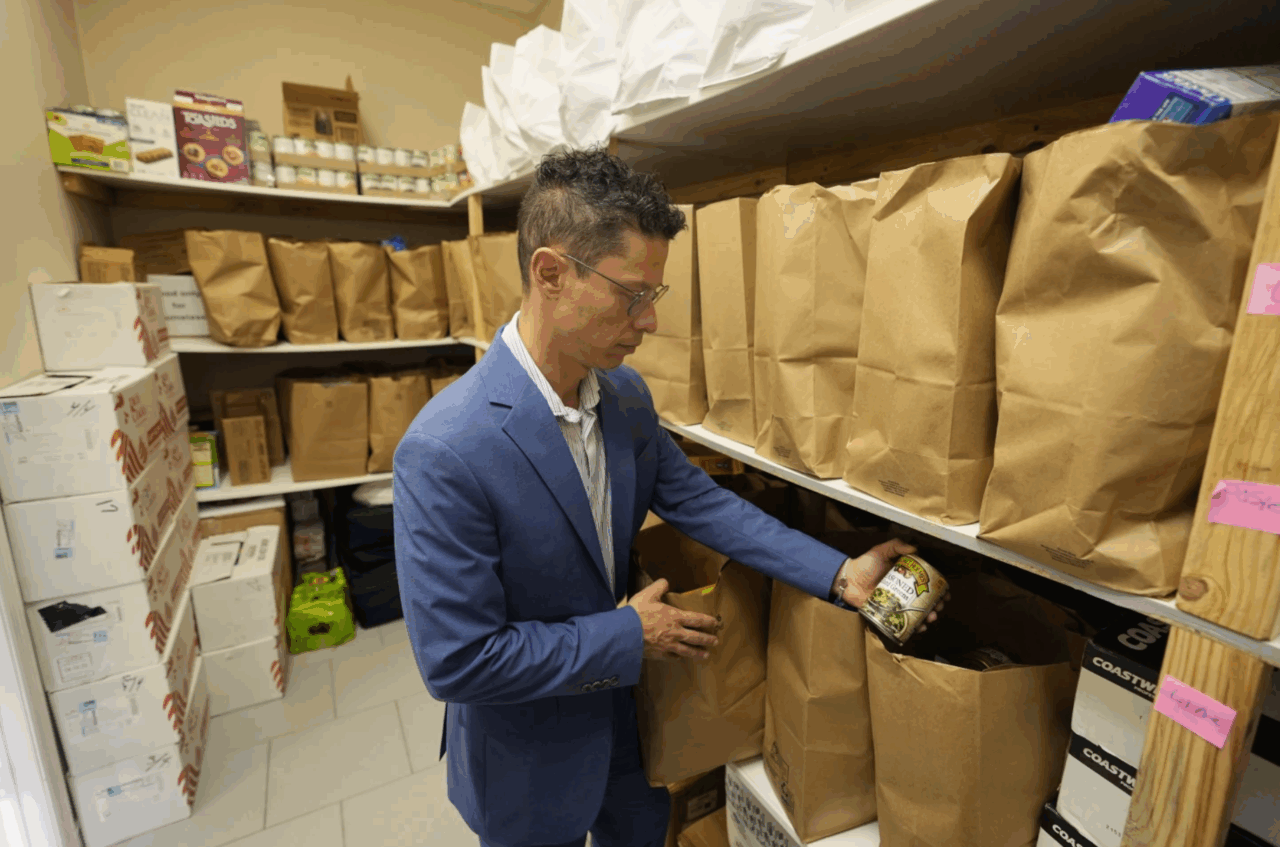
Hope Community Center in Apopka has pushed local officials to commit to not requiring IDs at shelters and sandbag distribution points. During an evacuation, the facility becomes an alternative shelter and a command center, from which staffers translate and send out emergency communications in multiple languages. For those who won’t leave their homes, staffers do door-to-door wellness checks, delivering food and water.

“It’s a very grassroots, underground operation,” said Felipe Sousa Lazaballet, the center’s Executive Director.

Preparing the community is challenging when it’s consumed by the daily crises wrought by detentions and deportations, Sousa Lazaballet said.

“All of us are in triage mode,” he said. “Every day there is an emergency, so the community is not necessarily thinking about hurricane season yet. That’s why we have to have a plan.”

___

Republished with permission of The Associated Press.


Post Views: 0


Source link

Continue Reading

Politics

Dean Black bill abolishing Nassau County board advances in House

Published

on


This could save the county money.

Nassau County’s government is about to become a bit more streamlined, as an appointed board dormant since 2002 is potentially subject to be wiped off the books completely.

Rep. Dean Black’s legislation (HB 4017) would terminate Nassau County Recreation & Water Conservation & Control Districts on the books since the 1960s, when the Legislature created them by a special act.

There is one such district in ordinance.

Though the board hasn’t done anything in 23 years, removing it from the books purportedly would reduce administrative costs, and would transfer all assets and liabilities of the district to the Nassau County Board of County Commissioners, and protect taxpayers.

“The county has established a municipal service benefit unit, or MSBU, to address drainage issues subsequently. Therefore, the district is no longer functioning or necessary. In a word, it is now obsolete,” Black said.

“The district does not own any land, the district does not have any assets. The district does not currently levy any taxes. It has been inactive since 2002. The repeal of this district would prevent a future board of county commissioners from levying millage rates for what is now a defunct and unnecessary district against the taxpayers of Nassau County.”

The State Affairs Committee is the final committee stop before the House floor.


Source link

Continue Reading

Politics

Gov. DeSantis prioritizes road projects, infrastructure improvements in budget plan

Published

on


Gov. Ron DeSantis is looking to prioritize road construction projects and beef up infrastructure in his 2026-27 budget proposal.

DeSantis is calling for $15.4 billion for the Florida Department of Transportation (FDOT) in addition to $14.3 billion for the State Transportation Work Program, which handles construction and maintenance of Florida’s roads, bridges, rails, seaports and other public transportation systems.

Speaking at a budget press conference in Orlando, DeSantis said his proposal provides “major support for infrastructure and transportation.”

“Over $14 billion for our state work program — that more than funds everything we need to do,” DeSantis said as he unveiled a $117 billion proposed spending plan ahead of the upcoming Legislative Session.

The fully released budget plan gives more detail on how DeSantis wants to carry out his priorities.

The Governor wants to allocate $4.9 billion for highway construction and maintenance. That entails constructing 181 new lane miles, $1.4 billion for resurfacing 2,622 lane miles, about $873 million for repairing 38 bridges and replacing 21 others. In addition, DeSantis wants to allocate about $204 million for community trail projects.

DeSantis is also pushing for investments to be made at the state’s airports and seaports.

Under DeSantis’ plan, aviation improvements would get nearly $389 million and seaports could receive nearly $156 million for infrastructure upgrades.

“I don’t think you’re going to find another state that’s doing more meaningful things on transportation” and other issues while also maintaining a “stable budget,” DeSantis said at his budget press conference.

The state’s growing space industry would also benefit from DeSantis’ budget proposal which allocates $93 million through the FDOT Spaceport Improvement Program and $10 million for the Aerospace Investment Fund to help recruit companies to the state.

“As Florida’s space industry continues to reach new heights, infrastructure needs along the Space Coast will continue to be a priority, which is why the budget includes $5 million in startup funding to Space Florida to work alongside state agencies to establish additional wastewater capacity for Florida’s commercial launch providers,” DeSantis’ budget proposal added.

“These proposed investments are in addition to the nearly $700 million in funding through the FDOT Work Program to improve community infrastructure in Brevard, Indian River, and Volusia counties.”


Source link

Continue Reading

Politics

Federal probation overhaul enjoys broad support, including in swing districts

Published

on


Florida reformed and scaled back probation supervision more than three years ago. Now, polling shows broad support for Congress tackling probation updates nationwide.

New polling commissioned by the REFORM Alliance, a national group supporting changes to probation and parole, found nearly 79% of Americans support proposals to change supervision as proposed in a bipartisan bill championed by U.S. Rep. Laurel Lee.

The survey, conducted by Fabrizio Ward, showed strong majorities of Democrats, Republicans and independents backing reform.

It’s a result that shocked even the group’s leadership, as most Americans supported changing the process without hearing any messaging.

“I have to say, I was absolutely shocked that we saw as high support right out the gate, without even linking this to any of the authors or any of the incredible influencers who have stepped up and said that they endorsed the bill,” said Jessica Jackson, CEO of the REFORM Alliance.

“We saw right away that 79% of the Trump voters, 80% of the (Kamala) Harris voters said they want to see this happen. They want to see this public safety reform signed into law.”

The pollsters, who also have worked with President Donald Trump’s presidential campaign, stressed the conservative support from swing House districts Trump carried in 2024 by less than 5 percentage points, or that went to Trump despite electing Democrats to Congress.

“Reform of the supervised release system has a clear political benefit for Republicans in their fight to keep control of Congress,” pollsters Anthony Fabrizio and Bob Ward wrote in a memo. “Both the Trump base and the Swing voters who will determine the outcomes in the most competitive House districts see the benefits of making it easier for the recently incarcerated to get back into the workforce, paying taxes and contributing to society.”

That speaks to messaging likely to be embraced by Lee, a swing district Republican.

But the poll also shows voters across the political spectrum back changes. Her bill would grant more judicial discretion in requirements for supervision during probation, allow for an early end to probation for good conduct and allow treatment instead of probation for low-level drug possession.

Jackson said that’s to be expected when looking at data on the number of people detrimentally impacted by the probation system as it exists today.

“Seven out of 10 of the Democrats, or Harris voters, said that they had a loved one. You had eight out of 10 of the Trump supporters who said they had a loved one or themselves had been impacted,” Jackson noted. “I think it’s because it’s become such a widespread issue that people know someone personally, and of course, nothing puts this more on your radar than actually knowing somebody who’s been impacted.”

Various elements of the bill polled at different support levels, but all were popular.

Asked about investing in programs that increase the chances that those on parole will succeed in reentry into society, such as housing assistance, education and job training, addiction treatment, and mental health support, 81% of Trump voters and 84% of swing voters support the bill.

By comparison, giving Judges discretion on minor drug possession violations to consider treatment or rehabilitation instead of mandatory reimprisonment had support from 68% of Trump voters and 72% from swing voters, lower levels of support but strong majorities with even the least popular part of the bill.

“A member of Congress supporting the Safer Supervision Act would gain at the polls, and most voters want President Trump to issue an executive order to accomplish the policies of the Safer Supervision Act,” the polling memo states.

Jackson’s group is prepared to tell personal stories even to those who don’t already know someone impacted by probation restraints. Her group also worked on the First Step Act signed in Trump’s first term, and she recounts how one of the first recipients, after Trump commuted her sentence on a crack cocaine conviction, still struggled to reintegrate in 2018. It wasn’t because she fell into old habits, but because of impossible constraints imposed by the justice system.

That included requirements for visits with a parole officer located 45 minutes away, required random drug tests, an expectation she retain her job at Walmart, all while living in her daughter’s house without her own care and after returning to society after a decade in prison with no ability to build up savings.

“There’s just so much stupid that is holding people back, so much red tape that isn’t actually helping them succeed,” Jackson said.

It’s why even voters who support taking a hard line on crime see benefits in making a return to society easier and more efficient.

“People see this as a tough on crime bill,” Jackson said.

“This is a bill that would return federal supervision to its original intent, which is officers who have people on their docket who they think might be at high risk of committing another crime need the resources to be able to properly supervise them. The way that things are structured right now, you’ve got officers managing 100-plus cases. That means they can’t properly supervise anyone — not those who need their help, not those who pose risks.”


Source link

Continue Reading

Trending

Copyright © Miami Select.