Connect with us

Business

CEOs of the world, unite!

Published

on


I was a business reporter for almost 30 years, specializing in CEOs – the great, the mediocre, and the really, really bad (sometimes all in one person). From the early 1990s to the late 2010s, I rode shotgun, watching in awe as the Corner Office point of view – ever Alpha – left the political, the academic, and basically every other perspective in the dust. 

Shareholder-driven capitalism meant what was good for business was good for, well, everyone. (“everyone” wasn’t supposed to mean income inequality hitting historical highs). That belief, in turn, elevated industry titans from Jamie Dimon and Mark Zuckerberg to Jack Welch and Warren Buffett as the most powerful voices on the planet. The real decisions were made at Davos or in Sun Valley, not DC or Brussels. Politics were an inconvenience. For decades – until companies like Microsoft and Google became well-acquainted with antitrust law – tech companies ignored Washington and didn’t even lobby. Why bother? 

As trust dropped for institutions overall but rose for corporate leaders, even social change movements were pushed forward by CEOs. Leaders like former Levi’s CEO Chip Bergh and Dick’s Sporting Goods CEO Lauren Hobart spoke in favor of topics such as gun safety or equity

Other organizations, political groups, and communities followed corporations’ lead – and it seemed to work for business: Less than five years ago, at the height of the pandemic and the Black Lives Matter protests, The Edelman Trust Barometer showed that employees of all generations were 7.0 to 9.5 times more likely to be attracted to a company that takes a stand on key issues. Even if you didn’t agree with the policies, the point is that executives knew they were fully empowered to make these decisions independently. 

Fast forward to today. As the rich get richer and stock market valuations increasingly are tied to a tiny group of corporate behemoths, the leaders of those companies have more economic power than ever. And yet, they have willingly and shockingly lost their ability to use it (except, of course, when they actually join the administration, like good old Elon). 

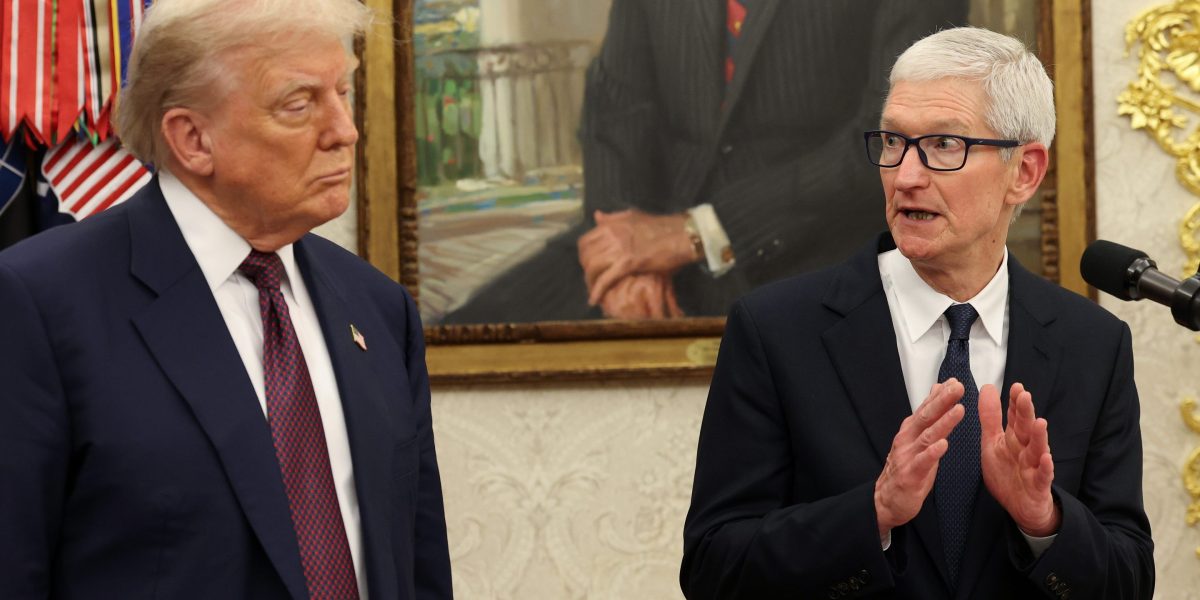
It would be hilarious if it wasn’t so terrifying: The daily parade of CEOs bearing literal golden gifts — Hello Tim Cook! — as they bow and scrape to the President of the United States, horse-trading “investments” in the USA that have little chance of materializing in return for not being taxed or publicly humiliated in a given month. Unlike other organizations that have limited leverage — nonprofits, universities, and, now, they’d like you to think, Congress — these guys actually DO have the clout to resist. But they don’t – or won’t – even as one of their own (Intel CEO Lip-Bu Tan) has his job directly threatened by the President, and along with another, Nvidia CEO Jensen Huang, may soon be signing up to pay a regular vig to Uncle Sam. 

Many leaders undoubtedly see this kissing up as a tactic. Be nice, stay under the radar, and all will be good one day soon. Then we can return to our regularly scheduled capitalism. But this is not how corporate leaders have EVER acted in the U.S. They have flexed at will, for better or for worse, because they could. 

If CEOs actually united, they could use that market power to pressure the President and his team to move from their chaotic, arbitrary approach to managing the economy to one that at least incorporates rational thinking. 

So what could these CEOs do, instead of flattery and humiliation? They could work together instead of letting their power be fragmented.

They could use their voices collectively – just as they have done many times before in times of trouble. Just last year (before the election), JPMorgan Chase CEO Jamie Dimon spoke publicly on income inequality. Last April, when tariffs were threatened, The Business Roundtable spoke up– and had impact. But now that the tariffs are real… crickets. 

They could say – loudly and to the world as a group –  that firing the nonpartisan analyst responsible for the nation’s financial data will make it impossible for anyone to trust that anything business people say is true. 

They could say that businesspeople are better at business than politicians (even if those politicians are also running a business at the same time) and that boards and shareholders already have a fiduciary duty to do the right thing. 

They could talk about how this chaotic tariff cycle makes it impossible to budget, plan or hire when they have no idea what their costs are and that as a result, many of their financial projections are no longer sound. 

They could lean into their power instead of giving it away. 

They could try cooperating – so that they don’t lose the power to compete.

After all, as one famous author once said, they have nothing to lose but their chains.

The opinions expressed in Fortune.com commentary pieces are solely the views of their authors and do not necessarily reflect the opinions and beliefs of Fortune.

Introducing the 2025 Fortune Global 500, the definitive ranking of the biggest companies in the world. Explore this year’s list.


Source link

Continue Reading

Business

Parents are sacrificing retirement, taking second jobs, and liquidating investments for college

Published

on


Parents make countless sacrifices for their children. And now that college is more expensive than ever, they’re jeopardizing their own financial futures to try to secure their kids’. 

According to a survey of 1,000 parents from Citizens Bank, respondents say they are taking on a second job (19%), borrowing against their 401(k) or liquidating personal funds (30%), pausing investing entirely (26%), and cutting back on major purchases or vacations (66%). And more than 60% of parents reported they expect to delay their retirement in order to pay for their kids’ college education.

The cost of college has ballooned: It’s 40 times higher than it was in 1963, according to the Education Data Initiative. And between 2010 and 2023 alone, tuition costs at four-year public universities jumped more than 36%, Education Data Initiative said, with the average cost of college today nearly $40,000 per year.

That’s led more than 60% of parents to need to go “above and beyond” typical financing options like 529 plans and federal loans, according to the Citizens survey data. 

“Compared to just a few years ago, the pressure has increased due to rising tuition, inflation, and greater uncertainty around future costs,” Tony Durkan, vice president and head of 529 college savings at Fidelity, told Fortune. “Many families are still underprepared, often relying on rough estimates rather than clear savings goals.”

Financial sacrifices for a college education are ‘very risky

Pam Krueger, investment advisor and founder of Wealthramp, said the phenomenon of parents taking on side gigs, pulling money out of retirement, and refinancing their homes to pay for college is incredibly common. 

“It’s coming from a place of love and a desire to protect their kids from the burden of student debt—but it’s also very risky,” Krueger warned. “These choices can set parents back in a way that’s really hard to recover from.”

Part of the problem is the disconnect between college admissions and financial planning, according to Citizens. Survey data showed one in five parents admitted they just focused on getting their child into college without thinking about how to pay for it. And it’s such a touchy and embarrassing topic for parents,  almost 50% of survey-takers said they would rather talk to their children about drugs and alcohol. 

How to prepare to pay for college

While pulling money from retirement, taking on another job, or refinancing your home may feel like the only option to come up with enough funding for college, financial advisors say there are other options. 

Of course, a 529 savings plan can help—but that has a longer runway. These tax-advantaged plans can sometimes allow you to pay for tuition ahead of time, but many people save for many, many years to fund these accounts. 

Still, “the earlier you begin saving, the more time your money has to grow through compounding,” Durkan said. “Even small, regular contributions can add up significantly over time.” Plus, any funds that aren’t used can be transferred to a sibling, cousin, or back to yourself, meaning no wasted money—and it stays in the family, Krueger said.

But if it’s too late in the process—like if your kid is already in high school—an alternate strategy is needed. Krueger said this requires open and honest communication with your child about what you can actually afford. 

“Sit down with your child and talk openly about what’s realistic. Explore schools that are generous with merit aid or have transparent pricing,” Krueger said. “And look at the full cost—not just tuition, but room and board, books, travel. Sometimes the ‘big name’ school isn’t the best financial fit—and that’s okay.”

For parents just starting to plan for college while their children are in high school, Brian Safdari, founder and CEO of College Planning Experts, also suggests moving around investments and assets and as well as applying for grants, scholarships, merit-based aid, and institutional aid starting as early as ninth or 10th grade. Even private colleges with sticker prices of $95,000 or more a year could offer generous aid that make the final cost the same as a public school or even less, he told Fortune.

Still, “the expected cost minus savings minus free money will likely still leave a gap,” Safdari said. “Once we have that number, we can start figuring out how to fund it over four years, while minimizing student debt and leaving enough money to retire.”

A version of this story was published on Fortune.com on June 25, 2025.

More on saving for college:

Fortune Brainstorm AI returns to San Francisco Dec. 8–9 to convene the smartest people we know—technologists, entrepreneurs, Fortune Global 500 executives, investors, policymakers, and the brilliant minds in between—to explore and interrogate the most pressing questions about AI at another pivotal moment. Register here.


Source link

Continue Reading

Business

Apple won’t be the same in 2026 as these rising stars follow its biggest executive exodus in years

Published

on


Apple is experiencing the most extensive leadership transformation since its visionary CEO and cofounder Steve Jobs died in 2011, with a wave of departures across artificial intelligence, design, legal, operations, and financial divisions that will reshape one of the world’s most valuable companies.

The iPhone maker announced last week that Lisa Jackson, its vice president of environment, policy, and social initiatives, will retire in January, while Kate Adams, who has served as general counsel since 2017, will retire late next year. These departures follow a cascade of recent exits including AI chief John Giannandrea, who announced his retirement this month, and Alan Dye, the head of user interface design since 2015, who left to join Meta. Bloomberg also reported that Johny Srouji, Apple’s chief chip architect for Apple Silicon, is mulling an exit, but the 61-year-old executive threw cold water on those rumors Monday, saying “I love my team, I love my job at Apple” in a memo to staffers.

Speaking of Meta, Mark Zuckerberg’s social media empire has been the beneficiary of Apple’s exodus. Billy Sorrentino, another senior design director, chose to leave for Meta with Dye, and Ruoming Pang, who headed Apple’s AI foundation models team, also left for Meta in July, taking approximately 100 engineers with him. Ke Yang, who led AI-driven web search for Siri, and Jian Zhang, Apple’s AI robotics lead, also left for Meta this year.

But perhaps the biggest change at the top this year has been Chief Operating Officer Jeff Williams, who decided to retire in July after 27 years with Apple. He was long considered the top candidate to succeed CEO Tim Cook. Also this summer, CFO Luca Maestri stepped back from his role to instead oversee corporate services starting in the new year, while Kevan Parekh took over as CFO.

Succession planning and Tim Cook’s future

The scale of the turnover has been striking, but the timing appears connected to succession planning. Both Bloomberg and the Financial Times have reported that Apple is ramping up efforts to prepare for Cook, who turned 65 in November, to potentially retire in 2026. He has led the company since 2011 and grown its market cap from roughly $350 billion to $4 trillion.

John Ternus, Apple’s senior vice president of hardware engineering, has emerged as the leading internal candidate to replace Cook. Ternus, 50, joined Apple’s product design team in 2001 and has overseen hardware engineering for every generation of iPad, the latest iPhone lineup, and AirPods. He played a crucial role in the Mac’s transition to Apple silicon.

The choice of Ternus would mark a departure from Apple’s recent operational focus under Cook. While Cook and Williams both had operational backgrounds with expertise in global supply chains, Ternus brings technical hardware expertise. His selection would signal that Apple is prioritizing product innovation as it faces challenges in new categories like the Vision Pro and competition in artificial intelligence.

Apple’s new AI leadership

Apple is bringing in Amar Subramanya, a veteran of both Google and Microsoft, to lead its AI efforts. Subramanya spent 16 years at Google, eventually becoming head of engineering for Google’s AI assistant Gemini, before a brief stint at Microsoft as corporate vice president of AI. He will oversee Apple Foundation Models, machine learning research, and AI safety, reporting to software chief Craig Federighi.

Subramanya’s hire signals Apple’s determination to accelerate its AI capabilities after falling behind competitors like Google and OpenAI. His experience building large language models at Google positions him to help Apple develop competitive generative AI products, a critical battleground for tech companies in the coming years.

Apple’s new design leadership

On the design front, Stephen Lemay is replacing Dye as the head of user interface design. Lemay has been with Apple since 1999 and played a key role in designing every major Apple interface from the original iPhone to the latest operating systems.

The promotion of Lemay has reportedly been met with enthusiasm inside Apple. Blogger and podcaster John Gruber, who has covered Apple for decades and has deep ties within the company, wrote that employees are borderline “giddy” about Lemay taking over.

“Sources I’ve spoken to who’ve worked with Lemay at Apple speak highly of him, particularly his attention to detail and craftsmanship,” Gruber wrote. “Those things have been sorely lacking in the Dye era.”

This internal promotion contrasts sharply with how Dye’s departure was received. Dye had overseen UI design for a decade but faced internal criticism over design direction and product quality. Lemay’s appointment represents a return to the company’s design-first philosophy that characterized Apple’s earlier innovation phases.

Apple’s new operations and supply chain leadership

Sabih Khan, who has been with Apple for 30 years, took over as chief operating officer in July, succeeding Williams. Khan joined the executive team as senior vice president of operations in 2019 and has overseen Apple’s global supply chain for the past six years. Khan will also now oversee environment and social initiatives, taking on some of Lisa Jackson’s former responsibilities.

Khan’s appointment represents continuity in operations while consolidating responsibilities across the executive suite. His deep knowledge of Apple’s manufacturing and logistics networks positions him to navigate ongoing supply chain challenges, particularly as the company diversifies production beyond China.

Jennifer Newstead, currently Meta’s chief legal officer and a former legal adviser to the U.S. State Department, will become Apple’s general counsel on March 1, 2026. In a consolidation of responsibilities, Newstead will oversee both legal and government affairs, effectively merging the roles previously held by Adams and Jackson.

Newstead brings significant international law and regulatory expertise at a critical time for Apple. The company faces increasing scrutiny from antitrust regulators worldwide, particularly in the European Union and the United States. The Justice Department and 16 attorneys general filed an antitrust suit against Apple last March, alleging the company’s policies hamper competition and make it difficult for consumers to switch phones. A trial date is not yet set, but suffice to say Newstead’s work will be cut out for her once she starts.

Her appointment underscores Apple’s focus on navigating complex regulatory environments while addressing regulatory challenges around AI development and data privacy. Her experience in government affairs at Meta, where she managed relations with policymakers globally, makes her well-suited to handle Apple’s expanding regulatory obligations.

Apple’s new financial leadership

Kevan Parekh assumed the chief financial officer role on January 1, 2025, replacing Luca Maestri, who had held the position since 2014. Parekh brought deep familiarity with Apple’s financial operations, having worked in the company’s finance division previously. His transition to CFO continues Apple’s pattern of promoting experienced insiders to top roles, though his tenure also reflects the company’s need for steady financial stewardship amid market volatility and shifting investor expectations.

Apple’s inflection point

The departures span functions critical to Apple’s competitive position. Beyond the visible departures, Apple has lost significant talent in AI research to its competition in Silicon Valley, namely Google, Microsoft, and OpenAI. Apple is attempting to address this through high-profile hires like Subramanya, but the scale of departures suggests internal friction or strategic shifts that pushed executives to explore opportunities elsewhere.

The consolidation of responsibilities—particularly having Newstead oversee both legal and government affairs, and Khan handling operations and environmental initiatives—suggests Apple is also tightening its executive structure. This could be driven by cost considerations or by a desire to create clearer lines of authority as the company prepares for potential leadership transitions.

Despite the upheaval, Apple is positioning these changes as strategic rather than reactive. The transitions of Williams, Maestri, and others were described as “long-planned successions” in company announcements. Cook has publicly praised the incoming leaders and emphasized continuity, even as Apple assembles what amounts to an entirely new leadership team for its next chapter.

Cook himself remains a question mark. While some reports suggest he could retire in 2026, the executive has been adamant about his plans. In January, Cook told CNBC he would never retire, at least in “the traditional way,” adding he would “always want to work.” Still, all the reliable reporting since that on-air interview points to scenarios in which Cook will step back from day-to-day operations.

Looking ahead

Whether this new generation can maintain Apple’s innovation momentum while navigating AI competition, regulatory pressure, and the eventual departure of Cook himself remains the defining question for the company’s future. The success of Ternus, Newstead, Lemay, Khan, and Subramanya will determine whether Apple can accelerate its AI capabilities, maintain design excellence, navigate regulatory challenges, and sustain the company’s position as one of the world’s leading tech companies.

The changes also reflect a shift in Apple’s strategic priorities. Under Cook, the company has excelled in operational efficiency and global supply chain management. But under Ternus—if he indeed becomes CEO—the company may place greater emphasis on hardware innovation and product differentiation, particularly in emerging categories where AI and design intersect.

The appointment of Subramanya to lead AI, combined with the return of Stephen Lemay to design, suggests Apple is doubling down on what made it successful in the first place: breakthrough products with cutting-edge technology with thoughtful design.

It all suggests 2026 will be a pivotal year for Apple, which is expected to accelerate its AI efforts, roll out new phone designs, and fend off regulators to secure long-term positioning in the rapidly changing landscape.

For this story, Fortune journalists used generative AI as a research tool. An editor verified the accuracy of the information before publishing. 


Source link

Continue Reading

Business

Paramount launches WBD hostile bid that includes Trump son-in-law Jared Kushner

Published

on


In a separate regulatory filing, Paramount disclosed that Affinity Partners, the private equity firm led by Jared Kushner, is part of the bid. It added that sovereign wealth funds from Saudi Arabia, Abu Dhabi, and Qatar are also participating.

Affinity and the other outside financing partners have agreed to forgo any governance rights, which Paramount said means the Committee on Foreign Investment in the United States would have no jurisdiction over the transaction. Meanwhile, Chinese tech conglomerate Tencent is no longer a partner.

The offer comes after Paramount lost out in the bidding war for the assets last week to Netflix, which made a cash-and-stock deal worth $27.75 per share. Paramount’s proposed transaction is for the entirety of WBD, including the Global Networks segment, while Netflix’s deal is for the studio and HBO Max.

Paramount argued its offer to WBD shareholders provides a superior alternative to the Netflix transaction, which offers “inferior and uncertain value and exposes WBD shareholders to a protracted multi-jurisdictional regulatory clearance process with an uncertain outcome,” referring to the likely antitrust concerns for Netflix’s megadeal.

At the Kennedy Center over the weekend, President Donald Trump partially confirmed reporting from Bloomberg’s Lucas Shaw about his private conversations with Netflix co-CEO Ted Sarandos, saying they had met in the Oval Office before Netflix announced its winning bid, while adding that its combined market share with WBD could be an antitrust concern.

Paramount argued that WBD’s recommendation of the Netflix offer is based on an “illusory prospective valuation of Global Networks that is unsupported by the business fundamentals” and encumbered by high levels of financial leverage assigned to the entity. Netflix’s offer would assume $11 billion of debt and involve a $59 billion bridge loan, which Bloomberg reported was among the highest ever.

David Ellison, chairman and CEO of Paramount, said: “WBD shareholders deserve an opportunity to consider our superior all-cash offer for their shares in the entire company.”

Paramount, which earlier sent a letter to WBD CEO David Zaslav complaining of a “tainted” sale process, further asserted today that although Paramount made six offers for WBD over 12 weeks, “WBD never engaged meaningfully with these proposals, which we believe deliver the best outcome for WBD shareholders.

“We believe our offer will create a stronger Hollywood. It is in the best interests of the creative community, consumers, and the movie theater industry. We believe they will benefit from the enhanced competition, higher content spend and theatrical release output, and a greater number of movies in theaters as a result of our proposed transaction,” Ellison continued. “We look forward to working to expeditiously deliver this opportunity so that all stakeholders can begin to capitalize on the benefits of the combined company.”

Paramount’s tender offer is scheduled to expire at 5 p.m. ET on Jan. 8, 2026. The company said its offer will be financed by new equity backstopped by Paramount’s well-capitalized principal equity holders, and $54 billion of debt commitments from Bank of America, Citi, and Apollo.

Centerview Partners and RedBird Advisors are acting as lead financial advisors to Paramount, and Bank of America Securities, Citi, and M. Klein & Co. are also acting as financial advisors. Cravath Swaine & Moore and Latham & Watkins are acting as legal counsel to Paramount.

Disclosure: The author worked at Netflix from June 2024 through July 2025.


Source link

Continue Reading

Trending

Copyright © Miami Select.