Connect with us

Politics

Pro-bear nonprofit sues FWC to halt December hunt
Published

on


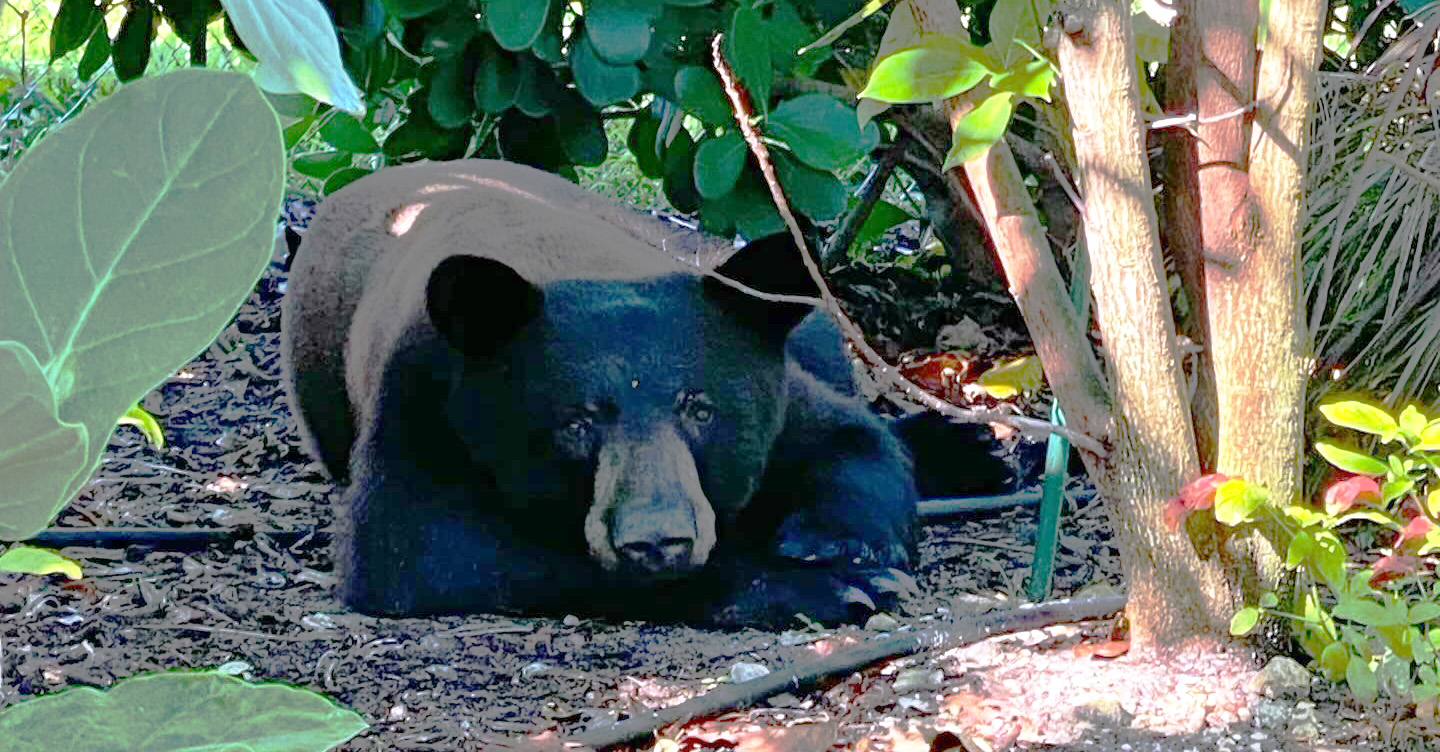
Opponents of Florida’s first sanctioned black bear hunt in a decade are suing to stop the planned killings, arguing the Florida Fish and Wildlife Conservation Commission (FWC) violated state law and relied on outdated science to justify the event.

Oviedo-based nonprofit Bear Warriors United has filed a petition seeking to invalidate FWC’s newly adopted rule authorizing the Dec. 6-28 hunt in four “bear management units.”

The plan allows up to 187 black bears to be killed by various means through a lottery-based permit system.

Bear Warriors is asking for a Judge to block FWC from issuing permits until the case is resolved and to declare the rule invalid. The group also seeks attorneys fees.

The complaint, filed Friday with the Division of Administrative Hearings, contends the rule improperly delegates decision-making powers from FWC’s seven constitutionally appointed Commissioners to the agency’s Director or designee.

Lawyers Thomas Crapps and Raquel Levy, representing Bear Warriors United, argue the change grants “unbridled authority to issue permits to kill bears annually without any guidance or scientific fact.”

To that end, they wrote, the decision to authorize the hunt is “based on stale facts from a 2014-2015 bear population study and is directly contrary to FWC’s own 2019 Bear Management Plan.”

FWC members voted unanimously Aug. 13 to authorize the hunt. It’s the first since 2015, when officials halted the hunt after 295 bears were killed in just two days. The FWC had expected it to take a week to reach that number.

This year’s hunt will see 187 permits distributed across four regions: 68 for the East Panhandle, 46 for North Florida, 18 for Central Florida, and 55 for South Florida. Residents will pay $100 per permit, while non-residents, capped at 10% of total permits, will pay $300.

FWC leaders said the hunt is intended to manage Florida’s estimated 4,000 black bears and reduce conflicts with humans. Reports of “nuisance” bear encounters, according to FWC data, climbed from 2,000 in 2016 to more than 6,000 in 2024.

In June 2024, Gov. Ron DeSantis signed legislation by Tallahassee Sen. Corey Simon and Port St. Joe Rep. Jason Shoaf that loosened restrictions on the use of lethal force during bear encounters. Proponents of the measure, like Liberty County Sheriff’s Deputy Dusty Arnold, cited a proliferation of the animals in his support of the change.

“If you’ve got a dog, they’re coming in, they’re tearing your pens up, getting the dog food. If you have a grill out and you don’t clean it properly, they’re coming onto your porches and they’re trying to tear your grill open,” he said. “We’re starting to see a lot more bears hit by cars, so we’re having a lot of property damage everywhere.”

Opponents, like Chuck O’Neil, President of the Speak Up Wekiva environmental group, called the measure “overly broad” and potentially devastating the state’s black bear population. He predicted ahead of the FWC’s vote last week that if approved, the hunt wouldn’t go forward easily.

“I think it’s going to end up in the court of public opinion,” he told the Fort Myers News-Press. “That’s where we’re going to fight this out and make it as politically unpopular as possible.”

In an email included in the petition, environmental lawyer Clay Henderson, who helped draft the 1998 constitutional amendment creating the FWC, criticized the agency for “flying blind” by relying on outdated population figures from 2017.

He agreed with the lawsuit’s central arguments: that the 187-bear quota relies on outdated estimates, which don’t account for population declines following the 2015 hunt, and that the FWC’s decision unlawfully delegates to the agency’s Executive Director nontransferable powers and responsibilities.

“The Legislature specifically reserved the assignment of duties and responsibilities necessary to develop ‘management techniques’ for ‘enhancement of animal populations’ to the Florida Fish and Wildlife Research Institute (the FWC’s research division) — and not the executive director,” he wrote. “Not only did the Legislature specifically reserve this assignment of duties to only the Florida Fish and Wildlife Research Institute, but it also mandated that FWC do so.”

Bear Warriors United said it was filing a lawsuit last week even before the hunt was approved, arguing the FWC improperly delisted black bears from its threatened species list.

The challenge comes after weeks of heated debate. Environmental groups, including Bear Warriors and Bear Defenders, organized protests in at least 11 cities last weekend and raised billboards, including one near the Governor’s Mansion in Tallahassee. An FWC survey of 13,000 Floridians found 75% opposed the hunt, while a separate Humane World for Animals poll put opposition at 81%.


Post Views: 0


Source link

Continue Reading

Politics

Stan McClain, Lauren Melo push for ‘Blue Ribbon’ projects to boost land preservation

Published

on


State lawmakers are considering a proposal aimed at encouraging Florida’s largest private landowners to serve as long-term stewards of both the natural and built environments, offering a framework supporters say better aligns growth, conservation and infrastructure planning.

Sen. Stan McClain and Rep. Lauren Melo have each filed bills (SB 354, HB 299) establishing “Blue Ribbon” projects, which would apply to landowners who control or own at least 10,000 or more contiguous acres. The measures would require participating landowners to conserve at least 60% of the property.

Under the bill, the plan must prescribe the development property over a 50-year planning period by meeting strict statutory requirements. Landowners would still have to earn approval from local governments based on compliance with the statutes, including development orders, and concurrency. 

“HB 299 creates a framework that secures large-scale private land conservation for the long term — without requiring state purchase or taxpayer subsidies,” Melo said.

“The legislation not only fosters responsible growth, it also expands the availability of attainable housing for Florida families. The Blue Ribbon Projects bill strikes a balance that will be good for our communities, while protecting natural spaces, wildlife corridors and critical water recharge areas.” 

The stated Blue Ribbon project goals are to protect wildlife and natural areas; limit urban sprawl; provide a range of housing options including missing middle and affordable housing; create quality communities designed to reduce vehicle trips and promote mobility options; and enhance local economic development objectives and job creation.

The proposal is born of a desire to implement smart growth strategies by ensuring growth occurs only where it can be supported. The proposal requires phased planning for water, wastewater, transportation, schools and utilities.

It also emphasizes sustainability beyond just conservation lands, by ensuring new development supports population density in compact communities that are mobility focused.

The measure also seeks to ensure the state is a good steward of taxpayer dollars, by allowing conservation lands to be secured without public dollars. 

Still in its early phases, the bill has some early detractors, such as the Sierra Club, worried the proposal constitutes a local government preemption. But Audubon Florida’s Beth Alvi has not taken a direct position and remains hopeful, telling POLITICO that Melo “has always been solutions-oriented and is a devoted advocate for her community.”

Supporters, meanwhile, argue the process actually gives local residents more say in development in or near their communities through a real remedy process for landowners or anyone who objects to the project proposal.

“These bills are about the Florida we leave behind. They secure meaningful land conservation at no cost to taxpayers, while giving our state a responsible way to plan for future growth. SB 354 and HB 299 also bring fairness and predictability to the review process and support sustainable development that pays its own way — providing the long-term certainty communities and local governments need to plan wisely,” McClain said.

The House version of the bill will be heard in its first committee, the Intergovernmental Affairs Subcommittee, Thursday at 9 a.m.


Source link

Continue Reading

Politics

First Coast manufacturing was generally flat in November, with signs of improvement

Published

on


First Coast manufacturers put the brakes on contraction for the first time in months in November, though the general industrial picture was flat.

The University of North Florida (UNF) Jacksonville Economic Monitoring Survey (JEMS) shows several sectors of the manufacturing elements expanded in November, the most upbeat turnaround on the First Coast in several months. Seven out of the 12 elements of the UNF survey showed the Purchase Managers Index (PMI) expanded last month. That’s a big change from October, when only two sectors showed expansion.

“Jacksonville’s headline PMI of 50 in November indicates that local manufacturing activity was essentially flat. This stands in contrast to the national PMI of 48.2, which shows that U.S. manufacturing continued to contract at a faster pace,” said Albert Loh, Interim Dean of the UNF Coggin College of Business who oversees the JEMS survey.

“Still, a flat PMI is relatively positive when compared with deeper national declines and highlights Jacksonville’s resilience heading toward 2026.”

UNF researchers from the JEMS project reach out to First Coast manufacturing companies each month to see where they stand on production and several other factors.

One of the key factors that showed expansion for North Florida manufacturers in October was output, which jumped from a 49 figure in October to 53 in November.

“A reading of 53 suggests a modest but meaningful pickup in business activity in the region. While not signaling a boom, it reflects resilience and indicates that local firms are navigating cost pressures, supply chain adjustments, and mixed demand with cautious optimism,” the JEMS report concluded.

New orders, another high-profile manufacturing element, also showed a substantial uptick increasing from a figure of 49 in October to 52 in November.

“New orders are a leading indicator, so this improvement points to potentially stronger production, hiring, and inventory activity ahead,” the JEMS report said.

Other factors that showed expansion in North Florida last month included output prices, average input prices, quantity of input purchased, inventory of input purchased and business activity outlook over the next year.

Key elements that are still sluggish with contraction included employment, backlogs of work, finished goods inventory and suppliers’ delivery times. New export orders were unchanged.


Source link

Continue Reading

Politics

Democrats question how court cases upholding Florida’s congressional map warrant redrawing it

Published

on


No congressional maps were presented at a second meeting of the Florida House’s redistricting committee. Now, Democrats are questioning why any would be drafted at all.

Andy Bardos, counsel for the House, told members that two key court cases contribute to a different legal landscape than when the Legislature last approved congressional lines in 2022. Most importantly, the Florida Supreme Court upheld that map, which was drawn by Gov. Ron DeSantis’ staff and broke up a seat previously held by a Black Democrat. The other case out of Louisiana awaits a Supreme Court ruling in the coming term.

Rep. Kevin Chambliss, a Homestead Democrat, questioned how the Florida Supreme Court upholding the existing map merited the reconsideration of new lines.

“That map was deemed constitutional,” Chambliss said. “If that was conclusive to an action, then that means that’s done. So then what is the reason why we’re doing it now? I’m confused, because it seems like there was a conclusion there based on the court case, and now we’re having a conversation where the second court case isn’t even finished yet.”

Bardos stressed that the only reason the Florida Supreme Court considered the congressional map was because civil rights groups sued, but the legal challenge focused only on the breakup of the North Florida seat previously represented by U.S. Rep. Al Lawson.

Justices upheld the map, but determined the prior configuration of Lawson’s seat, itself the product of a 2015 Supreme Court decision, improperly considered race as the predominant motivation in drawing a district spanning from Tallahassee to Jacksonville.

“In the process of deciding that, the court articulated legal principles that had never before been set forth by a court in that way,” Bardos said.

For example, he said that even if lawmakers want to hold to a nondiminishment requirement in the “Fair Districts” amendments in Florida’s Constitution, lawmakers “can’t make race predominant.”

Still, Bardos in presentations also explained that portions of Florida’s Fair Districts remain unchanged, including a ban on drawing maps to favor a political party.

That could likely fuel any legal challenge to maps produced by the Legislature ahead of the 2026 Midterms. President Donald Trump has pressured Republican-controlled Legislatures to draw House maps that better improve the situation for Republicans.

Minutes before the Wednesday redistricting meeting, Republican National Committee Chair Joe Gruters, a member of the Florida Senate, reposted a prediction on X that Florida could net as many as five seats in redistricting. Florida’s U.S. House delegation currently includes 20 Republicans and eight Democrats.

But notably, the House is moving forward with redistricting before DeSantis or the Florida Senate takes action. Both the Governor and Senate President Ben Albritton said they think new cartography should wait until the Supreme Court rules in another redistricting case, Louisiana v. Callais.

“Just no matter what else happens, that is going to have to be addressed,” DeSantis said last week.

Bardos said any ruling on that case will only directly impact Louisiana. However, he said the Legislature may take action at any point to adhere to legal principles set forth in that ruling, issues that will impact any court challenges to political cartography in the future.

Rep. Bruce Antone, an Orlando Democrat, suggested there’s no legally compelling reason for the Legislature to look at maps right now.

“Once a state goes through the redistricting process, what compelling reasons would there be outside of a court case requiring redistricting?” Antone said. “What compelling reasons would require us to do this exercise a second time, mid-census?”

Rep. Mike Redondo, a Miami Republican chairing the House redistricting committee, said he didn’t want lawmakers discussing “hypotheticals,” including whether lawmakers would even consider a new map. He also said lawmakers can undertake whatever process they choose, including still deciding whether to undertake field meetings around Florida.

“As a body, we’re going to make those decisions in terms of how input will be received.”

But at the meeting on Wednesday, the committee took no public comment, including from South Florida members of the public who bussed to the hearing.


Source link

Continue Reading

Trending

Copyright © Miami Select.