Connect with us

Politics

Donald Trump runs into the difficulty of Putin diplomacy and ending a long war
Published

on


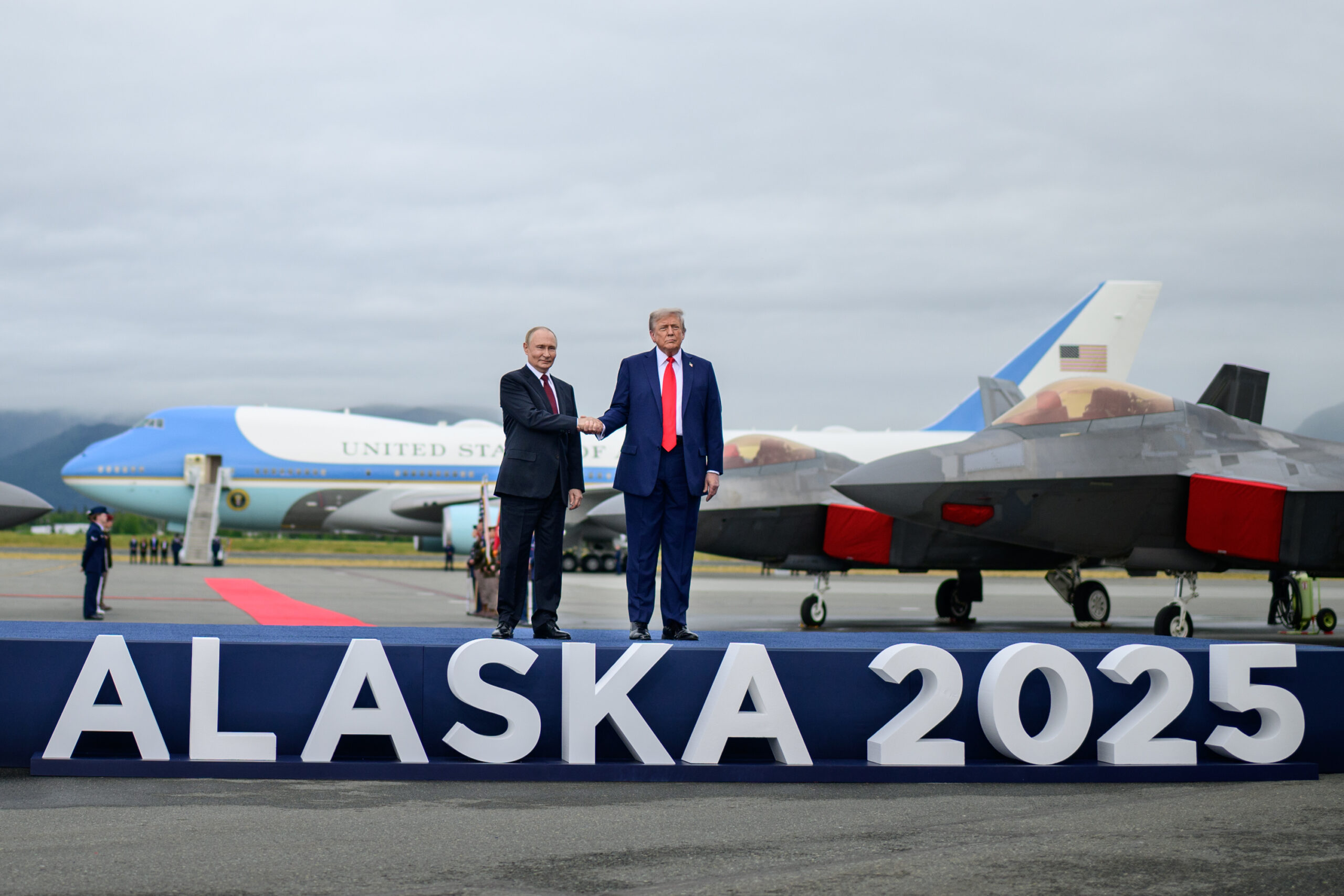
President Donald Trump walked into a summit with Russia’s Vladimir Putin pressing for a ceasefire deal and threatening “severe consequences” and tough new sanctions if the Kremlin leader failed to agree to halt the fighting in Ukraine.

Instead, Trump was the one who stood down, dropping his demand for a ceasefire in favor of pursuing a full peace accord — a position that aligns with Putin’s.

After calls with Ukrainian President Volodymyr Zelenskyy and European leaders, Trump wrote as he flew home from Friday’s meeting in Alaska that it had been “determined by all that the best way to end the horrific war between Russia and Ukraine is to go directly to a Peace Agreement, which would end the war, and not a mere Ceasefire Agreement, which often times do not hold up.”

It was a dramatic reversal that laid bare the challenges of dealing with Putin, a cunning adversary, as well as the complexities of a conflict that Trump had repeatedly boasted during his campaign that he could solve within 24 hours.

Few details have emerged about what the two leaders discussed or what constituted the progress they both touted. The White House did not respond to messages seeking comment Saturday.

While European leaders were relieved that Trump did not agree to a deal that ceded territory or otherwise favored Moscow, the summit allowed Putin to reclaim his place on the world stage and may have bought Russia more time to push forward with its offensive in Ukraine.

“We’re back to where we were before without him having gone to Alaska,” said Fiona Hill, who served as Trump’s senior adviser on Russia at the National Security Council during his first term, including when he last met Putin in Helsinki in 2018.

In an interview, Hill argued that Trump had emerged from the meeting in a weaker position on the world stage because of his reversal. Other leaders, she said, might now look at the U.S. president and think he’s “not the big guy that he thinks he is and certainly not the dealmaking genius.”

While European leaders were relieved that Trump did not agree to a deal that ceded territory or otherwise favored Moscow, the summit allowed Putin to reclaim his place on the world stage and may have bought Russia more time to push forward with its offensive in Ukraine.

Trump has “run up against a rock in the form of Putin, who doesn’t want anything from him apart from Ukraine,” she said.

At home, Democrats expressed alarm at what at times seemed like a day of deference, with Trump clapping for Putin as he walked down a red carpet during an elaborate ceremony welcoming him to U.S. soil for the first time in a decade. The two rode together in the presidential limousine and exchanged compliments.

Trump seemed to revel in particular in Putin echoing his oft-repeated assertion that Russia never would have invaded Ukraine if Trump had been in office instead of Democrat Joe Biden at the time.

Before news cameras, Trump did not use the opportunity to castigate Putin for launching the largest ground invasion in Europe since World War II or human rights abuses he’s been accused of committing. Instead, Putin was the one who spoke first, and invited Trump to join him in Moscow next.

“President Trump appears to have been played yet again by Vladimir Putin,” said Democratic Sen. Jeanne Shaheen of New Hampshire, ranking member of the Senate Foreign Relations Committee. “The President rolled out a red carpet and warmly greeted a murderous dictator on American soil and reports indicate he got nothing concrete in return.”

“Enough is enough,” she went on. “If President Trump won’t act, Congress must do so decisively by passing crushing sanctions when we return in the coming weeks.”

Sen. Jack Reed, a Rhode Island Democrat who is the ranking member of the Senate Armed Services Committee, said he supports diplomacy but “peacemaking must be done responsibly.”

“Instead of caving to Putin, the U.S. should join our allies in levying tough, targeted new sanctions on Russia to intensify the economic pressure,” he said.

Trump has tried to cast himself as a peacemaker, taking credit for helping deescalate conflicts between India and Pakistan as well as Thailand and Cambodia. He proudly mediated a peace agreement between Rwanda and the Democratic Republic of Congo and another between the leaders of Armenia and Azerbaijan to end decades of fighting.

Trump has set his eye on the Nobel Peace Prize, with numerous allies offering nominations.

But Trump has struggled to make headway on the world’s two most vexing conflicts: the Russia-Ukraine war and Israel’s offensive in Gaza against Hamas.

In Washington, the summit was met by little response from Trump’s allies. Republican lawmakers who spoke out were largely reserved and generally called for continued talks and constructive actions from the Trump administration.

“President Trump brought Rwanda and the DRC to terms, India and Pakistan to terms, Armenia and Azerbaijan to terms. I believe in our President, and believe he will do what he always does — rise to the challenge,” Rep. Brian Mast, a Florida Republican who chairs the House Foreign Affairs Committee, said in a statement to The Associated Press.

Sen. Lisa Murkowski, an Alaska Republican, wrote on social media after the summit that “while the press conference offered few details about their meeting” she was “cautiously optimistic about the signals that some level of progress was made.”

Murkowski said it “was also encouraging to hear both presidents reference future meetings” but that Ukraine “must be part of any negotiated settlement and must freely agree to its terms.”

Sen. Lindsey Graham, a South Carolina Republican and close Trump ally, offered that he was “very proud” of Trump for having had the face-to-face meeting and was “cautiously optimistic” that the war might end “well before Christmas” if a trilateral meeting between Trump, Zelenskyy and Putin transpires. Zelenskyy plans to meet with Trump in Washington on Monday, joined by European and NATO leaders.

“I have all the confidence in the world that Donald Trump will make it clear to Putin this war will never start again. If it does, you’re going to pay a heavy price,” he said on Fox News.

For some Trump allies, the very act of him meeting with Putin was success enough: conservative activist and podcaster Charlie Kirk called it “a great thing.”

But in Europe, the summit was seen as a major diplomatic coup for Putin, who has been eager to emerge from geopolitical isolation.

Former Russian President Dmitry Medvedev, deputy head of Russia’s Security Council, praised the summit as a breakthrough in restoring high-level dialogue between Moscow and Washington, describing the talks as “calm, without ultimatums and threats.”

Former Swedish Prime Minister Carl Bildt said the summit was “a distinct win for Putin. He didn’t yield an inch” but was also “a distinct setback for Trump. No ceasefire in sight.”

“What the world sees is a weak and wobbling America,” Bildt posted on X.

___

Republished with permission of The Associated Press.


Post Views: 0


Source link

Continue Reading

Politics

First Coast manufacturing was generally flat in November, with signs of improvement

Published

on


First Coast manufacturers put the brakes on contraction for the first time in months in November, though the general industrial picture was flat.

The University of North Florida (UNF) Jacksonville Economic Monitoring Survey (JEMS) shows several sectors of the manufacturing elements expanded in November, the most upbeat turnaround on the First Coast in several months. Seven out of the 12 elements of the UNF survey showed the Purchase Managers Index (PMI) expanded last month. That’s a big change from October, when only two sectors showed expansion.

“Jacksonville’s headline PMI of 50 in November indicates that local manufacturing activity was essentially flat. This stands in contrast to the national PMI of 48.2, which shows that U.S. manufacturing continued to contract at a faster pace,” said Albert Loh, Interim Dean of the UNF Coggin College of Business who oversees the JEMS survey.

“Still, a flat PMI is relatively positive when compared with deeper national declines and highlights Jacksonville’s resilience heading toward 2026.”

UNF researchers from the JEMS project reach out to First Coast manufacturing companies each month to see where they stand on production and several other factors.

One of the key factors that showed expansion for North Florida manufacturers in October was output, which jumped from a 49 figure in October to 53 in November.

“A reading of 53 suggests a modest but meaningful pickup in business activity in the region. While not signaling a boom, it reflects resilience and indicates that local firms are navigating cost pressures, supply chain adjustments, and mixed demand with cautious optimism,” the JEMS report concluded.

New orders, another high-profile manufacturing element, also showed a substantial uptick increasing from a figure of 49 in October to 52 in November.

“New orders are a leading indicator, so this improvement points to potentially stronger production, hiring, and inventory activity ahead,” the JEMS report said.

Other factors that showed expansion in North Florida last month included output prices, average input prices, quantity of input purchased, inventory of input purchased and business activity outlook over the next year.

Key elements that are still sluggish with contraction included employment, backlogs of work, finished goods inventory and suppliers’ delivery times. New export orders were unchanged.


Source link

Continue Reading

Politics

Democrats question how court cases upholding Florida’s congressional map warrant redrawing it

Published

on


No congressional maps were presented at a second meeting of the Florida House’s redistricting committee. Now, Democrats are questioning why any would be drafted at all.

Andy Bardos, counsel for the House, told members that two key court cases contribute to a different legal landscape than when the Legislature last approved congressional lines in 2022. Most importantly, the Florida Supreme Court upheld that map, which was drawn by Gov. Ron DeSantis’ staff and broke up a seat previously held by a Black Democrat. The other case out of Louisiana awaits a Supreme Court ruling in the coming term.

Rep. Kevin Chambliss, a Homestead Democrat, questioned how the Florida Supreme Court upholding the existing map merited the reconsideration of new lines.

“That map was deemed constitutional,” Chambliss said. “If that was conclusive to an action, then that means that’s done. So then what is the reason why we’re doing it now? I’m confused, because it seems like there was a conclusion there based on the court case, and now we’re having a conversation where the second court case isn’t even finished yet.”

Bardos stressed that the only reason the Florida Supreme Court considered the congressional map was because civil rights groups sued, but the legal challenge focused only on the breakup of the North Florida seat previously represented by U.S. Rep. Al Lawson.

Justices upheld the map, but determined the prior configuration of Lawson’s seat, itself the product of a 2015 Supreme Court decision, improperly considered race as the predominant motivation in drawing a district spanning from Tallahassee to Jacksonville.

“In the process of deciding that, the court articulated legal principles that had never before been set forth by a court in that way,” Bardos said.

For example, he said that even if lawmakers want to hold to a nondiminishment requirement in the “Fair Districts” amendments in Florida’s Constitution, lawmakers “can’t make race predominant.”

Still, Bardos in presentations also explained that portions of Florida’s Fair Districts remain unchanged, including a ban on drawing maps to favor a political party.

That could likely fuel any legal challenge to maps produced by the Legislature ahead of the 2026 Midterms. President Donald Trump has pressured Republican-controlled Legislatures to draw House maps that better improve the situation for Republicans.

Minutes before the Wednesday redistricting meeting, Republican National Committee Chair Joe Gruters, a member of the Florida Senate, reposted a prediction on X that Florida could net as many as five seats in redistricting. Florida’s U.S. House delegation currently includes 20 Republicans and eight Democrats.

But notably, the House is moving forward with redistricting before DeSantis or the Florida Senate takes action. Both the Governor and Senate President Ben Albritton said they think new cartography should wait until the Supreme Court rules in another redistricting case, Louisiana v. Callais.

“Just no matter what else happens, that is going to have to be addressed,” DeSantis said last week.

Bardos said any ruling on that case will only directly impact Louisiana. However, he said the Legislature may take action at any point to adhere to legal principles set forth in that ruling, issues that will impact any court challenges to political cartography in the future.

Rep. Bruce Antone, an Orlando Democrat, suggested there’s no legally compelling reason for the Legislature to look at maps right now.

“Once a state goes through the redistricting process, what compelling reasons would there be outside of a court case requiring redistricting?” Antone said. “What compelling reasons would require us to do this exercise a second time, mid-census?”

Rep. Mike Redondo, a Miami Republican chairing the House redistricting committee, said he didn’t want lawmakers discussing “hypotheticals,” including whether lawmakers would even consider a new map. He also said lawmakers can undertake whatever process they choose, including still deciding whether to undertake field meetings around Florida.

“As a body, we’re going to make those decisions in terms of how input will be received.”

But at the meeting on Wednesday, the committee took no public comment, including from South Florida members of the public who bussed to the hearing.


Source link

Continue Reading

Politics

Boca Raton police union endorses Fran Nachlas for Mayor

Published

on


Boca Raton Deputy Mayor Fran Nachlas’ campaign to remove “Deputy” from her title just got a boost from the city’s police union.

The Fraternal Order of Police, Lodge 35, is endorsing Nachlas due to her “consistent support for public safety, dedication to community partnership, and commitment to responsible leadership.”

Boca Raton will “continue to thrive as a safe, vibrant, and forward-moving community” under Nachlas’ mayoralty, the group added in its statement announcing the support.

“Fran has been a dedicated supporter of law enforcement and a strong advocate for our community,” the organization said in a separate Instagram post.

“Your steadfast commitment to ensuring the safety and well-being of our citizens, along with your keen understanding of the unique challenges faced by our officers, exemplify exceptional leadership and dedication. We have complete confidence in your ability to lead with integrity, compassion, and unwavering commitment to the community.”

Nachlas said in a statement that she is “profoundly honored” by the nod.

“Our officers put their lives on the line every day to keep our community safe, and their trust means the world to me,” she said. “As Mayor, I will continue to prioritize public safety, strengthen community partnerships, and ensure our police have the resources and support they need.”

Nachlas was named Boca’s Deputy Mayor in March. She is a past Chair of the Boca Raton Community Redevelopment Agency and member of the Boca Raton Community Advisory Council. She now serves on the Palm Beach County Transportation Planning Agency Governing Board, Florida League of Cities Development, Code Compliance and Redevelopment Committee in addition to her City Council duties.

She is one of three candidates competing to succeed term-limited Mayor Scott Singer, along with Boca Raton Council member Andy Thomson and Mike Liebelson, an energy executive-turned-adviser.

Nachlas and Liebelson are Republicans. Thomson is a Democrat.

Boca Raton’s municipal election is on March 10, 2026.


Source link

Continue Reading

Trending

Copyright © Miami Select.