Connect with us

Business

Startup down rounds are at a ten-year high, according to PitchBook data

Published

on


The soaring valuations of the early 2020s are, finally, coming back to earth.

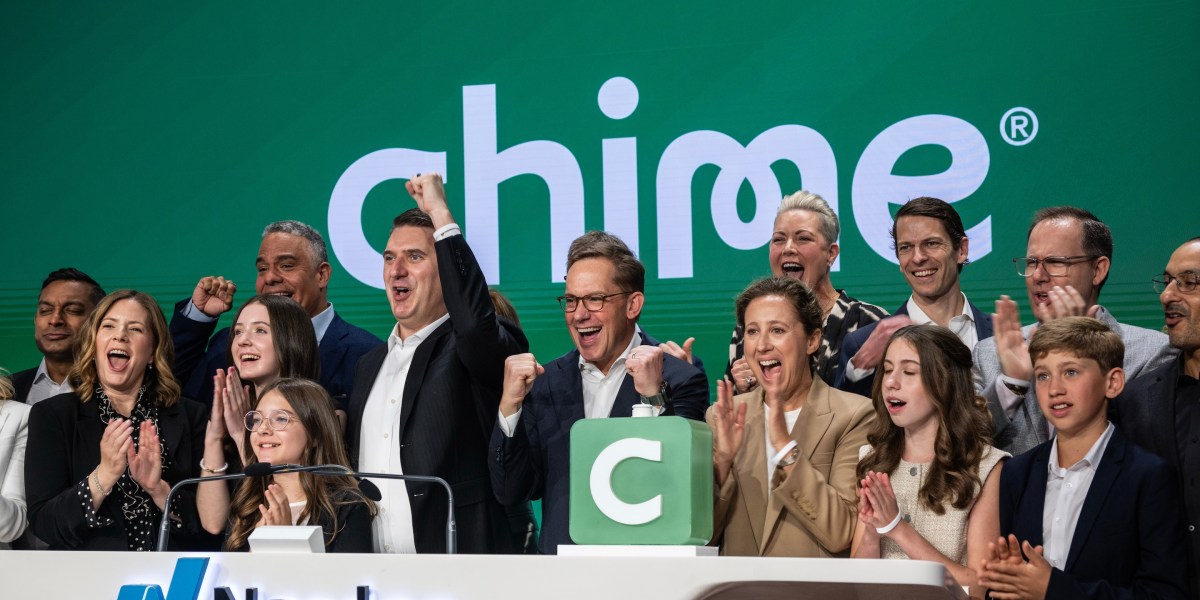
This week, PitchBook data revealed that 15.9% of venture-backed deals in 2025 so far have been down rounds, marking a decade high. Additionally, almost every major IPO listing in Q2 hit the public markets below its peak valuation, the data from PitchBook adds. Some examples include MNTN (at IPO, valuation was down from $2 billion to $1.1 billion), Circle (dropping from $7.7 billion to $5.8 billion), Hinge (valuation at IPO was $6.2 billion, down from the $23 billion high), and Chime (going public at $9.1 billion from a $25 billion peak valuation). 

AI continues to be a bright spot in many ways—but isn’t entirely exempt either, as 29.3% of down rounds were in PitchBook’s broad AI and machine learning vertical. Of course, the biggest names in AI—like OpenAI, reportedly heading towards a $500 billion valuation, and Anthropic, reportedly raising at a $170 billion valuation—continue to hit eye-popping levels. And lower on the food chain, AI is still consistently valued at a premium, with PitchBook reporting that median Series B step-up for AI startups is 2.1x, well above the median of 1.4x that all other categories fetch. 

The IPO market is, some would say, back. (I think it pretty much is, but also has been for a while, for those with the stomach for it.) In Q2, venture-backed startups in the U.S. generated $67 billion in exit value, PitchBook said—the highest since the last quarter of 2021. But here’s a sobering fact: There are still lots of unicorns out there, so distributions back to VC firms and by extension their LPs are limited. 

An unsurprising but ice-cold (and very down-to-earth) number to leave you with: The unicorns that have made their public debut this year comprise a mere 1% of all U.S. unicorns.

See you tomorrow,

Allie Garfinkle
X:
@agarfinks
Email: alexandra.garfinkle@fortune.com
Submit a deal for the Term Sheet newsletter here.

Joey Abrams curated the deals section of today’s newsletter. Subscribe here.

Venture Deals

Reprieve Cardiovascular, a Milford, Mass.-based developer of intelligent decongestion management therapy designed to treat acute decompensated heart failure, raised $61 million in Series B funding. Deerfield Management led the round and was joined by Arboretum Ventures, Lightstone Ventures, Sante Ventures, Genesis Capital, and others.

Protege, a New York City-based developer of data sets designed for AI training, raised $25 million in Series A funding. Footwork led the round and was joined by CRV, Bloomberg Beta, Flex Capital, Liquid 2 Ventures, Shaper Capital, and others.

Evertune, a New York City-based AI marketing platform, raised $15 million in Series A funding. Felicis Ventures led the round and was joined by Eniac Ventures, NextView Ventures, and angel investors. 

Isaac Health, a New York City-based health technology company for brain health and dementia care, raised $10.5 million in Series A funding. Flare Capital led the round and was joined by Industry Ventures, Black Opal Ventures, Meridian Street Capital, B Capital, and Primetime Partners.

Thread, a New York City-based developer of an AI service desk for managed service providers, raised $8 million in funding. Integr8d Capital and David Bellini led the round and were joined by Headline, Adam Slutskin, Vince Kent, and others.

Infinity Loop, a New York City-based AI-powered contract intelligence platform, raised $5 million in seed funding. Glasswing Ventures and TIAA Ventures led the round and were joined by Plug and Play, Restive Ventures, and angel investors.

Studio Atelico, a San Francisco and London, U.K.-based developer of an AI engine for video games, raised $5 million in seed funding from Air Street Capital and angel investors.

Prefer, a Singapore-based food tech company, raised $4.2 million in funding. At One Ventures and Chancery Hill Capital led the round and were joined by existing investor Forge Ventures.

Archestra, a London, U.K.-based platform designed to enable companies to securely use AI agents and connect them to internal data sources safely, raised $3.3 million in pre-seed funding. Concept Ventures led the round and was joined by Zero Prime Ventures, Celero Ventures, RTP Global, and others.

Private Equity

Crestview Partners and DigitalBridge Investments agreed to take WideOpenWest, an Englewood, Colo.-based broadband provider, private for approximately $1.5 billion. 

Agility Retail Group, backed by San Francisco Equity Partners, acquired Infinity Retail Services, a Turtle Lake, Wis.-based designer and manufacturer of retail fixtures and displays. Financial terms were not disclosed.

Blue Owl Capital acquired South Reach Networks, a Miami, Fla.-based fiber infrastructure provider. Financial terms were not disclosed. 

Exits

Cardinal Health agreed to acquire Solaris Health, a Fort Lauderdale, Fla.-based health care platform, from Lee Equity Partners for $1.9 billion.

Other

PNC Bank agreed to acquire Aqueduct Capital Group, a New York City-based broker dealer. Financial terms were not disclosed.

People

H.I.G. Capital, a Miami, Fla.-based private equity firm, hired Harrison B. Davis as a managing director on its Small-Cap & Growth team. He previously was with TZP Group.

This is the web version of Term Sheet, a daily newsletter on the biggest deals and dealmakers in venture capital and private equity. Sign up for free.


Source link

Continue Reading

Business

Paramount launches WBD hostile bid that includes Trump son-in-law Jared Kushner

Published

on


In a separate regulatory filing, Paramount disclosed that Affinity Partners, the private equity firm led by Jared Kushner, is part of the bid. It added that sovereign wealth funds from Saudi Arabia, Abu Dhabi, and Qatar are also participating.

Affinity and the other outside financing partners have agreed to forgo any governance rights, which Paramount said means the Committee on Foreign Investment in the United States would have no jurisdiction over the transaction. Meanwhile, Chinese tech conglomerate Tencent is no longer a partner.

The offer comes after Paramount lost out in the bidding war for the assets last week to Netflix, which made a cash-and-stock deal worth $27.75 per share. Paramount’s proposed transaction is for the entirety of WBD, including the Global Networks segment, while Netflix’s deal is for the studio and HBO Max.

Paramount argued its offer to WBD shareholders provides a superior alternative to the Netflix transaction, which offers “inferior and uncertain value and exposes WBD shareholders to a protracted multi-jurisdictional regulatory clearance process with an uncertain outcome,” referring to the likely antitrust concerns for Netflix’s megadeal.

At the Kennedy Center over the weekend, President Donald Trump partially confirmed reporting from Bloomberg’s Lucas Shaw about his private conversations with Netflix co-CEO Ted Sarandos, saying they had met in the Oval Office before Netflix announced its winning bid, while adding that its combined market share with WBD could be an antitrust concern.

Paramount argued that WBD’s recommendation of the Netflix offer is based on an “illusory prospective valuation of Global Networks that is unsupported by the business fundamentals” and encumbered by high levels of financial leverage assigned to the entity. Netflix’s offer would assume $11 billion of debt and involve a $59 billion bridge loan, which Bloomberg reported was among the highest ever.

David Ellison, chairman and CEO of Paramount, said: “WBD shareholders deserve an opportunity to consider our superior all-cash offer for their shares in the entire company.”

Paramount, which earlier sent a letter to WBD CEO David Zaslav complaining of a “tainted” sale process, further asserted today that although Paramount made six offers for WBD over 12 weeks, “WBD never engaged meaningfully with these proposals, which we believe deliver the best outcome for WBD shareholders.

“We believe our offer will create a stronger Hollywood. It is in the best interests of the creative community, consumers, and the movie theater industry. We believe they will benefit from the enhanced competition, higher content spend and theatrical release output, and a greater number of movies in theaters as a result of our proposed transaction,” Ellison continued. “We look forward to working to expeditiously deliver this opportunity so that all stakeholders can begin to capitalize on the benefits of the combined company.”

Paramount’s tender offer is scheduled to expire at 5 p.m. ET on Jan. 8, 2026. The company said its offer will be financed by new equity backstopped by Paramount’s well-capitalized principal equity holders, and $54 billion of debt commitments from Bank of America, Citi, and Apollo.

Centerview Partners and RedBird Advisors are acting as lead financial advisors to Paramount, and Bank of America Securities, Citi, and M. Klein & Co. are also acting as financial advisors. Cravath Swaine & Moore and Latham & Watkins are acting as legal counsel to Paramount.

Disclosure: The author worked at Netflix from June 2024 through July 2025.


Source link

Continue Reading

Business

Craigslist founder signs the Giving Pledge, and some of his fortune will go to a pigeon rescue

Published

on


Of the wealthiest people in the world, about 250 have pledged to give away the majority of their fortune—an effort coined the Giving Pledge. It was started by Bill Gates, Melinda French Gates, and Warren Buffett in 2010, and billionaires including Mark Zuckerberg, Elon Musk, Larry Ellison, and Bill Ackman have signed on. 

Although it’s often also referred to as the “Billionaire’s Pledge,” other wealthy donors have committed to the endeavor. One of the latest signatories is Craigslist founder Craig Newmark, who announced on LinkedIn this weekend he’s officially joining the Giving Pledge.

“Okay, I’ve formally signed up for the Giving Pledge, sometimes considered the Billionaire’s Pledge, though I’ve never been a billionaire, particularly after I gave away all my Craigslist equity to my charitable foundation,” Newmark wrote. “Seems like a good way to officially enter my middle seventies, which I’ve done today.”

Newark built his fortune by founding popular online marketplace Craiglist in 1995. It started as an email list for local San Francisco residents, but turned into an online classifieds page the following year. Today, Craigslist is estimated to be worth about $3 billion

“This all feels like a follow up to my decision in early 1999 to monetize Craigslist as little as possible,” Newmark said of signing Giving Pledge. “The best estimate so far is that I turned down around $11B that bankers and VCs wanted to throw at me. I still made plenty after that.”

In 2020, Forbes estimated Newmark’s net worth at $1.3 billion, although in 2022 he said he’d give away most of his fortune to charitable causes. There aren’t more recent estimates of his net worth, but he emphasized in his LinkedIn post he is not a billionaire.

His foundation, Craig Newmark Philanthropies, mostly supports cybersecurity and veterans causes. And in his post committing to the Giving Pledge, Newmark said he’d continue making similar donations. 

“My focus is where I can do some actual good in neglected areas, like for military families and vets, like fighting cyberattacks and preventing scams,” he wrote. “Also, a little for pigeon rescue.”

Wait, what?

Newmark is also dedicated to rescuing pigeons. 

“I love birds, have a sense of humor, and I suspect that pigeons may become our replacement species,” he told the Associated Press in 2023.

His favorite neighborhood pigeon is named Ghostface Killah, who is featured in a painting on his mantle at home. 

He said he developed his love for pigeons in the mid-1980s when he lived in Detroit. Pigeons are “the underdog,” he told NYU’s student newspaper Washington Square News

“They’re the grassroots, most prominent bird and possibly our successor species,” Newmark said. “But pigeons are, well, I identify with them as well. I grew up with no money, living across the street from a junkyard.”

Early this year, Newmark donated $30,000 to San Francisco-based pigeon rescue Palomacy, which was the largest donation the organization had ever received. 

“Craig Newmark is many things: the founder of craigslist, an ‘accidental entrepreneur,’ a self-proclaimed old-school nerd, a full-time philanthropist and a life-long lover of pigeons,” Palomacy said in January. “We so appreciate the support they provide our feathered friends.”

With Newmark’s donation, Palomacy can continue to “save hundreds of pigeons and doves through hands-on rescue, rehabilitation, and rehoming in Northern California,” according to the organization. “We are reversing the unfair stigma against pigeons and showing the world they deserve our respect and protection.”

Recent criticisms of the Giving Pledge

Although there undoubtedly are some billionaires and other high-net-worth individuals who are genuinely committed to the Giving Pledge, there has been recent criticism many of the signatories aren’t living up to the pledge. Even Melinda French Gates, one of its founders, recently said people could be doing more. 

“Have they given enough? No,” she said in a recent interview with Wired.

Treasury Secretary Scott Bessent last week also called the Giving Pledge a failure—but for different reasons. He said it was “well intentioned,” but was “very amorphous” and claimed wealthy people made the commitment out of fear that the public would “come at it with pitchforks.” Bessent also pointed out that not many billionaires have actually delivered on their promise to donate their fortunes. 

Warren Buffett, another Giving Pledge founder, also recently admitted he had to rethink some of his original philanthropic plans.

“Early on, I contemplated various grand philanthropic plans. Though I was stubborn, these did not prove feasible,” he wrote in a recent letter to shareholders. “During my many years, I’ve also watched ill-conceived wealth transfers by political hacks, dynastic choices, and, yes, inept or quirky philanthropists.” 

Several studies have also poked holes in the Giving Pledge, showing how it’s benefitted billionaires by presenting themselves as generous and public‑spirited, but doesn’t question inequalities and tax rules that led to such massive wealth in the first place.

The Institute for Policy Studies (IPS) argues the Giving Pledge is “unfulfilled, unfulfillable, and not our ticket to a fairer, better future.” 

To be sure, many wealthy signatories like Newmark appear to be genuinely committed to the cause. 

“Like I say, a nerd’s gotta do what a nerd’s gotta do, and a nerd should practice what he preaches,” Newmark wrote over the weekend.


Source link

Continue Reading

Business

Nvidia CEO Jensen Huang urges a return to factory careers: ‘Not everyone needs a PhD’

Published

on


“We want to re-industrialize the United States. We need to be back in manufacturing,” Huang said recently on theJoe Rogan Experience podcast. “Every successful person doesn’t need to have a PhD. Every successful person doesn’t have to have gone to Stanford or MIT.”

Huang believes more Americans need to take on manufacturing gigs—not just to pivot to where the work will be in the age of AI, but also because the entire industry could be at risk. As much as the thought of U.S. citizens heading back into factories may seem like a back-track, he said it impacts the nation’s ability to remain prosperous and build AI companies like his.

“If [the] the United States doesn’t grow, we will have no prosperity,” Huang continued. “We can’t invest in anything domestically or otherwise—we can’t fix any of our problems. If we don’t have energy growth, we can’t have industrial growth. If we don’t have industrial growth, we can’t have job growth. It’s as simple as that.”

“If not for [Trump’s] pro-growth energy policy, we would not be able to build factories for AI, not be able to build chip factories, we surely won’t be able to build supercomputer factories. None of that stuff would be possible without all of that. Construction jobs would be challenged, electrician jobs—all of these jobs that are now flourishing, would be challenged.”

Lutnick’s intergenerational manufacturing push amid talent shortages

As the cofounder and leader of the world’s most valuable company, Huang has a peek under the hood of America’s changing workforce dynamic. The CEO of the $4.53 trillion chip giant has a direct line to U.S. President Donald Trump and Secretary of Commerce Howard Lutnick, who are determined to bring U.S. manufacturing back to its glory days. 

The Trump administration is pressing for American self-reliance while curbing immigration, leading officials like Lutnick to push for an intergenerational manufacturing boom. He even framed it as a step into the future, not a stumble back into the past. 

For example, Lutnick claimed that technician jobs are promising gigs with a low barrier to entry, that can pay anywhere between $70,000 to $90,000 at the onset—no college degree required. 

“It’s time to train people not to do the jobs of the past, but to do the great jobs of the future,” Lutnick toldCNBC earlier this year. “This is the new model, where you work in these plants for the rest of your life, and your kids work here, and your grandkids work here.”

It’s an appealing proposition: avoid college debt and earn more than the average U.S. worker, all while having stability during an AI jobs wipeout. Yet many manufacturing roles have been left unfilled, despite the sector continuing to grow. 

Employment in the manufacturing surpassed pre-pandemic levels, standing at about 13 million jobs as of January 2024, according toDeloitte. It was estimated that the need for human workers in manufacturing could stand at around 3.8 million, but over half of these jobs—around 1.9 million—could remain unfilled if skill gaps aren’t addressed and the tune on the jobs doesn’t change. 

After all, only 14% of Gen Zers said they’d consider industrial work as a career, according to a 2023 study from Soter Analytics. There are a few concerns holding them back: they believe the industry doesn’t offer work flexibility, and the conditions are unsafe.

Huang even believes robots will create new jobs for humans

Huang has hope for the future of jobs, even as robot employees step onto the scene—and it’ll give yet another boost to factory jobs. 

Some tech leaders, like Tesla CEO Elon Musk, are already developing their own fleets of autonomous workers; Musk predicted his company’s Optimus humanoid robots will be used internally within Tesla by the end of 2025, and the following year, other companies will have the tech in their hands. 

It’s assumed that these robots will take over the work of employees, leaving humans high and dry—but Huang is optimistic that the tech will create new opportunities, especially for technicians.

“I’m super excited about the robots Elon’s working on. It’s still a few years away. When it happens, there’s a whole new industry of technicians and people who have to manufacture the robots,” Huang explained in the podcast. 

“You’re going to have a whole apparel industry for robots. You’re going to have mechanics for robots. And you have people who come to maintain your robots.”


Source link

Continue Reading

Trending

Copyright © Miami Select.