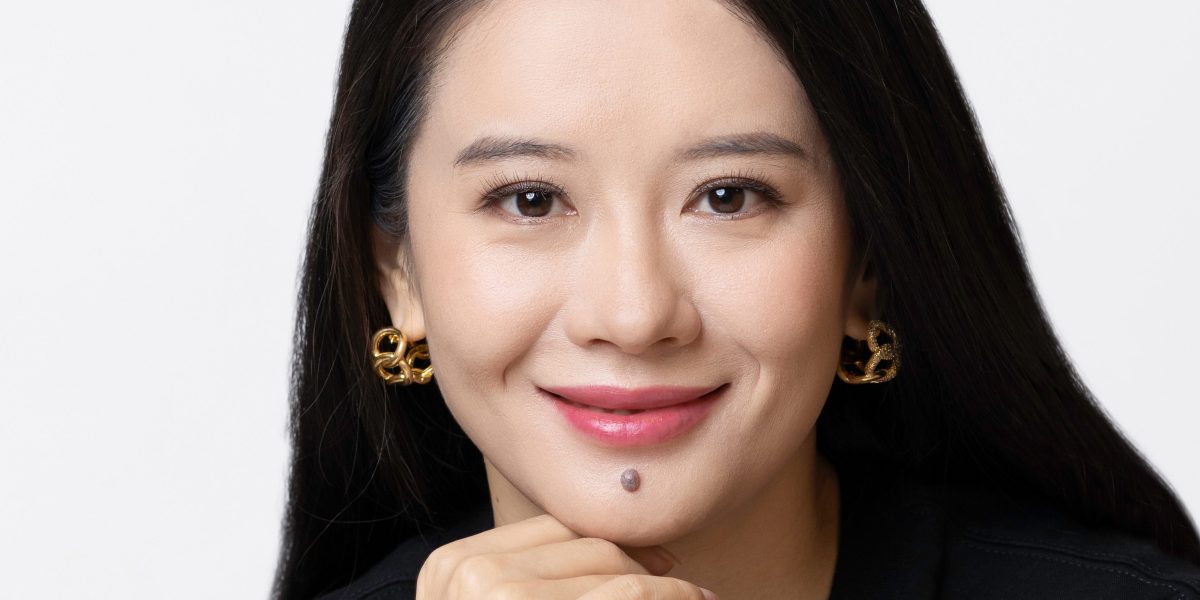
When Yi He was a girl in the 1980s, she walked to the well for water and relied on kerosene lamps at times to light the house. Things are different now. Today, Yi He is a celebrity to millions of Chinese and a multibillionaire thanks to her reported 10% stake in the world’s largest cryptocurrency exchange, Binance, where she wields enormous influence as a cofounder and senior executive. Still, life has not been easy.
Binance’s other cofounder, the flamboyant Changpeng Zhao, went to prison last year in the United States as part of a $4 billion plea deal. The situation created a huge business challenge for Binance and for Yi He, a painful personal one since Zhao was not only the company’s CEO but is the father of her young children.
Today, Binance appears to have weathered the ordeal. Zhao has served his sentence, and Binance, despite incurring the sort of blow that would have crippled most companies, is still on top as the world’s biggest cryptocurrency exchange. Yi He has been instrumental in achieving this, and after years of wielding power behind the scenes, is taking on a more public role running Binance.
In a rare interview, Yi He told Fortune about her journey from poor village girl to crypto billionaire, the tests she faced during Binance’s year of crisis, and her vision for an industry that is fast transforming global finance.
The common touch
In the course of her life and career, Yi He has overcome many obstacles—one of which has been learning English, which she only took up four years ago in her mid-thirties. During a long Zoom interview, He acquits herself well, only falling back on her translator when she struggles to explain a Chinese idiom or proverb.
The power of communication is something Yi He knows well. At Binance, she is renowned for her marketing and customer service skills, which helped vault the exchange to the biggest in the world in less than a year. To this day, she prides herself on listening to Binance clients on Telegram, X, WeChat, and any other platform where they might be found, and insists everyone else do the same. She has famously required that everyone who comes to work at Binance spend a few weeks on the front lines of customer service.
Yi He describes a recent encounter with a university student who had sent $500 worth of crypto to the wrong wallet, a common mistake and one that typically means the funds are gone for good. Yi He, though, took the time to track down and recover the misdirected funds, recalling how the student had told her, “It’s a small figure for you but everything to me.”
Yi He says she can empathize with such stories given her own experience growing up poor in Sichuan province, where she lost her father at age 9 and, when she was 16, spent long hours working to promote soft drinks outside a supermarket. Though she ultimately made her way to university—He pauses to recall the delights of being in a library for the first time—and a career as a TV host, she says her humble beginnings mean she can still relate to Binance’s many customers of modest means.
Yi He’s tale has echoes of Jennifer Lopez’s “Jenny From the Block,” a song about a beautiful woman who keeps the common touch even after she is rich and famous—the sort of story Americans lap up.
But that’s not how it plays in China, says Eowyn Chen, CEO of crypto firm Trust Wallet, who formerly worked for Yi He at Binance. According to Chen, Chinese people are less inclined to root for the underdog, and are more likely instead to hurl insults at those who have risen above their station. Chen says Yi He is the regular target of articles and social media barbs that seek to demean and ridicule her, but that her response is to turn negative rhetoric against those lobbing it.
“She tells people, ‘Sure, I came from a crappy background and made good, so why don’t you do the same?’” says Chen.
Yi He, whom Bloomberg dubbed “the most powerful woman in crypto,” has climbed to the top of the blockchain world using this mix of smarts, hustle, and cockiness—qualities she shares with her cofounder and romantic partner.
Building Binance
When Changpeng Zhao launched Binance in 2017, he had already built an outsize public persona as CZ, by which he is universally known today. Zhao built up the CZ mythology by taking outsize risks—like selling his Shanghai apartment in 2014 to buy more Bitcoin—and by enthusiastically joining in the daily shitposting for the very online community known as Crypto Twitter.
Zhao asked Yi He to join Binance in its early days but only after she had first recruited him years earlier, when she persuaded him to join her as chief technology officer at the exchange OKCoin (now OKX) in 2014. The pair shared an enthusiasm for crypto but other qualities as well. Zhao, like Yi He, spent his early years in an unheated, rural schoolhouse until his father immigrated to Canada where, in high school, Zhao worked minimum wage jobs at Chevron and McDonald’s. Zhao is also inclined to clap back at those who mock his background, even retweeting memes of himself in a Golden Arches uniform.
It was during their time at OKCoin that the pair became a couple as they gained experience operating a massive crypto business. Today, the pair, who never married but remain romantically involved, work closely as parents and business partners. Yi He is co-owner with Zhao of Binance’s venture capital arm turned family office, YZi Labs, and owns at least 10% of shares in the parent company, according to the Wall Street Journal.
On the nature of her relationship with Zhao, Yi He asked not to be quoted on the record and instead provided a written statement: “My personal life is independent from my professional life. My achievements and capabilities as cofounder are often overlooked with my personal life in question,” she wrote, while touting a Binance user base of 280 million customers.
Whatever the personal dimensions of the relationship, the professional side of it has proved highly effective, with Yi He roughly serving as the Binance equivalent of Sheryl Sandberg, the executive who helped build Facebook in its early days while helping to ground the then-unpolished CEO, Mark Zuckerberg.
In practice, this has meant Zhao occupying the role of Binance’s larger-than-life frontman and product visionary, with Yi He fanning massive growth through aggressive promotions, including car giveaways. Her approach found favor with the Chinese community abroad and also in China, where crypto is technically banned but still hugely popular, in part because it is an easily transferable asset beyond the reach of government capital controls.
A Binance employee who asked not to be named so as to discuss the firm’s executives described Yi He as an exacting boss, but one who supports employees and advocates for those around her. In discussing Binance’s day-to-day operations, Yi He said a core tenet at the company is “founder culture,” a phrase from the tech world that describes firms that retain the original drive of their early startup days.
In the case of Binance, those early days were defined in part by a willingness to play fast and loose with regulation, and to hopscotch from country to country in response to government scrutiny. While that strategy helped fuel Binance’s incredible growth, it has at times also been the company’s biggest weakness—one that caused it to lose its most prominent founder.
Binance after CZ
By early 2023, the walls were closing in. Following the collapse of Sam Bankman-Fried’s FTX exchange the previous year, the Biden administration redoubled its efforts to bring the crypto sector to heel—with a particular focus on the sector’s biggest player, Binance. The company’s lawyers had been in discussions with the Justice Department about various allegations for years, but finally the time had come to make a deal.
In September of 2023, the agency announced a sweeping settlement that would not only see Binance pay a whopping $4.3 billion fine—the largest of its kind in corporate history—but also force Zhao to step down as CEO and plead guilty to charges of failing to implement adequate anti-money-laundering measures. Both the Wall Street Journal and Reuters, meanwhile, cited multiple unnamed sources to claim the agency sought to force Yi He to leave the company as well. (“Binance’s plea agreements with the U.S. regulators are a matter of public record,” said a company spokesperson.)
Despite this massive blow to both its treasury and leadership, Binance two years later remains the biggest crypto exchange by far under Zhao’s successor, Richard Teng. A former top regulator from Singapore, Teng has helped the company implement a raft of compliance measures and project a new image that suggests it has evolved beyond the fast-and-loose tactics of its early days. In January, Binance also took a major step—for the first time introducing a formal board structure, featuring seven members including Teng and three independent directors.
Despite all this, a former employee at the company told Fortune that the power at Binance very much resides where it always has—with Zhao, Yi He, and two other early Binance executives, Lilai “Roger” Wang and Wei “Sonny” Zhou. The person, who asked not to be identified in order to speak candidly, added that Yi He has a final say in all personnel matters and exerts the greatest authority when it comes to customer experience decisions. The Binance spokesperson, meanwhile, said the claim is not accurate and that the company’s culture encourages employees to exercise a high degree of autonomy.
The founder of a venture capital firm, meanwhile, described Binance as a company run with an “iron fist” that, despite dealing with new legal constraints and the challenge of running a sprawling global operation, is in no danger of losing its place as market leader. This assessment appears to be supported by recent data, supplied by CoinGecko, that shows Binance holding on to the lion’s share of trading activity—39% of volume on centralized exchanges in June—despite the emergence of new competitors:
For Yi He, Binance’s ongoing dominance comes as a validation of her customer-first strategy, and of the company founder’s personal devotion to crypto—a technology she views as transformational, to the same degree that the arrival of the internet changed traditional media and TV.
Yi He predicts that crypto will accelerate its push into the conventional financial system through stablecoins and other blockchain technologies and that, in five to 10 years, both realms will be fully integrated with each other.
On a personal level, Yi He says the mass adoption of crypto feels like yet another massive technological change she has experienced since the days of her girlhood not so long ago, when her house didn’t have electricity or running water.
As for the trials she’s experienced along the way, she cites a Mongolian proverb: “Since you have spoken well, do not speak of pain. If you speak of the good, do not mention the pain.”








 Politics8 years ago