Connect with us

Business

Successful CEOs use ‘the rule of 5’ to create and keep new habits, says the career coach to the Fortune 500

Published

on


I hear the same thing from many leaders: “From the outside in, it looks like I’m doing great, but the truth is I’m a bit miserable, frustrated with myself, and feeling stuck.” Surprisingly, to address our own situations, most of us already know a directional step we could take or stop taking, but we don’t do it. Why? And how can we solve that?

Hold up one hand. Count your fingers, out loud.

Do it again, and for five seconds, see if you can focus only on how incredible your fingers are. Wiggle them. Flash them. Say out loud with a smile, “Power of Five.”

Your hand is your prop to remind you. Five is your anchor.

Just start for five seconds and get a streak going

Mel Robbins’s The 5 Second Rule and James Clear’s Atomic Habits overlap beautifully: action before motivation.

If you want to run, commit to putting on your running shoes for five seconds every day. That’s it.

Sounds silly, right? But here’s what happens: Shoes go on, you think, “Hmm, might as well walk to the mailbox.” Halfway to the mailbox, you think, “I can make it to the corner.” At the corner, you keep going. Some days it’s a short walk, other days you run sprints. But it started with your five magic seconds.

Here’s the thing. We don’t need to put motivation into you. We need to let it out. Action releases emotion. Starting takes less than five seconds. Momentum does the rest.

Apply the Power of Five anywhere:

  • Better hydration: Start your day with five sips of water.
  • Healthier eating: Eat five spoonfuls of oatmeal or five forkfuls of salad, first. Oats release energy slowly, keeping you steady all day (it’s why they feed them to horses). The body reacts most to what the stomach lining senses first. If you’re going to have healthy and junk, get healthy in first.  
  • Learning: Study five new words of a language. (My friend Severin Hacker, cofounder of Duolingo, says 12 million people have a streak over 365 days!)
  • Finances: Save $5, €5, or ¥5 a day. It will shift how you think about finance.
  • Writing: Write five words a day for your book.
  • Patience: When someone cuts you off in traffic, count to five before “flipping.” No, wait! I mean five seconds before you sigh and say, “Maybe they’re just having a day.”
  • Work: Before even reading emails, put in five minutes on your toughest project. Eat the frog first.
  • Your idea: The best ideas come from you, not me. What’s yours for the Power of Five? 

Why it works

We humans adapt fast. Really fast. It’s kind of our superpower. But you must pledge to use your superpowers for good! It only takes five days to start getting in shape, and five to start losing it. There’s still so much we don’t know about the brain, but the latest research is that bodies and minds influence each other more than we realized. Physically doing something signals to your brain: This matters.

As Millard Fuller, cofounder of Habitat for Humanity, said: “It’s easier to act yourself into a new way of thinking than to think yourself into a new way of acting.”

The worst thing isn’t starting without a plan. The worst thing is never starting at all.

I’ll give you a little CEO secret from working with so many successful people. It looks like they planned it all out and never struggled, but the truth is very different. Everyone is a walking bundle of hopes, strengths, dreams, and insecurities. No exceptions.

The only way up the mountain is to stumble. To skin your knees. To feel a little lost. To be out of breath. If you’re not out of breath, you’re not climbing. You’re coasting. 

Ready to change?

Just … start.

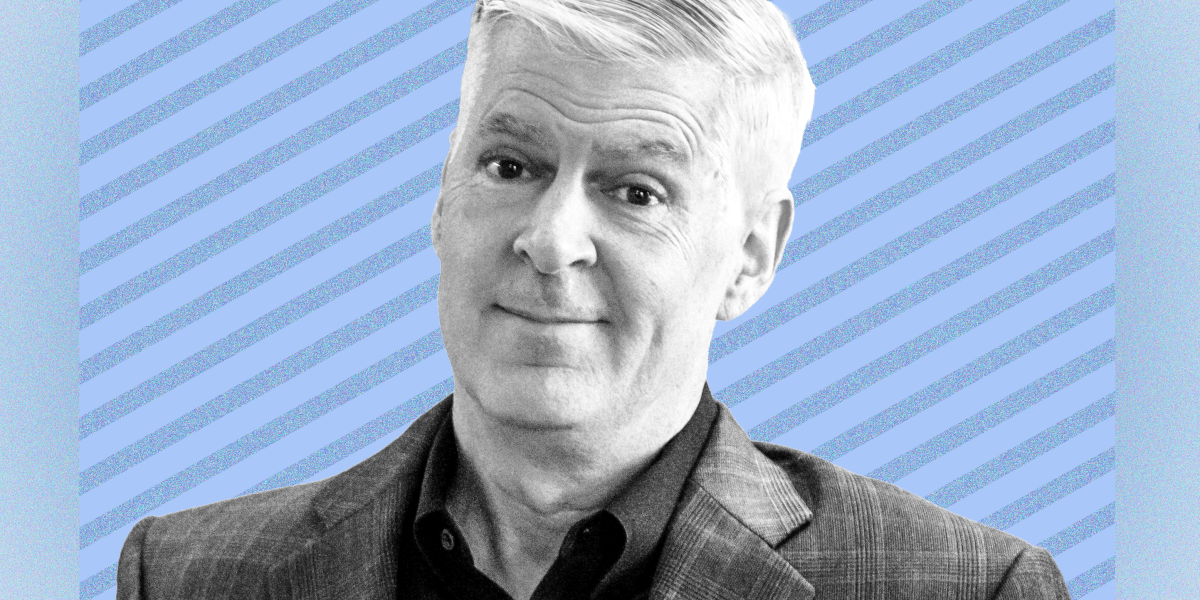
Bill Hoogterp is an author, entrepreneur, and one of the top executive coaches worldwide. He has advised dozens of Fortune 500 CEOs, and last year his company LifeHikes offered trainings at more than 100 global companies in 47 countries and seven languages. To learn more about Bill, visit lifehikes.com. To ask Bill a question for a future column, email bill_hoogterp@lifehikes.com.

Introducing the 2025 Fortune Global 500, the definitive ranking of the biggest companies in the world. Explore this year’s list.


Source link

Continue Reading

Business

US vaccine advisers end decades-long recommendation for all babies to get hepatitis B shot at birth

Published

on


A federal vaccine advisory committee voted on Friday to end the longstanding recommendation that all U.S. babies get the hepatitis B vaccine on the day they’re born.

A loud chorus of medical and public health leaders decried the actions of the panel, whose current members were all appointed by U.S. Health Secretary Robert F. Kennedy Jr. — a leading anti-vaccine activist before this year becoming the nation’s top health official.

“This is the group that can’t shoot straight,” said Dr. William Schaffner, a Vanderbilt University vaccine expert who for decades has been involved with the Advisory Committee on Immunization Practices and its workgroups.

Several medical societies and state health departments said they would continue to recommend them. While people may have to check their policies, the trade group AHIP, formerly known as America’s Health Insurance Plans, said its members still will cover the birth dose of the hepatitis B vaccine.

For decades, the government has advised that all babies be vaccinated against the liver infection right after birth. The shots are widely considered to be a public health success for preventing thousands of illnesses.

But Kennedy’s advisory committee decided to recommend the birth dose only for babies whose mothers test positive, and in cases where the mom wasn’t tested.

For other babies, it will be up to the parents and their doctors to decide if a birth dose is appropriate. The committee voted 8-3 to suggest that when a family elects to wait, then the vaccination series should begin when the child is 2 months old.

President Donald Trump posted a message late Friday calling the vote a “very good decision.”

The acting director of the Centers for Disease Control and Prevention, Jim O’Neill, is expected to decide later whether to accept the committee’s recommendation.

The decision marks a return to a health strategy abandoned more than three decades ago

Asked why the newly-appointed committee moved quickly to reexamine the recommendation, committee member Vicky Pebsworth on Thursday cited “pressure from stakeholder groups,” without naming them.

Committee members said the risk of infection for most babies is very low and that earlier research that found the shots were safe for infants was inadequate.

They also worried that in many cases, doctors and nurses don’t have full conversations with parents about the pros and cons of the birth-dose vaccination.

The committee members voiced interest in hearing the input from public health and medical professionals, but chose to ignore the experts’ repeated pleas to leave the recommendations alone.

The committee gives advice to the director of the Centers for Disease Control and Prevention on how approved vaccines should be used. CDC directors almost always adopted the committee’s recommendations, which were widely heeded by doctors and guide vaccination programs. But the agency currently has no director, leaving acting director O’Neill to decide.

In June, Kennedy fired the entire 17-member panel earlier this year and replaced it with a group that includes several anti-vaccine voices.

Hepatitis B and delaying birth doses

Hepatitis B is a serious liver infection that, for most people, lasts less than six months. But for some, especially infants and children, it can become a long-lasting problem that can lead to liver failure, liver cancer and scarring called cirrhosis.

In adults, the virus is spread through sex or through sharing needles during injection drug use. But it can also be passed from an infected mother to a baby.

In 1991, the committee recommended an initial dose of hepatitis B vaccine at birth. Experts say quick immunization is crucial to prevent infection from taking root. And, indeed, cases in children have plummeted.

Still, several members of Kennedy’s committee voiced discomfort with vaccinating all newborns. They argued that past safety studies of the vaccine in newborns were limited and it’s possible that larger, long-term studies could uncover a problem with the birth dose.

But two members said they saw no documented evidence of harm from the birth doses and suggested concern was based on speculation.

Three panel members asked about the scientific basis for saying that the first dose could be delayed for two months for many babies.

“This is unconscionable,” said committee member Dr. Joseph Hibbeln, who repeatedly voiced opposition to the proposal during the sometimes-heated two-day meeting.

The committee’s chair, Dr. Kirk Milhoan, said two months was chosen as a point where infants had matured beyond the neonatal stage. Hibbeln countered that there was no data presented that two months is an appropriate cut-off.

Dr. Cody Meissner also questioned a second proposal — which passed 6-4 — that said parents consider talking to pediatricians about blood tests meant to measure whether hep B shots have created protective antibodies.

Such testing is not standard pediatric practice after vaccination. Proponents said it could be a new way to see if fewer shots are adequate.

A CDC hepatitis expert, Adam Langer, said results could vary from child to child and would be an erratic way to assess if fewer doses work. He also noted there’s no good evidence that three shots pose harm to kids.

Meissner attacked the proposal, saying the language “is kind of making things up.”

Health experts say this could ‘make America sicker’

Health experts have noted Kennedy’s hand-picked committee is focused on the pros and cons of shots for the individual getting vaccinated, and has turned away from seeing vaccinations as a way to stop the spread of preventable diseases among the public.

The second proposal “is right at the center of this paradox,” said committee member Dr. Robert Malone.

Some observers criticized the meeting, noting recent changes in how they are conducted. CDC scientists no longer present vaccine safety and effectiveness data to the committee. Instead, people who have been prominent voices in anti-vaccine circles were given those slots.

The committee “is no longer a legitimate scientific body,” said Elizabeth Jacobs, a member of Defend Public Health, an advocacy group of researchers and others that has opposed Trump administration health policies. She described the meeting this week as “an epidemiological crime scene.”

Republican Sen. Bill Cassidy, a liver doctor who chairs the Senate health committee, called the committee’s vote on the hepatitis B vaccine “a mistake.”

“This makes America sicker,” he said, in a post on social media.

The committee heard a 90-minute presentation from Aaron Siri, a lawyer who has worked with Kennedy on vaccine litigation. He ended by saying that he believes there should no ACIP vaccine recommendations at all.

In a lengthy response, Meissner said, “What you have said is a terrible, terrible distortion of all the facts.” He ended by saying Siri should not have been invited.

The meeting’s organizers said they invited Siri as well as a few vaccine researchers — who have been vocal defenders of immunizations — to discuss the vaccine schedule. They named two: Dr. Peter Hotez, who said he declined, and Dr. Paul Offit, who said he didn’t remember being asked but would have declined anyway.

Hotez, of the Texas Children’s Hospital in Houston, declined to present before the group “because ACIP appears to have shifted its mission away from science and evidence-based medicine,” he said in an email to The Associated Press.


Source link

Continue Reading

Business

Jamie Dimon on AI: ‘maybe one day we’ll be working less hard but having wonderful lives’

Published

on


JPMorgan Chase CEO Jamie Dimon reiterated a nuanced and overall upbeat view about the effect of artificial intelligence on the economy.

In an interview with Fox News’ Sunday Morning Futures, the head of the world’s biggest bank acknowledged businesses have been cautious about hiring lately but said it’s not related to AI and doubted that the technology will dramatically reduce jobs in the next year.

“For the most part, AI is going to do great stuff for mankind, like tractors did, like fertilizers did, like vaccines did,” he said. “You know maybe one day we’ll be working less hard but having wonderful lives.”

Dimon added that AI still needs proper regulation to mitigate the downside risks, just like other innovations throughout history.

He also repeated his earlier warning that AI will eliminate jobs, but urged people to focus on uniquely human skills like critical thinking, emotional intelligence, and communication.

If AI sweeps through the economy so quickly that workers can’t adapt to new roles in time, Dimon suggested the public sector and private sector have roles to play.

“We—government and we the companies, society—should look at how do we phase it in a way that we don’t damage a lot of people,” he explained. “We should have done a little bit more on trade assistance years ago when you had a town that got damaged by the closure of a plant. And that you can do: you can retrain people, relocate people, income assistance, early retirement.”

Meanwhile, AI is also creating jobs in the near term as new infrastructure requires more construction and fiber optics, he pointed out.

The comments were his latest on AI in recent months. In November, Dimon predicted AI will help the developed world transition to a shorter workweek of just three and a half days sometime in the next 20-40 years.

And at the Fortune Most Powerful Women Summit in October, he said governments and companies must plan for an AI future to avoid a social backlash.

“It will eliminate jobs. People should stop sticking their heads in the sand,” he warned.


Source link

Continue Reading

Business

This pastor fills up arenas by not sugarcoating the Bible

Published

on


After Atlanta pastor Philip Anthony Mitchell stopped dwelling on growing his congregation about three years ago, its attendance surged. Now, lines packed with young adults snake outside 2819 Church, some arriving as early as 5:30 a.m. to secure a spot for Sunday worship.

Christian rap and contemporary music blast like a block party as volunteers cheer into megaphones for around 6,000 weekly churchgoers — up from less than 200 in 2023, the church reports. Inside the sanctuary, the atmosphere turns serious. Many drawn to 2819’s riveting worship are hungry for Mitchell’s animated intensity and signature preaching: No sugarcoating the Bible.

After spirited prayers and songs leave many crying, Mitchell ambles onstage in his all-black uniform, sometimes in quiet contemplation or tears, before launching into a fiery sermon. His messages, unpolished and laden with challenges to revere God and live better, often spread quickly online. A recent prayer event drew far more people than State Farm Arena could handle, with many flying in.

Crying, shouting, storming across the platform and punching the air, Mitchell preaches with his whole body — and an urgency to bring people to faith before they die or what he calls Jesus’ impending return to Earth.

“It is life or death for me,” Mitchell told The Associated Press, comparing preaching to the front lines of war. “There are souls that are hanging in the balance. … I think about the fact that in that room somebody might hear the Gospel, and that might be their last opportunity.”

The church — whose name references Matthew 28:19, a Bible verse commanding believers to go “make disciples of all the nations” — is nondenominational and theologically conservative, with beliefs opposing abortion and in support of marriage only between a man and a woman.

The congregation’s growth has attracted people of many races and ages, but it’s predominantly young Black adults. Their youth is notable since Americans ages 18 to 24 are less likely than older adults to identify as Christian or attend religious services regularly, according to Pew Research Center.

Sharp sermons and moving worship

Warren Bird, an expert on fast-growing churches, believes the right leader is key to a church’s growth — along with God’s help — and described Mitchell as “speaking a language” that connects with young people who other pastors haven’t reached.

Churchgoers say Mitchell’s message resonates because he carefully walks them through scripture and talks candidly about his spiritual transformation, including his past dealing drugs, paying for abortions and attempting suicide.

“I’m still a little rough around the edges, right? I still got a little hood in me,” said Mitchell, who still speaks with a regional New York accent.

Many at 2819 want more than motivational speeches and say Mitchell’s sermons are counterweights to the feel-good American preaching he criticizes.

“I’m preaching without watering that down, without filtering out things that we think might be too controversial,” said Mitchell, who wants people to mature spiritually and insists they can’t deal with sin and its consequences without Jesus.

“I think that there is a generation that is gravitating towards that authenticity and truth,” he said. “As a result of that, we are seeing lives being radically transformed.”

Christian podcaster Megan Ashley said she brought a friend to 2819 who had stepped away from her faith, and Mitchell had an impact. The friend told Ashley, “When he speaks, I believe him.”

The tougher messages might hurt some people’s feelings, said Donovan Logan, 23.

“But that’s what it’s supposed to do. If you don’t come to church and want to change, then that’s not the church you’re supposed to be going to,” Logan said.

Elijah McCord, 22, said Mitchell’s sermons about sin touch on what’s happening around him in Atlanta, and Mitchell’s story shows that “there’s life in what God has commanded.” He also values Mitchell’s pleadings to wait until marriage to have sex.

“He biblically talks about sin and repentance and how there’s actually hope in the Gospel,” McCord said.

Churchgoers say 2819’s draw goes beyond Mitchell. It’s the entire worship experience.

Passing the dancing greeters, the Sunday crowd enters the dark auditorium. It’s permeated with prayer and bold instrumental music before the service, which 2819 calls a gathering, officially begins, with hands already lifted amid shouts of praise. Tissue boxes sit at the end of aisles, ready to aid those moved to tears.

“The worship is crazy. The Holy Spirit is just there. Like, tangible presence. You feel it!” said Desirae Dominguez, 24.

Mitchell feels ‘ill-equipped’ to lead 2819

Mitchell spent 10 years preaching, racking up unfruitful notes from church growth conferences, and eventually started struggling with depression. During that time, he took a transformative trip to Israel where he said encounters with God and other Christians changed him. Then, in 2023, he changed the church’s name to 2819.

Mitchell, who has spent three years preaching just from the Book of Matthew alone, said God told him to preach without bringing prepared notes onstage. Although he attended Bible college, he sometimes doubts himself because of his past.

“I shed a lot of tears because I feel often ill-equipped, undeserving,” said Mitchell. “I would not have called me if I was God to steward something like this, and sometimes I don’t know why my preaching is reaching (people). … I’m still shocked myself.”

When preparing to preach, “I’m thinking about the brokenness of the people in the room, the troubled marriages, the one who is suicidal. I’m thinking about the young lady who’s battling crippling insecurities and don’t know that she has a father up there that loves her more than any man she’s going to find down here.”

When not preaching, Mitchell’s demeanor is quieter. He and his staff are “here to serve,” he often says.

His large online platform exposes him and sometimes his family to public critique, pushback, and even threats. Some accuse him of self-righteousness or say he’s too harsh. He also issued a public apology earlier this year for comments in a sermon about obeying authority that were seen as dismissive of police brutality.

At times, he says he is deeply affected by criticism and said he repents for some of what critics decried. But Mitchell also finds solace in better understanding Jesus by enduring it.

Staff constantly adjusts for growth

The church recently moved into its own building, having outgrown the charter school where they held the services, and added a third one. On the first two Sundays at the new location, they added an impromptu fourth gathering because so many people came.

The staff faced similar conundrums at Access, the church’s October prayer event that drew an estimated 40,000 people. State Farm Arena was filled to capacity, as was an overflow space in a nearby convention center, leaving thousands outside, the church reported.

“We’re constantly tinkering. We’re constantly fixing things,” said Tatjuana Phillips, 2819’s ministries director.

Logistical challenges, such as packed parking lots and swamped staff, are common at fast-growing churches, said Bird, the church growth expert.

Despite its size, the church encourages community through its small groups, called “squads,” that give about 1,700 people a place to discuss sermons and support each other’s personal growth. Staff also engage with about 75,000 people weekly who watch gatherings online.

The long lines also yield friendships. Ashley Grimes, 35, said that’s where she’s “met so many brothers and sisters in Christ that I now get to do life with.”

Many of those new friends can be found shuffling into the church’s auditorium on Sundays while volunteers, called servant leaders, pray over each seat before Mitchell preaches.

On a recent Sunday, Mitchell told the crowd that they can turn to Jesus regardless of what they’ve done. It worked for him. God, he said, “used failure to transform my life.”


Source link

Continue Reading

Trending

Copyright © Miami Select.