Connect with us

Business

The Money Doctor and ‘Captain Pakistan’: Steve Hanke on his last call with Imran Khan and the doom loop gripping South Asia

Published

on


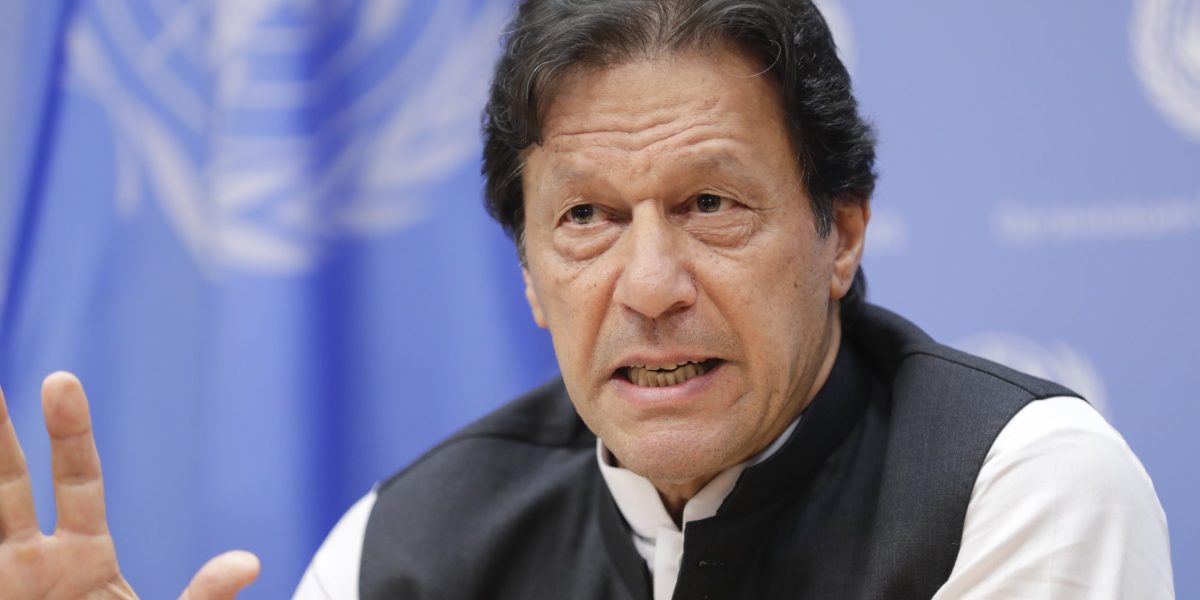
August 5th marked another grim day for Imran Khan, the former Prime Minister of Pakistan and one of the world’s greatest cricketers. It was the second anniversary of his incarceration in Rawalpindi’s Adiala jail on trumped-up charges. Thanks to General Asim Munir, the Army’s Chief of Staff, Khan has been held in solitary confinement in a six-by-eight “death cell” for two years. Anyone less that “Captain Pakistan,” as Khan is known, would have met the Grim Reaper long ago.

The last time I spoke to Khan was on April 2, 2023. We spoke for an hour-and-a-half via Zoom. I was at my residence in Baltimore, and Khan was in Lahore. We had an intense discussion that went on until past midnight in Lahore. What did we talk about?

The cricketer and the currency board

The focus of our conversation was economic policy. Not for the first time, we grappled with what needed to be done to extract Pakistan from its economic doom loop. Our point of departure was the rupee, which had shed 48% of its value against the U.S. dollar since June 2021. To pull Pakistan out of its doom loop and establish stability, I recommended the medicine that I had successfully prescribed in Estonia (1992), Lithuania (1994), Bulgaria (1997), and Bosnia-Herzegovina (1997). In all those cases, a currency board did the trick, as they always do. Indeed, since the first currency board was established in Mauritius (1849), there have been over 70 currency boards, and none have failed. Even the currency board that John Maynard Keynes installed in Archangel during Russia’s civil war (1918) worked without a glitch.

Just what is a currency board? A currency board issues notes and coins convertible on demand into a foreign anchor currency, such as the U.S. dollar, at a fixed exchange rate. It is required to hold anchor-currency reserves equal to 100% of its monetary liabilities.

A currency board has no discretionary monetary powers and cannot issue credit. It has an exchange-rate policy but no monetary policy. Its sole function is to exchange the domestic currency it issues for an anchor currency at a fied rate. A currency board’s currency is a clone of its anchor currency.

A currency board requires no preconditions and can be installed rapidly. Government finances, state-owned enterprises, and trade need not be reformed before a currency board can issue money.

The Bulgarian and Lithuanian examples

Khan and I spent a great deal of time on our April 2023 Zoom call discussing the currency board that I installed in Bulgaria, when I was President Petar Stoyanov’s Chief Economic Adviser. In 1997, Bulgaria faced a raging hyperinflation of 24% per month and a banking crisis. Once the currency board was installed in July, hyperinflation stopped immediately. By 1998, the banking system was solvebnt, money-market interest rates had plunged from triple digits to an average of 2.4%, a massive fiscal deficit turned into a surplus, a deep depression became economic growth, and Bulgaria’s foreign-exchange reserves more than tripled. Today, thanks to its currency board, Bulgaria has the second lowest debt-to-GDP ratio in the EU, behind only Estonia.

What struck me about Khan during that evening back in 2023 was that he understood the technical details and the political ramifications of installing a currency board. Our brainstorming session reminded me of the days when I was a State Counselor in Lithuania and Chief Adviser to Lithuania’s Prime Minister Adolfas Šleževičius (1994-1996). Not surprisingly, Šleževičius was capable of dealing with technical arguments and their political ramifications. After all, he held a doctorate degree from Moscow State University.

Pakistan’s doom loop

A currency board would stabilize Pakistan’s economy and provide a massive confidence shock, with that, Pakistan would exit its doom loop, which is characterized by the lack of confidence in the rupee, a flight of capital, and the accumulation of ever more debt.

Just how big is the problem? Using the World Bank’s residual method for measuring capital flight, I estimate that capital flight in Pakistan has amounted to a whopping 37% of the huge debt that Pakistan has piled up since 2000. Unfortunately for Pakistanis, a staggering 37% of the funds that flow into Pakistan are siphoned off and squirreled away outside Pakistan, primarily in Dubai. This doom loop requires ever more borrowing. That’s why Pakistan has passed the begging bowl to the International Monetary Fund 24 times, and counting.

As I write on the second year of Imran Khan’s incarceration on multiple phony charges, I can understand why the Pakistani elites, including General Munir, want to keep him behind bars. They want to keep parking money in Dubai.

The opinions expressed in Fortune.com commentary pieces are solely the views of their authors and do not necessarily reflect the opinions and beliefs of Fortune.

Introducing the 2025 Fortune Global 500, the definitive ranking of the biggest companies in the world. Explore this year’s list.


Source link

Continue Reading

Business

National Park Service drops free admission on MLK Day and Juneteenth while adding Trump’s birthday

Published

on


The National Park Service will offer free admission to U.S. residents on President Donald Trump’s birthday next year — which also happens to be Flag Day — but is eliminating the benefit for Martin Luther King Jr. Day and Juneteenth.

The new list of free admission days for Americans is the latest example of the Trump administration downplaying America’s civil rights history while also promoting the president’s image, name and legacy.

Last year, the list of free days included Martin Luther King Jr Day and Juneteenth — which is June 19 — but not June 14, Trump’s birthday.

The new free-admission policy takes effect Jan. 1 and was one of several changes announced by the Park Service late last month, including higher admission fees for international visitors.

The other days of free park admission in 2026 are Presidents Day, Memorial Day, Independence Day, Constitution Day, Veterans Day, President Theodore Roosevelt’s birthday (Oct. 27) and the anniversary of the creation of the Park Service (Aug. 25).

Eliminating Martin Luther King Jr. Day and Juneteenth, which commemorates the day in 1865 when the last enslaved Americans were emancipated, removes two of the nation’s most prominent civil rights holidays.

Some civil rights leaders voiced opposition to the change after news about it began spreading over the weekend.

“The raw & rank racism here stinks to high heaven,” Harvard Kennedy School professor Cornell William Brooks, a former president of the NAACP, wrote on social media about the new policy.

Kristen Brengel, a spokesperson for the National Parks Conservation Association, said that while presidential administrations have tweaked the free days in the past, the elimination of Martin Luther King Jr. Day is particularly concerning. For one, the day has become a popular day of service for community groups that use the free day to perform volunteer projects at parks.

That will now be much more expensive, said Brengel, whose organization is a nonprofit that advocates for the park system.

“Not only does it recognize an American hero, it’s also a day when people go into parks to clean them up,” Brengel said. “Martin Luther King Jr. deserves a day of recognition … For some reason, Black history has repeatedly been targeted by this administration, and it shouldn’t be.”

Some Democratic lawmakers also weighed in to object to the new policy.

“The President didn’t just add his own birthday to the list, he removed both of these holidays that mark Black Americans’ struggle for civil rights and freedom,” said Democratic Sen. Catherine Cortez Masto of Nevada. “Our country deserves better.”

A spokesperson for the National Park Service did not immediately respond to questions on Saturday seeking information about the reasons behind the changes.

Since taking office, Trump has sought to eliminate programs seen as promoting diversity across the federal government, actions that have erased or downplayed America’s history of racism as well as the civil rights victories of Black Americans.

Self-promotion is an old habit of the president’s and one he has continued in his second term. He unsuccessfully put himself forwardfor the Nobel Peace Prize, renamed the U.S. Institute of Peace after himself, sought to put his name on the planned NFL stadium in the nation’s capital and had a new children’s savings program named after him.

Some Republican lawmakers have suggested putting his visage on Mount Rushmore and the $100 bill.


Source link

Continue Reading

Business

JPMorgan CEO Jamie Dimon says Europe has a ‘real problem’

Published

on


JPMorgan Chase & Co. Chief Executive Officer Jamie Dimon called out slow bureaucracy in Europe in a warning that a “weak” continent poses a major economic risk to the US.

“Europe has a real problem,” Dimon said Saturday at the Reagan National Defense Forum. “They do some wonderful things on their safety nets. But they’ve driven business out, they’ve driven investment out, they’ve driven innovation out. It’s kind of coming back.”

While he praised some European leaders who he said were aware of the issues, he cautioned politics is “really hard.” 

Dimon, leader of the biggest US bank, has long said that the risk of a fragmented Europe is among the major challenges facing the world. In his letter to shareholders released earlier this year, he said that Europe has “some serious issues to fix.”

On Saturday, he praised the creation of the euro and Europe’s push for peace. But he warned that a reduction in military efforts and challenges trying to reach agreement within the European Union are threatening the continent.

“If they fragment, then you can say that America first will not be around anymore,” Dimon said. “It will hurt us more than anybody else because they are a major ally in every single way, including common values, which are really important.”

He said the US should help.

“We need a long-term strategy to help them become strong,” Dimon said. “A weak Europe is bad for us.”

The administration of President Donald Trump issued a new national security strategy that directed US interests toward the Western Hemisphere and protection of the homeland while dismissing Europe as a continent headed toward “civilizational erasure.”

Read More: Trump’s National Security Strategy Veers Inward in Telling Shift

JPMorgan has been ramping up its push to spur more investments in the national defense sector. In October, the bank announced that it would funnel $1.5 trillion into industries that bolster US economic security and resiliency over the next 10 years — as much as $500 billion more than what it would’ve provided anyway. 

Dimon said in the statement that it’s “painfully clear that the United States has allowed itself to become too reliant on unreliable sources of critical minerals, products and manufacturing.”

Investment banker Jay Horine oversees the effort, which Dimon called “100% commercial.” It will focus on four areas: supply chain and advanced manufacturing; defense and aerospace; energy independence and resilience; and frontier and strategic technologies. 

The bank will also invest as much as $10 billion of its own capital to help certain companies expand, innovate or accelerate strategic manufacturing.

Separately on Saturday, Dimon praised Trump for finding ways to roll back bureaucracy in the government.

“There is no question that this administration is trying to bring an axe to some of the bureaucracy that held back America,” Dimon said. “That is a good thing and we can do it and still keep the world safe, for safe food and safe banks and all the stuff like that.”


Source link

Continue Reading

Business

Hegseth likens strikes on alleged drug boats to post-9/11 war on terror

Published

on


Defense Secretary Pete Hegseth defended strikes on alleged drug cartel boats during remarks Saturday at the Ronald Reagan Presidential Library, saying President Donald Trump has the power to take military action “as he sees fit” to defend the nation.

Hegseth dismissed criticism of the strikes, which have killed more than 80 people and now face intense scrutiny over concerns that they violated international law. Saying the strikes are justified to protect Americans, Hegseth likened the fight to the war on terror following the Sept. 11, 2001 attacks.

“If you’re working for a designated terrorist organization and you bring drugs to this country in a boat, we will find you and we will sink you. Let there be no doubt about it,” Hegseth said during his keynote address at the Reagan National Defense Forum. “President Trump can and will take decisive military action as he sees fit to defend our nation’s interests. Let no country on earth doubt that for a moment.”

The most recent strike brings the death toll of the campaign to at least 87 people. Lawmakers have sought more answers about the attacks and their legal justification, and whether U.S. forces were ordered to launch a follow-up strike following a September attack even after the Pentagon knew of survivors.

Though Hegseth compared the alleged drug smugglers to Al-Qaida terrorists, experts have noted significant differences between the two foes and the efforts to combat them.

Hegseth’s remarks came after the Trump administration released its new national security strategy, one that paints European allies as weak and aims to reassert America’s dominance in the Western Hemisphere.

During the speech, Hegseth also discussed the need to check China’s rise through strength instead of conflict. He repeated Trump’s vow to resume nuclear testing on an equal basis as China and Russia — a goal that has alarmed many nuclear arms experts. China and Russia haven’t conducted explosive tests in decades, though the Kremlin said it would follow the U.S. if Trump restarted tests.

The speech was delivered at the Reagan National Defense Forum at the Ronald Reagan Presidential Foundation and Institute in California, an event which brings together top national security experts from around the country. Hegseth used the visit to argue that Trump is Reagan’s “true and rightful heir” when it comes to muscular foreign policy.

By contrast, Hegseth criticized Republican leaders in the years since Reagan for supporting wars in the Middle East and democracy-building efforts that didn’t work. He also blasted those who have argued that climate change poses serious challenges to military readiness.

“The war department will not be distracted by democracy building, interventionism, undefined wars, regime change, climate change, woke moralizing and feckless nation building,” he said.


Source link

Continue Reading

Trending

Copyright © Miami Select.