Connect with us

Politics

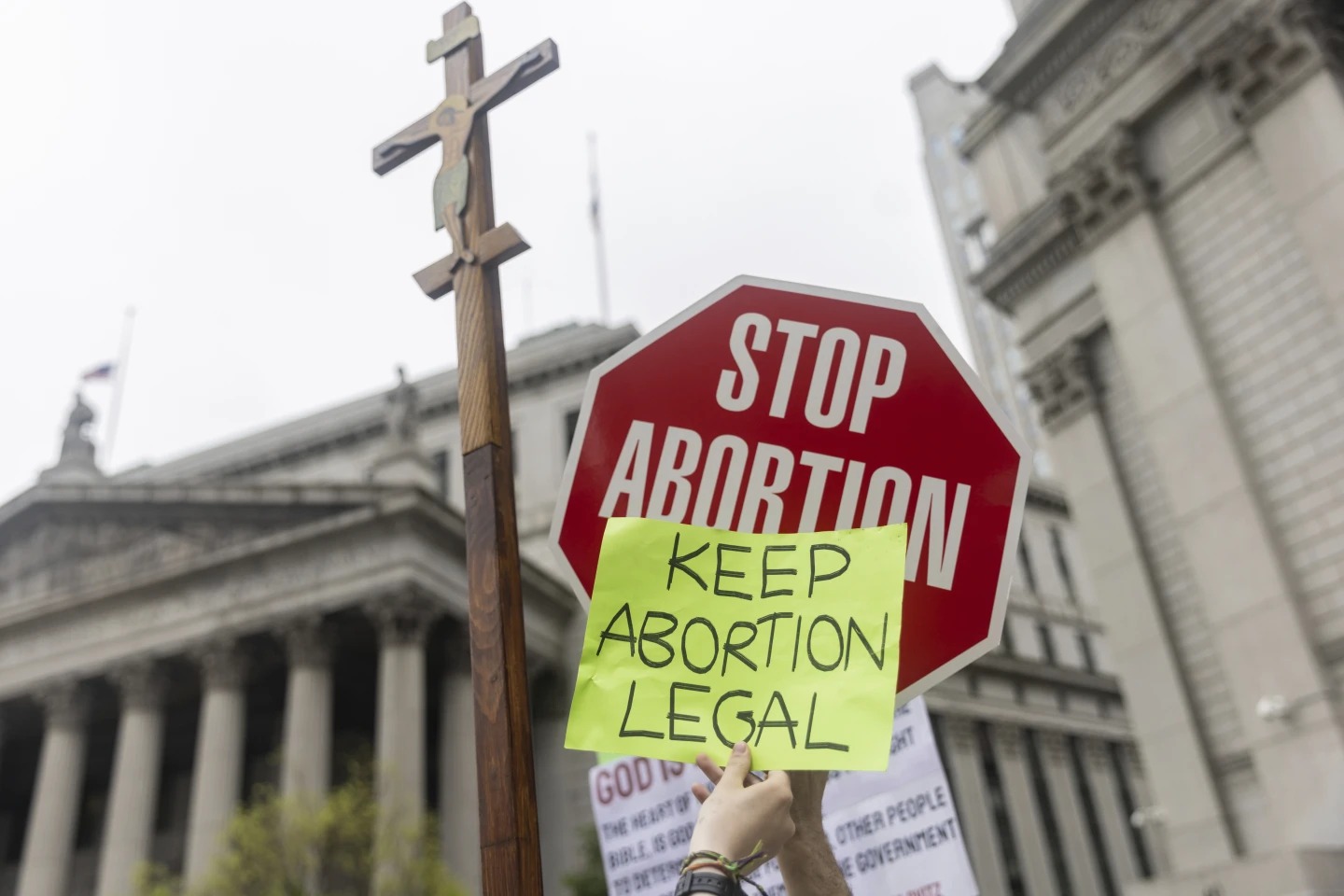
Donald Trump has said abortion is a state issue. His judicial picks could shape it nationally for decades

Published

on


In his second term, all but five of his 17 nominees are from states that went for Trump in 2024 and where Republicans have pushed severe abortion restrictions. Among them, four nominees are from Missouri and five are from Florida.

Here is a look at the nominees who have tried to reduce abortion access or have advocated for restrictions. They did not respond to requests for comment:

Whitney Hermandorfer, who has been confirmed to the 6th U.S. Circuit Court of Appeals, has built much of her relatively short career as a lawyer around challenging former President Joe Biden’s policies related to abortion and transgender rights. She challenged a federal law requiring employers to provide workers with reasonable accommodations to get abortion care, as well as Title X regulations that required providers who receive funding through the program to give information about abortions to patients if asked.

Hermandorfer defended Tennessee’s abortion ban, one of the strictest in the country, in court and tried to dismiss a lawsuit from doctors seeking clarification on exemptions to the ban. She said abortion deserves special scrutiny because “this is the only medical procedure that terminates a life.”

Maria Lanahan, a district court nominee in Missouri, helped write the state’s complaint in a lawsuit that had sweeping national implications for access to medication abortion. The case challenged the FDA approval of the abortion pill mifepristone despite decades of evidence showing the drug is safe and effective.

The lawyer supported Missouri’s effort to strip Planned Parenthood of state Medicaid funding and defended the state’s abortion ban after a group of clergy sued, arguing it violated the state constitution’s protections for religious freedom.

Jordan Pratt, a nominee for the U.S. District Court for the Middle District of Florida, called abortion a “barbaric practice” and “one of the most severe invasions of personal rights imaginable” in an amicus brief supporting Florida’s 15-week abortion ban. The state now bans the procedure at six weeks.

In 2025, Pratt struck down a Florida law that created a judicial waiver program for minors seeking to have abortions without parental consent. The lawyer also worked for the Alliance Defending Freedom, a conservative legal organization that opposes abortion and has sued to reverse the FDA approval of mifepristone.

John Guard, also nominated to fill for the same district, defended Florida’s then-15-week abortion ban in court as the state’s chief deputy attorney general.

Joshua Divine, a deputy solicitor general of Missouri who is nominated to be a district judge in the state, is currently representing Missouri in a case challenging the FDA approval of mifepristone. Divine co-authored the lawsuit, which includes misinformation about medication abortion, including that it “starves the baby to death in the womb.”

In his college newspaper, Divine described himself as a zealot for the anti-abortion movement, referred to abortion as “the killing of an innocent, genetically unique human being” and argued that life begins at fertilization.

He also stepped into a prominent role in the fight over abortion rights in the state after Missouri voters approved an abortion rights amendment in 2024. That amendment did not immediately override state laws. It left it up to abortion rights groups to ask courts to knock down abortion restrictions they believed were now unconstitutional. During the ensuing legal battles, Divine represented the state in defending a host of abortion restrictions.

Chad MeredithTrump’s nominee to the U.S. District Court for the Eastern District of Kentucky, defended the state’s abortion ban and other restrictions while he was the state’s chief deputy general counsel. That included a law requiring doctors to perform ultrasounds and describe images to abortion patients.

Bill Mercer, a Republican state lawmaker in Montana who is nominated for a U.S. District Court judgeship in the state, has repeatedly supported anti-abortion bills. Those include ones that sought to ban abortion after 20 weeks of pregnancy; require a 24-hour waiting period and mandatory ultrasounds for abortion patients; require parental notification for minors to get an abortion; prohibit the use of state funding for abortions; prohibit certain insurance policies from covering abortions; and restrict what types of medical professionals can dispense medication abortion.

Jennifer Mascott, a lawyer in the White House Counsel’s Office and a Trump nominee to the 3rd U.S. Circuit Court of Appeals, has spoken repeatedly about abortion law in panels and interviews.

After the Supreme Court overturned Roe v. Wade, Mascott in an interview on “Fox News Live” disagreed with the argument that the decision undermined the court’s legitimacy. She said abortion issues are “more appropriately decided” by the states, elected officials in Congress and people in their local communities.

Anti-abortion groups said it is premature to make broad conclusions about whether the nominees would help carry out their policy goals but that they were optimistic based on the names they have seen so far.

“We look forward to four more years of nominees cut from that mold,” said Katie Glenn Daniel, director of legal affairs for the national anti-abortion organization SBA Pro-Life America.

Kristi Hamrick, spokesperson for Students for Life, said she was hopeful the administration will continue nominating those “who will respect the rule of law.”

Abortion rights advocates said Trump is embedding abortion opponents into the judiciary one judge at a time.

Mini Timmaraju, president of the national abortion rights organization Reproductive Freedom for All, said the courts, until now, have largely been an effective option for advocates to challenge state abortion bans and restrictions.

“This just feeds into this larger strategy where Trump has gotten away with distancing himself from abortion — saying he’s going to leave it to the states while simultaneously appointing anti-abortion extremists at all levels of government,” she said.

___

Republished with permission of The Associated Press.


Source link

Continue Reading

Politics

Eileen Higgins brings out starpower as special election campaign nears close

Published

on


Prominent Democrats will be on hand at a number of stops.

Former Miami-Dade Commissioner Eileen Higgins is enlisting more big names as support at early vote stops ahead of Tuesday’s special election for Mayor, including a Senate candidate, a former Senate candidate, and a current candidate for Governor.

During her canvass kickoff at 10 a.m at Elizabeth Virrick Park, Higgins will appear with U.S. Senate Candidate Hector Mujica.

Early vote stops follow, with Higgins solo at the 11 a.m. show-up at Miami City Hall and the 11:30 at the Shenandoah Library.

From there, big names from Orlando will be with the candidate.

Orange County Mayor and candidate for Florida Governor Jerry Demings and former Congresswoman Val Demings will appear with Higgins at the Liberty Square Family & Friends Picnic (2 p.m.), Charles Hadley Park (3 p.m.), and the Carrie P. Meek Senior and Cultural Center (3:30 p.m.)

Higgins, who served on the County Commission from 2018 to 2025, is competing in a runoff for the city’s mayoralty against former City Manager Emilio González. The pair topped 11 other candidates in Miami’s Nov. 4 General Election, with Higgins, a Democrat, taking 36% of the vote and González, a Republican, capturing 19.5%.

To win outright, a candidate had to receive more than half the vote. Miami’s elections are technically nonpartisan, though party politics frequently still play into races.


Source link

Continue Reading

Politics

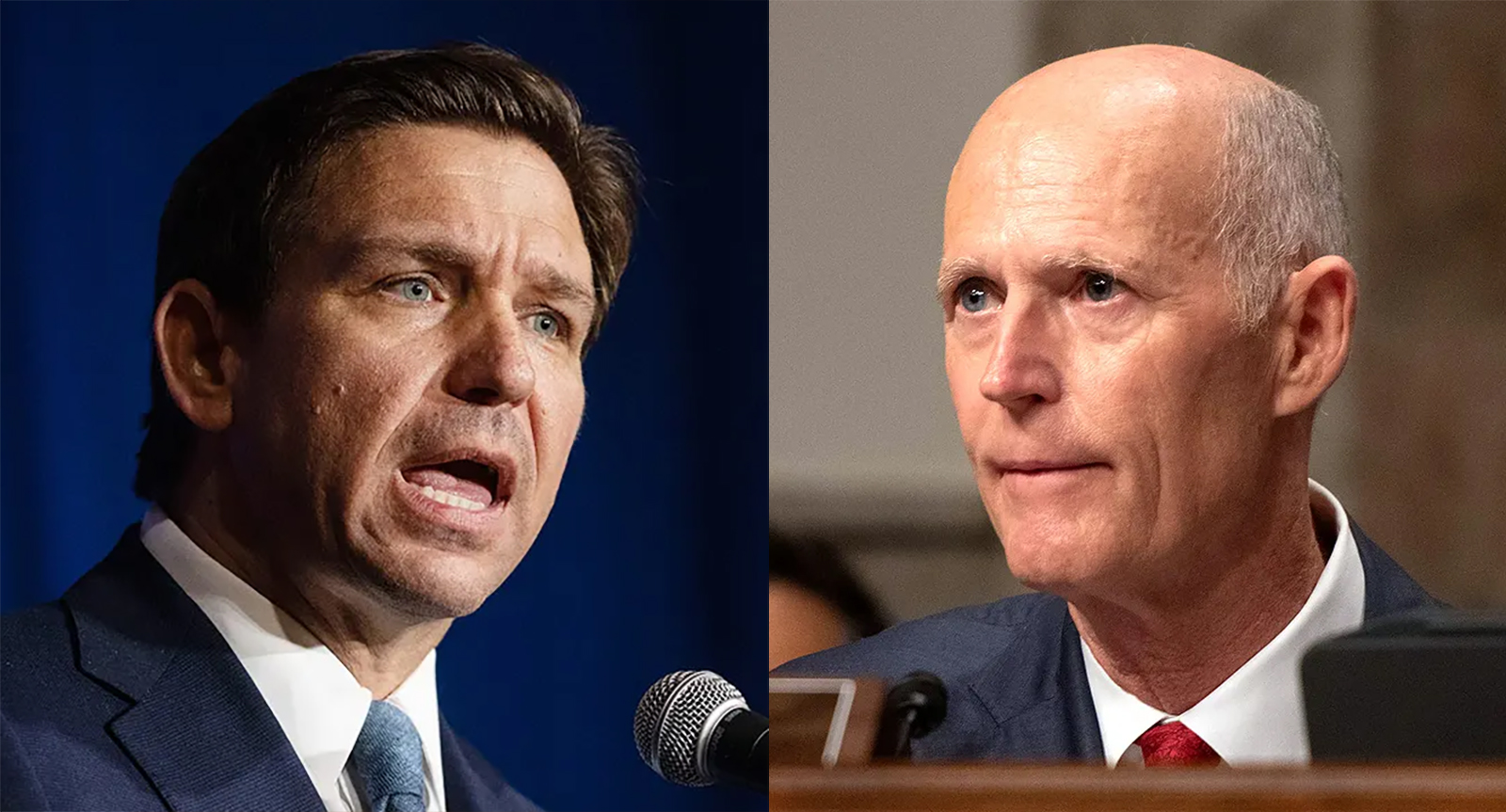
Hope Florida fallout drives another Rick Scott rebuke of Ron DeSantis

Published

on


The cold war between Florida’s Governor and his predecessor is nearly seven years old and tensions show no signs of thawing.

On Friday, Sen. Rick Scott weighed in on Florida Politics’ reporting on the Agency for Health Care Administration’s apparent repayment of $10 million of Medicaid money from a settlement last year, which allegedly had been diverted to the Hope Florida Foundation, summarily filtered through non-profits through political committees, and spent on political purposes.

“I appreciate the efforts by the Florida legislature to hold Hope Florida accountable. Millions in tax dollars for poor kids have no business funding political ads. If any money was misspent, then it should be paid back by the entities responsible, not the taxpayers,” Scott posted to X.

While AHCA Deputy Chief of Staff Mallory McManus says that is an “incorrect” interpretation, she did not respond to a follow-up question asking for further detail this week.

The $10 million under scrutiny was part of a $67 million settlement from state Medicaid contractor Centene, which DeSantis said was “a cherry on top” in the settlement, arguing it wasn’t truly from Medicaid money.

But in terms of the Scott-DeSantis contretemps, it’s the latest example of tensions that seemed to start even before DeSantis was sworn in when Scott left the inauguration of his successor, and which continue in the race to succeed DeSantis, with Scott enthusiastic about current front runner Byron Donalds.

Earlier this year, Scott criticized DeSantis’ call to repeal so-called vaccine mandates for school kids, saying parents could already opt out according to state law.

While running for re-election to the Senate in 2024, Scott critiqued the Heartbeat Protection Act, a law signed by DeSantis that banned abortion after the sixth week of pregnancy with some exceptions, saying the 15 week ban was “where the state’s at.”

In 2023 after Scott endorsed Donald Trump for President while DeSantis was still a candidate, DeSantis said it was an attempt to “short circuit” the voters.

That same year amid DeSantis’ conflict over parental rights legislation with The Walt Disney Co.Scott said it was important for Governors to “work with” major companies in their states.

The critiques went both ways.

When running for office, DeSantis distanced himself from Scott amid controversy about the Senator’s blind trust for his assets as Governor.

“I basically made decisions to serve in uniform, as a prosecutor, and in Congress to my financial detriment,” DeSantis said in October 2018. “I’m not entering (office) with a big trust fund or anything like that, so I’m not going to be entering office with those issues.”

In 2020, when the state’s creaky unemployment website couldn’t handle the surge of applicants for reemployment assistance as the pandemic shut down businesses, DeSantis likened it to a “jalopy in the Daytona 500” and Scott urged him to “quit blaming others” for the website his administration inherited.

The chill between the former and current Governors didn’t abate in time for 2022’s hurricane season, when Scott said DeSantis didn’t talk to him after the fearsome Hurricane Ian ravaged the state.


Source link

Continue Reading

Politics

Amnesty International alleges human rights violations at Alligator Alcatraz

Published

on


Enforcing what Gov. Ron DeSantis calls the “rule of law” violates international law and norms, according to a global group weighing in this week.

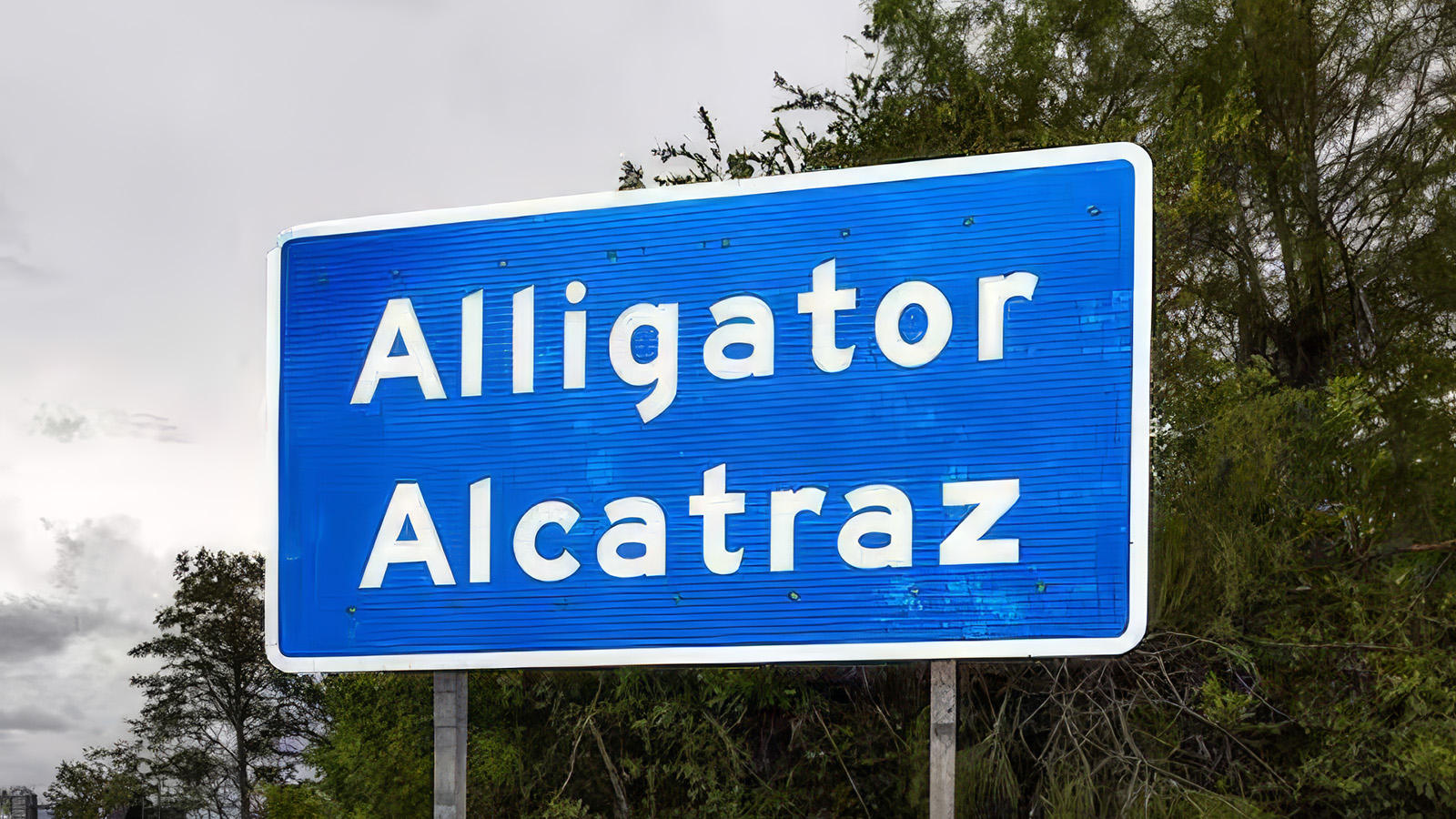
Amnesty International is the latest group to condemn the treatment of immigrants with disputed documentation at two South Florida lockups, the Krome North Service Processing Center (Krome) and the Everglades Detention Facility (Alligator Alcatraz).

The latter has been a priority of state government since President Donald Trump was inaugurated.

The organization claims treatment of the detained falls “far below international human rights standards.”

Amnesty released a report Friday covering what it calls a “a research trip to southern Florida in September 2025, to document the human rights impacts of federal and state migration and asylum policies on mass detention and deportation, access to due process, and detention conditions since President Trump took office on 20 January 2025.”

“The routine and prolonged use of shackles on individuals detained for immigration purposes, both at detention facilities and during transfer between facilities, constitutes cruel, inhuman and degrading treatment, and may amount to torture or other ill-treatment,” the report concludes.

Gov. DeSantis’ administration spent much of 2025 prioritizing Alligator Alcatraz.

While the state did not comment on the report, Amnesty alleges the state’s “decision to cut resources from essential social and emergency management programs while continuing to allocate resources for immigration detention represents a grave misallocation of state resources. This practice undermines the fulfillment of economic and social rights for Florida residents and reinforces a system of detention that facilitates human rights violations.”

Amnesty urges a series of policy changes that won’t happen, including the repeal of immigration legislation in Senate Bill 4-C, which proscribes penalties for illegal entry and illegal re-entry, mandates imprisonment for being in Florida without being a legal immigrant, and capital punishment for any such undocumented immigrant who commits capital crimes.

The group also recommends ending 287(g) agreements allowing locals to help with immigration enforcement, stopping practices like shackling and solitary confinement, and closing Alligator Alcatraz itself.



Source link

Continue Reading

Trending

Copyright © Miami Select.